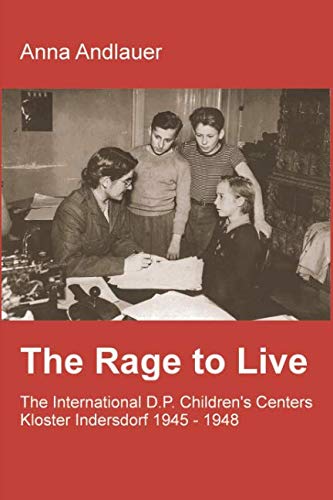
This book documents two historical humanitarian efforts to help the youngest victims of National Socialism in postwar Germany:
During the first year after the liberation of the concentration and labor camps, from July 1945 to July 1946, a team of UNRRA pioneers, along with Catholic nuns and adult displaced persons, provided 613 Jewish and gentile child survivors in Kloster Indersdorf (near Dachau) with the initial help they needed to pick up the pieces of their shattered existence and go on with their lives. Taking care of hundreds of young Holocaust survivors and other displaced children posed a challenge hitherto unknown. Adequate housing and sufficient food had to be provided: a hot bath, suitable and clean clothing, medical treatment, schooling and leisure activities; friends had to be kept together, and new perspectives for the future found – either repatriation or resettlement. Social Welfare Officer Greta Fischer and her UN team focused on the children’s individual needs and psychological responses to persecution and displacement. The humanitarian workers listened attentively when the child survivors talked about their suffering and loss; they had to understand that these traumatised young people urgently needed to gain control over their haunting experiences. Believing in the children’s potential and trusting their will to survive, the caregivers prepared them for a new life to come – either in their home country or in a completely different environment.
From July 1946 – September 1948 in the now renamed Jewish Children’s Center Kloster Indersdorf, the Zionist kibbutz movement Dror, along with the UNRRA, also had to meet the basic needs of hundreds of young Holocaust survivors from Poland, Hungary and Romania. Emissaries from Palestine and youth-leader madrichim offered schooling, games, sports, concerts and cultural activities; but adhering to their Zionist and socialist principles, they stressed the importance of collective discipline, order and self-sacrifice. Their primary aim was to prepare these child survivors for their future life on a kibbutz in Erez Israel. Thus they also engaged the child survivors in helping with farm and household tasks, they practiced roll-calls and self-defense, and they taught them Zionist and socialist principles.
Sixty to seventy years later, the author interviewed more than a hundred child survivors who were either in the International Children’s Center or in the Jewish Children’s Center Kloster Indersdorf. She paints a vivid picture of everyday life in both children’s centers and creates portraits of many of these child survivors “then and now” – what they were forced to go through and what had enabled them to forge a new future despite their traumatic past.
 About
About History
 Education
 Quilts
 FIlms
FIlms Photos
 News Media & Events
 Publications
 Donate