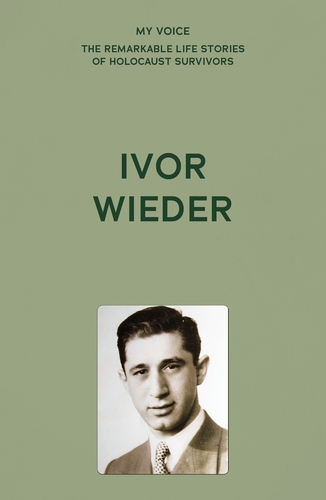
Ivor was born in 1931 and grew up in the village of Barsana, Romania, with his parents, brother and three sisters, the fourth child of five.
Life in Barsana was tough. Ivor’s father was a merchant, selling fruit on a horse and cart while his mother was a seamstress, often working late into the night on her sewing machine to keep the family afloat. In August 1940, the village was occupied by the Hungarians, allies of Nazi Germany, and began to pass anti-Jewish laws. Jewish men and children were beaten up and Ivor couldn’t go to school without children chasing after him, calling him, ‘a dirty Jew.’
In 1944, the Jews were rounded up with dogs and marched to a ghetto called Berbesti, and then onto Sighet. Ivor was forced onto a cramped cattle train to Auschwitz, where he was tragically separated from his younger sister and mother who were murdered in the crematorium.
After being shaved and tattooed, Ivor was taken to Furstengrube, a nearby working camp, where, at 12 years old, he witnessed the worst cruelty imaginable. His father was killed, after sustaining a hand injury.
Months later, Ivor and his brother were moved to Mittelbau-Dora, a working camp in Germany, before being taken to Bergen-Belsen where they were liberated by the British Army.
In October 1945, Ivor was flown to Southampton, and he later settled in north-west London, starting a business from nothing with his brother, manufacturing bags, which soon flourished. Ivor met his wife, Marion, and they had two sons. Ivor now has quite a legacy, with seven grandchildren and 17 great-grandchildren.

 About
About History
 Education
 Quilts
 FIlms
FIlms Photos
 News Media & Events
 Publications
 Donate