Many members of the Boys were deported to the Auschwitz concentration, extermination and labour camp complex. It was operated by Nazi Germany in occupied Poland.
The Boys were teenage and child-Holocaust survivors, who were brought to the UK after the war for rest and rehabilitation.
On arrival in Auschwitz II-Birkenau, there was a selection in which those who would be murdered in the camp’s gas chambers were separated from those chosen as slave labourers.
Members of the Boys were selected for slave labour or medical experimentation.
While some remained in the main Auschwitz complex others were taken to work in one or more of Auschwitz’s 40 subcamps.
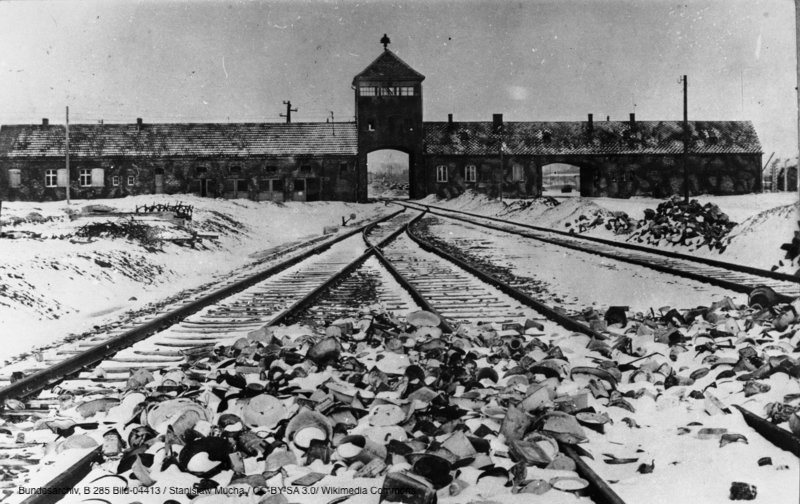
Auschwitz-Birkenau concentration camp.
Overview
Auschwitz was a huge complex that swarmed with people.
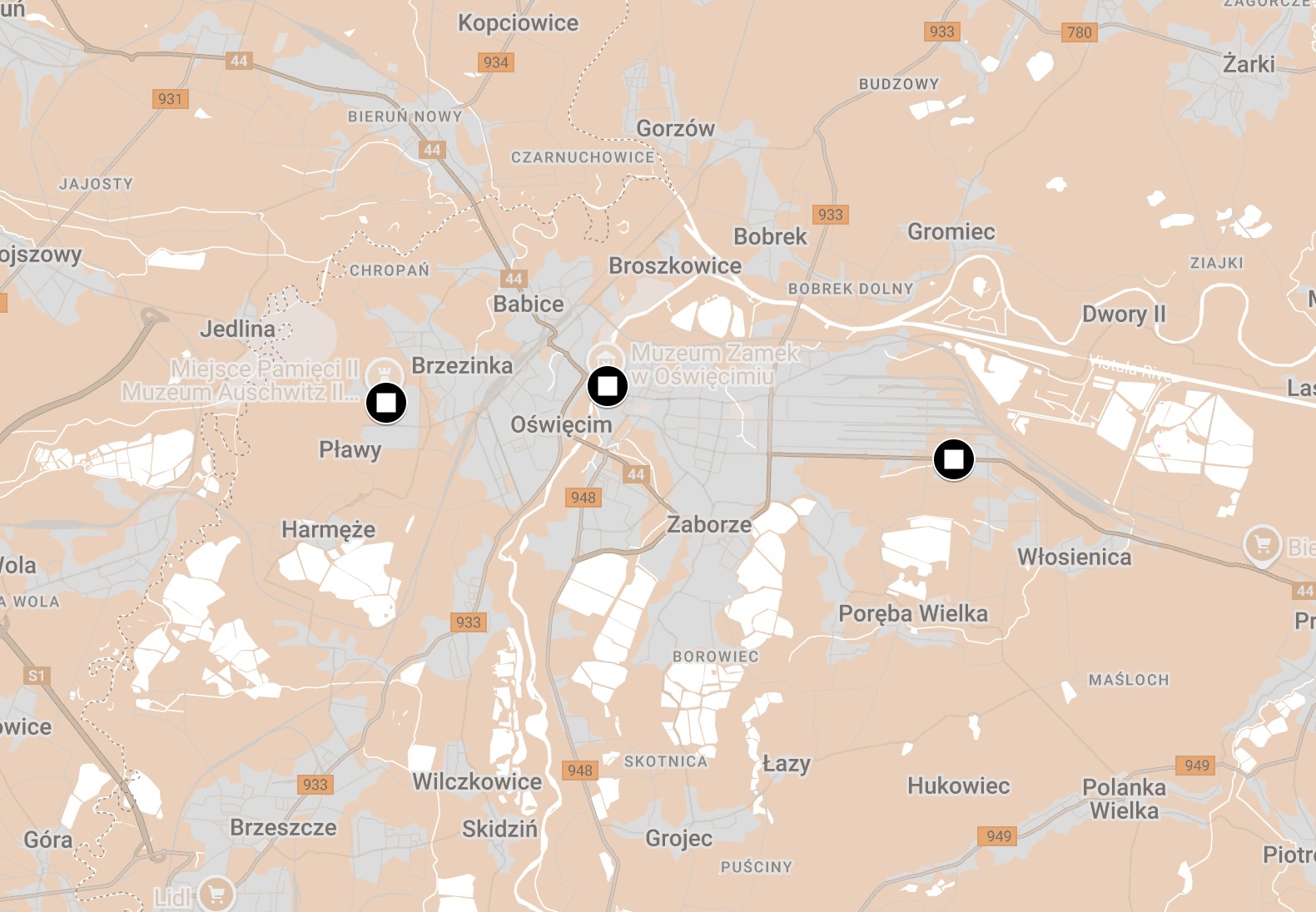
It was a society of its own with its own hierarchy and from 1943 was made up of three large autonomous sites: Auschwitz I, the original camp, which was a political prison and labour camp; Auschwitz II-Birkenau, which was both a concentration camp and extermination camp; and Auschwitz III-Monowitz, a labour camp.
At its peak in the summer of 1944, Auschwitz covered about 40km² and held 135,000 prisoners, 25% of the population of the entire concentration camp system.
During its period of operation, over 1,000,000 prisoners passed through the Auschwitz complex including those murdered on arrival, those chosen for slave labour, transferred to other camps or forced to endure other experiences including medical experiments and prostitution.
Origins
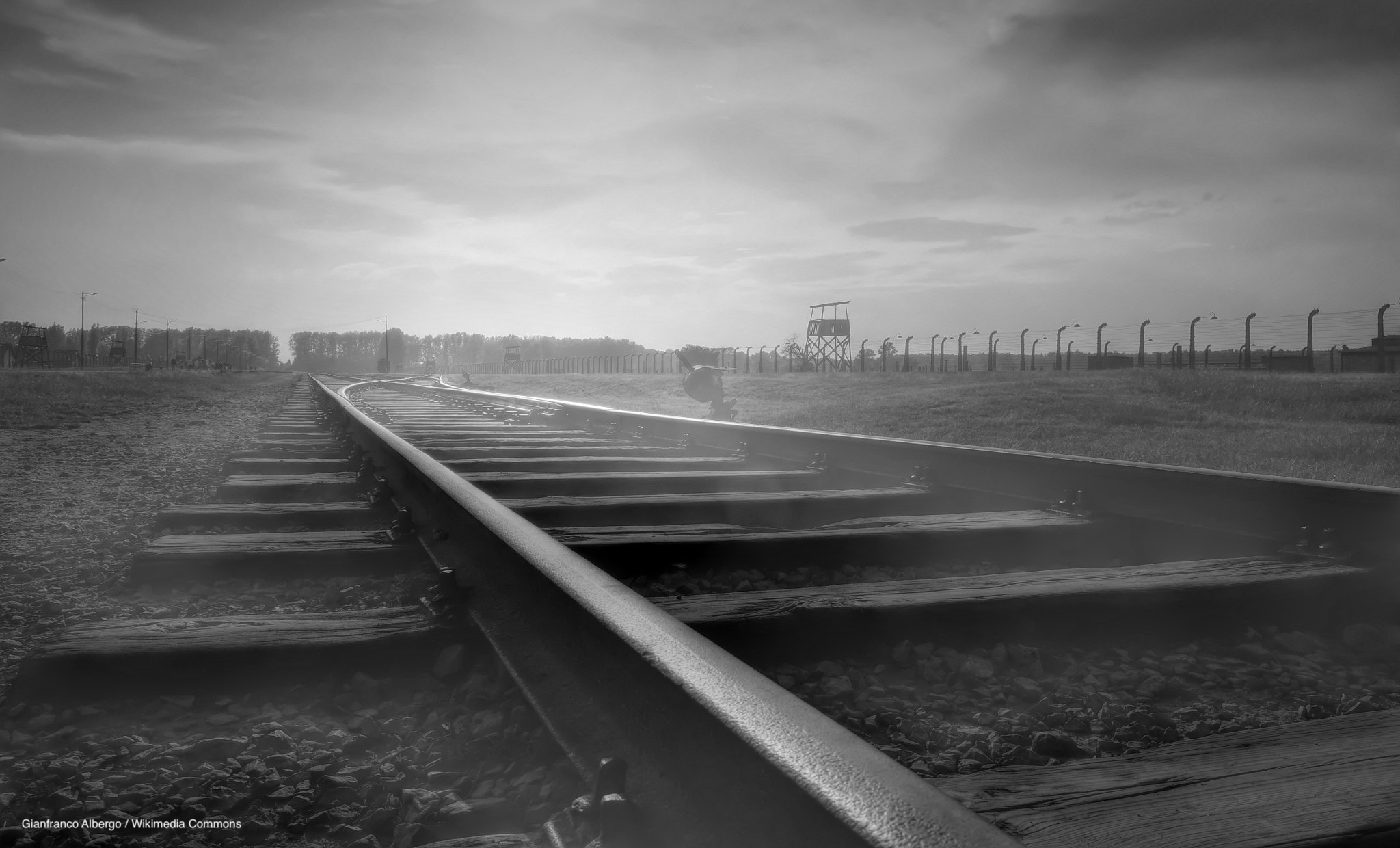
Memorial and Museum Auschwitz Birkenau, Poland.
The town of Oświcięm, 50km from Kraków, Auschwitz in German, was part of western Poland annexed to the German Reich in 1939.
The original Auschwitz I camp, which opened in June 1940 as a holding place for Polish political prisoners, was set up in a former Polish Army barracks. The spot was chosen as Oświcięm was a major railway hub.
Auschwitz was not just the site of the biggest mass murder in human history but the living enactment of the Nazi policy of Lebensraum. Few Germans lived here before 1939 but during World War II Oświęcim was transformed into a model German eastern settlement.
The town’s original population was 50% Jewish. Jews had lived in the region since the 10th century. Oświęcim’s Jews were deported in 1940-41, while its Polish population was moved to the poorer parts of the town before they were expelled. Germans were resettled in Oświęcim and I G Farben opened a large factory there.
The Nazis isolated the camps from the outside world and expelled about 9,000 residents from the Zone of Interest, the Interessengebiet, to prevent prisoners from contacting the outside world and to eliminate witnesses to their crimes. The area was about 40sqkm beyond the camp perimeter.
Until the beginning of 1942, Auschwitz functioned only as a concentration camp. It was made up of three parts and had a system of subcamps.
Until the beginning of 1942, Auschwitz functioned only as a concentration camp. It was made up of three parts and had a system of subcamps.
“Maybe the older people knew where we were going I don’t know but as children we didn’t know. And we travelled for sometime, we couldn’t see out of those trains, because they were trucks and we got someplace or other that turned out to be Auschwitz.
Here we were taken off the trains, the SS men were standing round and we were in line to go into camp. Some were turned to the right and some were tuned to the left – that was the first selection we ever knew. My mother was separated from us with the baby in her arms and my two sisters. My brother and I went to the left. We didn’t know of course what happened but today we all know what happened. The people to the right going straight to the gas chambers, people going to the left they had other plans for.”
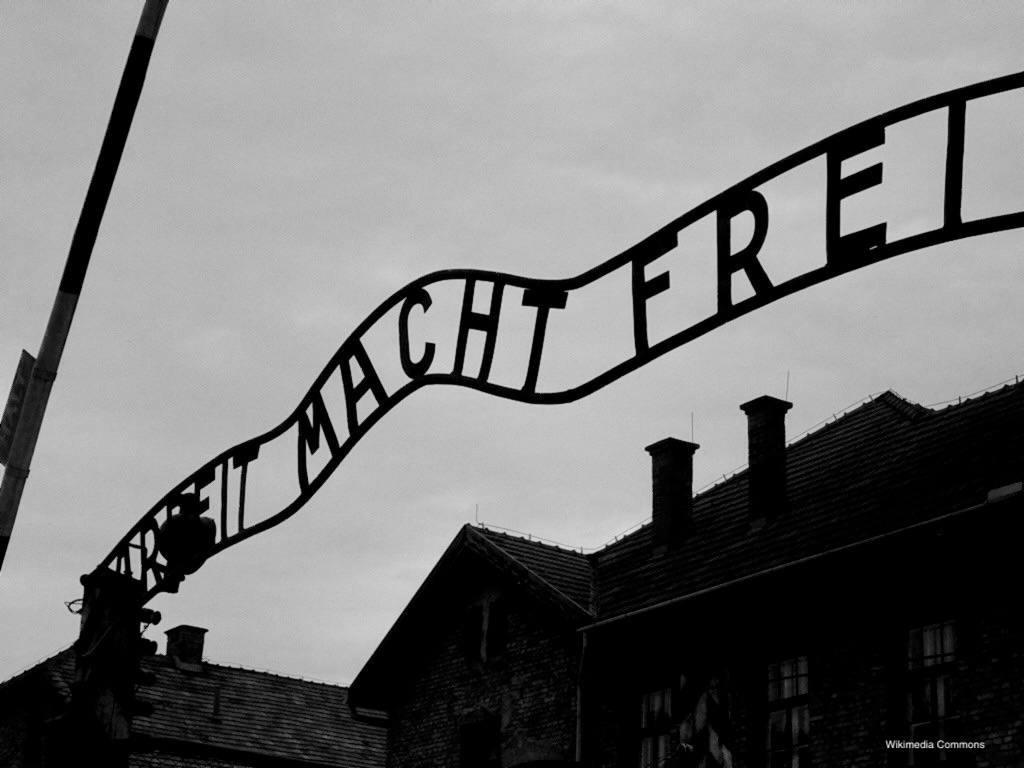
Auschwitz I Gate.
Auschwitz I was the main camp and home to its administration. Its official name was Konzentrationslager (KL) Auschwitz I-Stammlager. The prisoners were initially only Poles and German criminals, who were brought to the camp as functionaries and who were extremely violent. But by August 1944, of its 16,000 inmates 10,000 of whom were Jews.
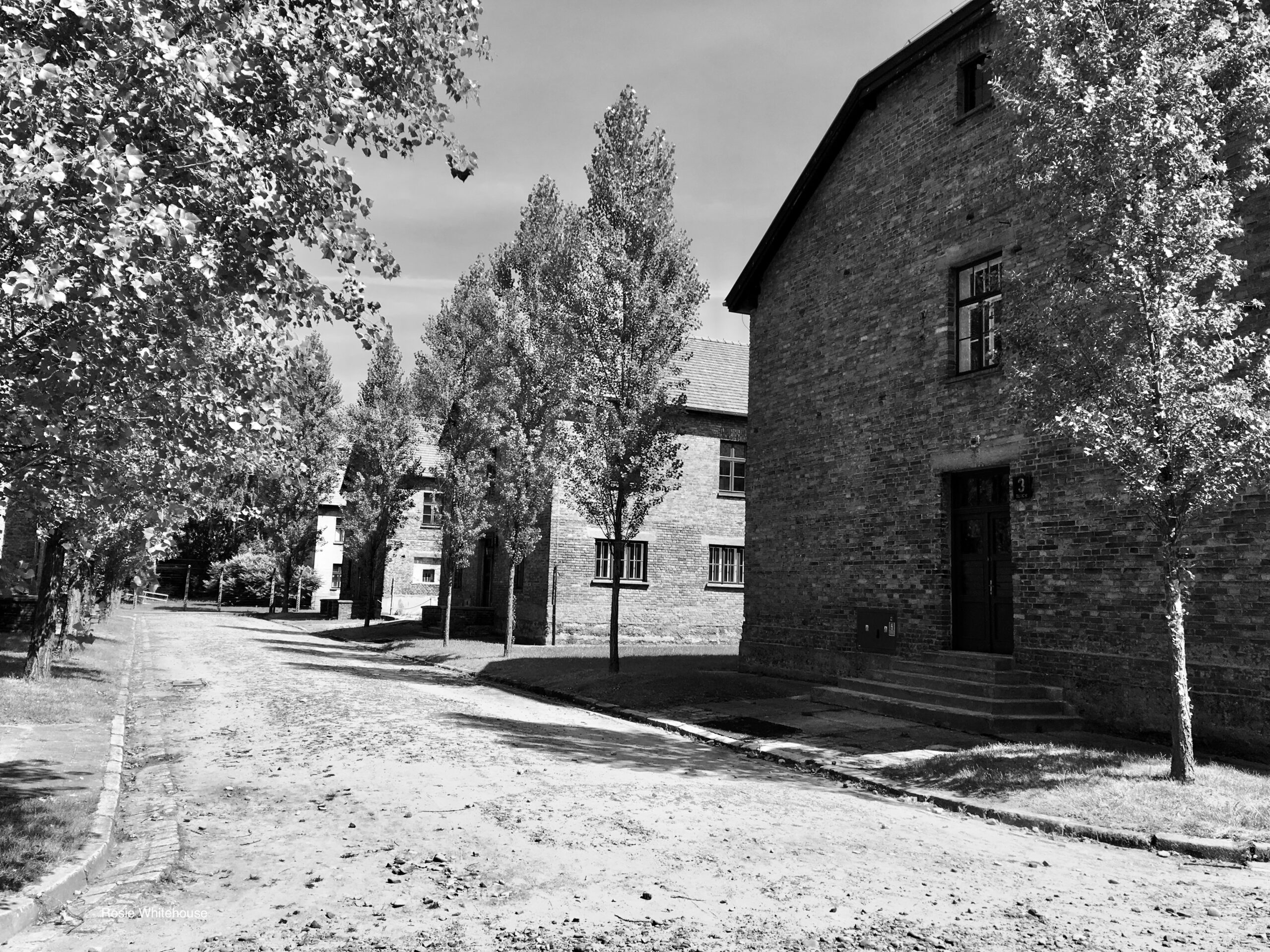
Barracks in the former Auschwitz I, Poland.
The first gassings took place at the crematoria in Auschwitz I in August 1941 when Soviet prisoners of war were gassed using Zyklon B gas. The crematorium remained in operation until July 1943, by which time the crematoria at Auschwitz II had taken over. Exact figures for those murdered by poisoned gas in Auschwitz I do not exist but historians estimate that 10,000 people may have been gassed there.
Structure
The camp was based around the former Polish army barrack which originally consisted of 22 barracks but was expanded in 1943.
A new prisoner was first taken to the prisoner reception centre built between 1942-1944. It was located near the gate with the Arbeit macht frei sign. There they were tattooed, shaved, disinfected, and given a striped prison uniform. The centre contained a bathhouse, laundry, and 19 gas chambers for delousing clothing.
Most of the Boys did not pass through Auschwitz I but some of them, among them Perez Lewkowicz and Sam Pivnik, were taken to the Bricklayers School, the Maurerschule.
Auschwitz I had its own gas chamber, Crematorium I. The gas – Zyklon B – is commonly known as hydrogen cyanide. Thousands were also murdered in Auschwitz I by phenol injections into the heart.
Auschwitz II-Birkenau was the heart of the Nazi killing machine. Thousands of the Boys relatives and friends were murdered in its gas chambers.
Most of the Boys arrived with their families after the construction of the main gate and the ramp within the camp in March 1944. Prior to its construction transports arrived at the Old Jewish Ramp, Alte Judenrampe, a former freight station 900m from Birkenau’s main gate.
The arrival of the Hungarian Jews in the camp are among the few images we have of Auschwitz II-Birkenau. Some of the most haunting photographs capture Hungarian Jewish women, children and the elderly waiting to be gassed in the field close to Crematoria IV and V. It is highly likely that among them are the Boys’ relatives.
History
Auschwitz II-Birkenau was built in 1941 on the site of the village of Brzezinka, Birkenau in German, to hold Soviet prisoners of war. Of the 10,000 Soviet prisoners who arrived in Birkenau in October 1941, only 186 by were still alive in the spring of 1942.
Until 1942, very few Jews were interned in the camp, but when the invasion of the Soviet Union failed to proceed at a blitzkrieg pace, the Nazi plan to resettle Europe’s Jews in Siberia was abandoned, and genocidal policies adopted. The first Jews were gassed in Auschwitz III-Birkenau in February 1942, but Birkenau only became a centre of mass murder in 1943 after the closure of Bełzec, Sobibór and Treblinka.
By 1944, 22,600 Sinti and Roma had been brought to the camp, half of whom were women and children. Of these, 1,700 were murdered on arrival and the rest were given numbers beginning with Z for Zigeuner, gypsy in German. Conditions in the Roma camp were horrendous even by Auschwitz standards and 7,000 of the inmates died from starvation and disease. The camp was liquidated on 2 August 1944, when all the inmates were gassed in Crematorium V. Many of the Boys, among them Isaac Perlmutter, now Ivor Perl, remember the camp and its liquidation.
Arrival
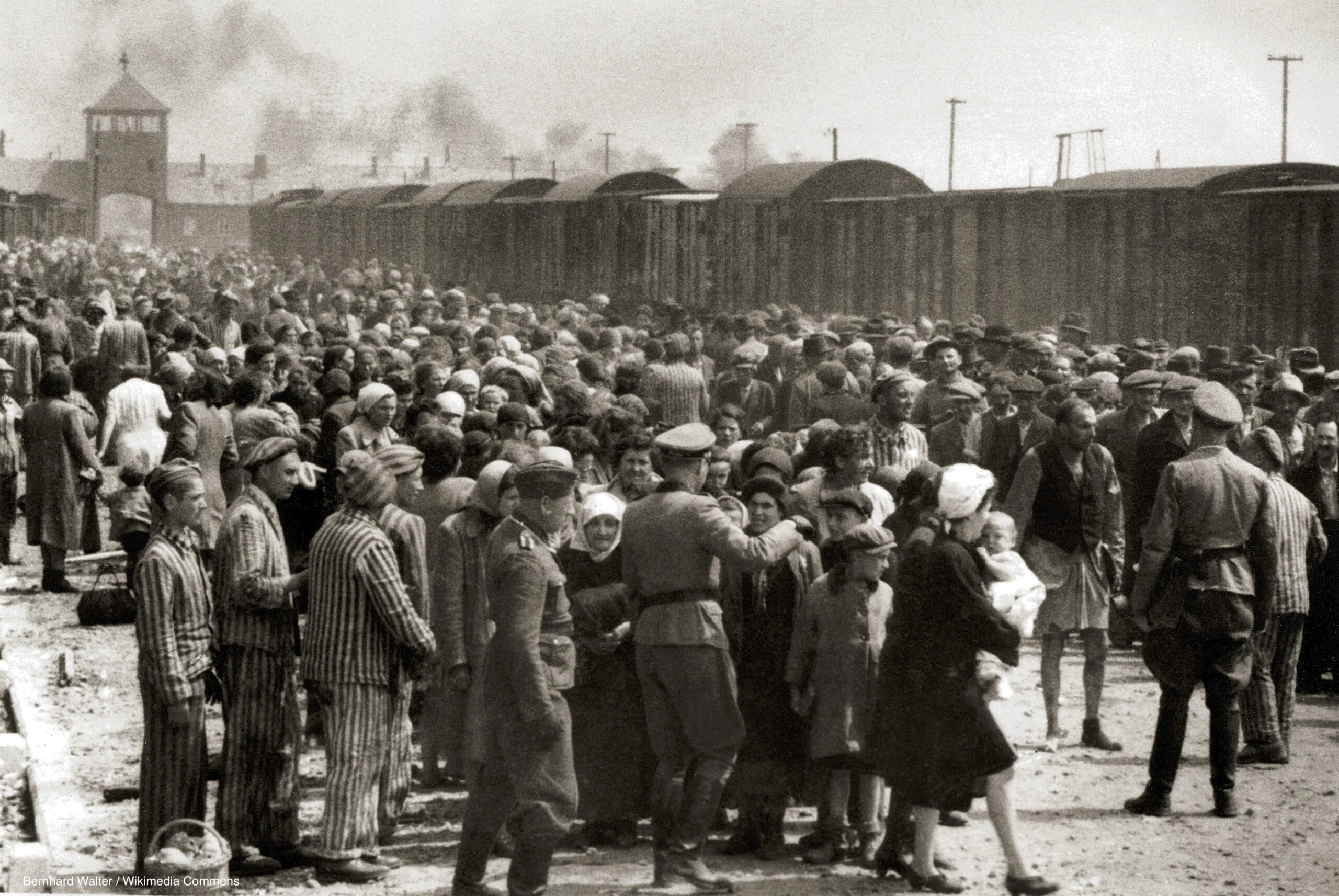
A selection at the ramp in Auschwitz-Birkenau concentration camp 1944.
Unlike at the extermination camps of Bełżec, Chełmno, Sobibór and Treblinka there was from April 1942 a selection at the point of arrival in the camp. Those deemed unfit for work were sent straight to the gas chambers.
In the summer alone, 10,000 Hungarian Jews arrived every day and the confusion at the ramp was extreme. Jews from the Łódź Ghetto also arrived in the summer of 1944.
Lieb Wieder, later Ivor Wieder, was 12 years old when he was deported in March 1944 to Auschwitz II-Birkenau from Sighet in Romania.
Ivor Wieder after the liberation.
“The doors of the cattle wagon full of men, women and children slammed open and there was tremendous confusion. We were greeted by soldiers with long sticks in their hands and barking dogs, shouting, ‘Araus, araus! (Get out of the trains!) As soon as our feet touched the ground, we were immediately separated, men on one side, women on the other. They wouldn’t even let you say goodbye to each other. We had to leave behind all our belongings. There were thousands of people coming in, train after train after train.
My younger sister, Reizel, was with my mother, and they were sent straight to the crematorium. Anyone with a baby or a young child went straight there. I never saw my mother or sister again. I saw them go off and I never got to say goodbye. Selection. That’s my life story.”
The Boys’ Families
Some of the Boys’ siblings and cousins and occasionally one of their fathers or uncles were also selected for slave labour. Most of the Boys’ mothers, grandparents and many of their younger brothers and sisters, as well as their nephews and nieces were sent to be gassed.
There were three crematoria that were situated between 800m-1km from the main gate. Victims were led underground into an undressing room, where banal announcements about cleanliness were broadcast. They were told to leave their clothes on the pegs provided and proceed to the showers. The ‘shower room’ was then sealed.
Zyklon B was released into the room via four installations. The SS then watched the people die through a peep hole. Ventilators then sucked out the gas and the doors leading out were opened. The whole process took 20 minutes. The corpses were then removed by the Sonderkommando. They were kept in strict isolation and had a life expectancy of only a few weeks.
There are accounts of groups of those condemned to die fighting back.
“When we got off the cattle truck, they ordered, ’Men, right; women, left’. I was a child. I was thirteen years old. I went with my father. My little sister, Esther, she was sent with my mother. Esther was only eleven. She was holding my mother’s hand. When they made a selection of women, Esther clung to my mother. My mother wouldn’t give her up. Had my mother let go of her hand, she would have lived. She wouldn’t give her up. They went straight to the gas chamber.”
Maurice Vegh, quoted in Martin Gilbert, The Boys: The Story of 732 Young Concentration Camp Survivors (Weidenfeld & Nicholson, 1996).
Slave Labour
Those selected for slave labour were then taken to the main camp bathhouse, known as the ‘sauna’. Here their personal possessions were taken from them, their heads were shaved, they were disinfected, tattooed and given prison clothing.
As the Boys’ testimonies confirm the process was brutal and the nudity was shocking especially for observant Jews. A second selection sometimes took place at this point. The ‘sauna’ was also used to disinfect clothes.
Auschwitz was the only place where tattooing was done, but from the summer of 1944 it was sometimes not carried out.
Most of those selected for slave labour died after three to four months in what was referred to in Nazi documents as ‘extermination through work’.
Auschwitz III was a labour camp attached to the IG Farben factory, one of the biggest chemical companies in Europe. The Boys who were taken to the camp as slave labourers were selected in Auschwitz II-Birkenau from various transports between 1942-44.
History
Auschwitz III was the first concentration camp set up and paid for by a private company. The factory was operated by Nazi Germany from 1942-45. The camp had between 25,000-35,000 male prisoners.
It produced buna, a synthetically produced rubber made from coal. Other German factories also used slave labourers from the camp and located their factories nearby. I.G. Farben chose the spot as it was close to natural resources, safe from Allied bombing raids and had immediate access to slave labour.
Until 1943, Monowitz was a subcamp of Auschwitz, KZ Auschwitz III-Aussenlager. It was renamed Monowitz in November 1944 and took its name from the village of Monowice, Monowitz in German, where it was located. The village had been razed and the Polish population expelled.
From 22 November 1943, Auschwitz III-Monowitz oversaw the industrial subcamps of Auschwitz.
Structure
Monowitz had about 12,000 prisoners of whom by 1944, 90% of the labourers were Jewish. Life expectancy was three-four months.
The 59 barracks at Auschwitz III were overcrowded like those in Birkenau; however, those in Monowitz had windows and heating during the winter. Food rations were marginally better than in other parts of Auschwitz.
The commandant throughout the entire existence of the camp was SS-Hauptsturmführer Heinrich Schwarz. He had 440 SS men at his disposal.
Between 25,000 to 30,000, died of overwork, starvation, hypothermia or were killed at the construction site, or fell victim to a selection and were sent to the gas chambers.
In the last year of the was the Allies bombed the I.G. Farben factories at Monowitz four times.
Meir Novice c 1946.
“At Buna we worked daily for the next five months or so, until Auschwitz was liquidated when the Russians were approaching from the east. Details of living and working conditions at Buna are very well described by Elie Wiesel in his book Night. Coincidently, Elie Wiesel was in both Auschwitz and Buchenwald at about the same time as my cousins and I. His description of life there at that time applied to us also. (The difference between his experience and ours was that I had already had four years of Nazi experience. Elie Wiesel came fresh from Hungary where his troubles started in the spring of 1944.)
I want to bear witness that all the experiences described so well by him were experiences that I also had. I, too, experienced the beatings, the starvation, stood through innumerable assemblies in extreme cold, in pyjama like garments, four hours on end. I saw hangings, had to get used to seeing the piles of bony corpses and the smell of the crematoria at Birkenau, experienced the “selections” and saw people die in front of me.”
Michael Novice quoted in Martin Gilbert, The Boys: The Story of 732 Young Concentration Camp Survivors (Weidenfeld & Nicholson, 1996).
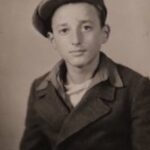
Ivor Perl in 1945 after the liberation.
“As I was working in the ditch, I noticed the camp next to ours consisted of young children that were all twins … Not far from the twin’s camp, I saw a big building with fire belching out of huge chimneys. When I asked one of the people working with me what the building was used for, he said it was a bakery. Either he did not know the building’s true purpose, or he thought I was too young to be told, but I did not believe him when he said it was for baking bread. Somehow, I sensed something more sinister, and it did not take long to find out the true reason for the flames coming from those chimneys.”
Ivor Perl, Chicken Soup under a Tree: A Journey to Hell and Back (Lemon Soul, 2023).
When the Red Army scouts arrived at the gates of Auschwitz in January 1945, in a barracks alongside a stack of frozen corpses were a group of tiny starving children.
They had been selected at the ramp for medical experimentation by Dr Mengele and his team. For months the pyramids of bodies had been a mundane backdrop to the games they played with pebbles in the dirt outside. The soldier who found them immediately took out a small wooden board and cut slices of salami from his rations and handed them to each one.
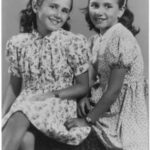
Tatiana and Alessandra Bucci in the Weir Courtney hostel.
“Our memory of the ten months we spent in the camp is of an apparent normality. Of course, it was a normality that was constructed only in our minds. Two little girls, alone in an unknown place, with adults we’d never seen before. Fear must have been inevitable. But in our memory it was replaced by that sense of normality that children often create to defend themselves in the face of the most terrible events, the unexpected. Andra attributes that sensation to Tatiana’s protectiveness toward her. Tatiana was the older one, so maybe Mamma had told her to take care of her younger sister, or maybe it was instinctive. Probably both. The fact is that the entire time we stuck to each other like a stamp to a postcard.
But fear erupts aggressively when, every so often, an adult wearing a white coat enters the barrack to take away some of us children. At the time we knew nothing about the medical experiments. All we saw was that some children went away and didn’t come back. Those who were taken didn’t return. That was very clear to us. And our fear became terror.”
Andra & Tatiana Bucci, Always Remember Your Name: The Children of Auschwitz (Manilla, 2022).
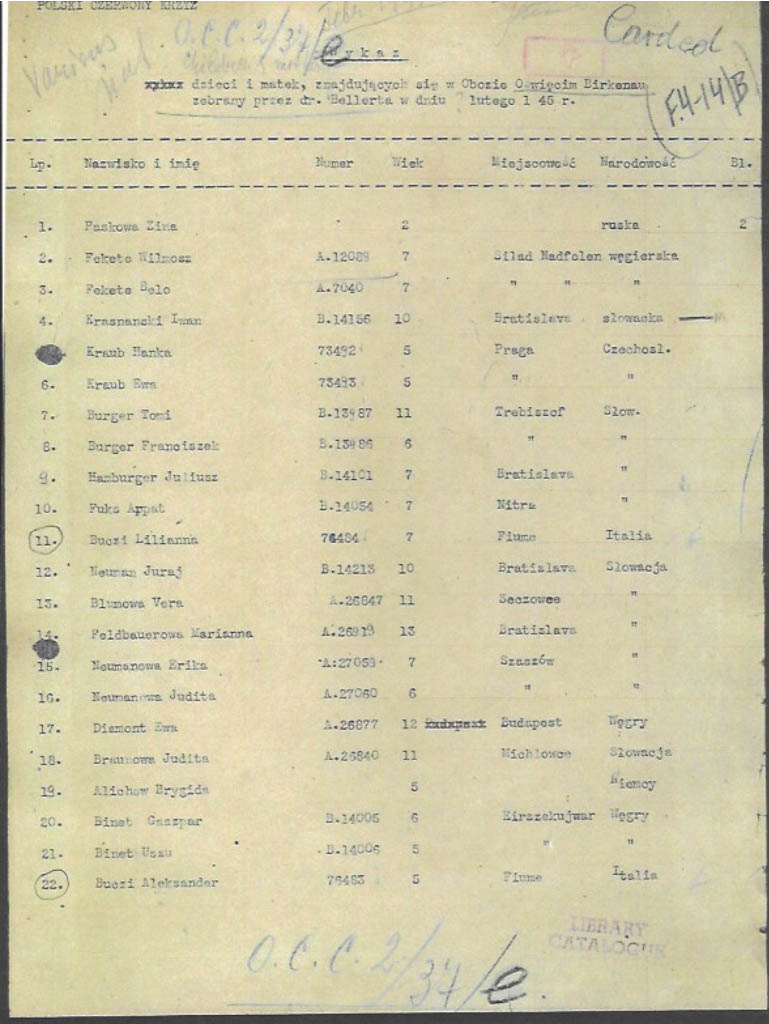
Immediately Auschwitz was liberated, Dr Jozef Bellert a member of the Polish underground assembled a group of Red Cross volunteers and went to the camp.
From Birkenau he took the surviving children to Katowice where they were cared for by Caritas, the Catholic charity.
The Jewish children were then handed over to the Jewish Committee in Krakow.
The city was a dangerous place. Survivors were violently attacked in the streets and in the synagogues, so the children were moved to Jewish orphanages in the Tatra Mountains and from there to Košice in Slovakia.
Five of those children aged between six and eleven years old would become members of the Boys and be brought to the UK. They were:
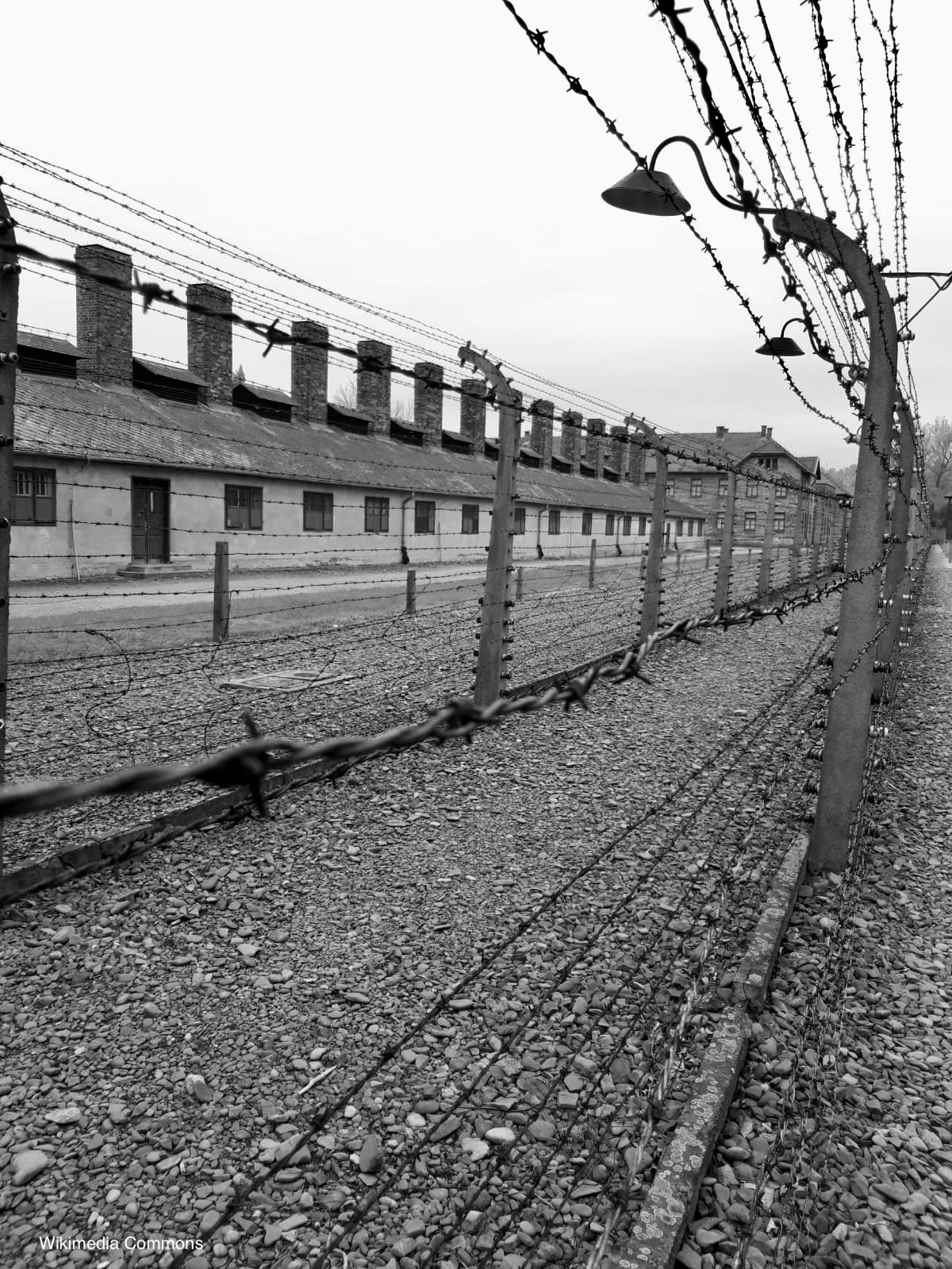
The former Auschwitz concentration camp.
What Did The World Know?
Two Jewish prisoners, Alfred Wetzler and Rudolf Vrba (Walter Rosenberg), escaped from the camp and returned to their native Slovakia, where they warned the Slovakian Jewish Council of the mass murder they had witnessed.
Vrba had worked in Kanada, where victim’s possessions were sorted, and at the Alte Judenrampe and had memorised the transports he saw arrive over a two-year period.
Watching the Jews step down from the train, he soon became aware that Auschwitz relied on the Jews’ ignorance of what awaited them to function efficiently. This realisation made him determined to warn the Jews of Hungary who were yet to be deported.
Wetzler and Vrba’s report reached the World Jewish Congress in June 1944 and was seen by Churchill and Roosevelt. World leaders appealed to the Hungarian leader Horthy who stopped the transports.
The two men thus saved 200,000 lives, even if all of those Jews did not survive the war.
The BBC broadcast some of the details as did the American and Swiss press. In June 1944, American reconnaissance flights took pictures of the complex that were so detailed it was possible to see people walking towards the crematoria.
Public interest was however limited, and the Allies took no action. Incredulity, antisemitism and strategic considerations all played a part.
Dissolution & Liberation
As the Red Army approached the SS guards blew up the crematoria and burned much of the paperwork in an attempt to hide the Nazis crimes.
Then on 18 January 1945, all prisoners in the Auschwitz complex whom the Nazis considered capable of walking were sent on a death marches.
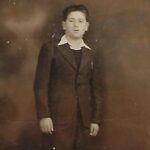
Arek Hersch in 1946.
“This was a very severe winter. We had no way of keeping warm except to continue moving. At about three o’clock in the afternoon, when it was already getting dark, we heard the noise of heavy guns, ‘It won’t be long now,’ I thought.
Someone said that maybe the Russians would encircle us as we marched, and the guards began to try to speed us up as they were becoming afraid. They would probably have preferred to run off and save their own skins. As we looked back, we saw that the sky was red with fire.
Some prisoners began to falter, malnutrition and exhaustion preventing them from maintaining the pace the guards demanded. Some asked the guards if they could rest for a while, but the guards just pushed them on. Those who could not walk any more were shot in the back of the head by an SS guard who marched at the rear of the column.
I plodded on I was almost falling from exhaustion, but knew there was no respite. At both sides of the road people lay dead, shot for not being able to walk any further, murdered when they were so close to liberation. Those of us who could, kept on walking. We did not know where we were marching to, only that we were leaving Auschwitz behind.”
The complex was liberated by the Red Army on 27 January 1945.
Historians estimate that 1.1 million people were murdered in Auschwitz, about 90% of whom were Jews, half of them women and children.
The exact figure will never be known as the SS destroyed much of the paperwork and the identity of those who were condemned to death was not recorded in the camp. The initial Soviet figure of 4m deaths has been discredited.
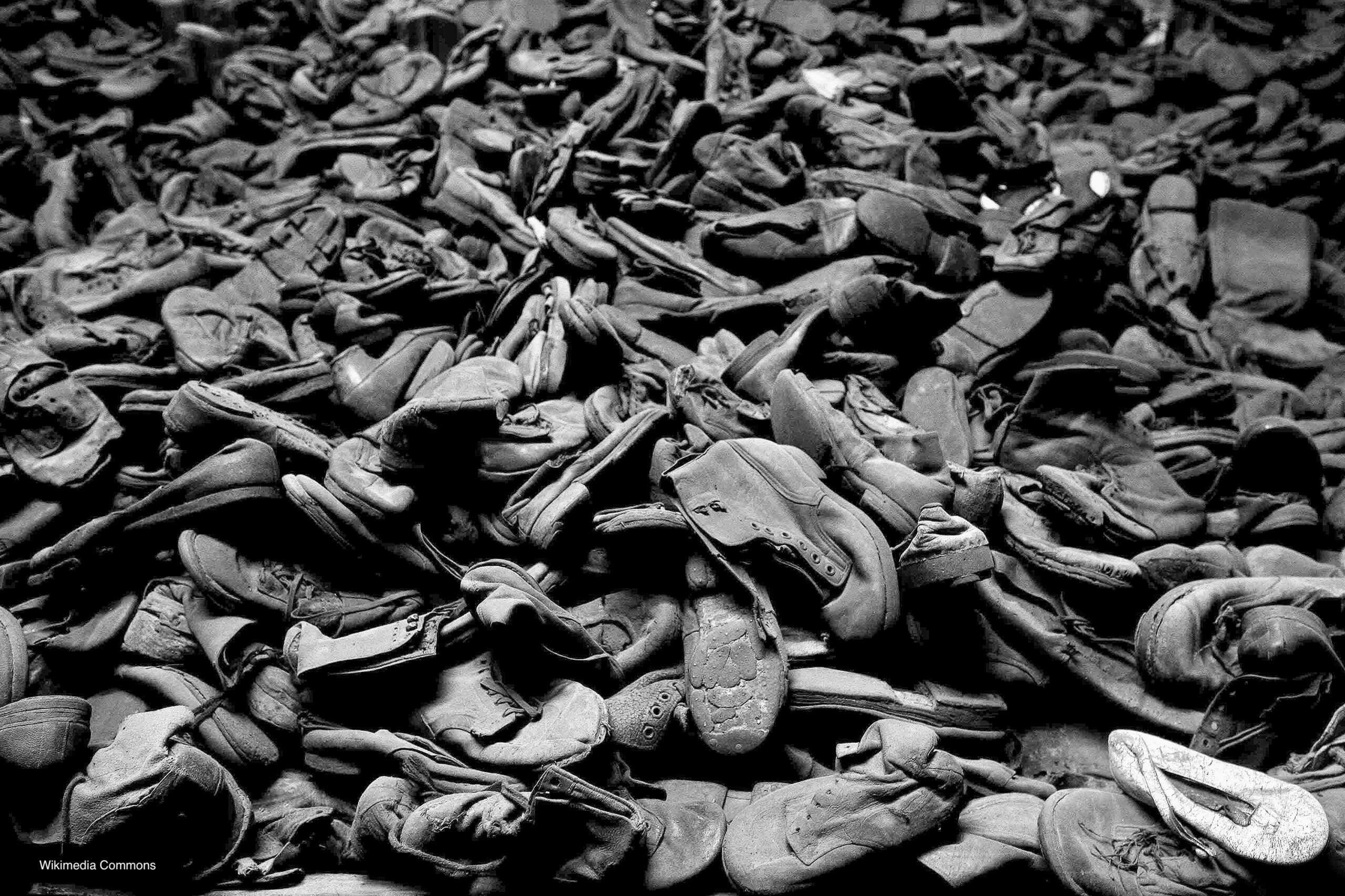
Shoes at the Auschwitz Memorial and Museum in Poland.
Aftermath
Auschwitz was not built for posterity and, in the months after the war, 200 of the wooden barracks were taken down so that the materials could be used for reconstruction.
In February 1945 the Red Army shipped much equipment and machinery from the Buna Werke factory to western Siberia. However, many of the original buildings remained, and the chemical industry was rebuilt on the site after the war. Auschwitz III-Monowitz remains a factory today and access is restricted. There are two memorials to the camp.
About 1,000 SS personnel from Auschwitz were put on trial in Poland after the war. Many had been extradited from Germany. The best known trial was that of the first commandant Rudolf Höss. He was sentenced to death in 1947 and hanged in the former camp.
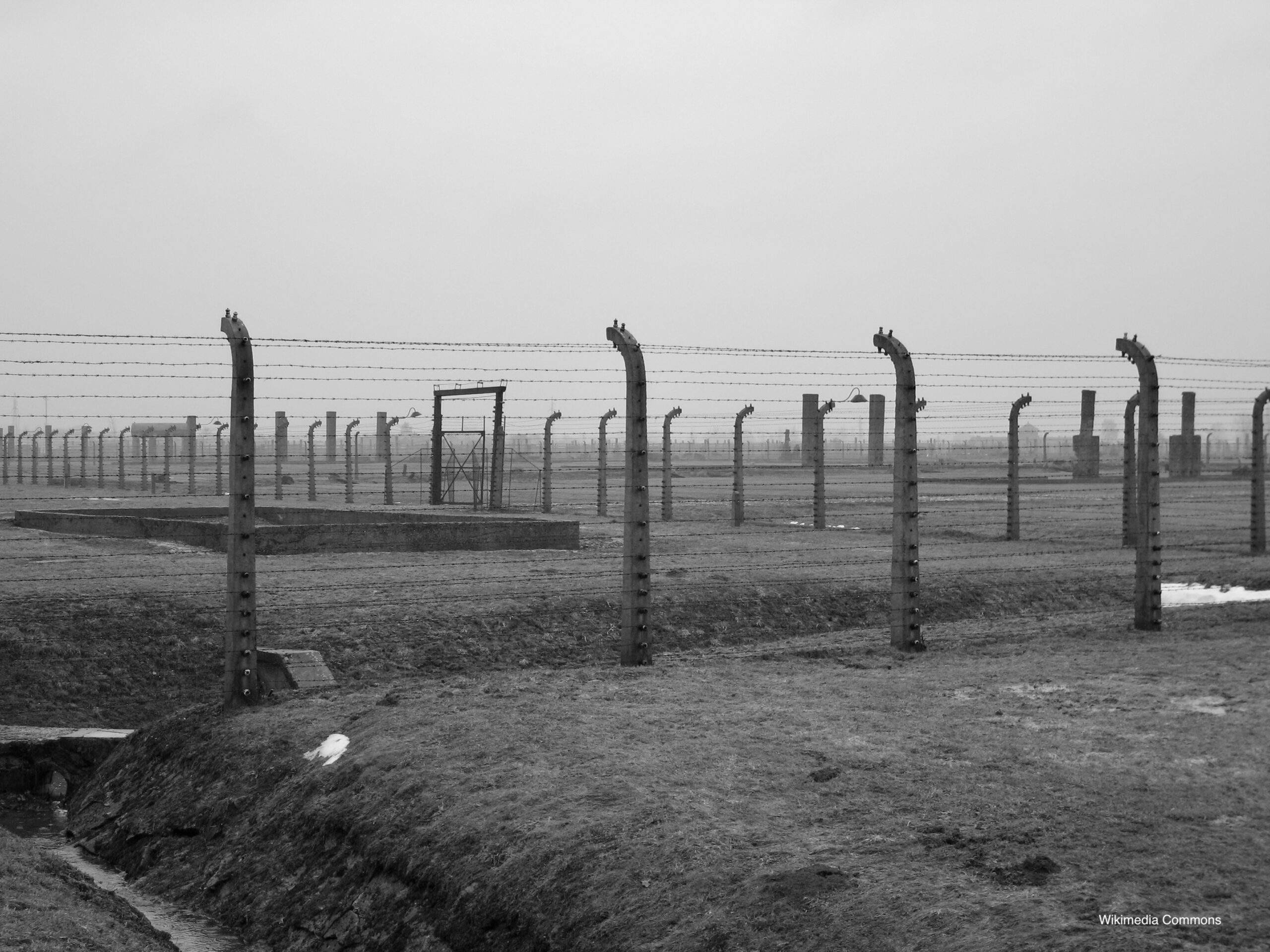
Auschwitz Memorial and Museum in Poland.
Memorialisation
Fearful that the evidence of what happened would disappear, Polish survivors took the initiative and set up a museum in June 1946. That museum, as it does today, centred on the original camp at Auschwitz I, where political prisoners had been held. It received 100,000 visitors in 1946 alone, mainly Poles. It was officially opened by a decree of the Polish parliament in July 1947 and since then 44m people have visited.
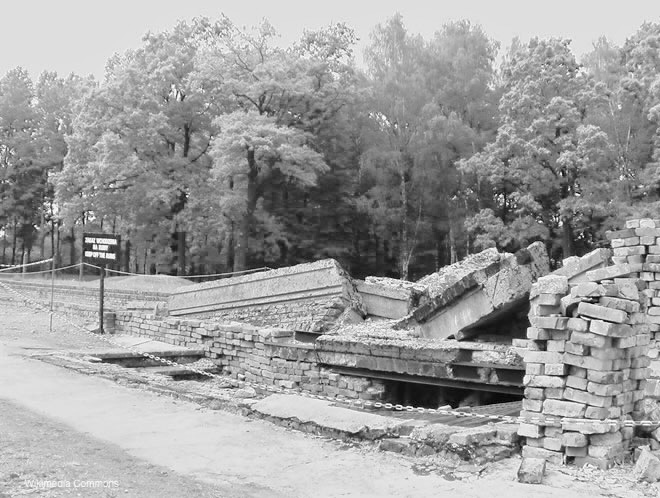
Former gas chamber at the Auschwitz Memorial and Museum in Poland.
 About
About History
 Education
 Quilts
 FIlms
FIlms Photos
 News Media & Events
 Publications
 Donate