
Members of the Boys were slave labourers in the Blechhammer labour camp, a subcamp of the Auschwitz concentration, extermination and labour camp complex.
The Auschwitz complex was operated by Nazi Germany in occupied Poland. The camp had 40 subcamps. Blechhammer was the second largest of the Auschwitz subcamps under the command of Auschwitz III-Monowitz.
The Boys were teenage and child-Holocaust survivors, who were brought to the UK after the war for rest and rehabilitation.
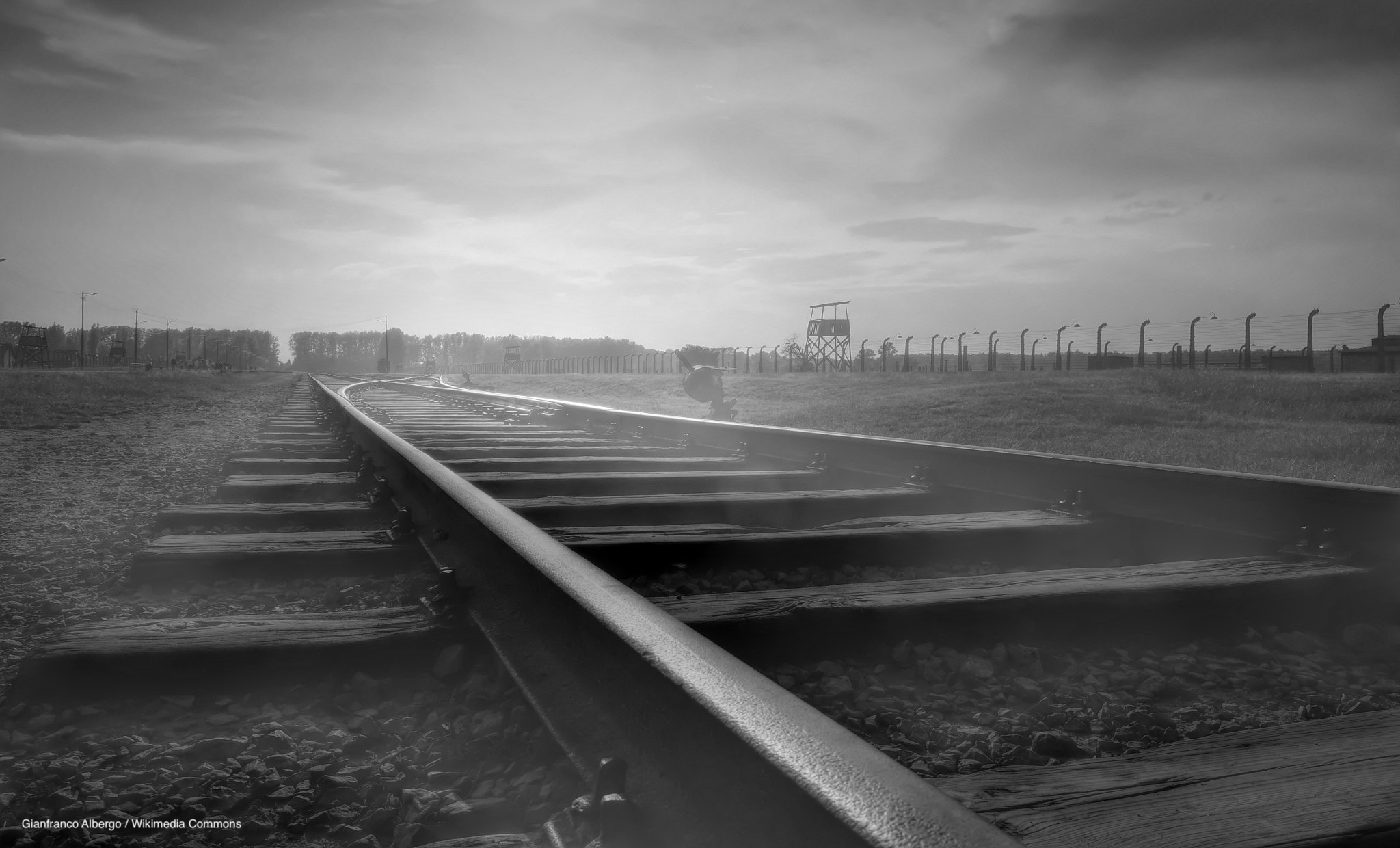
Memorial and Museum Auschwitz Birkenau, Poland.
History
Blechhammer became a subcamp of Auschwitz III-Monowitz in the spring of 1944.
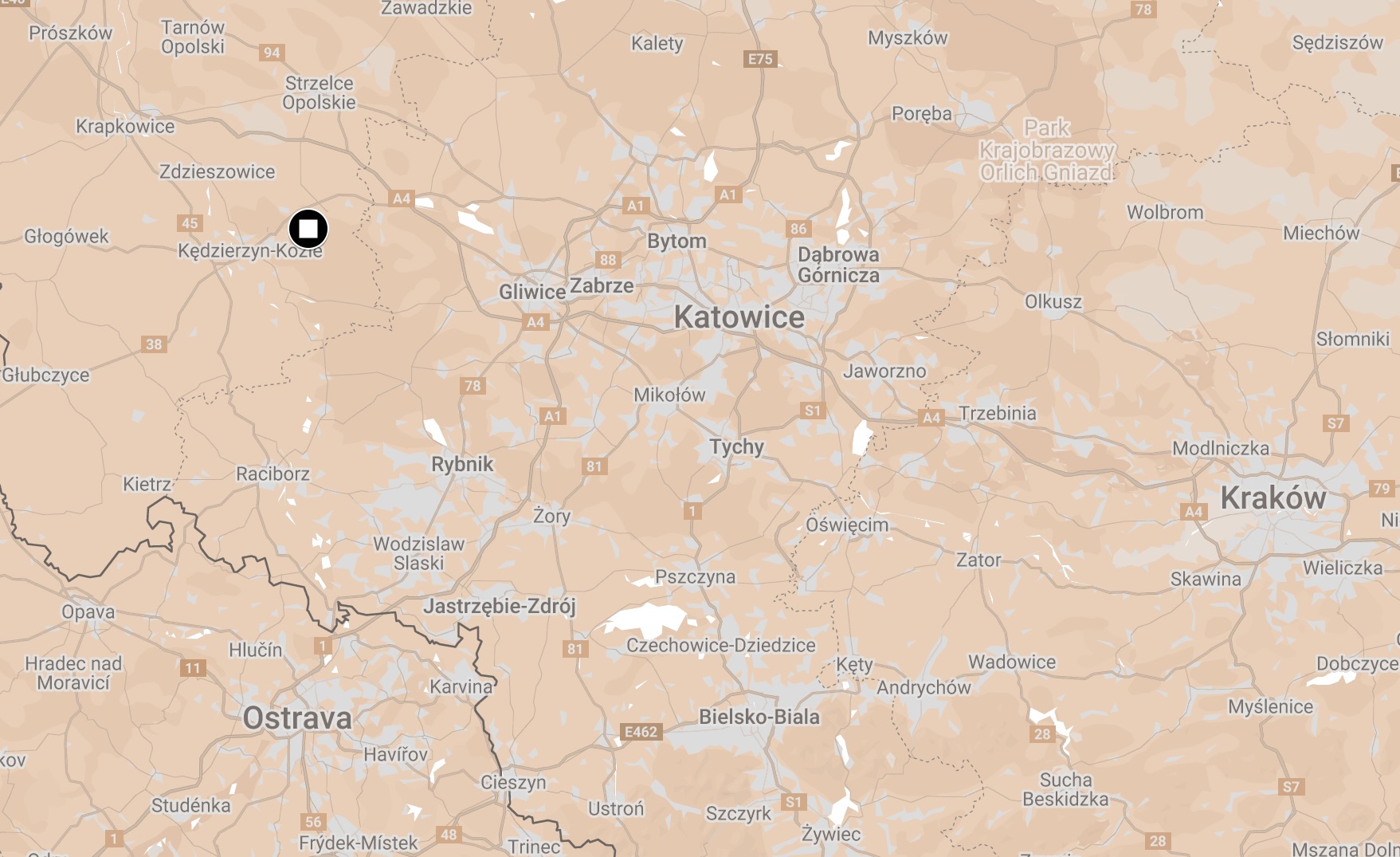
The camp was established on the site of a forced labour camp for Jews that had operated since 1942. It was located near the town of Blechhammer in an industrial area 100km west of the main camp of Auschwitz I, which was located in the nearby occupied Polish city of Oświęcim, which was then part of Germany. Today, it is the Polish village of Blachownia Ślaska.
Approximately 5,000 prisoners passed through the camp. They worked on the construction of the synthetic fuel plant Hydrierwerke run by Oberschlesische Hydrierwerke AG.
Kurt Klappholtz arrived in Blechhammer before it became a subcamp of Auschwitz III-Monowitz. He was 17 years old:
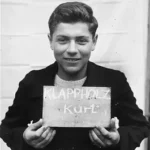
Kurt Klappholz in Kloster Indersdorf, Germany in 1945.
“First of all, the guard now became SS. And the whole administration consisted of SS people … We were lined up to be tattooed, which we had not been until then … And I can still see the barrack, and we lined up … There was a queue of people, and you could see that at the head of the queue or the person who got to the tattooist table was being tattooed. And people would come out and look at their numbers … That’s, I suppose, an obvious reaction. Here suddenly you have a number on your forearm which you didn’t have before.”
“And we were issued with the concentration camp garb, namely the pyjamas, these hats, the corresponding underwear … If I remember correctly, the clogs. They were not French clogs. They were shoes, canvas tops but wooden soles. They were not the French clogs consisting exclusively of wood … Now the other thing that is of importance to me personally is all other belongings were taken away. And to the best of my recollection of it is then that I lost the photographs that I’d had, in particular, the photograph of my father as a lieutenant in the imperial royal army, which I had treasured so much.”
Structure
The camp had 25 overcrowded barracks and was surrounded by a concrete wall. Conditions were similar to other subcamps of Auschwitz. The prisoners were all malnourished and suffered from diarrhoea and tuberculosis.
The SS would periodically conduct selections of prisoners. Those deemed incapable of work were deported to Auschwitz II-Birkenau, where many of them were murdered in the gas chambers.
After the Hydrierwerke plant was bombed, Jewish prisoners were forced to move unexploded ordinance during which many lost their lives. Prisoners also died in the bombing raids.
Dissolution & Liberation
The camp was evacuated on 21 January 1945 as the Red Army approached. The 3,959 male prisoners and 157 female prisoners were issued with 800 grams of bread, a small portion of margarine, and artificial honey for the march. No more food was handed out until the prisoners arrived at Gross Rosen on 2 February.
The march was led by the commandant SS-Obersturmführer Kurt Klipp. About 6,000 prisoners on death marches from Gleiwitz and Jaworzno passed through the camp among them Gerson Frydman and Issy Hahn. They walked from Blechhammer through Kole – Neustadt – Glucholazy – Neisse – Otmuchow – Zabkowice Slaskie – Schweidnitz – Strzegom. Approximately 800 prisoners who were unable to walk or tried to flee were shot.
The prisoners remained in Gross-Rosen for five days before being taken on 6/7 February by train to the Buchenwald concentration camp. On the way the train was attacked several times by Allied Fighter Planes, which caused many deaths.
Shortly before the liberation of Blechhammer by the Red Army, the SS torched, shelled, and tossed grenades into the camp barracks, in which sick prisoners had been left behind.
Aftermath
The camp was used briefly by the Soviet authorities to hold German prisoners. After its closure the camp was dismantled probably so the wood could be used for emergency housing. The factory still produces petrochemicals.
 About
About History
 Education
 Quilts
 FIlms
FIlms Photos
 News Media & Events
 Publications
 Donate