Members of the Boys were slave labourers in the Braunschweig labour camp, a subcamp of the Neuengamme concentration camp in Hamburg, Germany.
Neuengamme was operated by Nazi Germany. The camp had 99 subcamps.
The Boys were teenage and child-Holocaust survivors, who were brought to the UK after the war for rest and rehabilitation.
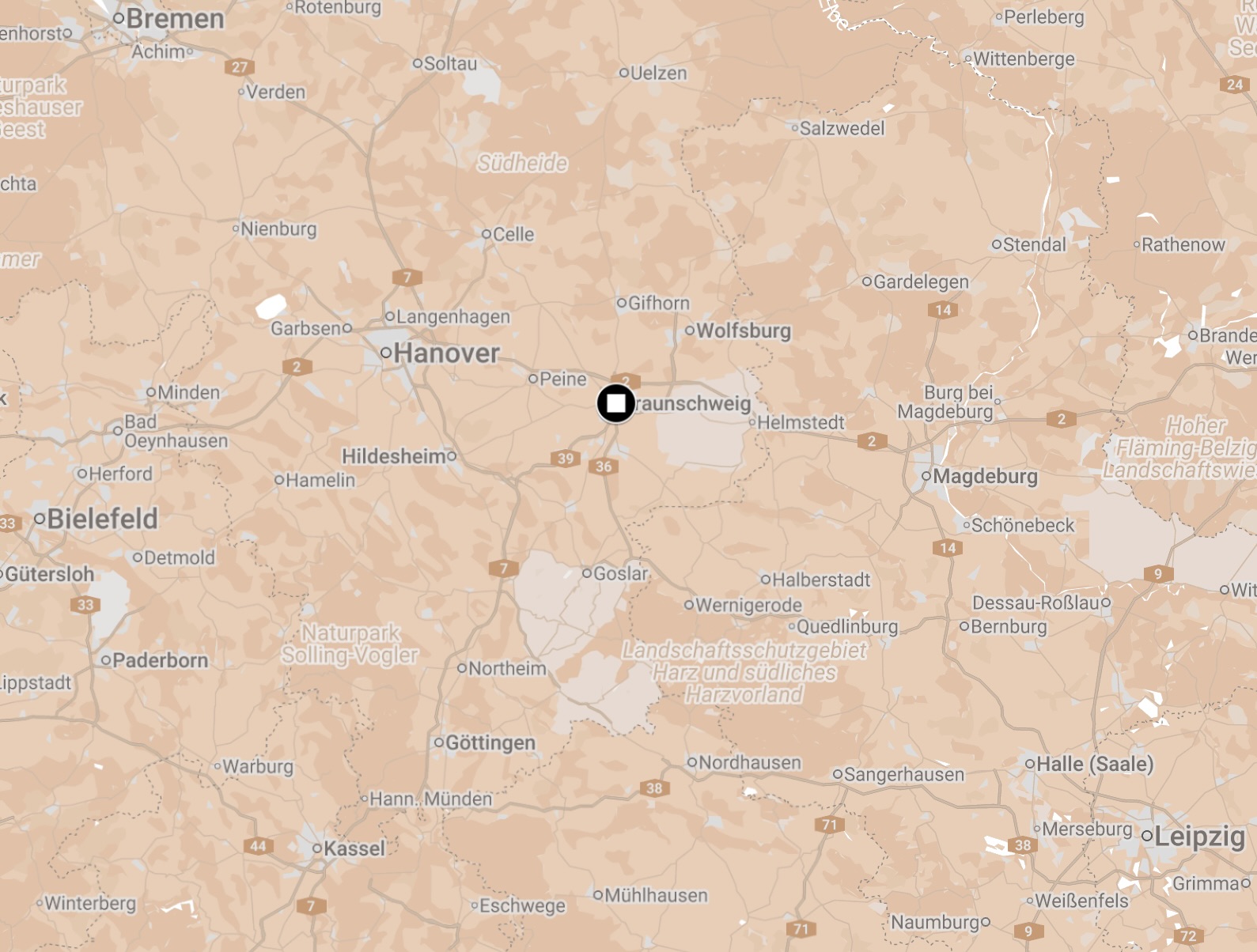
 The camp was operated by the armaments company Büssing-NAG Vereinigte Nutzkraftwagen AG.
History
In 1944, the company requested prisoners from Neuengamme concentration camp to manufacture parts for lorries for the Wehrmacht. Then in September and November 1944 representatives of Büssing NAG went to Auschwitz II-Birkenau extermination and concentration camp to select 1,250 slave labourers.
Prisoners were transferred from Auschwitz to Braunschweig in three transports. Next to the selection table a bar was put up to measure the height of the prisoners. Those not tall enough were rejected from the transport. Many of the prisoners taken to Braunschweig had been deported to Auschwitz from the Łódź Ghetto. Among them were David Kestenberg, Israel Gasfreund, Abraham Pawlowski, Mordka Litwin and Yankel ‘Jack’ Bart. Those selected in Auschwitz also included Hungarian and Czech Jews among them Gabor Kohn.
Structure
Five huts were set up for a satellite camp on Wörthstrasse (now Schillstrasse) near the main factory. The company also erected another satellite camp in Vechelde for production outside of the city to avoid bombing raids.
Prisoners worked day and night shifts and had to walk 1.2km to the factory before their 12-hour shift began. One of the Boys Jerzy Herszberg recalled, “The work in the factory, however, was fairly easy, and often, when the supply was low, we had nothing to do. . . . But we had to be alert at all times as a loss of concentration resulted in paying a high price. Clearly, a 12-hour shift, 7 days or nights, in alternate weeks, was exhausting, and I felt an acute lack of sleep.”
The subcamp was set up for approximately 300 prisoners, but at times more than twice that number were held there. Consequently, the conditions in Braunschweig were very poor. The prisoners were almost constantly covered with lice. There was no soap and only cold water for showers. The bowls in which the thin soup was served were never washed.
The atmosphere was extremely violent. Herszberg, who was among the Boys who had been brought from Auschwitz, later said, “Braunschweig was the worst camp I stayed in. . . . The rumours were that the Kapo in charge of the camp had been previously a hangman in Dachau . . . and I can recall at least six [Kapos], memorablefor their sadism. . . . They never seemed to tire of torturing and humiliating us.”
Some prisoners wore striped camp clothing from Auschwitz while others were in civilian clothes with a striped patch sewn on the back. The factory work was extremely dirty and the prisoners’ clothes were soon filthy. No change of clothes was issued.
Dissolution
When the camp was dissolved in March, the prisoners were marched to the Watenstedt satellite camp. On 7 April, they were moved by train Ravensbrück arriving on 14 April. When Ravensbrück was evacuated at the end of April, the men were forced to march further on foot. A large number of them including the Boys were taken on another transport to the Wöbbelin-Ludwigslust camp, where the survivors were liberated by American troops on 2 May 1945.
 About
About History
 Education
 Quilts
 FIlms
FIlms Photos
 News Media & Events
 Publications
 Donate