
Members of the Boys worked as slave labourers in the HASAG armaments factory in Flössberg, a subcamp of the Buchenwald concentration camp.
Buchenwald concentration camp was operated by Nazi Germany. The camp had 139 subcamps.
The Boys were teenage and child-Holocaust survivors, who were brought to the UK after the war for rest and rehabilitation.
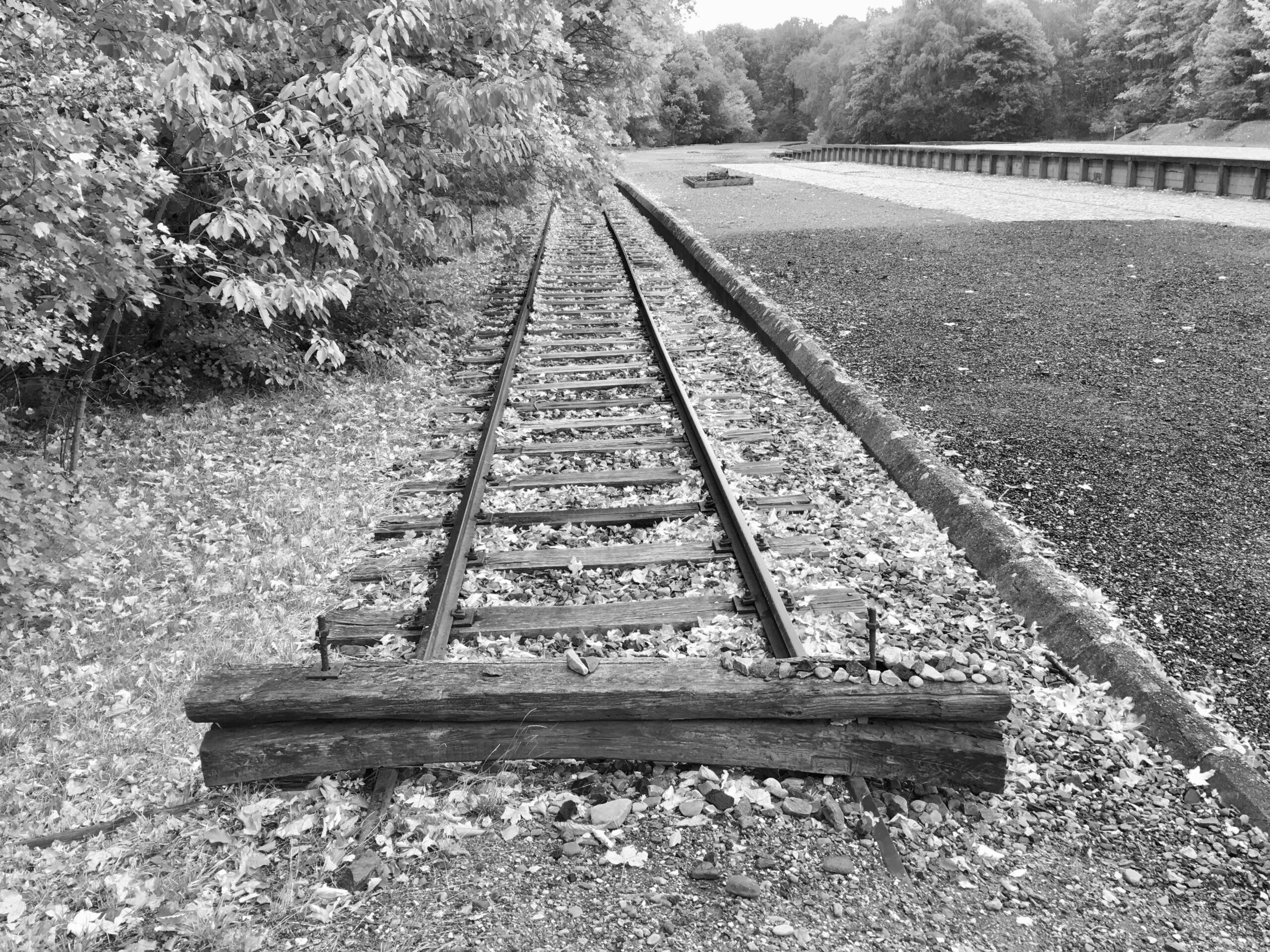
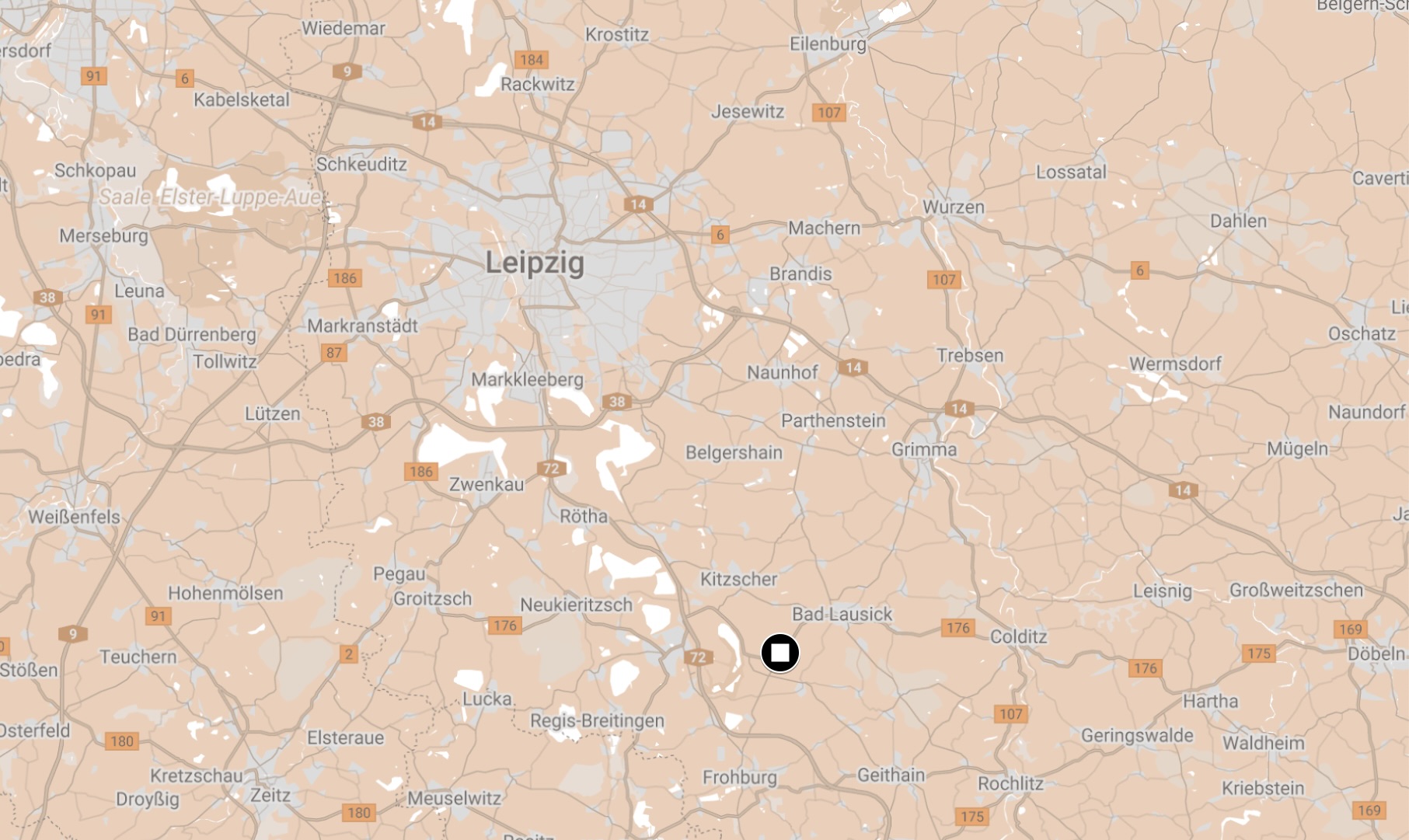
The camp was located in a forested area near the village of Flössberg, approximately 34km southeast of Leipzig, in Saxony, eastern Germany.
In the Third Reich, the German Leipzig based company HASAG, Hugo Schneider AG, became a Nazi arms-manufacturing conglomerate with dozens of factories across German occupied Europe. From 1934, the company produced increasing quantities of munitions, primarily grenades and, toward the end of the war, the Panzerfaust, an important antitank weapon. They used slave labour on a vast scale and tens of thousands of Jews from Poland died producing armaments in HASAG factories.
The Boys worked as slave labourers in the HASAG armaments factory in Flössberg as they had previously in other locations in occupied Poland.
History
The camp held about 1,900 prisoners, primarily Polish and Hungarian Jewish men and boys. Very little documentation survives about the camp’s operation or structure.
It is known that at first the prisoners were kept busy with the construction of the camp and production facilities close to the camp. They had to carry rails and lay the bed for the railway tracks as well as lay a company railway line. Survivors have talked about leveling the ground and transporting building materials for the construction of factory buildings and barracks in the forest.
In addition to construction work, the HASAG prisoners, especially in March 1945, were used outside the camp after Allied bombing raids on the factory facilities in the forest. They were used to clean up and disarm unexploded bombs in the nearby manor of Beucha.
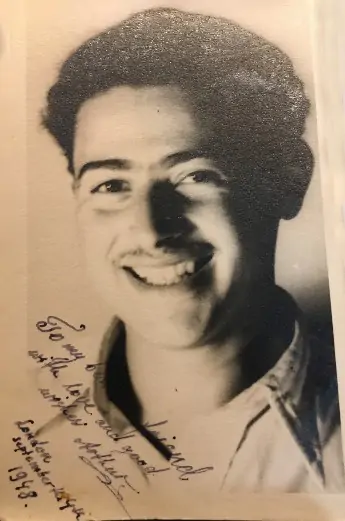
“The camp was built in a forest, was very swampy, and we had to walk in deep mud to and from work … The German commandant was an absolute sadist. He derived great pleasure from beating us over our heads with a stick as we passed through the gates on the way to work. None of us believed that we would come out alive from that place. By some miracle I made friends with a boy of similar age, who helped me enormously to keep my morale there. My friend had a most wonderful voice and very often we would sing together to while away our painfully hungry time.
Alec Ward quoted in Martin Gilbert, The Boys: The Story of 732 Young Concentration Camp Survivors (Wiedenfeld & Nicholson, 1996). Ward was then 17 years old. His friend was Arthur Poznanski.
Dissolution & Liberation
As the Allied front approached, the prisoners were transported by death train to Mauthausen concentration camp in Austria. The journey took 15 days in brutal conditions. Arthur Poznanski jumped from the train and escaped.

 About
About History
 Education
 Quilts
 FIlms
FIlms Photos
 News Media & Events
 Publications
 Donate