
Members of the Boys were slave labourers in the Flossenbürg concentration camp in the former Sudetenland.
Flossenbürg concentration camp was operated by Nazi Germany.
The Boys were teenage and child-Holocaust survivors, who were brought to the UK after the war for rest and rehabilitation.
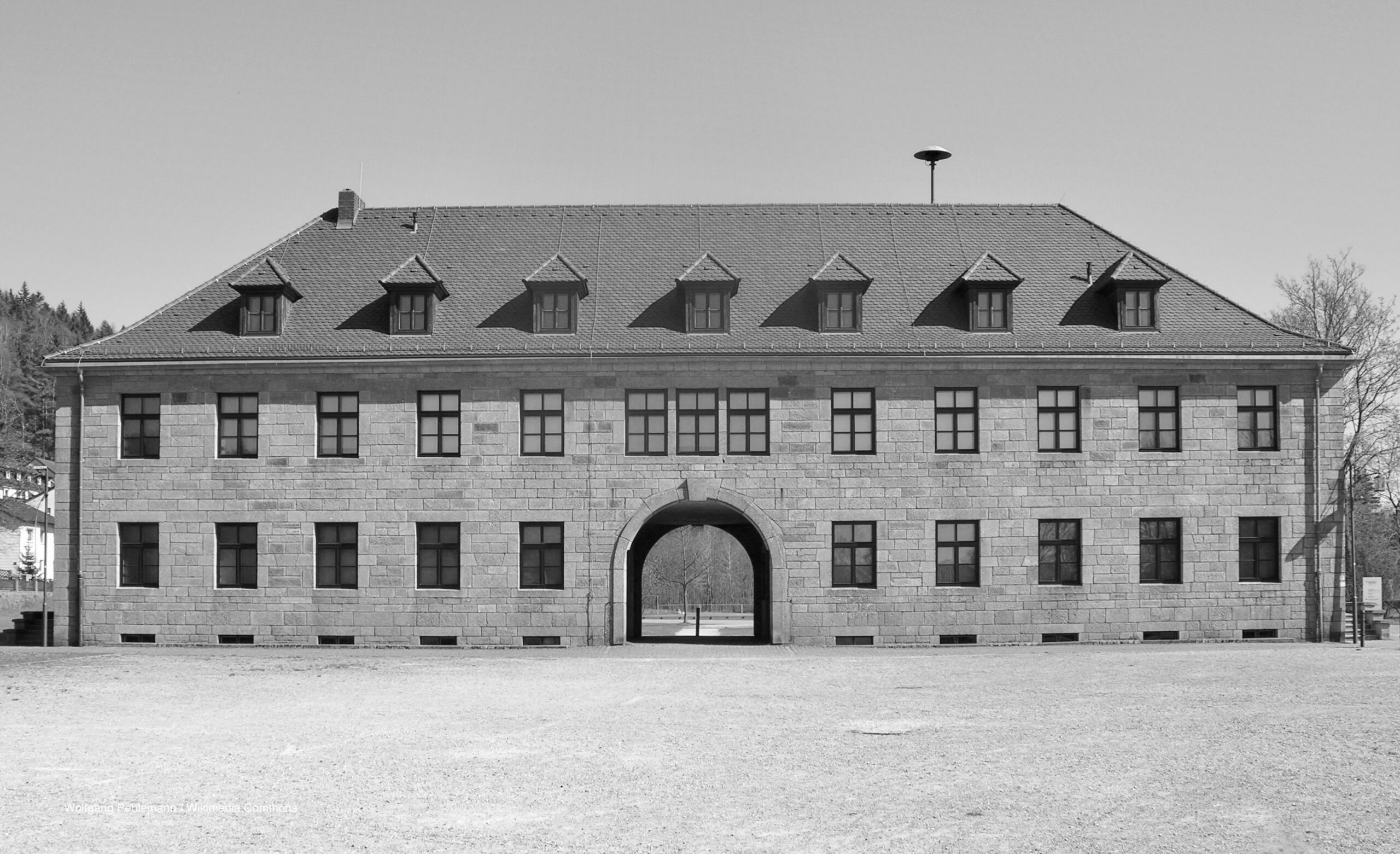
The former Flossenbürg concentration camp.
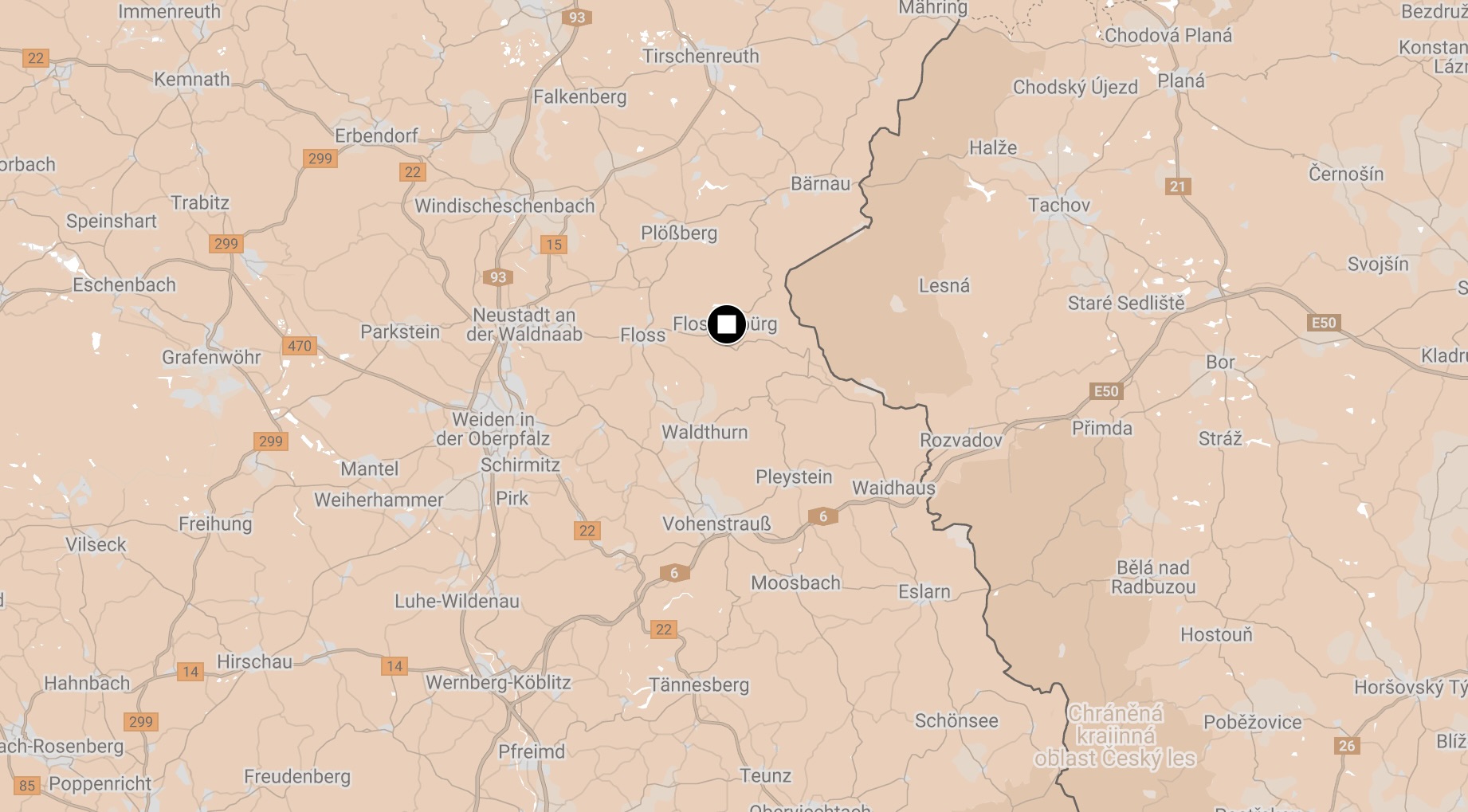
The camp was a Nazi concentration camp run by the SS. It opened in May 1938. It was located in the remote Fichtel Mountains in Bavaria near the German border with Czechoslovakia. It originally housed political prisoners and those considered ‘asocials’ by the Nazi Party.
History
Prisoners were initially set to work in the adjacent granite quarry but by 1943 most prisoners had been put to work producing armaments and aircraft. Granite was in high demand for the construction of monumental Nazi buildings.
The first foreign prisoners were Czech and Polish resistance operatives. In February 1943. The camp’s population was 4,004 prisoners but in 1944 Flossenbürg’s population grew to over 40,000 and it acquired a system of subcamps designed to exploit slave labour. Many members of the Boys were to find themselves in these subcamps.
Before 1944, few Jews passed though Flossenbürg. The Boys arrived in Flossenbürg in the final months and weeks of the war as they were evacuated by death march from other camps, notably Auschwitz, Gross Rosen and Kraków-Płaszów. They were among over 25,000 prisoners who arrived on the marches.
The vast number of prisoners transported to Flossenbürg in late 1944 and early 1945 meant the camp fell into a state of disarray.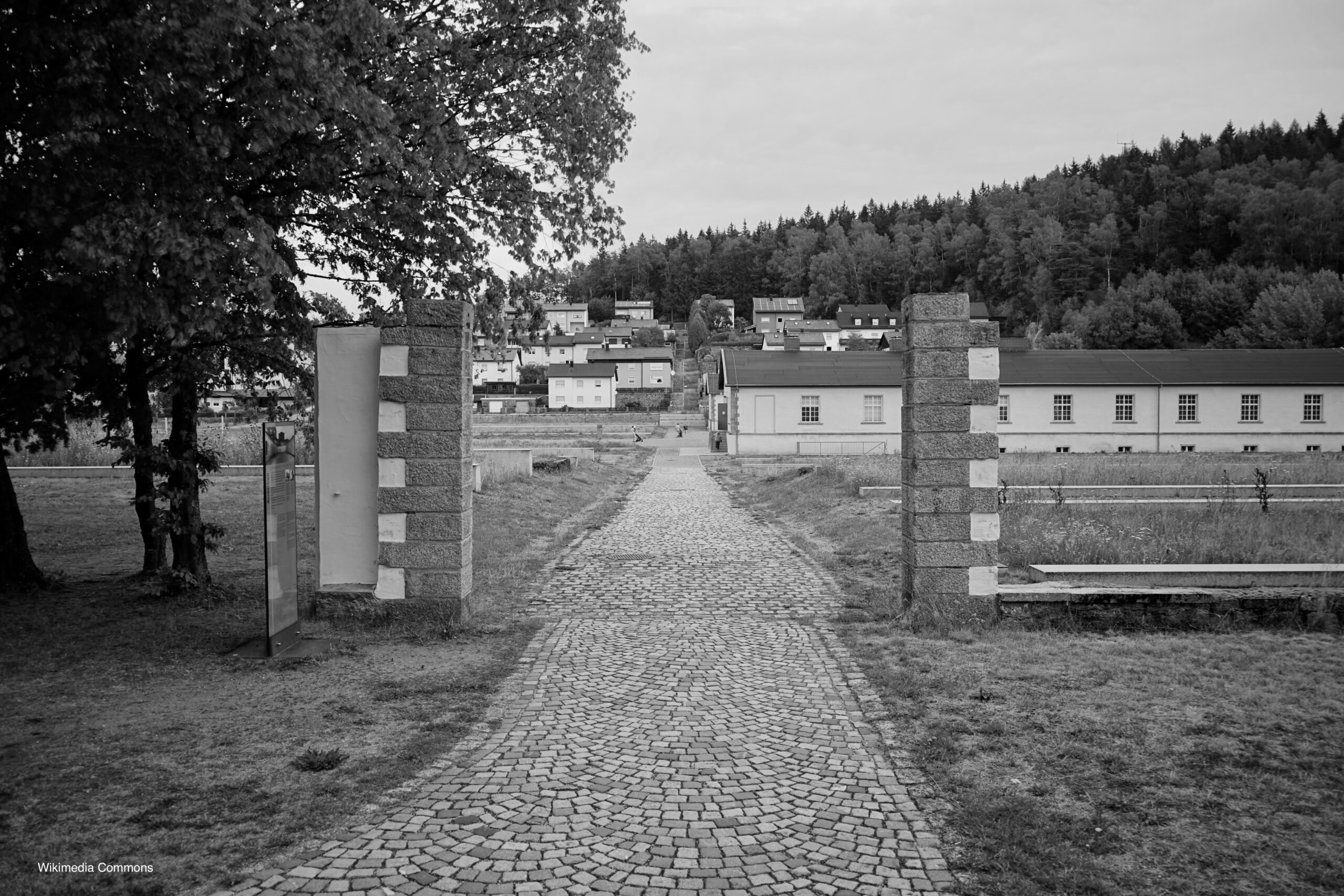
Dissolution & Liberation
As the American army approached in mid-April 1945, the SS began the mass evacuation of the camp on a death march to Dachau. Of the 9,300 prisoners, it is believed that 7,000 died along the route. Many of the Boys survived this death march.
American soldiers liberated the camp in April 1945.
Aftermath
After the war, 52 former SS personnel and officials from Flossenbürg were tried by a U.S. military tribunal at Dachau, from 1946 to 1947. Seven had charges dropped and five were acquitted, while the remainder received death sentences, life terms, or shorter prison sentences.
Many lower-ranking guards, however, were never prosecuted, due to lack of evidence or because they fled and avoided capture.

 About
About History
 Education
 Quilts
 FIlms
FIlms Photos
 News Media & Events
 Publications
 Donate