
Member of the Boys were taken as slave labours to the Fünfteichen labour camp, a subcamp of the Gross Rosen concentration camp.
The Gross Rosen concentration camp was operated by Nazi Germany. The camp had 100 subcamps located in what is now Czechia, Germany and Poland.
The Boys were child-Holocaust survivors, who were brought to the UK after the war for rest and rehabilitation.
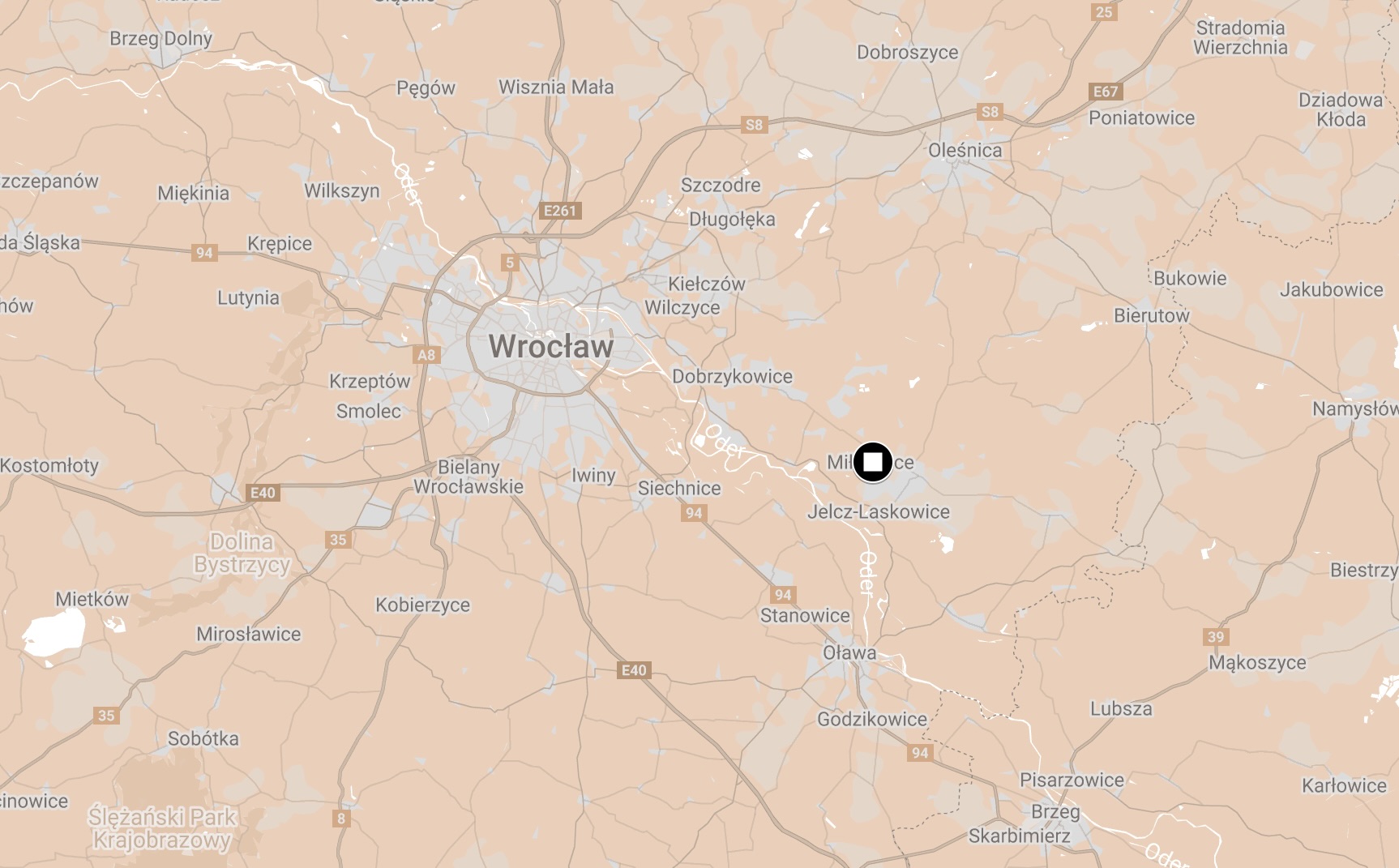
The Fünfteichen subcamp was located in what was then Germany but is now Miłoszyce near Wrocław in Poland.
History
The camp was set up as an armaments plant for the Maschinenfabriken Friedrich Krupp Berthawerk AG. Construction of the Krupp factory buildings began in early 1942 and production commenced by early 1943. Slave labour was used from 1 July 1943. The camp was the largest sub-camp of Gross Rosen and located about 3km from the factory.
The Fünfteichen camp received its first large prisoner transport in late September or early October 1943: a transport of approximately 600 Polish Jews from Auschwitz. More prisoner transports arrived at the camp in subsequent months.
There were 1,200 prisoners in the camp on February 2, 1944, though it could already hold 4,000 to 5,000 men. Prisoner accounts tell us that between 6,000 and 7,000 prisoners were in the camp near the end of its existence. Many were Polish prisoners who arrived after the failure of the Warsaw Uprising.
Dissolution & Liberation
The evacuation of Fünfteichen started on 21 January 1945. Approximately 6,000 prisoners were marched out of the camp, surrounded by SS men. In freezing temperatures the prisoners walked along dirt roads for four days to Gross Rosen.
Approximately 1,000 prisoners died on the journey.
The prisoners stayed at the main camp for a few days, before they were then assigned to various evacuation trains into the Reich to the concentration camps of Buchenwald, Flossenbürg, Dachau, Mittelbau, and primarily Mauthausen.
Aftermath
Today, little remains of Fünfteichen camp. The camp command block is now apartments and the remains of the barracks SS are industrial buildings. Remnants of reinforced concrete bunkers remain in the fields but are severely damaged. The ruins of the camp kitchen are visible. The is a large granite cross memorial.

 About
About History
 Education
 Quilts
 FIlms
FIlms Photos
 News Media & Events
 Publications
 Donate