
Members of the Boys were taken by death march to the Gunskirchen camp, a subcamp of the Mauthausen concentration camp in Austria.
Mauthausen concentration camp was operated by Nazi Germany. The camp had 40 subcamps.
The Boys were teenage and child-Holocaust survivors, who were brought to the UK after the war for rest and rehabilitation.
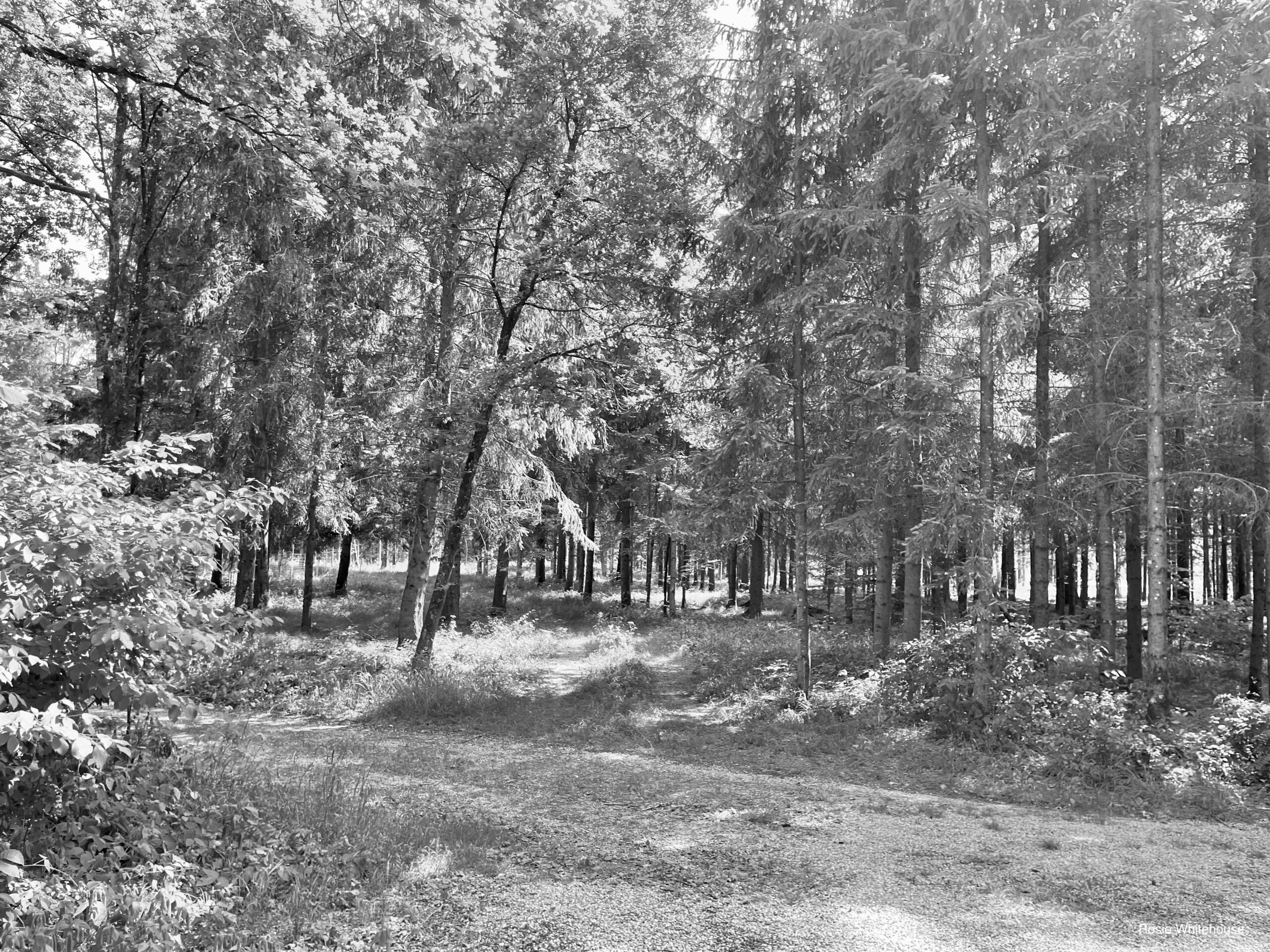
The site of the former Gunskirchen concentration camp.
The camp was located deep in a forest near Wels 20km southwest of Linz in Austria.
History
The camp was opened on 12 March 1945. Initially the prisoners were involved in cutting trees and transporting them to a nearby sawmill.
Almost immediately, however, Gunskirchen was transformed into an assembly camp for evacuated prisoners from camps as the Red Army advanced. The prisoners were not used for slave labour.
Structure
The camp was surrounded by a 2.5m high barbed- wire fence. The guard towers were equipped with machine guns and manned by the SS and Wehrmacht. Of the 10 planned barracks, only 6 were finished. The floors in the barracks were compressed earth.
The barracks intended for 300 prisoners each, soon held between 2,500 and 3,000 prisoners each. Many of the younger prisoners survived because they climbed up onto the beams at night.
At the end of April, there were between 15,000 and 17,000 prisoners in the camp. There was virtually no sanitation.
Wolfgang Sinai Adler
“I think it would be impossible to tangibly describe the horrific conditions under which the Germans forced us to live. I will only say that the physical and emotional torment that I suffered during that one week in Gunskirchen was probably equal to all of the misery that I had under gone ap to that point. I was grouped together with about four thousand men who were jammed into one barracks … There was no possibility what so-ever to lie down, and the only way that it was possible to sit down was if each person sat down on another’s lap.”
Sinai Adler, formerly Wolfgang Adler, Your Rod and Your Staff: A Young Man’s Chronicle of Survival (Feldheim, 1992). Adler had survived a death march from Auschwitz, a death train to Mauthausen and a death march from Mauthausen to Gunskirchen.
The daily rations consisted of a piece of black bread and a little soup. Often no food was handed out at all and survivors report incidents of cannibalism. Many prisoners starved to death and died of dysentery and typhus.
Initially the dead were buried in mass graves outside the camp. Later they were buried inside the camp but during the last weeks of the camps existence they were not buried at all.
Hugo Gryn after the liberation.
“The weather was very bad and in Gunskirchen itself conditions were terrible. What food there was, we were told afterwards on fairly good authority, was being poisoned. There was deep mud, fever and stench and many perished from starvation and the typhoid which by then had infected everyone of us. People took water out of ditches and caught things like frogs. Whatever was available was devoured. There was even, I think, a certain amount of cannibalism.”
Dissolution & Liberation
The SS left the camp on 4 May 1945 and employees of the Red Cross arrived to hand out food supplies. Hundreds died as they could not digest the food.
Soldiers of the 71st Infantry Division, Third U.S. Army, reached the camp on 5 May 1945.
An estimated 15,000 prisoners survived the camp, while more than 3,000 died. In the following months, at least 1,000 prisoners, who were looked after in civilian and military hospitals in Wels and surroundings died as a result of their experiences.
Aftermath
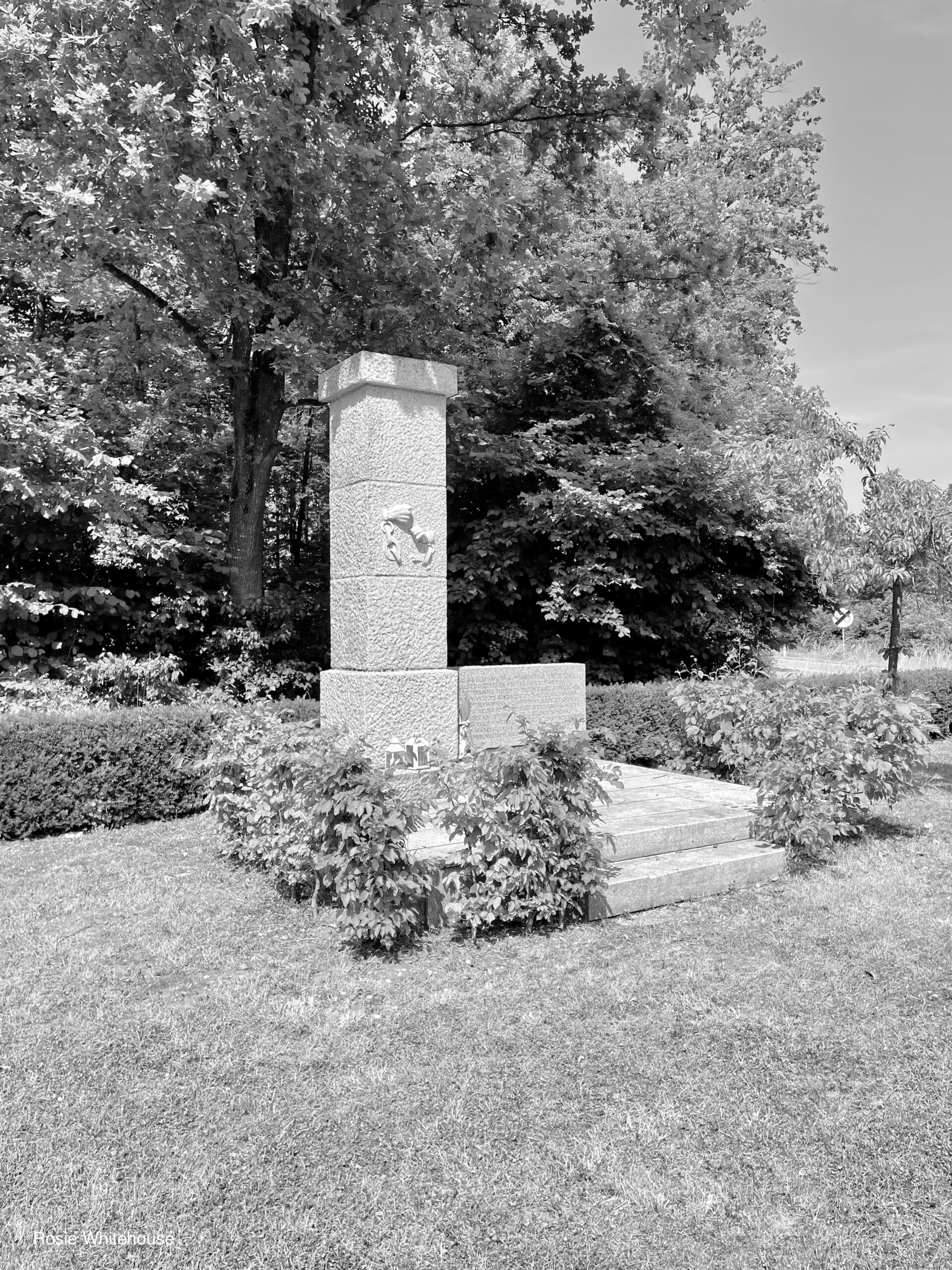
After the war, mass graves with 1,227 corpses were found in the camp’s vicinity. Today, there is a memorial by the roadside and another in a glade in the forest itself.

 About
About History
 Education
 Quilts
 FIlms
FIlms Photos
 News Media & Events
 Publications
 Donate