
Members of the Boys were slave labours in the Günthergrube labour camp, a subcamp of the Auschwitz concentration, extermination and labour camp complex.
The Auschwitz complex was operated by Nazi Germany in occupied Poland. The camp had 40 subcamps.
The Boys were teenage and child-Holocaust survivors, who were brought to the UK after the war for rest and rehabilitation.
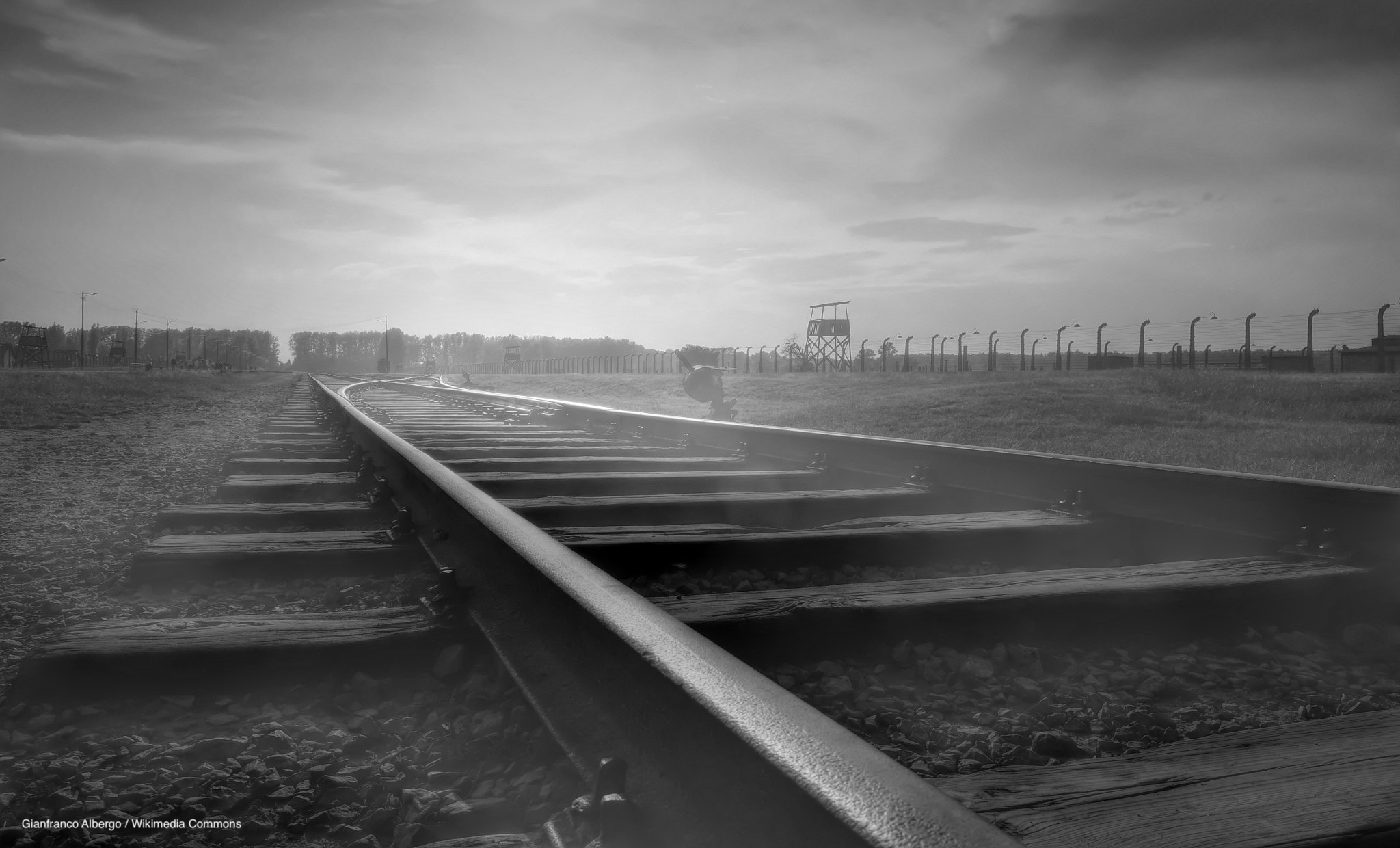
Memorial and Museum Auschwitz Birkenau, Poland.
History
The subcamp of Günthergrube was established February 1944.
The camp was located next to the Günther coal mine, which belonged to Fürstlich Plessische Bergwerks AG, in Lędziny.
Lędziny is a town in Silesia in southern Poland, near Katowice. Prisoners mined coal at the Piastschächte mine and worked on the construction of the Günther mine.
Structure
Günthergrube was the only Auschwitz subcamp that changed its location over the course of its existence.
At first, the prisoners were quartered in a former camp for compulsory labourers which was located in a school building, on the road to the newly built Günther mine in Lędziny.
This camp was called Lager Heimat.
A new camp named Günthergrube was built by the prisoners, which opened in June 1944. It consisted of two barracks with a kitchen, bathhouse, and latrine, surrounded by a high brick wall along which stood eight masonry guard towers.
The camp commandant was SS-Oberscharführer Alois Wendelin Frey. The prison population was predominantly Jewish. Many of the prisoners had come from the Bliżyn labour camp among them one of the Boys Mordechai Topel.
The number of those who died is unknown.
Dissolution & Liberation
On 18 January 1945, about 600 prisoners were evacuated on foot to Gliewice, another Auschwitz subcamp. They arrived there two days later. The following day prisoners were loaded into open freight cars, but after a few stops the train only got as far as the station Gliwice Rzędówka, just a few kilometres away. Afterwards the surviving prisoners were marched on foot in the direction of Rybnik.
During the march there was a commotion caused when one of SS men named Frank, who together with the prisoners tried to escape from the column. A shootout ensued, resulting in more than 300 prisoners being killed. The remaining approximately 200 prisoners were probably shot in the stadium in Rybnik.

 About
About History
 Education
 Quilts
 FIlms
FIlms Photos
 News Media & Events
 Publications
 Donate