
Members of the Boys were slave labourers in the Gusen labour camp, a subcamp of the Mauthausen concentration camp in Austria.
Mauthausen concentration camp was operated by Nazi Germany. The camp had 40 subcamps.
The Boys were teenage and child-Holocaust survivors, who were brought to the UK after the war for rest and rehabilitation.
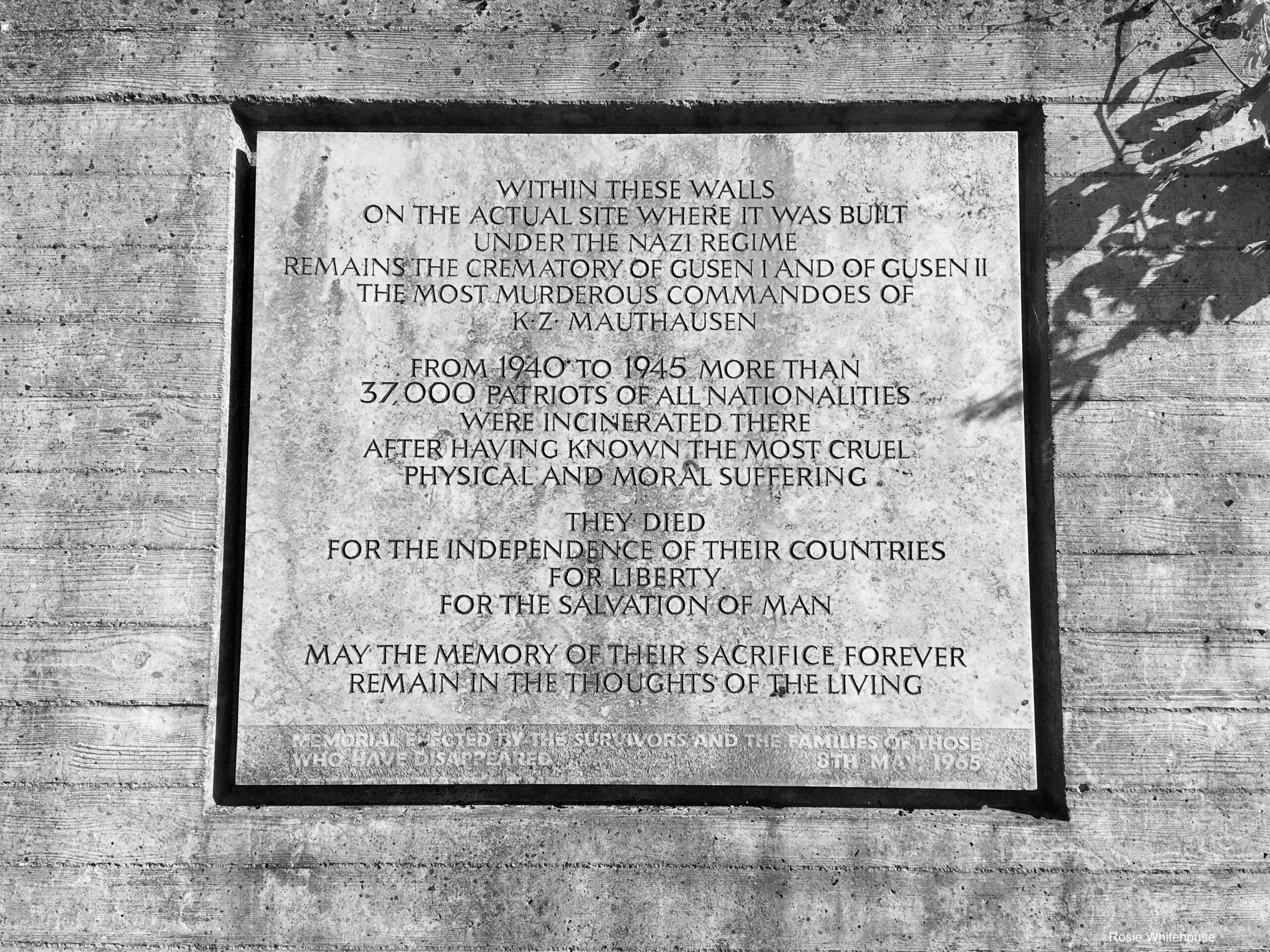
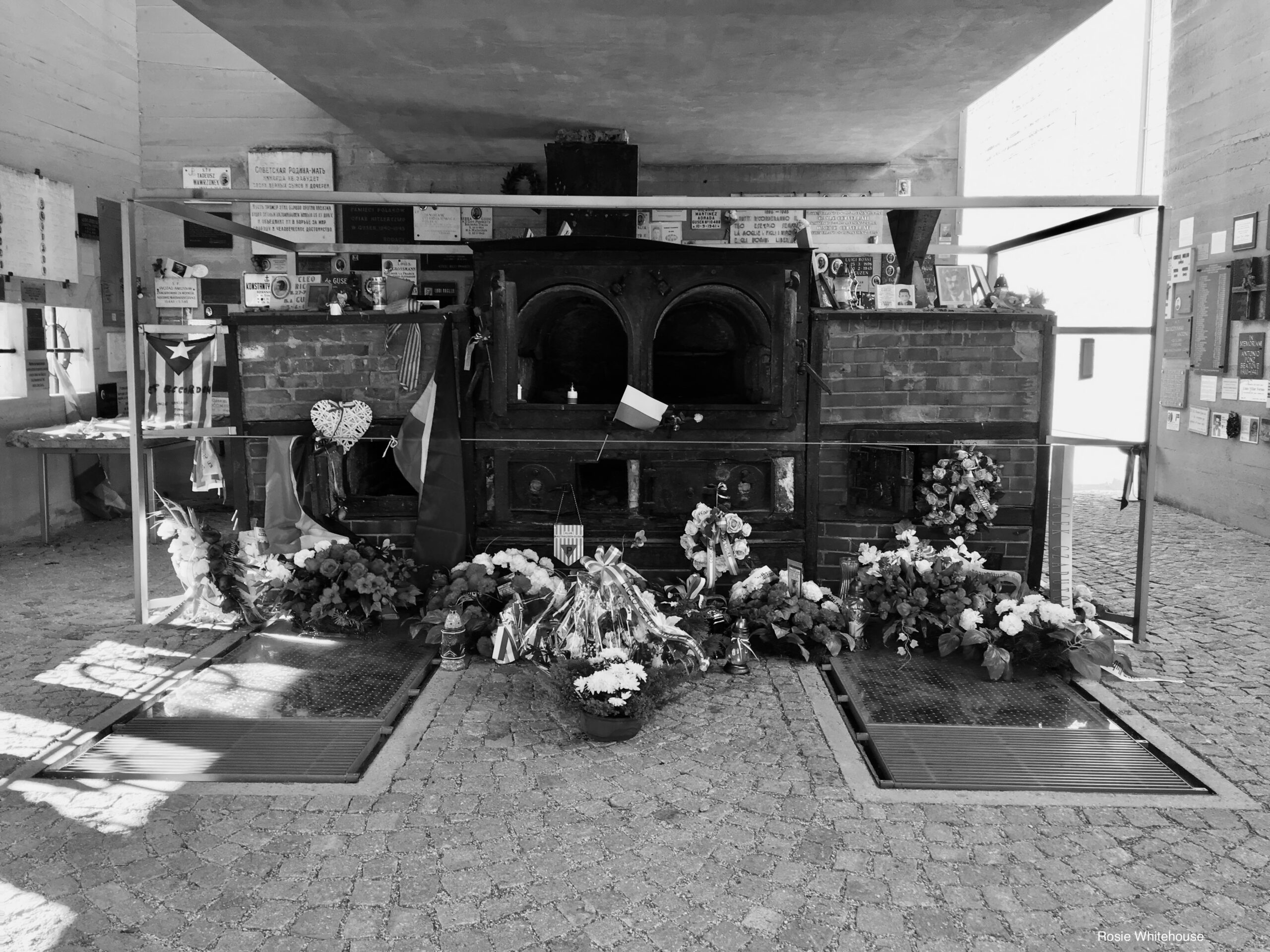
Gusen memorial.
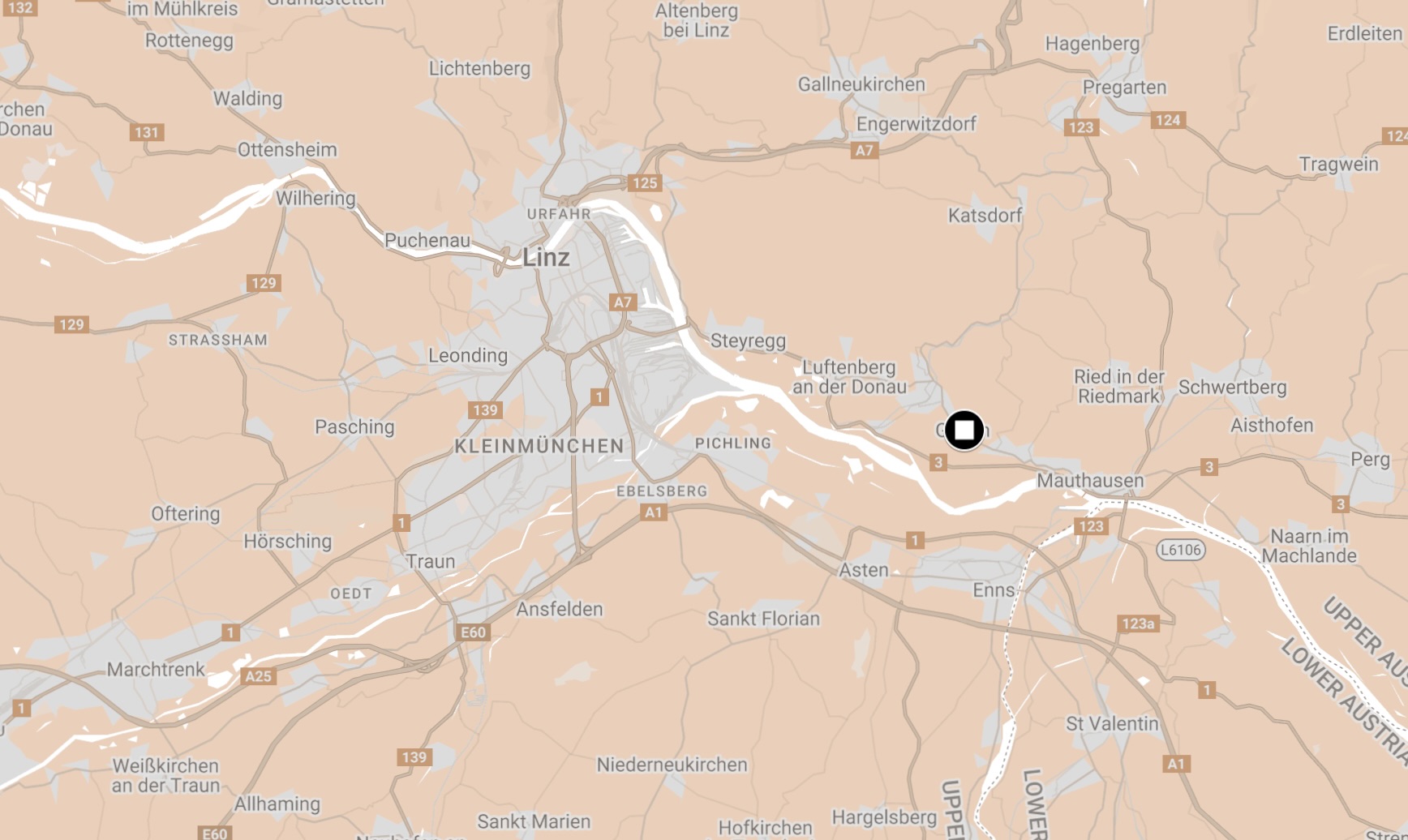
Gusen, 7km west of the main Mauthausen concentration camp, was located near a granite quarry. The camp began operation in April 1940.
In the first two years of its operation thousands of prisoners died or were systematically killed.
History
In 1943 two large armaments companies, the Austrian Steyr-Daimler-Puch AG and the German Messerschmitt GmbH moved the production of guns and aeroplanes to Gusen. In late 1943-early 1944, the SS initiated a giant, underground construction project, code named ‘B8’ and the codename ‘Bergkristall’, in St. Georgen an der Gusen, a few kilometres from the Gusen concentration camp. The tunnels would be used to protect production of Messerschmitt Me 262 fighter jets from air raids.
Construction continued around the clock and, under massive time pressure. The life expectancy of prisoners was as short as six months, as work in the quarries was specifically intended to cause the death of prisoners. Mass production of aircraft fuselages and parts went into operation as early as autumn 1944. By the end of the war, around eight kilometres of tunnels had been built but the site was never completed. Despite this aircraft production began in early 1945 and by 1 May, 987 fuselages were built.
Medical experiments were also undertaken at the camp including tuberculosis experiments.
Structure
The need for labour to construct underground tunnels induced the SS to increase the prisoner population to more than 24,000 by the end of 1944. The prisoners included 2,750 Hungarian Jews from Auschwitz II-Birkenau who arrived in June 1944. Thousands of Polish Jews from Kraków-Płaszów, Auschwitz and Flossenbürg arrived in the late summer and autumn of 1944. In October 1944, 1,000 Polish civilians captured during the Warsaw Uprising and some 1,500 Italian civilians were brought to Gussen.
In order to accommodate this influx of prisoners, the camp was expanded and Gussen II and Gusen III were created. Overcrowding meant that there were three people to a bunk.
Work was 24 hours. Prisoners had to spend up to 14 hours a day in transit or in the tunnels, where the dust was so thick that they had to use headlamps to use pneumatic drills. They were quickly worn out by the lack of oxygen. About 100 died in the tunnels every day.
Approximately 71,000 people from across Europe were deported to the Gusen concentration camp, of whom about 36,000 did not survive.
Dissolution & Liberation
During April 1945, as Soviet troops invaded eastern Austria, the SS evacuated prisoners from the subcamps of Mauthausen in eastern and south-eastern Austria, and southern Moravia to Mauthausen and Gusen. During 1945, some 14,000 prisoners, nearly 25% of all prisoners registered in Gusen, arrived at the camp. In February 1945, the Gusen concentration camp reached its peak capacity of 26,311 prisoners.
In April 1945, the SS planned to murder 40,000 prisoners by trapping them in the tunnels and detonating them with dynamite, but the plan was abandoned as the US Army approached and the SS began to desert the camp. More than 10,000 prisoners died in Gusen between January and May 1945, including 4,500 prisoners who were shipped back to Mauthausen to die.
The Gusen concentration camp was liberated by the US Army in the early morning of 5 May 1945. During the chaos of liberation, a number of former kapos, prisoners who worked as commandos, were murdered by the prisoners. In the days that followed, Nazi Party members were ordered to bury the dead in the potato field between Gusen I and II while local citizens were forced to watch.
On 27 July 1945, in accordance with the Yalta agreement, American troops handed the area to Soviet control and took the unfinished aircraft from the tunnels.
Aftermath
After the war, some SS personnel and kapos were tried for their crimes, although most went unpunished. The site was sold off and developed into private homes and businesses. The original footprint of the camp can no longer be seen. While it is difficult to comprehend that people live in a former concentration camp, it is far from unusual.

 About
About History
 Education
 Quilts
 FIlms
FIlms Photos
 News Media & Events
 Publications
 Donate