
Members of the Boys were slave labourers in the Kraków-Płaszów concentration camp in Poland.
Kraków-Płaszów concentration camp was operated by Nazi Germany.
The Boys were teenage and child-Holocaust survivors, who were brought to the UK after the war for rest and rehabilitation.
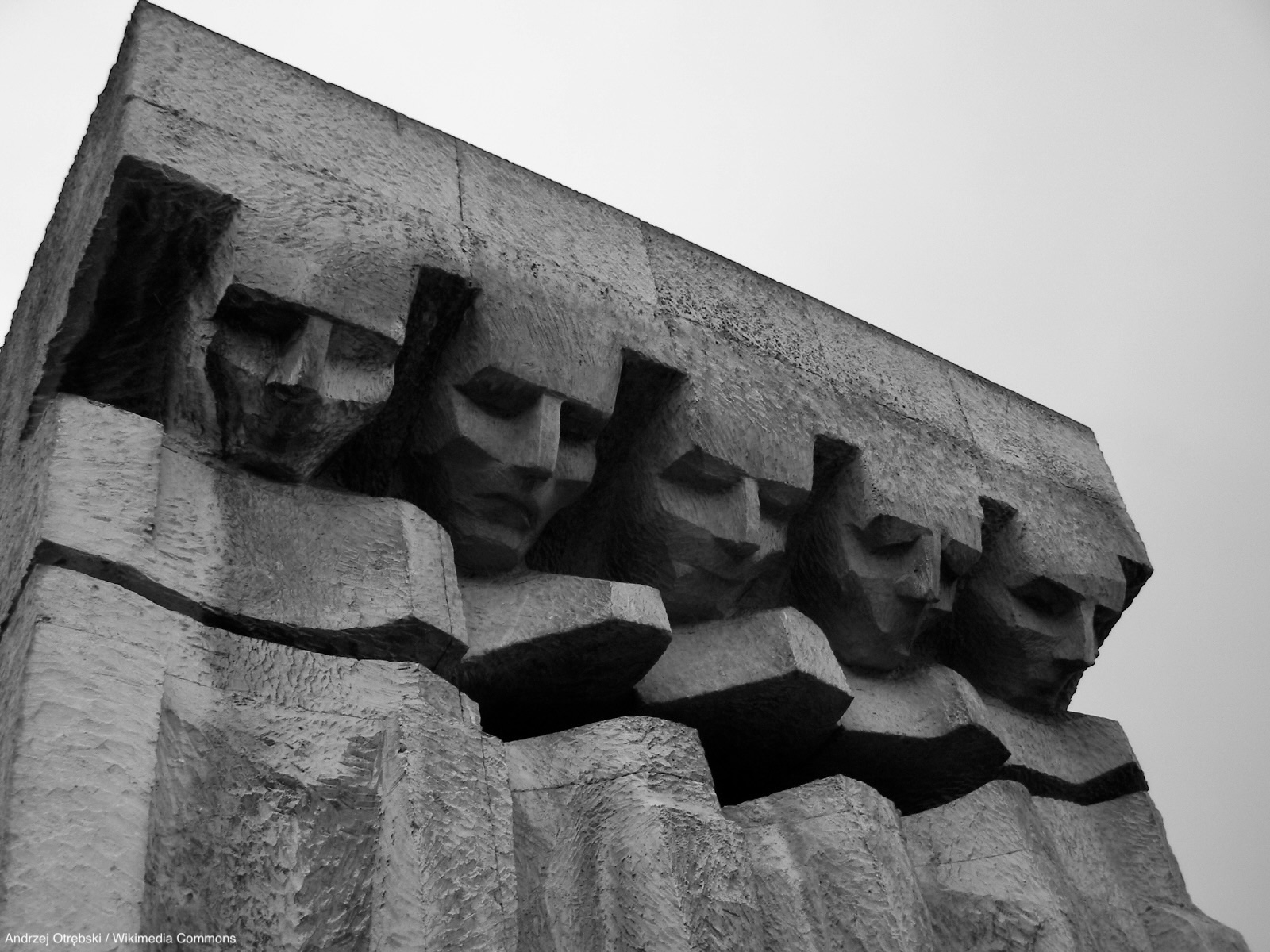
Kraków-Płaszów Memorial.
Overview
In the spring of 1943, Płaszów, with its 10,000 prisoners, was one of the biggest forced labour camps in occupied Poland. The prisoner population grew even further with transports from other camps. An estimated 35,000 people were detained in the camp which officially became a concentration camp in early 1944 but there is no exact figure as the card index was destroyed. A large number of the Boys passed through the camp and experienced its extremely violent atmosphere.
History
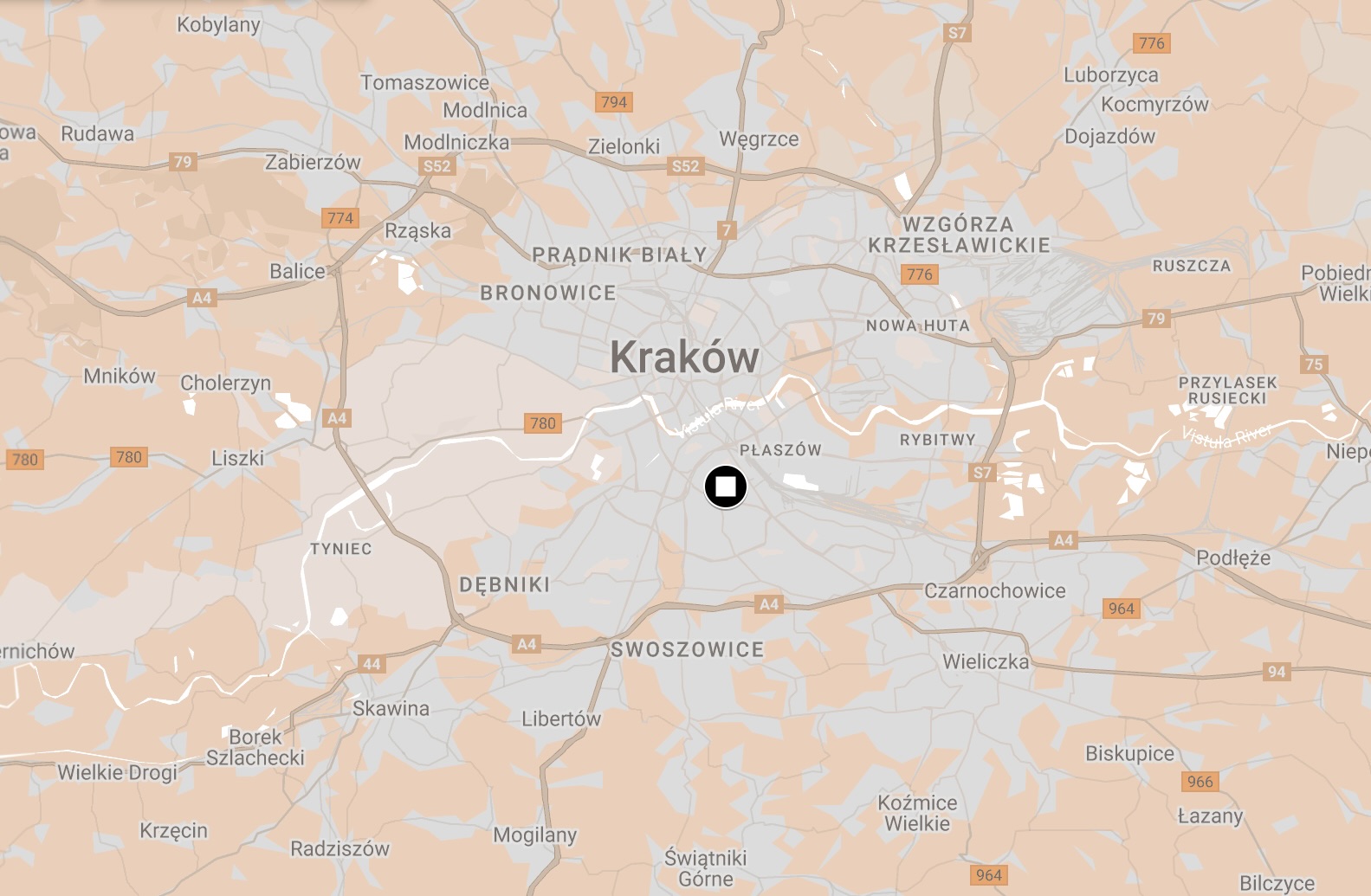
The camp was established in October 1942, in the Kraków districts known of Podgórze and Wola Duchacka. The camp was built by ghetto inmates partly on the site of two Jewish cemeteries.
The commandant was the Austrian Amon Göth, who transferred from the staff of the SSPF Lublin, had been involved in Aktion Reinhardt, the mass murder of Polish Jews. He served as camp commandant until September 13, 1944, and was replaced for some months by Philipp Grimm and then by Kurt Schuppke. Płaszów was extremely violent and there were frequent the mass executions. The whole camp was called out to witness hangings. Göth was infamous for random violence and individual murders.
In comparison to other camps, Płaszów’s inmate population included a comparatively high proportion of Jewish women and children. The transports from Hungary in 1944 consisted to a high degree of women. While most of the Jewish children under 14 in Poland were killed by the end of 1942, there were still some in the so-called Julag III until 1943 and in Płaszów until the spring of 1944.
In March 1944, 2,000 Jews, many teenagers were sent to the Skarzysko-Kamienna camp in among them many of the Boys. Other members of the Boys were transferred to the Czestochowa-HASAG labour camp or to Auschwitz II-Birkenau.
Structure
Besides the main camp some of the Boys were held in Kraków Zabłocie, Oskar Schindler’s ‘Deutsche Emailwaren-Fabrik’, and Kraków-Prokocim established March 1943 at the former ‘Kabel’ plant, at 75 Prokocimska street. Nearby, at Cmentarna Street in Prokocim, Julag II, where 2,500 Jews were imprisoned, was established in the Summer of 1942.
The quarry where prisoners worked was by the main camp. According to estimates, more than 35,000 people were imprisoned in the camp throughout its operation, and about 6,000 people were killed here.
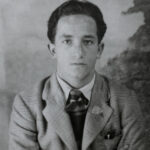
Harry Balsam
“I was one of the lucky ones. The Commandant of the camp by the name of Muller, picked me out of around 350 men and 35 boys between the ages of 12 – 14. He told me that I was to be his Pulzer (Boot Polisher). The remaining 34 boys he said, would be shot. He told me that I could have one boy with me. I was petrified and not thinking clearly. I told him that all of the boys were my friends and cousins. He shouted back to me “One boy only – I said.” The first name that came to my mind in a panic, was Moniek Rosenbaum.
He was called out and told to stand beside me. The remaining boys were crying and screaming. He told us that small boys would be of no use to him as he needed men to work and help build the direct railway line from Cracow to Berlin. After keeping the men and boys standing for about two hours on the Apel-Plalz (Roll Call Ground), he decided not to shoot any of them but to transfer them to another camp called Prokocim, which was about three miles away. We were surrounded by the guards with their machine guns pointing at us ready to fire.
Rosenbaum and I stayed behind in Płaszów with the other men. Rosenbaum worked in the camp while I worked only for Muller cleaning and polishing his boots. When Commandant Muller was not around, I spent my time walking around the camp. I used to go into the kitchen and take out as much food as I wanted for friends and people I knew. One such person was a boy called Pomerance – with whom I became very friendly. He was already in Płaszów when I arrived. Other such people were the elders of my town who were helping teach me my Barmitzvah. This I recited in Płaszów Slave Labour Camp sometime in September 1942.
I am not aware of any other boy being Barmitzved in a camp.”
Dissolution & Liberation
In August–September 1944, the camp leadership started to erase the traces of its crimes. Orders were given for a Sonderkommando group of prisoners to dig up the mass graves and burn the bodies.
The liquidation of KL Płaszów began in June 1944. The biggest evacuation transport left Płaszów on 6 August, deporting 7,500 to 8,000 Jewish inmates to Auschwitz II-Birkenau. Another train left for Mauthausen concentration camp in Austria. Prisoners were also taken to the Stutthof concentration camp in northern Poland. On the 14 January 1945 the last group of about 600 prisoners departed on foot to Auschwitz II-Birkenau.
The Red Army occupied the former camp on 19 January 1945.
Aftermath
The crimes in Kraków-Płaszów were the subject of relatively few postwar trials, the most important of which dealt with Göth. He was sentenced to death and executed.
Little of the Płaszów camp remains and the area is now a public park. High on a hill above the former camp there is a vast communist-era monument on the site of one of the mass graves, from which there is a view over the commercial shopping district and the arterial roads that encircle it. To the right is the Jewish memorial and a statue that honours Hungarian women who were taken from Płaszów to Auschwitz II-Birkenau.
Amon Göth’s house remains at ulica Heltmana 22 but is a private residence. At the time of writing, work had begun to turn the area into a memorial museum. The development has been highly controversial: locals object to the loss of their open space and fear an influx of tourists into what is a residential area; Jewish groups are fearful that this could cause an antisemitic backlash. Two museums on Kamieńskiego and in the Grey House, which served as the SS living quarters at Jerozolimska 3, are due to open in 2026.
 About
About History
 Education
 Quilts
 FIlms
FIlms Photos
 News Media & Events
 Publications
 Donate