
Members of the Boys were slave labourers in the Leitmeritz labour camp, a subcamp of the Flossenbürg concentration camp in former Sudentenland.
Flossenbürg concentration camp was operated by Nazi Germany. The camp had 80 subcamps.
The Boys were teenage and child-Holocaust survivors, who were brought to the UK after the war for rest and rehabilitation.
History
Leitmeritz was the largest subcamp of the Flossenbürg concentration camp.
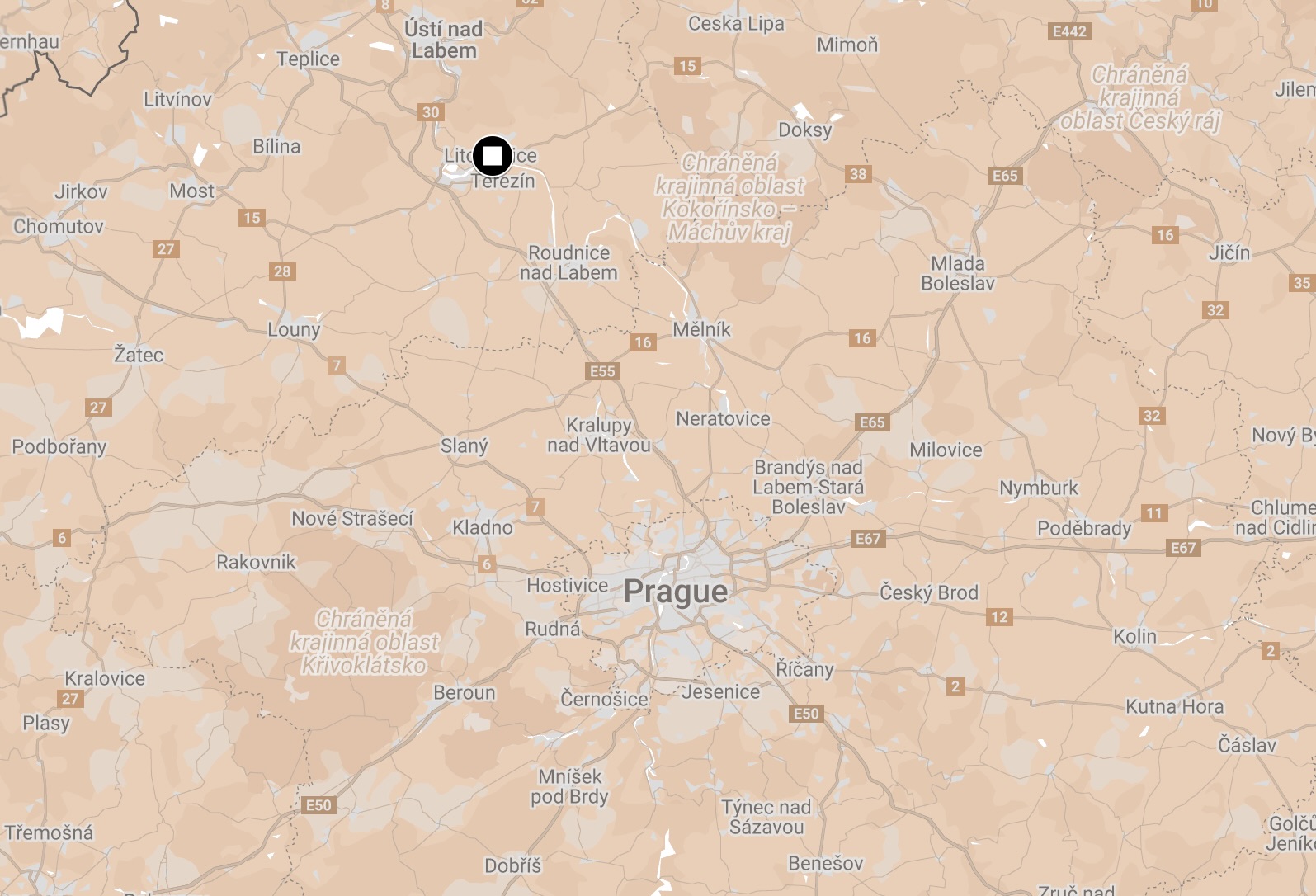
Leitmeritz was then part of the Reichsgau Sudetenland, which had been annexed by Germany in the Munich Agreement of 1938.
It is now Litoměřice in the Czech Republic.
Prisoners produced tank engines for Auto Union, modern-day Audi and at a second site producing tungsten and molybdenum wire and sheet metal for Osram.
Structure
The factory was located underground in the Radobýl Mountain to hide it from Allied bombers.
The prisoners had to dig tunnels to create the factory which was in an existing quarry. It was dangerous work, and many prisoners were killed in the frequent tunnel collapses.
The camp itself was in a former Czechoslovakian army base. Conditions were appalling, there was little food and disease was widespread.
About 18,000 prisoners passed through the camp of whom about 4,500 died in accidents of from disease or starvation.
There was a high number of Jewish prisoners.
Dissolution & Liberation
In the last weeks of the war Leitmeritz became a hub for death marches.
There was no accommodation or food for the thousands of prisoners arrived at the camp. The majority of the prisoners came from the Flossenbürg camp, Gross Rosen and Auschwitz and Dachau.
Some prisoners had to sleep outside while others, during the last few days of the war, slept in the tunnels
The camp was dissolved on 8 May 1945.
The members of the Boys who passed through the camp arrived in the spring of 1945 and were liberated in Theresienstadt by the Red Army.
Aftermath
Today, there is a memorial to the camp.

 About
About History
 Education
 Quilts
 FIlms
FIlms Photos
 News Media & Events
 Publications
 Donate