
Members of the Boys were slave labourers in the Lieberose labour camp, a subcamp of the Sachsenhausen concentration camp.
Sachsenhausen concentration camp was operated by Nazi Germany. The camp had 92 subcamps. Lieberose was the second biggest of its satellite camps.
The Boys were teenage and child-Holocaust survivors, who were brought to the UK after the war for rest and rehabilitation.
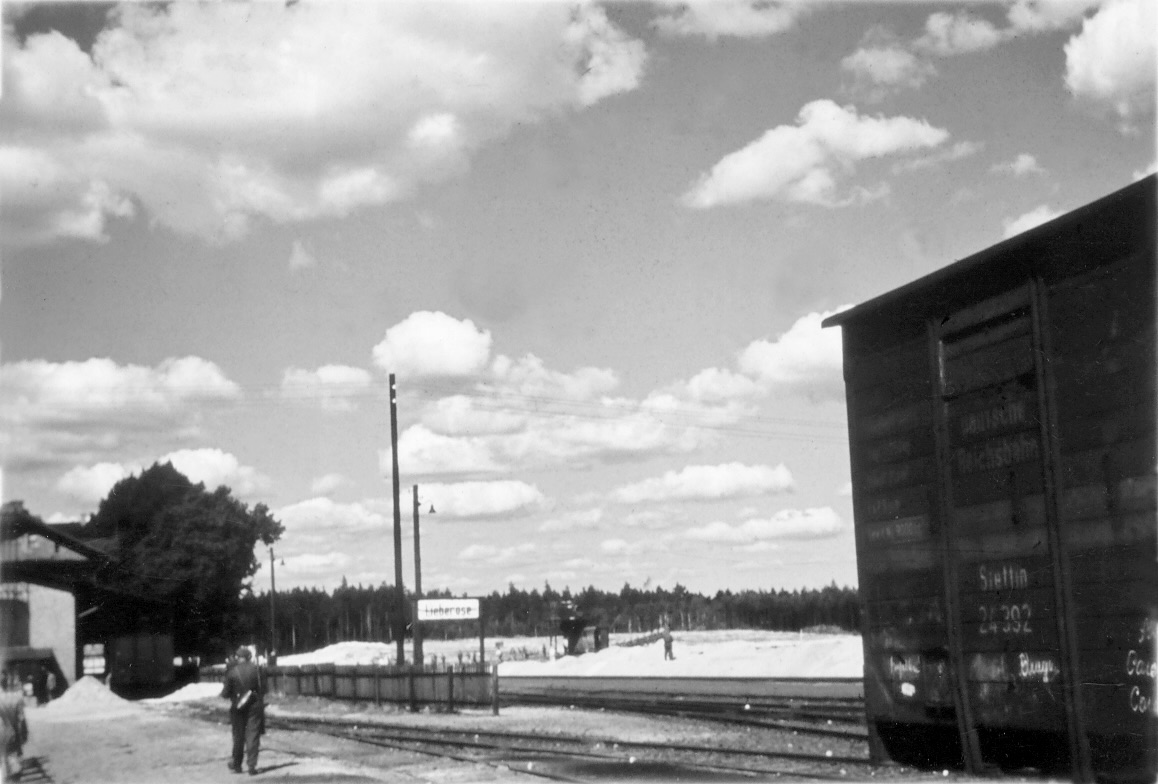
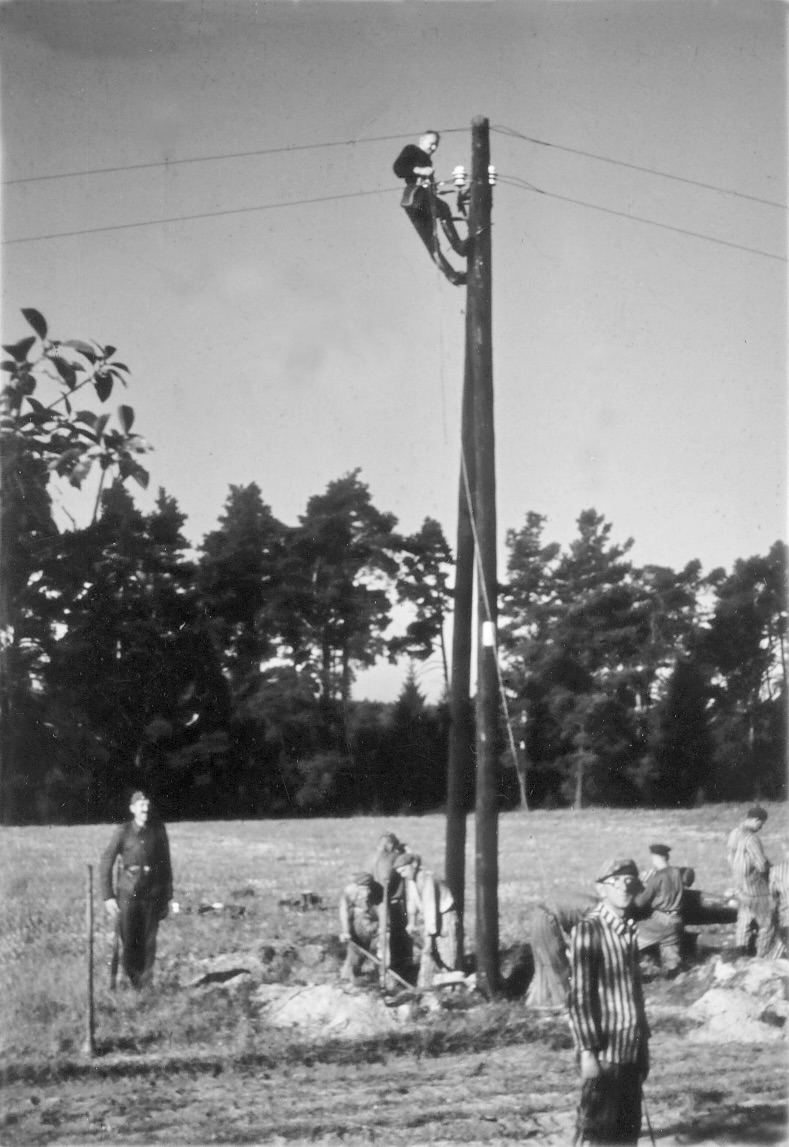
The Lieberose camp during the Nazi era.
History
The camp was set up in the autumn of 1943 so prisoners could be put to work building a large military training area for members of the Waffen-SS, who had their headquarters in the nearby village of Jamlitz in Brandenburg. Lieberose was only 100km from Berlin and Reichsführer-SS Heinrich Himmler wanted to set up an SS garrison close to the capital so that in the event of a coup they could be quickly deployed.
Structure
About 4,000 prisoners had passed through the camp by the end of 1944, 90% of whom were Jews.
Hugo Gryn arrived in the camp with his father from Auschwitz II-Birkenau in June 1944. He was 13 years old.
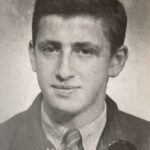
Hugo Gryn after the liberation.
“The station was in a forest and the only signs of life came from a sawmill adjoining the railway station. ‘This is a good omen,’ said Dad, ‘forests and a sawmill. I am sure now that we will find jobs and not be entirely ignorant of them.’ … The only thing we did not know was whether they would leave us in Liebrose and is so, whether they would want us to work with civilians. For we could see some civilian workers standing on piles of timber, eyeing us without any particular interest. It was the first time I had seen German civilians. You could tell they were Germans, with their small black moustaches and leather caps. Altogether they looked just like my idea of Germans except that they were much smaller. It was the first time that I saw a German look at us. A vacant gaze, it was free of sympathy and compassion as it was of hatred. Just a terrible hurting indifference. We could have been barrels of paint being unloaded, or some labour-saving gadgets for their factory.”
Hugo Gryn, with Naomi Gryn, Chasing Shadows (Penguin, 2001).
Prisoners were literally worked to death in the camp under the ‘extermination by work’ scheme. The prisoners had to march barefoot to the construction site, carrying a hollow block on their shoulders. The sick prisoners were periodically taken to Auschwitz II-Birkenau, where they were gassed. An estimated 80% percent of the Jewish prisoners had lost their lives by the time the camp was dissolved, either through exhaustion or in the gas chambers in Auschwitz.
Dissolution
When the camp was shut down in early February 1945, 1,342 prisoners, who were too weak to be sent on the death march to Sachsenhausen were shot. Most of the Jewish prisoners were then taken from Sachsenhausen to the Mauthausen concentration camp in Austria, but some were also moved to Bergen-Belsen, Neuengamme, Flossenbürg, and Dachau.
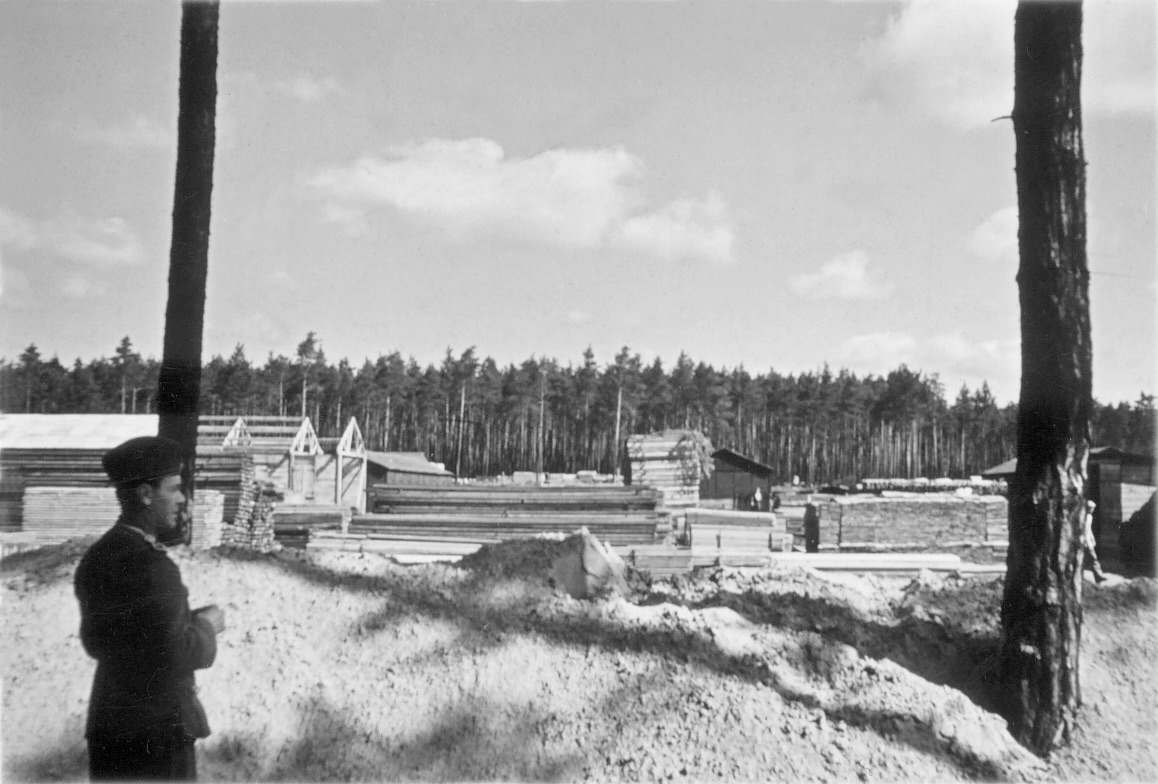
The Lieberose camp during the Nazi era.
Aftermath
From September 1945 to 1947, the Soviet secret services, the NKVD, used the site of the former labour camp to hold German civilians accused of national socialist crimes and active membership in the Nazi Party.
In 1946–1947, at the Sachsenhausen Trial in front of a Soviet military tribunal in Berlin, Lieberose played almost no role. The prosecution of the perpetrators was neglected, despite the fact that the NKVD knew several of the murderers by name.
A mass grave, containing the bodies of hundreds of victims of the Nazis, was been found near the site of the camp in the 1970s. It is believed to be the largest mass grave in Germany which was not itself within a concentration camp.
 About
About History
 Education
 Quilts
 FIlms
FIlms Photos
 News Media & Events
 Publications
 Donate