
Many members of the Boys were deported to the Mauthausen concentration camp in Austria during its period of operation.
Mauthausen concentration camp was operated by Nazi Germany and had 40 subcamps.
The Boys were teenage and child-Holocaust survivors, who were brought to the UK after the war for rest and rehabilitation.
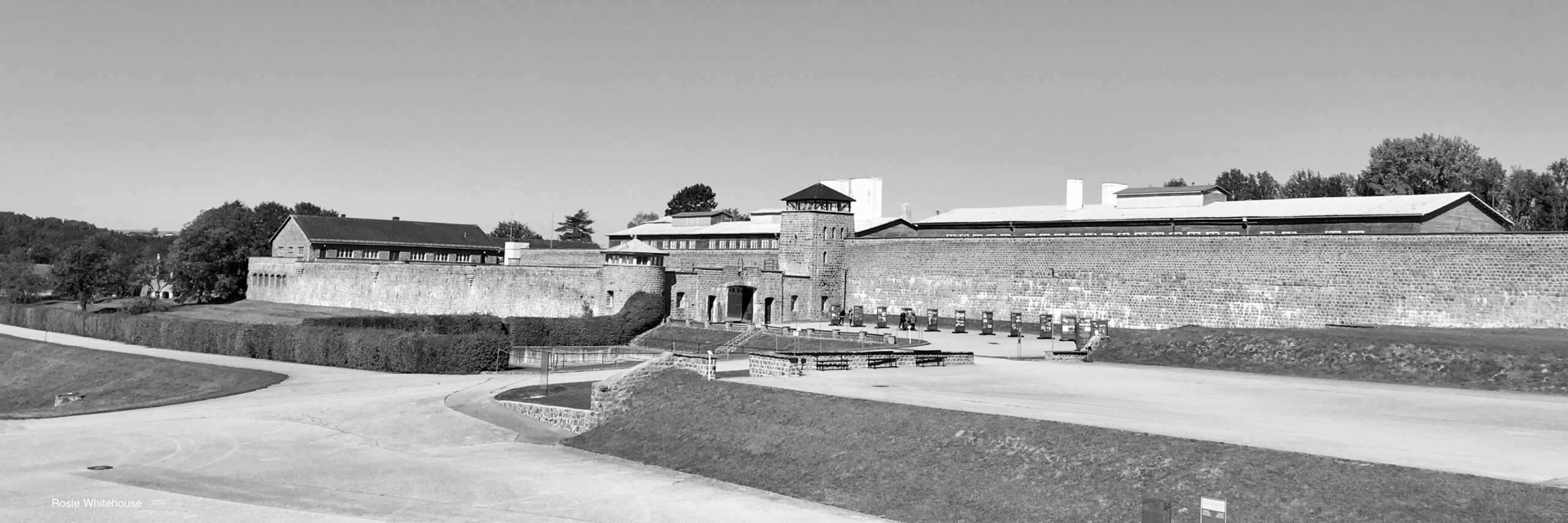
Mauthausen Memorial, Austria.
Overview
Mauthausen was one of the first large concentration camp complexes in Nazi Germany and conditions in the camp complex were among the worst. Construction began in August 1938 a few months after the annexation of Austria. It operated 101 subcamps across Austria and southern Germany in which prisoners were forced to work as slave labourers.
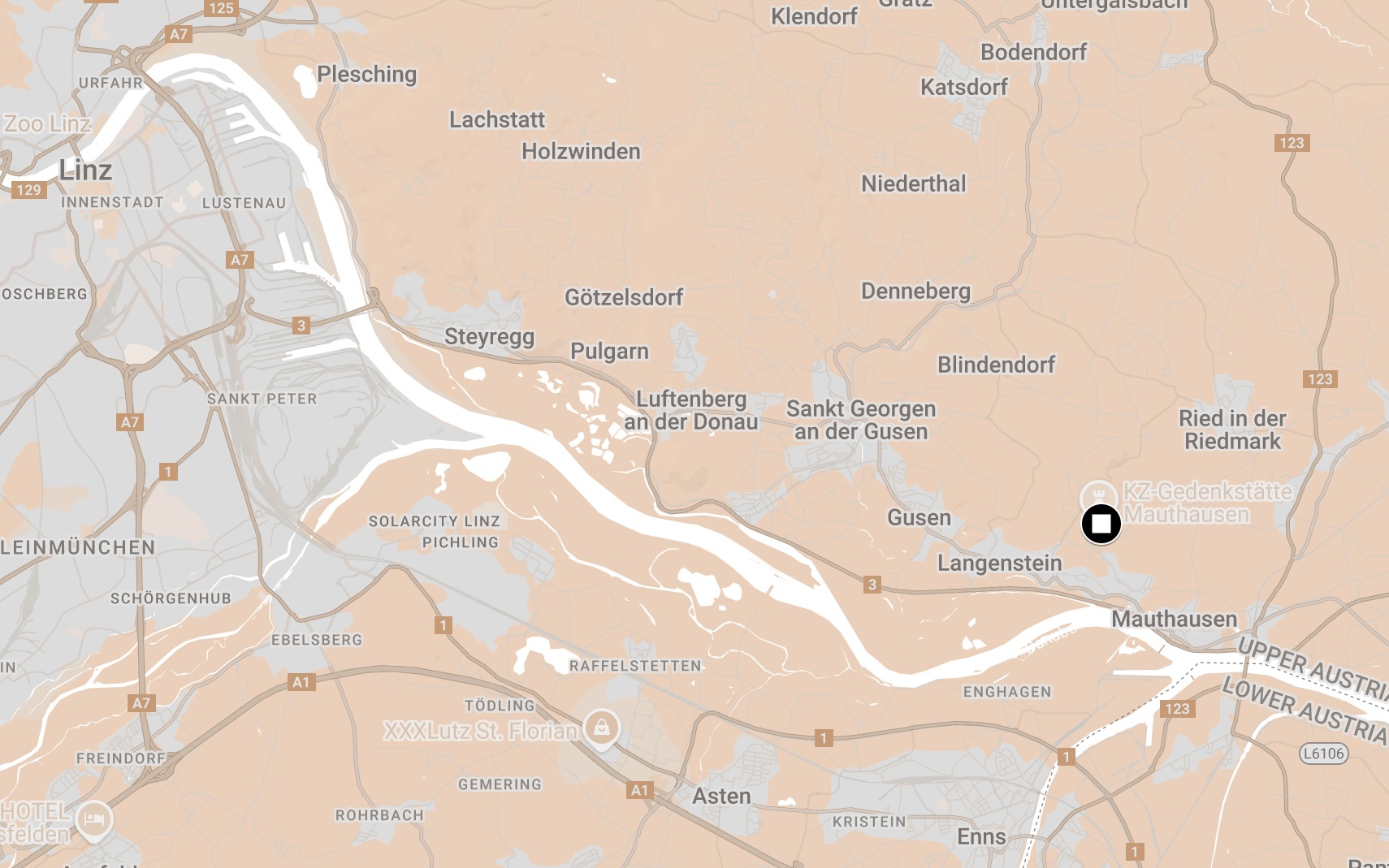
The camp was located 20km east of Linz on a hill above the town of Mauthausen.
Half of the 190,000 inmates died at Mauthausen or its subcamps.
History
The site was located in Mauthausen as it was close to a granite quarry. Although the camp was controlled by the German state from the beginning, it was founded by Wiener-Graben quarry (the Marbacher-Bruch and Bettelberg quarries) was a DEST Company: an acronym for Deutsche Erd– und Steinwerke GmbH as an economic enterprise. A year later, the company ordered the construction of the first camp at Gusen. Granite was in demand to build vast Nazi monuments.
The money to fund the construction of the Mauthausen camp was gathered from a variety of sources, including commercial loans and the camp was one of the most profitable in the Third Reich.
The prisoners were originally criminals and so-called ‘asocials’ but in May 1939 Mauthausen became a camp for political prisoners. A large number of Spanish Republicans were deported from Vichy France to Mauthausen. The camp also held members of the Yugoslav resistance and prisoners from across occupied Europe.
From 1942 onwards the Mauthausen complex began to produce armaments. Prisoners were also rented out as slave labour on local farms and construction projects.
As Allied bombing got underway, Mauthausen became a centre for the construction of underground facilities for armaments production. Until this point relatively few Jews had been imprisoned in Mauthausen. In 1944 Jews were transferred from Auschwitz and Kraków-Płasów to Mauthausen among them were members of the Boys. A special tent camp was built to accommodate the new arrivals and it was in the tent camp that one of the Boys Misha Honigwachs witnessed cannibalism
Prisoners too weak to work were gassed in Mauthausen in a mobile gas van, at the nearby Hartheim Euthanasia Centre and from 1942 in the camps own gas chamber. Soviet prisoners of war were among the first to be gassed.
Structure
The camp had three sections. The original detention camp, the workshop area and the tent camp built in the spring and summer of 1944 to accommodate the influx of Hungarian Jews, among them members of the Boys. The camp was surrounded by walls, electric fences and watch towers.
Although the Mauthausen camp complex was mostly a labour camp for men, a women’s camp was opened in Mauthausen, in September 1944, with the first transport of female prisoners from Auschwitz.
The work at Mauthausen was exceptionally hard. The quarry in the main camp was at the base of the ‘Stairs of Death’. Medical experiments were also conducted in Mauthausen.
Dissolution & Liberation
Prisoners were used in back-breaking work to construct anti-tank defences at the Allies advanced.
The Germans destroyed many of the camps files in an attempt to hide evidence of their crimes and this is one reason that an exact death toll for prisoners is difficult to quantify. Prisoners were often also allocated numbers of dead prisoners that a further confuses the figures. Historians believe that over 90,000 of the 190,000 people deported to the camp died there; of those approximately 14,000 were Jewish.
About 10,000 prisoners, among them many members of the Boys were evacuated from Auschwitz, Gross Rosen and Sachsenhausen to Mauthausen in January 1945 on death marches and death trains. Many of those who survived the journey died before they could be registered. Thousands died of starvation and disease.
The SS abandoned the camp on 3 May 1945. The US army arrived on 5 May 1945.
Aftermath
Mauthausen fell within the Soviet zone of control and the former camp was then used as a Soviet barracks.
US troops captured camp commandant Franz Ziereis in May 1945. He was wounded in stomach and died soon after. Numerous administrative staff and guards were prosecuted after the war by US military tribunals. Of those convicted 49 were executed. Courts in Austria and the Federal Republic of Germany carried out several trials and US Federal courts stripped former Mauthausen guards of their US citizenship.
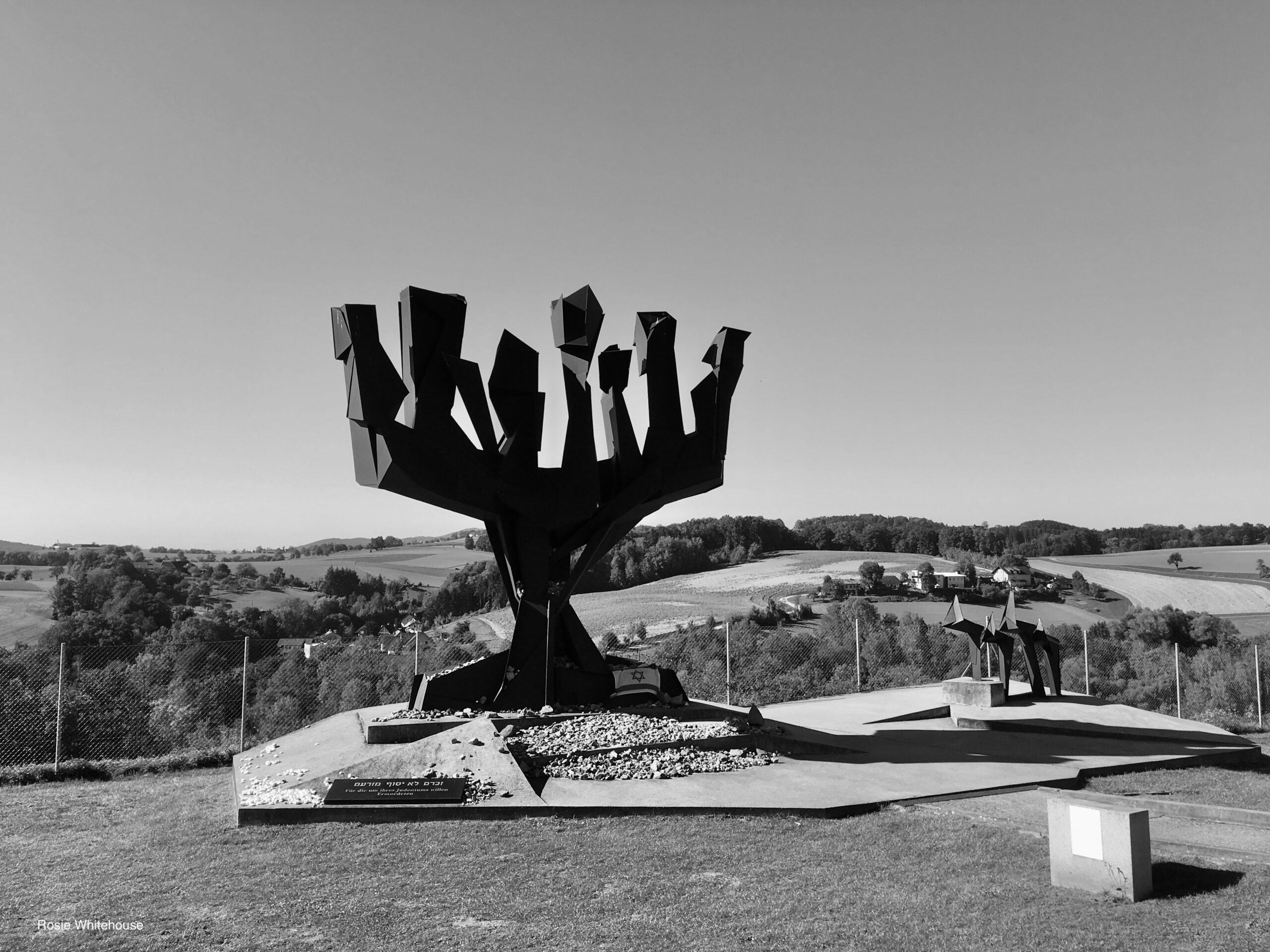
Mauthausen was declared a national memorial site in 1949. The Mauthausen Museum was opened in 1975. The Mauthausen site remains largely intact.

 About
About History
 Education
 Quilts
 FIlms
FIlms Photos
 News Media & Events
 Publications
 Donate