
Members of the Boys were slave labourers in the Mittelbau-Dora concentration camp, operated by Nazi Germany. Initially a subcamp of Buchenwald, it became an independent main camp in October 1944.
The Boys were teenage and child-Holocaust survivors, who were brought to the UK after the war for rest and rehabilitation.
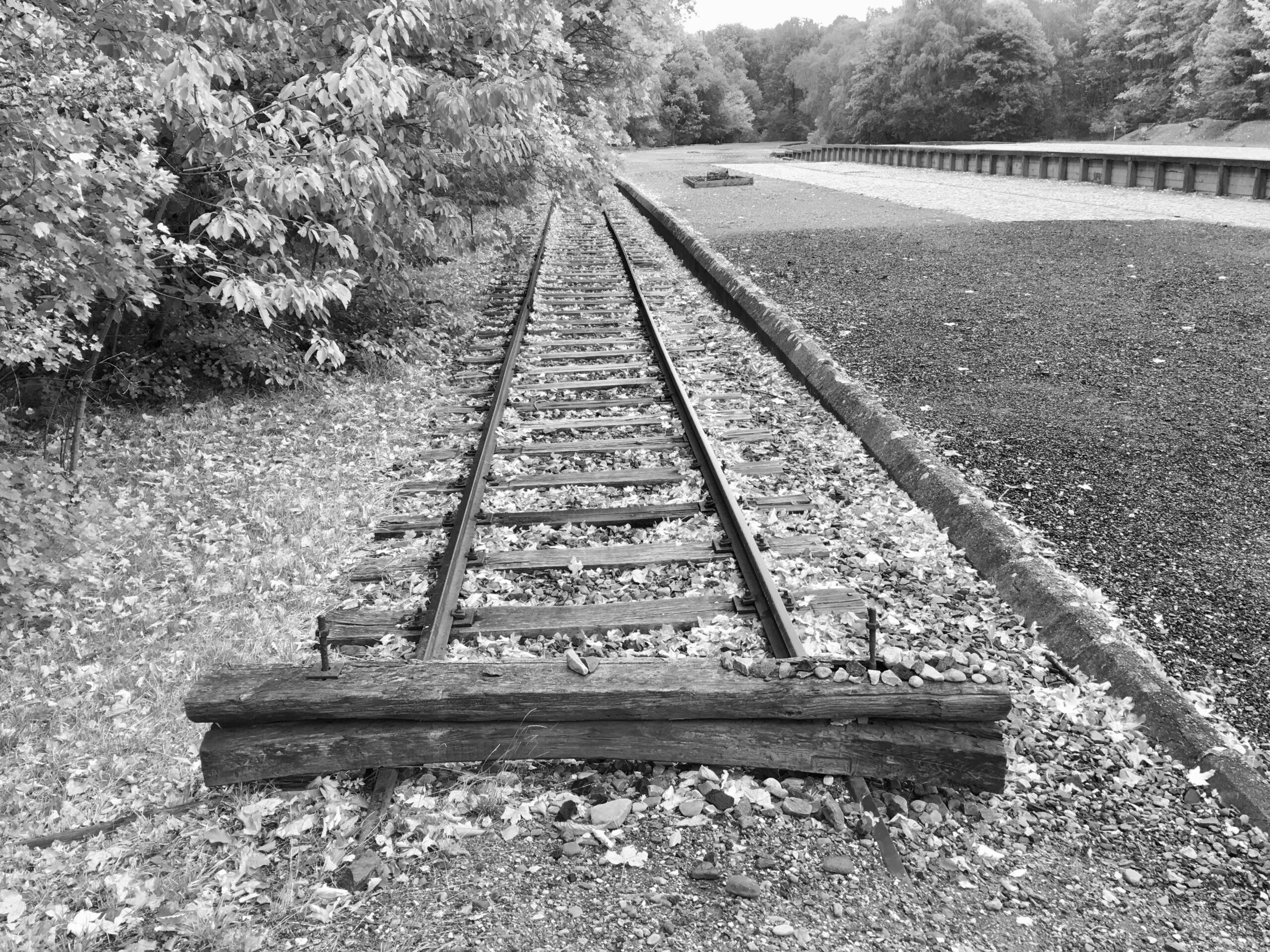
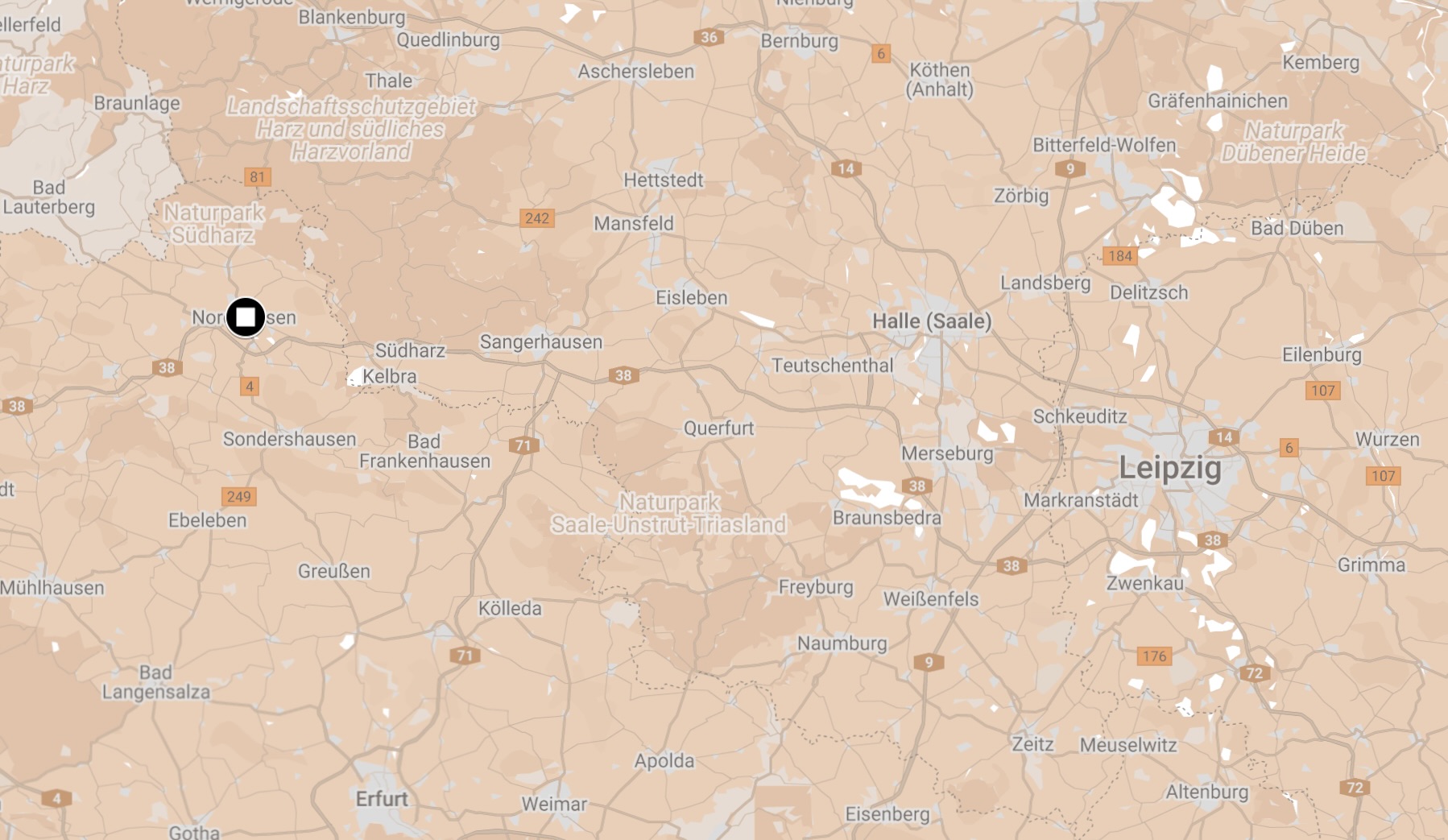
The Mittelbau (Central Construction) concentration camp was established in October 1944, making it the last main camp created by the SS-Business Administration Main Office (WVHA) and the only one not named after a specific place. The camp was located the town of Nordhausen, in the Harz Mountains region of central Germany.
History
Mittelbau-Dora took its name from a labour camp, a subcamp of Buchenwald, code-named Dora, created in the Harz Mountains in August 1943. The prisoners were to convert a central petroleum reserve for the Reich into a secret factory for the production of what was to become known as V-1 and V-2 rockets.
A British air raid against the German Army rocket research centre at Peenemünde on the Baltic in August 1943, led the evacuation of the rocket production to underground facilities safe from aerial attack. The assembly line was moved to the Nordhausen region.
The first phase of the camps existence was devoted to the creation of the underground factory. The prisoners, who were not Jewish and all male, lived in the tunnels. In the summer of 1944, the first Jewish prisoners arrived in the camp from Auschwitz via Buchenwald and from the Volkswagenwerke.
Over 16,000 inmates, arrived in Mittlebau-Dora in the winter of 1944-45 – 10,000 of them from Gross Rosen alone. A large percentage of them were Jewish. It was at this point in the camp’s history that the members of the Boys arrived in the complex. Many people had died in the trains and their corpses piled up waiting for the crematoria. Many corpses were burned outside.
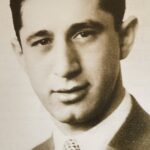
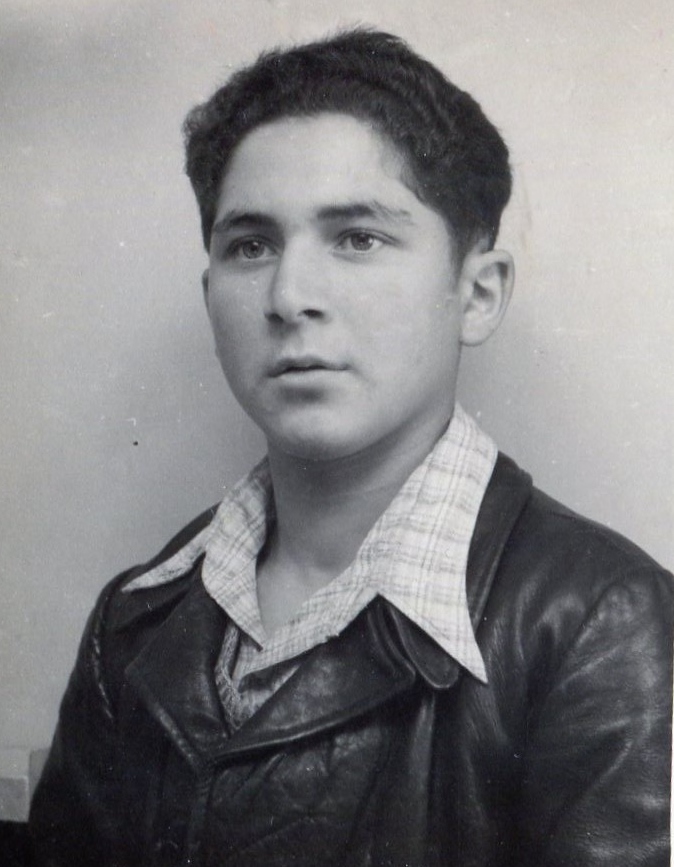
Ivor Wieder after the liberation.
“When we arrived at Dora, there was a long trek to the camp. Those who were very weak and couldn’t walk were shot.
I remember walking into Dora and seeing many dugouts by the side of the roads which were full of dead bodies, too many for the Germans to take to the crematoria. At Dora, we were in the underground factories making munitions all day and sometimes during the night too, as the bombing went on. We didn’t know anything about the war, not even what day it was, if it was Shabbos or Yom Tov. We didn’t have a clock. We didn’t have a radio. We had no news, nothing.”
Many of the new arrivals were housed in the Boelcke-Kaserne, a large military barracks complex previously used by the Luftwaffe (the German Air Force) in Nordhausen, which had been repurposed as a subcamp of Mittelbau-Dora.
Structure
Mittelbau-Dora had 40 subcamps but unlike in other subcamp systems, the subcamps of Dora were all involved in rocket and missile production and situated relatively close to each other. The Boys spent time in both the main camp and its subcamps of Ellrich-Juliushütte and Nordhausen.
The camp commandant was SS-Sturmbannführer Otto Förschner.
The Boys in Nordhausen Boelcke-Kaserne
The Boelcke-Kaserne subcamp had the largest proportion of Jewish prisoners in the Mittelbau-Dora. There were around 5,700 inmates in the barracks on 1 April 1945. Most were unable to work.
Members of the Boys, among them Joshua Segal, however, say that they were taken to work in the factories every day. He later recalled “Your life hung on the whim of the German commandant, who was a sadist, and would shoot or beat prisoners to test their tolerance.”
David Hirschfeld recalled in Martin Gilbert’s The Boys: The Story of 732 Young Concentration Camp Survivors that his brother and he “were lucky enough to be a part of a group of ten to 15 youngsters selected to work in the kitchen.” While 15-year-old Jonny Fox and his father were detailed to load the corpses onto trucks.
Prisoners were held in appalling conditions in two long two-storey garages on the northern edge of the barracks area, which were bordered by an electric fence. It was in the second garage that conditions were at their worst. Here the sick were left to die, among them the Boys relatives and friends. There were no beds and prisoners lay crammed in together on the concrete floor. Occasionally they were hosed down to clean the excrement off them. According to the SS files 1,662 prisoners died in Nordhausen between January 8 and April 2, 1945.
Dissolution & Liberation
On 1 April, work stopped in Mittelbau-Dora. Evacuation of the camp began on 4 April by both train and foot. Prisoners were taken by freight train to Bergen-Belsen, Sachsenhausen and Ravensbrück. Others were death marched through the Harz mountains. The last train left the complex on the evening of 5 April 1945.
Historians estimate 8,000 people died in the evacuations. The most infamous crime of the evacuation took place at the village of Gardelegen, where 1,016 prisoners were locked in a barn and burned alive.
The RAF attacked Nordhausen on 3-4 April. The garages in Boelcke-Kaserne were badly damaged, and the prisoners were not allowed in the air raid shelters. After the raid the barracks were evacuated, many of sick and dying prisoners were left behind in the rubble. When American soldiers arrived in Nordhausen, they found the corpses of more than 1,000 emaciated concentration camp prisoners and forced labourers. Embedded war reporters and American officials documented the horror.
Aftermath
The Americans immediately set up a field hospital. For over 1,300 prisoners, this help came too late. Many of those who survived the air raids died in the days that followed from starvation and exhaustion. The Americans forced the local population to bury the corpses from Boelcke-Kaserne, which included women and children, in the city’s main cemetery.
Before the Red Army took control a group of US military personnel arrived in Mittelbau-Dora to remove missile parts and German personnel. The German scientists would play a major role in the US space programme.
Those SS personnel who had accompanied the evacuation trains were arrested by the British military authorities and executed for crimes committed in Bergen-Belsen and Auschwitz, but not in Mittelbau-Dora. The Americans also convicted SS guards.
The American authorities used the Mittelbau-Dora complex as a displaced persons camp. It was later used by the Soviets as a repatriation centre.
Much of the camp was then demolished and the materials used for emergency housing or heating. The Soviets briefly used the tunnels to manufacture rockets. Memorialisation began in the 1950s. Today, a small portion of the original tunnel system is a museum.

 About
About History
 Education
 Quilts
 FIlms
FIlms Photos
 News Media & Events
 Publications
 Donate