Members of the Boys were slave labourers in the Ravensbrück concentration camp in northern Germany.
Ravensbrück concentration camp was operated by Nazi Germany and had 70 subcamps.
The Boys were teenage and child-Holocaust survivors, who were brought to the UK after the war for rest and rehabilitation.
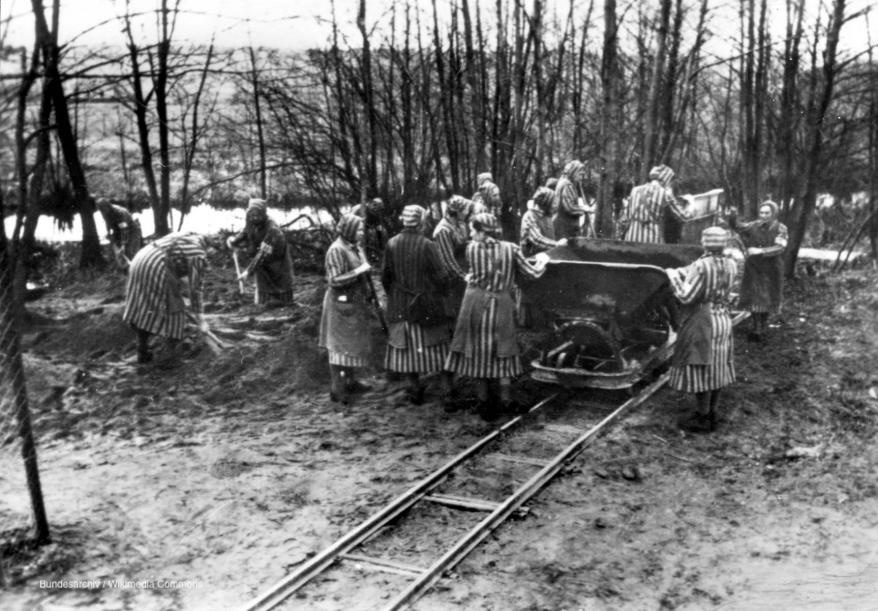
Slave labourers in the Ravensbrück concentration camp in Germany.
History
Between May 1939 and April 1945 approximately 123,000 women of 40 nationalities were held prisoner at Ravensbrück of whom about 50,000 died. There was also a small men’s camp in the complex which opened in 1941. Children were also held at the camp who arrived with Roma or Jewish mothers or were born to women in the camp.
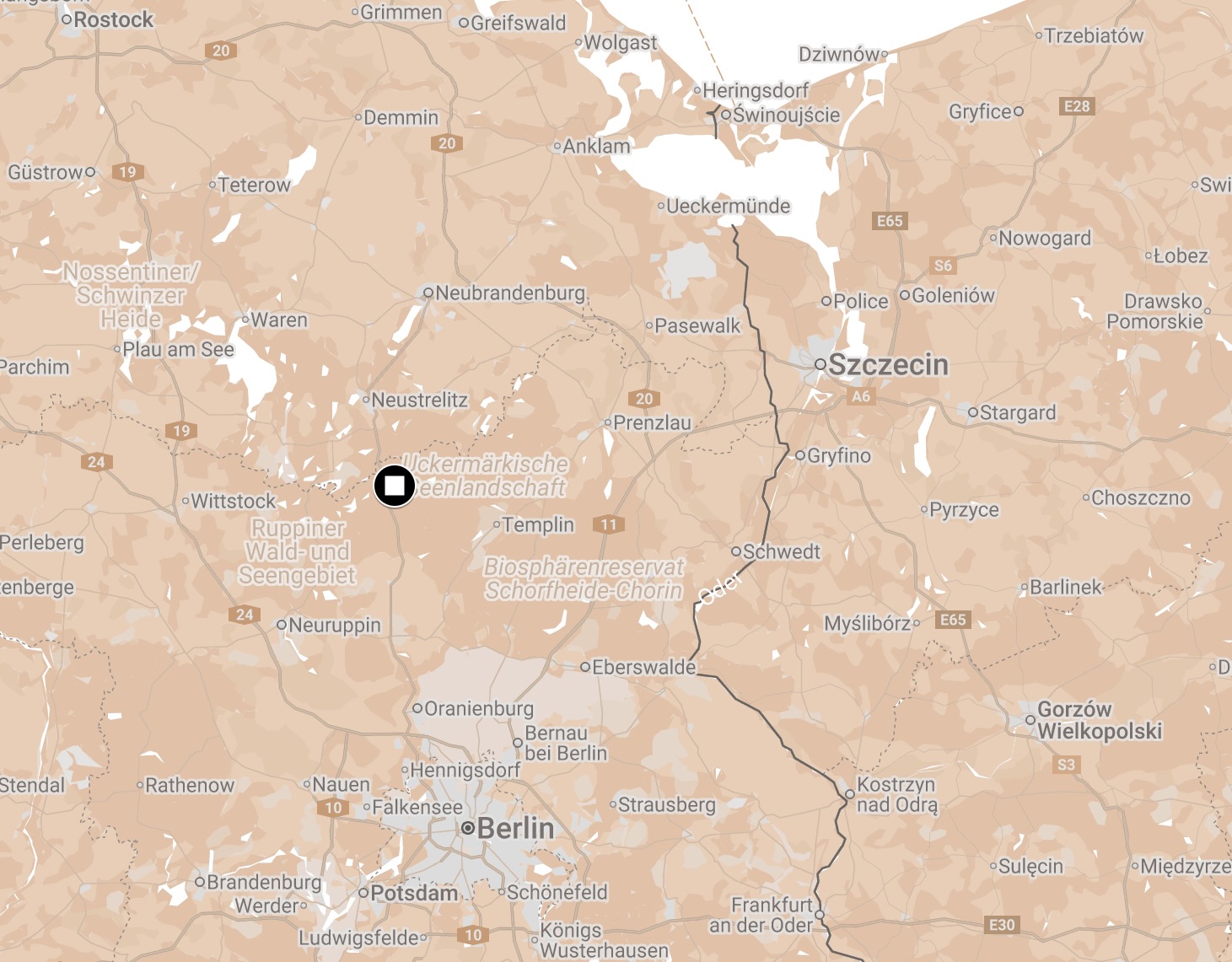
The camp was located 90km north of Berlin. Ravensbrück’s subcamps were spread across an area from the Baltic Sea to Bavaria.
The number of new arrivals in Ravensbrück increased drastically in 1944, to over 70,000, due mainly to the deportation of approximately 12,000 women from Warsaw after the failed uprising and the arrival of transports of Jewish women from Hungary, Slovakia, and other concentration camps, above all from Auschwitz.
Structure
The guards were all women, but the main administration was run by men.
From 1940 onwards, Ravensbrück became increasingly important as a supply of slave labour. Inmates did heavy labour outdoors, worked in armaments production and textiles for German companies like Siemens & Halske. The main camp was used as a transit station to its subcamps.
From the middle of 1941, the SS began establishing brothels in several of the men’s camps. The women prisoners who had to work there came mostly from Ravensbrück. Medical experiments were also carried out at Ravensbrück.
Originally all female camps were under the supervision of Ravensbrück but in the autumn of 1944 many female camps came under the jurisdiction of other camps.
Dissolution & Liberation
In 1944 and early 1945 many prisoners were evacuated from other camps. This is when members of the Boys arrived in the camp. Conditions in this period were dire with overcrowding and reduced rations. Preparations were also made for the mass murder of prisoners in the camp. In January 1945, older, weak and sick prisoners were taken from the main camp, quickly developed into a ‘death zone’ because conditions there were even worse than in the main camp. Many prisoners were also killed by Luminal—a barbiturate, called ‘white powder’ by the prisoners—or by being given poisonous injections, or by being selected for mass shootings or death in the gas chambers.
It was not only female members of the Boys who were taken to Ravensbrück as men were also transited through the camp.
As the Red Army approached there was a mass evacuation of the camp so that no witnesses could be caught by the Allies. About 24,000 women were forced on a death march to Mecklenburg while the Swedish and Danish Red Cross negotiated the release of 500 prisoners. 2,500 ethnic Germans were released.
On 30 April 1945, fewer than 3,500 malnourished and sick prisoners were found alive when the camp was liberated by the Red Army.
Aftermath
The former guards were tried by the Allies in the Hamburg Ravensbrück trials from 1946 to 1948. Sixteen of the accused were found guilty of war crimes and sentenced to death.
There is a memorial and museum at the site of the former camp.
 About
About History
 Education
 Quilts
 FIlms
FIlms Photos
 News Media & Events
 Publications
 Donate