
Members of the Boys were slave labourers in the Urbès labour camp, a subcamp of the Natzweiler-Struthof concentration camp.
Natzweiler-Struthof concentration camp was operated by Nazi Germany. The camp had 64 subcamps.
The Boys were teenage and child-Holocaust survivors, who were brought to the UK after the war for rest and rehabilitation.
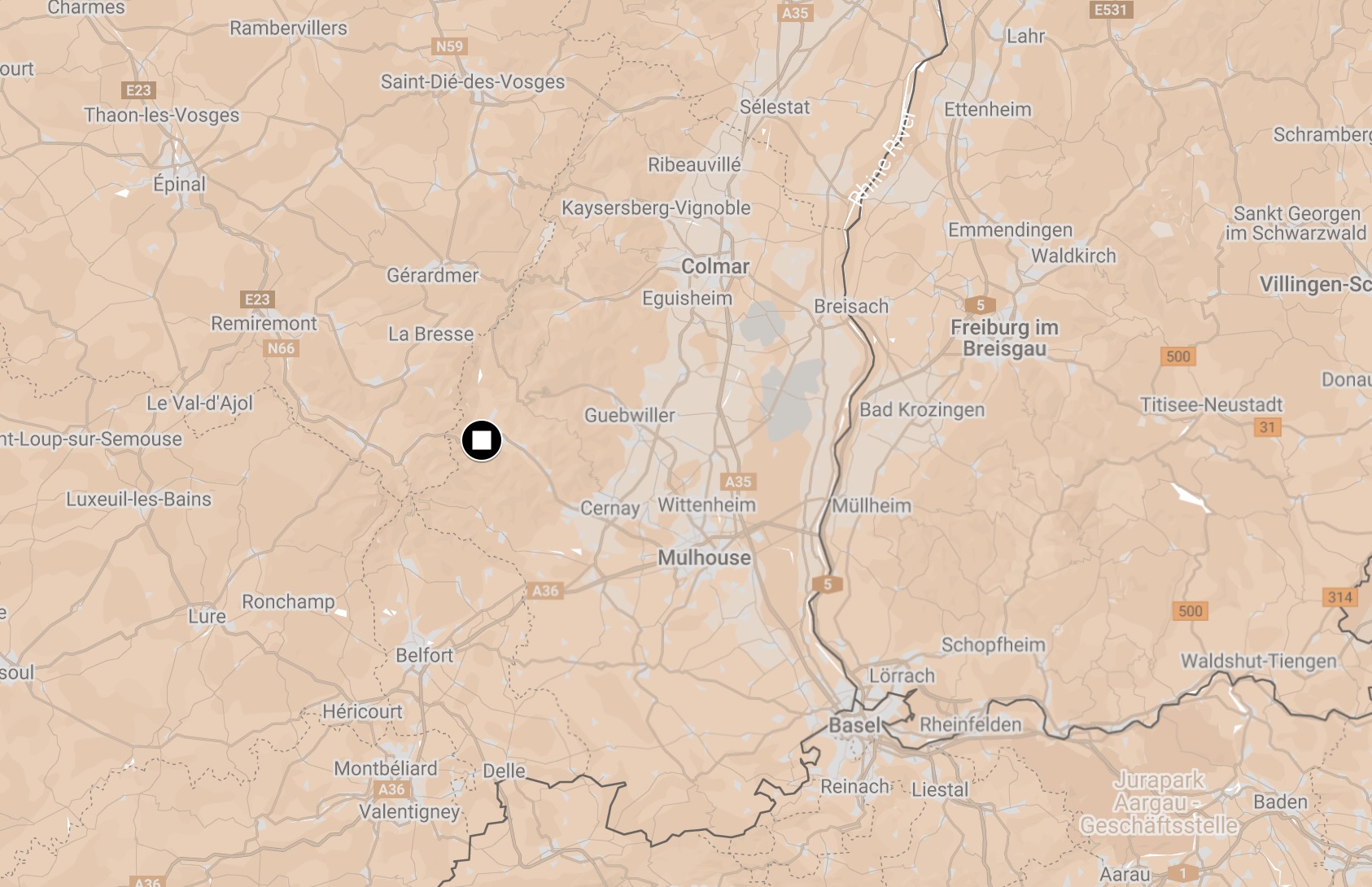
The Natzweiler subcamp was in Alsace in the town of Urbès known as Wesserling in German.
Wesserling is one of the subcamps to have emerged in the phase of the dissolution of the Natzweiler main camp.
The prisoners of the camp, which was located near Thann in Alsace, were to prepare a tunnel located between the towns of Urbés and Bussany in order to accommodate Daimler-Benz armaments production operations. In this tunnel, the company intended to undertake the production of propeller parts under the code name “A10 Kranich.”
History
The camp was first mentioned on 25 March 1944. On that day, 300 male prisoners from Dachau arrived. Nearly 90 percent of the prisoners on this transport were political prisoners; as for nationality, one-third of them were Italians, followed by Soviet citizens, Poles, Yugoslavs, French, Germans, Greeks, and Luxembourgers. A second transport of 200 prisoners followed on 29 March.
In the weeks that followed, further prisoner transports arrived in Wesserling, among them 502 prisoners from Lublin-Majdanek on 4 April; 1,350 prisoners on May 5; and 1,350 on 31 May 1944. Most of the prisoners were Polish forced laborers and Soviet prisoners of war or forced labourers. On 6 June 1944, 550 prisoners came from Auschwitz, including 302 Poles and 248 Soviet citizens. Nearly all of the inmates on this transport were classified as political prisoners.
On 31 August 1944, the final transport to arrive in Wesserling brought 465 Jews from Flossenbürg, including 444 of Polish nationality, 9 Soviet, and 11 German Jews. These prisoners had worked for Daimler-Benz as “labour Jews” in the Reichshof (Rzeszów) ghetto and subsequently in Dębica and had come to Wesserling by way of Krakau-Plaszow, Wieliczka, Auschwitz, and Flossenbürg. In Wesserling, they were lodged in the so-called Block 3.
Structure
The camp consisted of a number of barracks—three of them were accommodation for the inmates—and was fenced with barbed wire. Guards and administration were housed in a building outside the inmates’ camp. The camp was guarded by SS men and Luftwaffe soldiers, and in the beginning, it had no infirmary and no camp physician.
The tunnel where the inmates were put to work was located about 1.5km from the camp.
Due to the fact that the base of the tunnel was under water, the prisoners often worked standing in water. The air circulation in the tunnel was poor, since there was no ventilation, and to make matters worse, a diesel engine was constantly driving in and out. They were put to work in 12-hour shifts that changed weekly between day and night.
Dissolution & Liberation
Due to the advancing front, the camp was evacuated in October 1944. October 10, 1944, is the date of the subcamp’s last mention in the concentration camp files. It is not known how many prisoners were in the camp at the time of its evacuation. At least 300 prisoners had already been transferred to the Neckar camp complex in late August–early September 1944. Another 300 prisoners were sent to the Schwindratzheim subcamp and 465 prisoners—probably the last remaining inmates of the camp—were taken to the Sachsenhausen concentration camp.
The camp was liberated in February 1945 by the US Army.

 About
About History
 Education
 Quilts
 FIlms
FIlms Photos
 News Media & Events
 Publications
 Donate