
Members of the Boys were slave labourers in the Vaihingen labour camp, a subcamp of the Natzweiler-Struthof concentration camp in Germany.
Natzweiler-Struthof concentration camp was operated by Nazi Germany. The camp had 64 subcamps.
The Boys were teenage and child-Holocaust survivors, who were brought to the UK after the war for rest and rehabilitation.
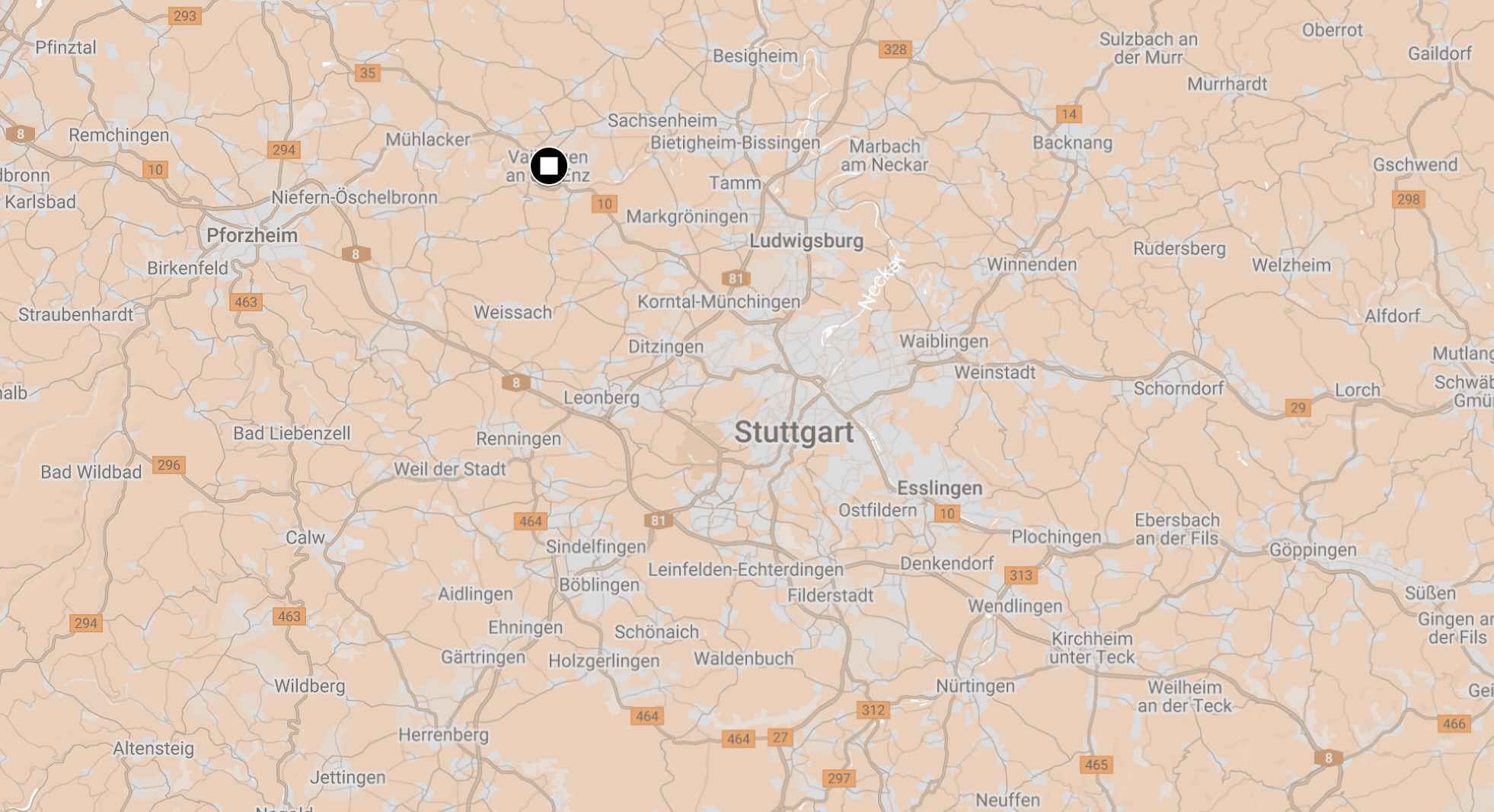
The camp was used for armaments production and located in the Necker region of Germany near the city of Vaihingen an der Enz.
History
The camp was built in a quarry by the Todt organisation in late 1943. It was part of a plan, code-named Stoffel, to relocate Messerschmitt manufacturing underground.
Charlie Igielman was transferred from Auschwitz II-Birkenau to Vaihingen in 1943:
“The train continued for two days. We were given no food nor water except what we had been given in Auschwitz as this was expected to last. There were about eighty people in my wagon. In the corner was a bucket which served as a toilet but it never got emptied. We were about eighty people in my wagon. We were the first to arrive in Vaihingen. Conditions were diabolical. The whole camp was literally knee deep in mud, as soon as you stepped out of your barrack block you sank. The S.S. used to ride around on horses chasing us … A few days after we started the camp commander got the idea to bring the stones to the camp to get rid of the mud. And so each person had to carry a stone the approximately five kilometres back to the camp. The Germans used to hit Jews with rifle butts until they were dead if the stone being carried was not large enough. Many people died of starvation and exhaustion.
I spent six long months in Vaihingen.”
Structure
The camp was in a field on the outskirts of Vaihingen on the road to Ensigen. The camp was surrounded by a double row of barbed-wire fences, and its four corners were flanked by watchtowers. At night, it was lit up by floodlights.
Inmates came from the Radom camp, who had been evacuated in the face of the advance of Soviet troops. The men were taken to Auschwitz II-Birkenau where a selection was made. Among them were members of the Boys Chaskiel Bernacki and Pinchas Hebel.
The 2,188 prisoners were taken to Vaihangen in mid-August. The majority were Polish Jews. At the end of November, only about 380 men remained in Vaihingen, half of whom were unfit for work.
Dissolution & Liberation
The camp was by this point a Krankenlager, a camp for the dying. In all, 2,442 inmates were transferred there from 17 different subcamps. A detachment was established to handle the corpses. In mid-February 1945, a typhus epidemic broke out in the camp.
The Vaihingen camp was evacuated toward the beginning of April 1944. Most were moved to Dachau subcamps. Those unable to walk were left behind. On 7 April 1945, French troops entered Vaihingen, liberating the inmates left behind.
Aftermath
On the order of French officers, the civilians of Vaihingen were required to care for the surviving patients and to take them to the Vaihingen hospital. The barracks were almost immediately burned to limit the risk of epidemic.
 About
About History
 Education
 Quilts
 FIlms
FIlms Photos
 News Media & Events
 Publications
 Donate