
Members of the Boys were held in Nazi labour and concentration camps and used as slave labourers.
From 1933-1945 Nazi Germany operated over 1,000 concentration camps and subcamps in its own territory and across German occupied Europe. Among them was the Buchenwald concentration camp.
As the camps were dissolved thousands of people, among them members of the Boys, endured horrific evacuations from the camps on foot, in freight wagons and open top trains, as well as perilous journeys across the Baltic Sea.
The Boys were teenage and child-Holocaust survivors, who were brought to the UK after the war for rest and rehabilitation.
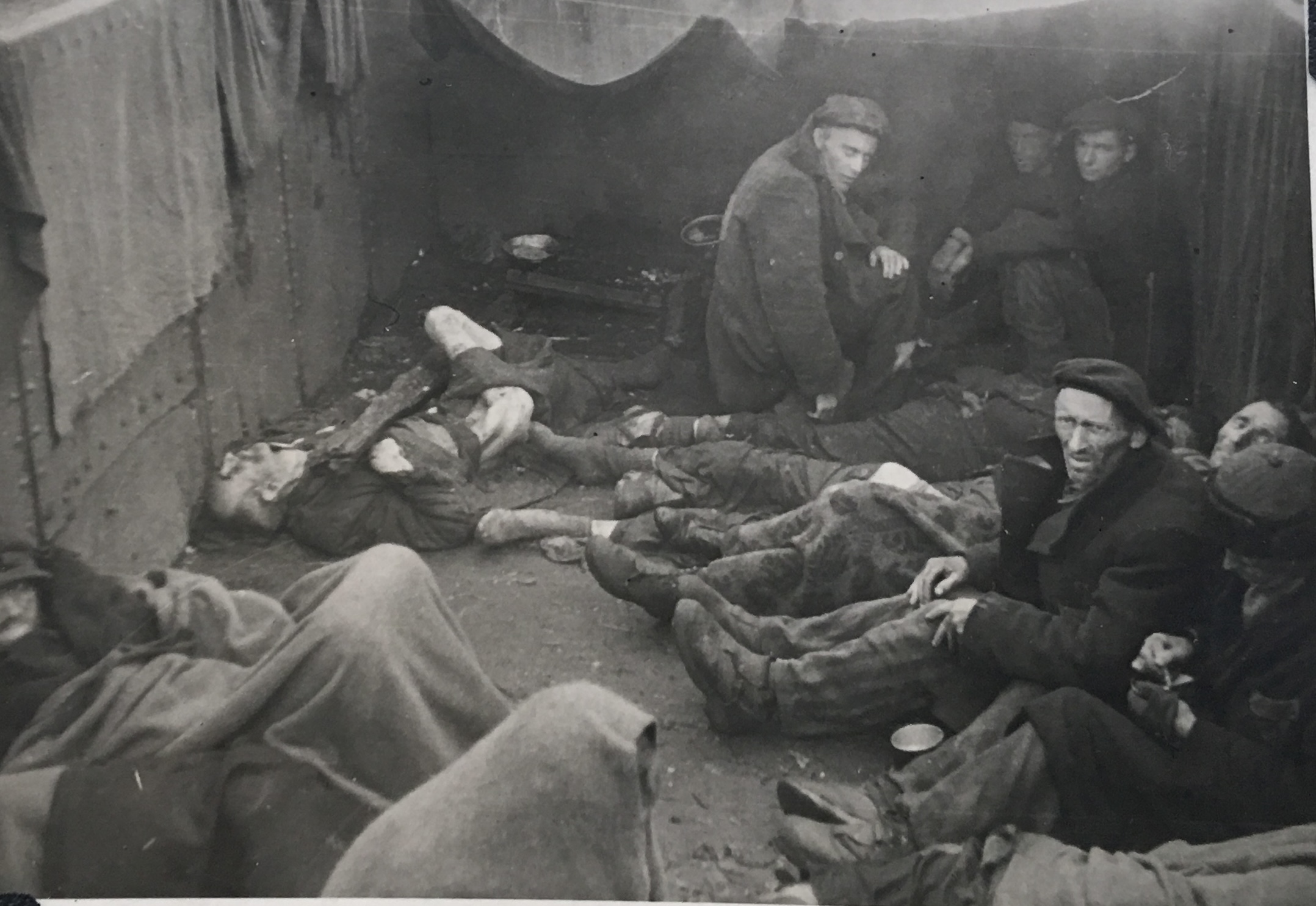
Death train from Buchenwald to Theresienstadt at liberation 8 May 1945.
Overview
The main Buchenwald concentration camp was on Ettersberg Mountain just outside the historic German city of Weimar.
As the Red Army advanced westwards across Poland in the freezing winter of 1944-45, the concentration and labour camps were forcibly emptied out and thousands endured death marches and then transit by train with no food and water to Buchenwald.
In conjunction with the advance of American troops, the SS had also brought thousands of inmates from western subcamps back to Buchenwald.
The main camp was extremely overcrowded. It was at this point that many members of the Boys arrived in Buchenwald.
By early April over 47,000 prisoners were crammed into the main Buchenwald concentration camp. With over 110,000 registered inmates by the end of February 1945, Buchenwald was the largest concentration camp still in existence.
Most of the members of the Boys were held in the Little Camp which was by now a death zone. Between January and April, 6,000 people died in this part of the camp alone. The undoubtably included relatives and friends of the Boys. The camp underground had, however, managed to protect over 1,000 young boys in the Kinderblock 66, among them many members of the Boys.
Dissolution
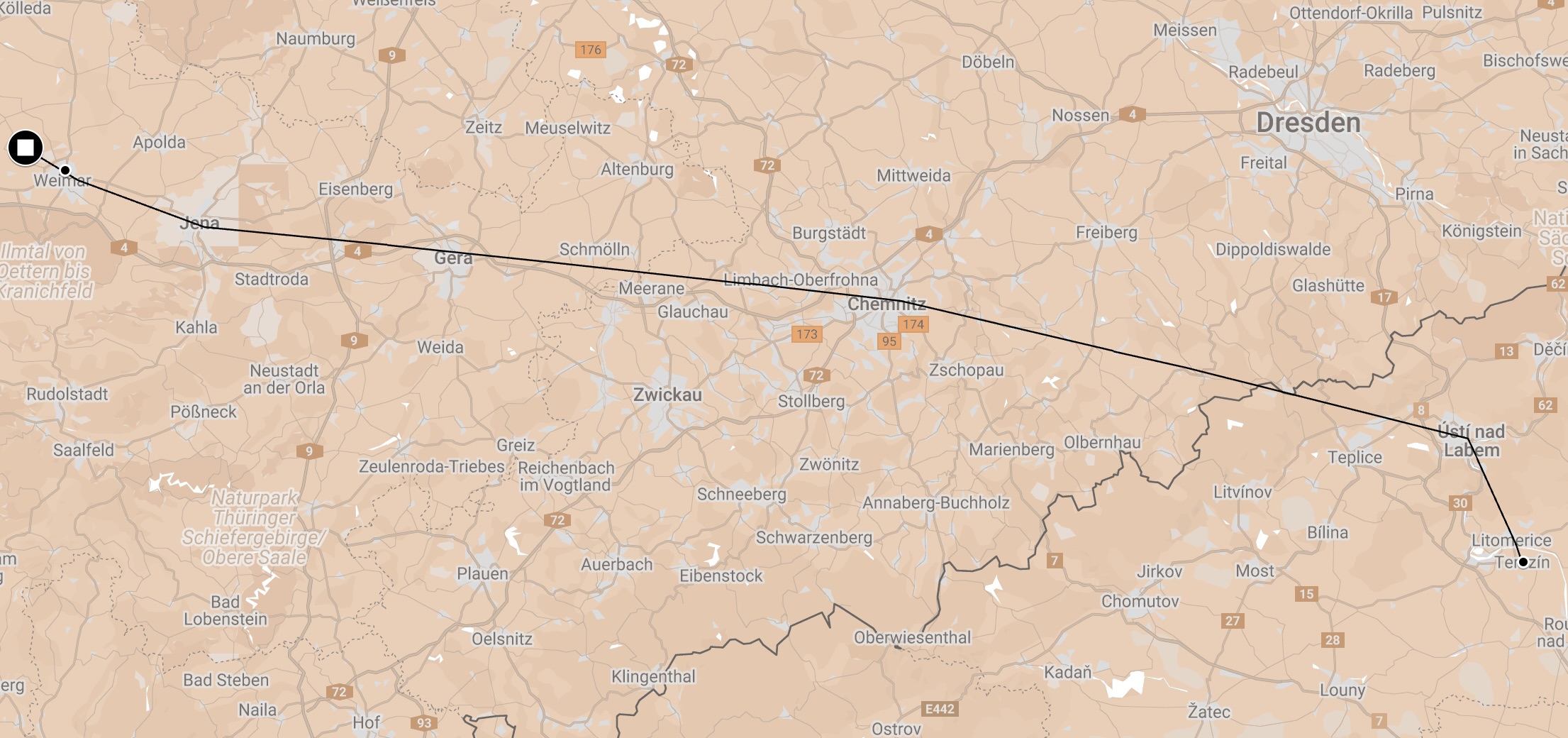
On April 7, the SS began to clear the main camp. The subcamps were evacuated separately. In the following days, 28,000 inmates of the main camp and its subcamps were transported by train or on foot to the Dachau, Flossenbürg and Mauthausen concentration camps and the Theresienstadt Ghetto. Probably over 10,000 inmates did not survive the marches and week-long rail transports. They died along the way from exhaustion or were shot by escorting guard details. The SS murdered them in full public view, sometimes with the participation the civil population. Some inmates were not liberated until the end of the war in May.
Some 3,000 primarily Jewish inmates were the first to be sent out from Buchenwald. The SS drove them on foot to the Flossenbürg concentration camp. Trains carrying thousands of inmates later left the Weimar goods station, headed for Leitmeritz and Bavaria. Inmate functionaries and the camp resistance delayed the process of assembling the marching columns. Nevertheless, further transports left the camp in the days that followed. Altogether 28,000 inmates departed from Buchenwald by train or on foot. Thousands lost their lives en route.
The Death Train from Buchenwald to Thereseinstadt
As the thunder of artillery from the advance of the US army could be heard in the distance prisons were ordered into the main parade ground. The Jews were ordered to step forward. Those who did were then taken into a large warehouse and then taken out to be shot. Among them were the uncle and cousins of 14-year-old Sevek Finkelstein one of the Boys.
Finkelstein was then among 3,000 prisoners mostly Russian prisoners of war who were marched out of the camp. Many members of the Boys endured this death march and the subsequent death train. They walked down the hill to the train station in Weimar. Here they were forced into open topped freight wagons. Finkelstein was struck by the normality, “People were walking around, nicely dressed, as if things were normal … Most people ignored us, some diverted their eyes.”
Sidney Finkel passing Gad Josef to his older brother as they arrive in Windermere in August 1945.
“In front of me walked a father and son, whom I believed were Hungarian Jews. The father appeared to be forty and the son was a teenager. The father, despite his age, appeared to be emaciated and physically exhausted. A half an hour into our march the father turned to his son and told him that he could not walk any further. The son was desperately attempting to urge him on. The son took his father’s arm and draped it around his shoulder and they continued to walk, but a few minutes later the father tore himself away from his son. The farther covered his eyes with his hands and as he moved to the ditch on the side of the road he stopped and shouted with all his remaining strength the watchword of our faith “Hear Oh Israel, The Lord our God, The Lord is one.” With that he fell into the ditch. The son was crying to his father to stand up, but the guard was there with his rifle, and all I heard was a shot as we continued to march.”
Sidney Finkel, Sevek and the Holocaust: The Boy who Refused to Die (2006).
As they were loaded into the train it started to rain. At nightfall the train left the station on a journey that would last three weeks. The train mostly travelled at night. There was no food and sometimes when the train stopped the prisoners were allowed to scavenge for food in the fields. It is not known exactly which route the train took.
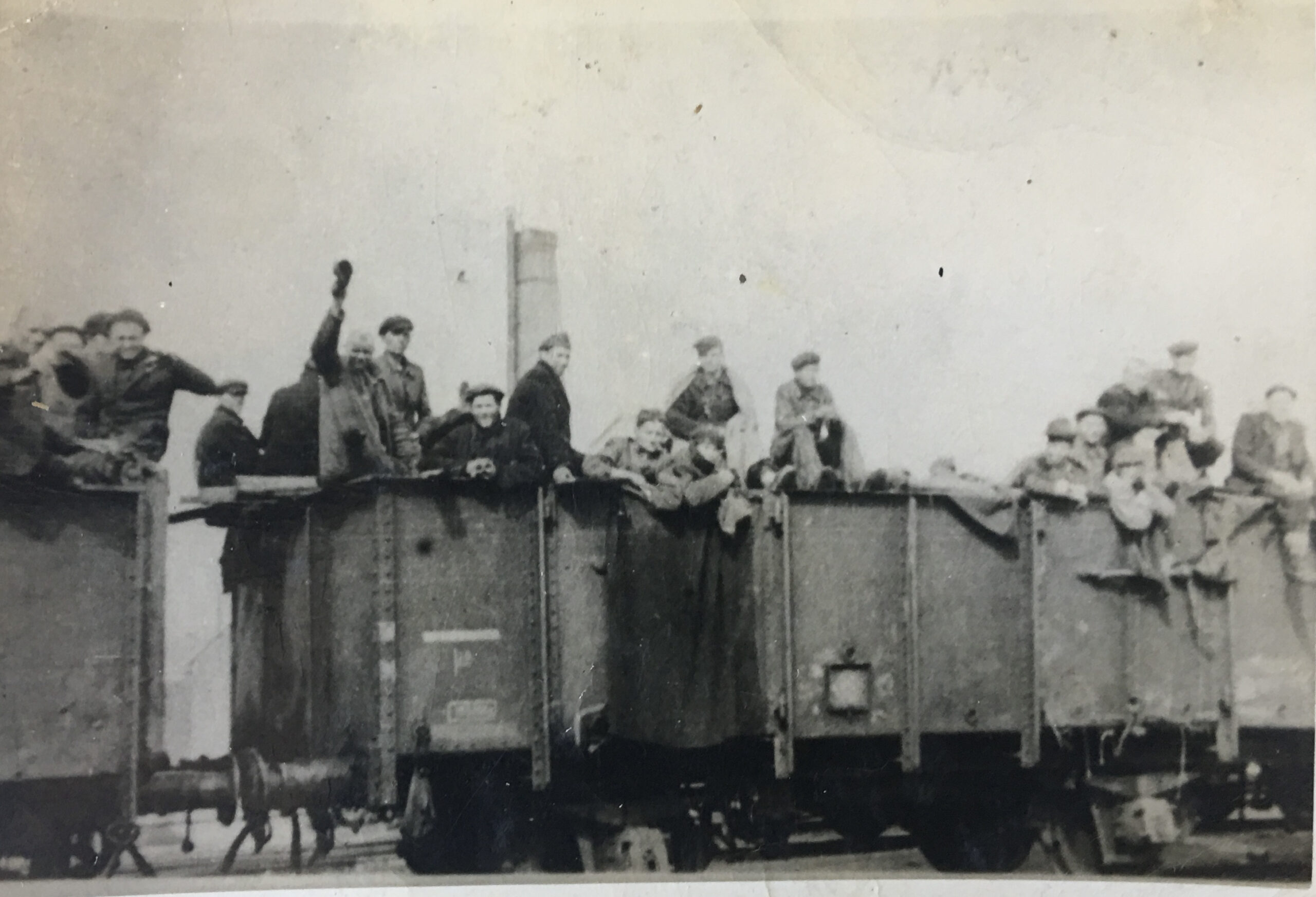
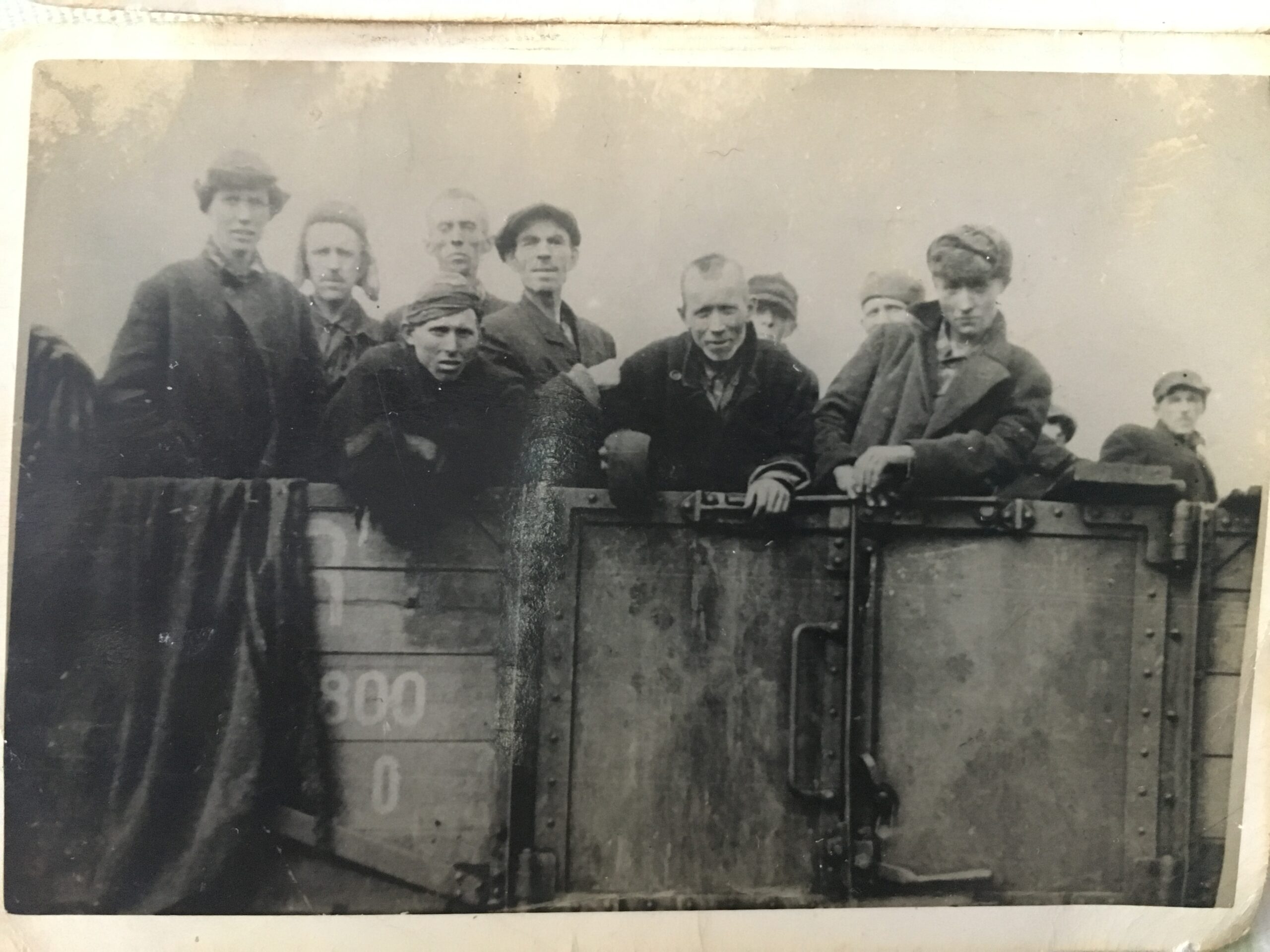
Death train from Buchenwald to Theresienstadt at liberation 8 May 1945.
The bodies of those who died were dumped in the last wagon. Members of the Boys witnessed the Soviet prisoners of war cutting flesh off the corpses.
While the death train continued its journey news of Hitler’s death became known. Its guards were the few soldiers who were still willing to commit murder for the Third Reich.
Jacob Glickson in the UK.
“From day to day, the people in our wagons dwindled. Some were murdered by the Germans and others died of starvation. There were also cases where prisoners killed each other; these were usually Hungarian inmates. We did not lack lice and other insects at all. They were so numerous that the lice even organised “parades” for us on our faces and arms, and it is no wonder as we received no water. I myself was sick. I suffered from pneumonia and I couldn’t move, so I never got off the train, not even when the Germans sometimes let us down to drink a little water. Each of us already had holes on our body as a result of the lice nibbling. We all resembled walking skeletons more than living humans.
Once, I managed, with great difficulty, to convince the guard to let me down to do my needs. Unfortunately, I spent a few seconds too long outside the wagon. I was so sick and weak that it was hard for me to go. Before I could turn back to the train, the German guard was already with his rifle in his hand, and he beat me with it. I couldn’t climb back to the cart on my own, and fortunately I was carried inside.
We continued to travel that way for another two weeks, hoping that we would finally reach any camp. One could say that we had already become indifferent to the journey and its destination, and we wished only for one thing: to get anywhere, where we will be able to recoup a bit of this terrible trip … we started eating weeds and grass to somehow maintain a minimum of vitality, because we knew that this situation could not last for a long time. When we were not allowed to pick grass for food, people dropped like flies.
It became more and more crowded inside the wagons, just like inside a hive. Horrifying thoughts began to haunt us again. With the arrival of the night, everyone thought that the time of death was coming.
One morning I was amazed to find that one of my neighbours, who was stronger than me, had plunged to his death, while I, although I was so ill and could not move from my place – miraculously, was still alive.
One morning we found out that one of our guards, an SS man, had escaped that night and that he left his weapon in the wagon. None of us noticed his escape, but that was a very good sign for us.”
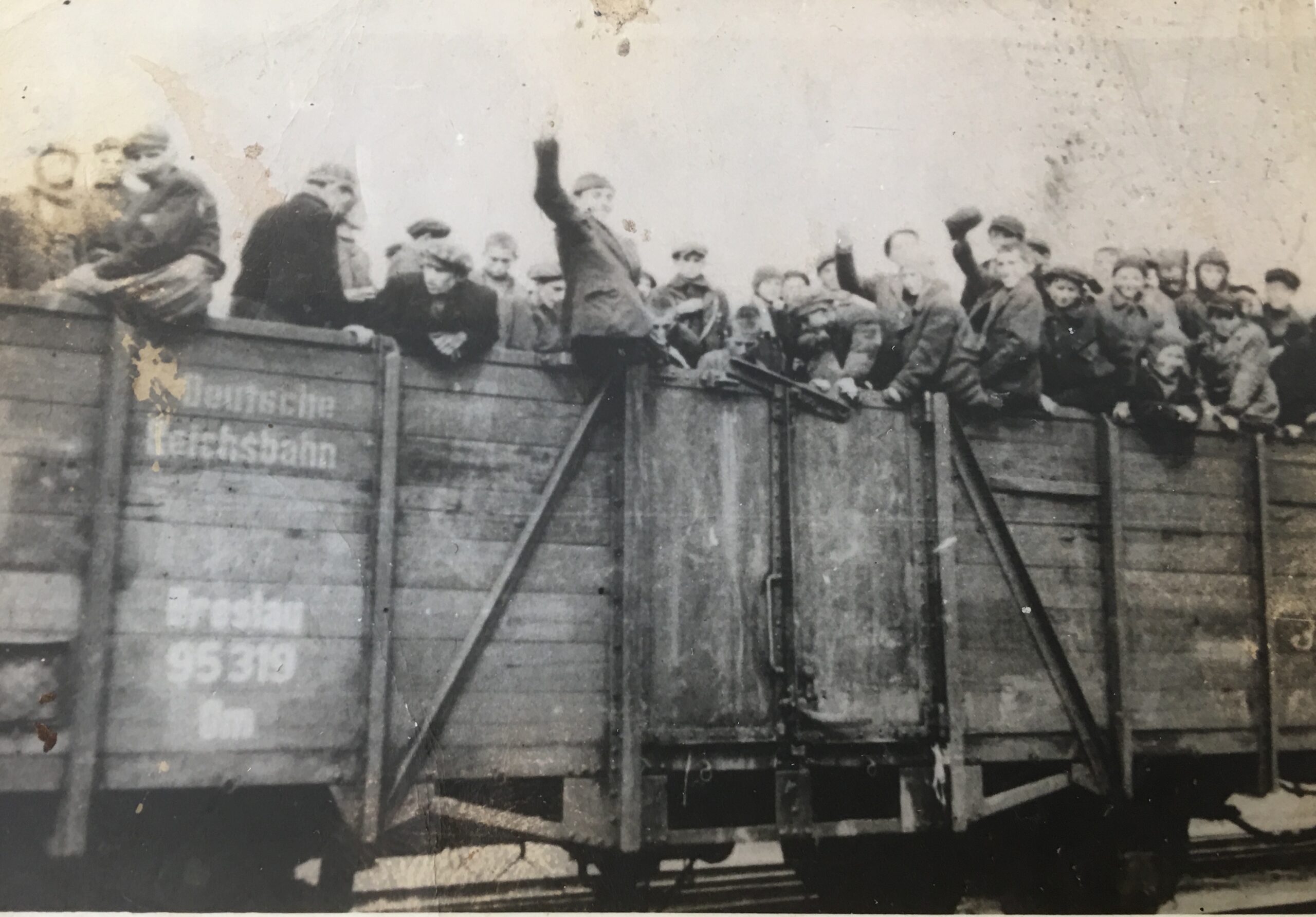
The liberation of the death train from Buchenwald to Theresienstadt 8 May 1945
The train was finally liberated by Czech partisans and the survivors were taken to the Theresienstadt Ghetto. The surviving members of the Boys were liberated in the Thereseinstadt on 8 May 1945.

 About
About History
 Education
 Quilts
 FIlms
FIlms Photos
 News Media & Events
 Publications
 Donate