
Members of the Boys were held in Nazi labour and concentration camps and used as slave labourers.
From 1933-1945 Nazi Germany operated over 1,000 concentration camps and subcamps in its own territory and across German occupied Europe. Among them was the München-Allach subcamp of the Dachau concentration camp.
As the camps were dissolved thousands of people, among them members of the Boys, endured horrific evacuations from the camps on foot, in freight wagons and open top trains, as well as perilous journeys across the Baltic Sea.
The Boys were teenage and child-Holocaust survivors, who were brought to the UK after the war for rest and rehabilitation.
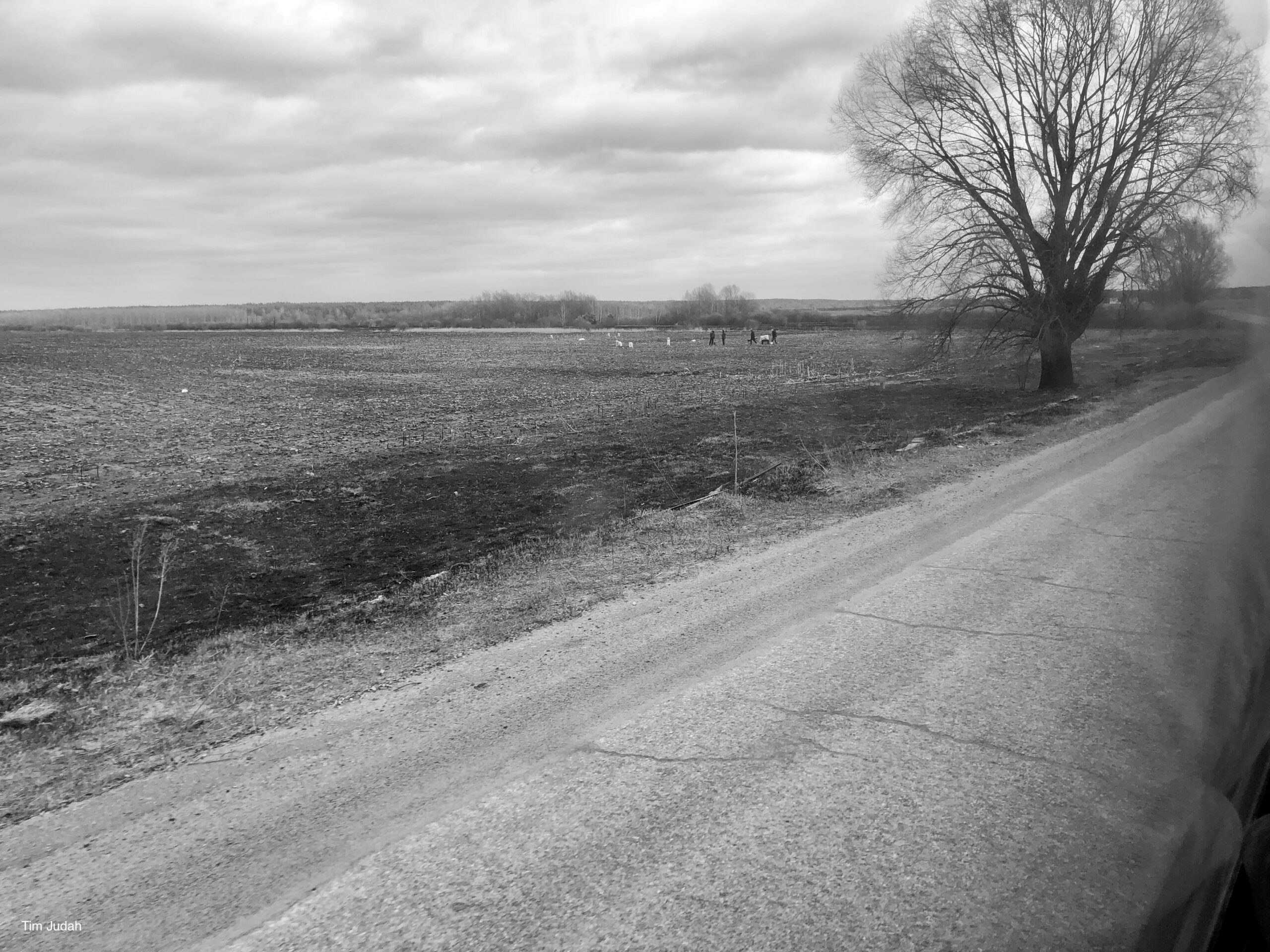
At the end of April 1945, the SS began evacuating prisoners from the main Dachau concentration camp to prevent their liberation by Allied troops. The death march from Dachau was joined by the death march from München-Allach on 26 April. At least 25,000 prisoners from the Dachau camp system were sent on foot in the direction of Tyrol. Several thousand prisoners died or were shot during the march.
Route
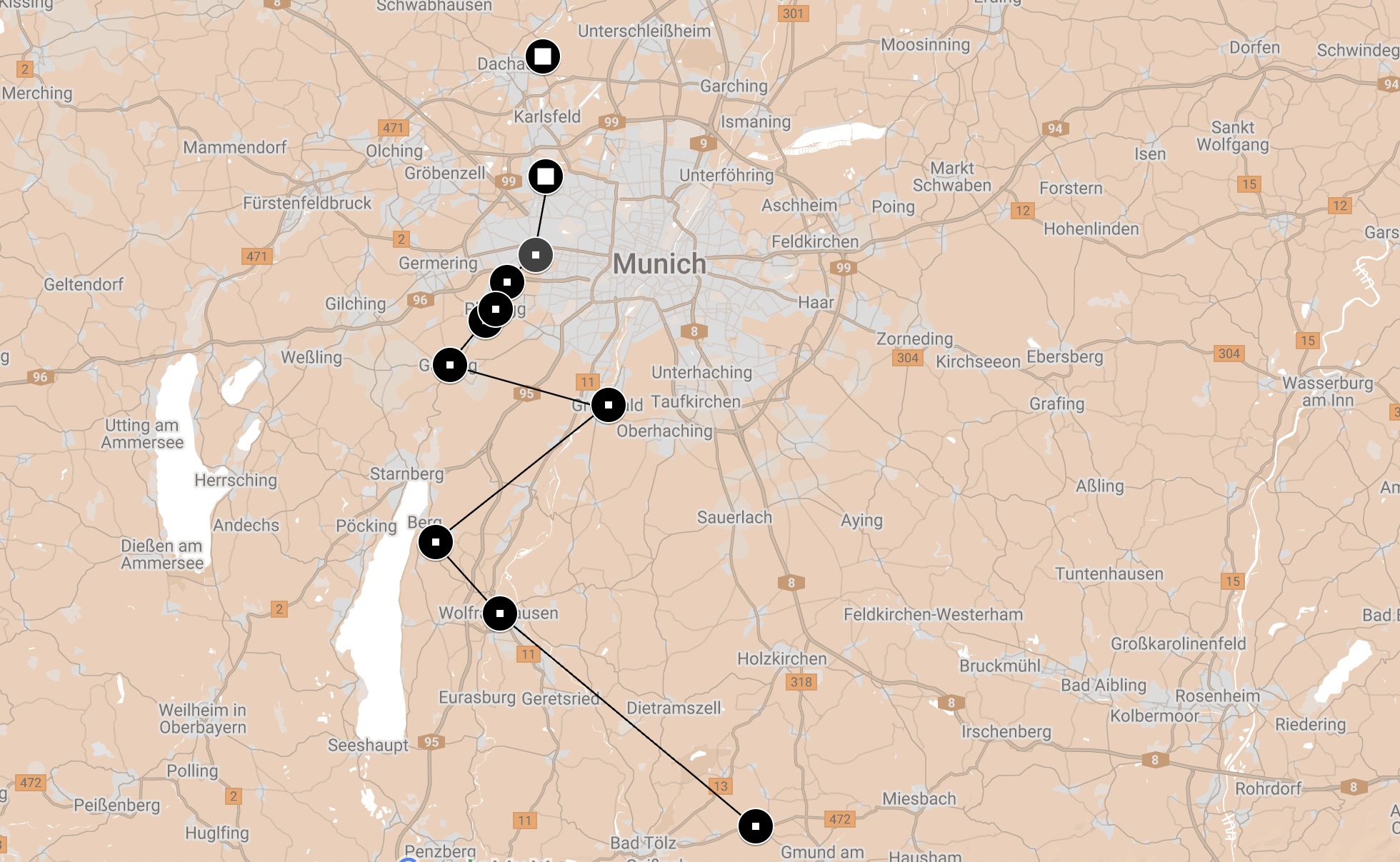
The prisoners were told their destination was Tyrol. The route led from Allach through Pasing, Gräfelfing, Planegg, and Krailling via Gauting to Leutstetten.
The prisoners were liberated on the death march by the US Army at Waakirchen on 1 May.
Memorialisation
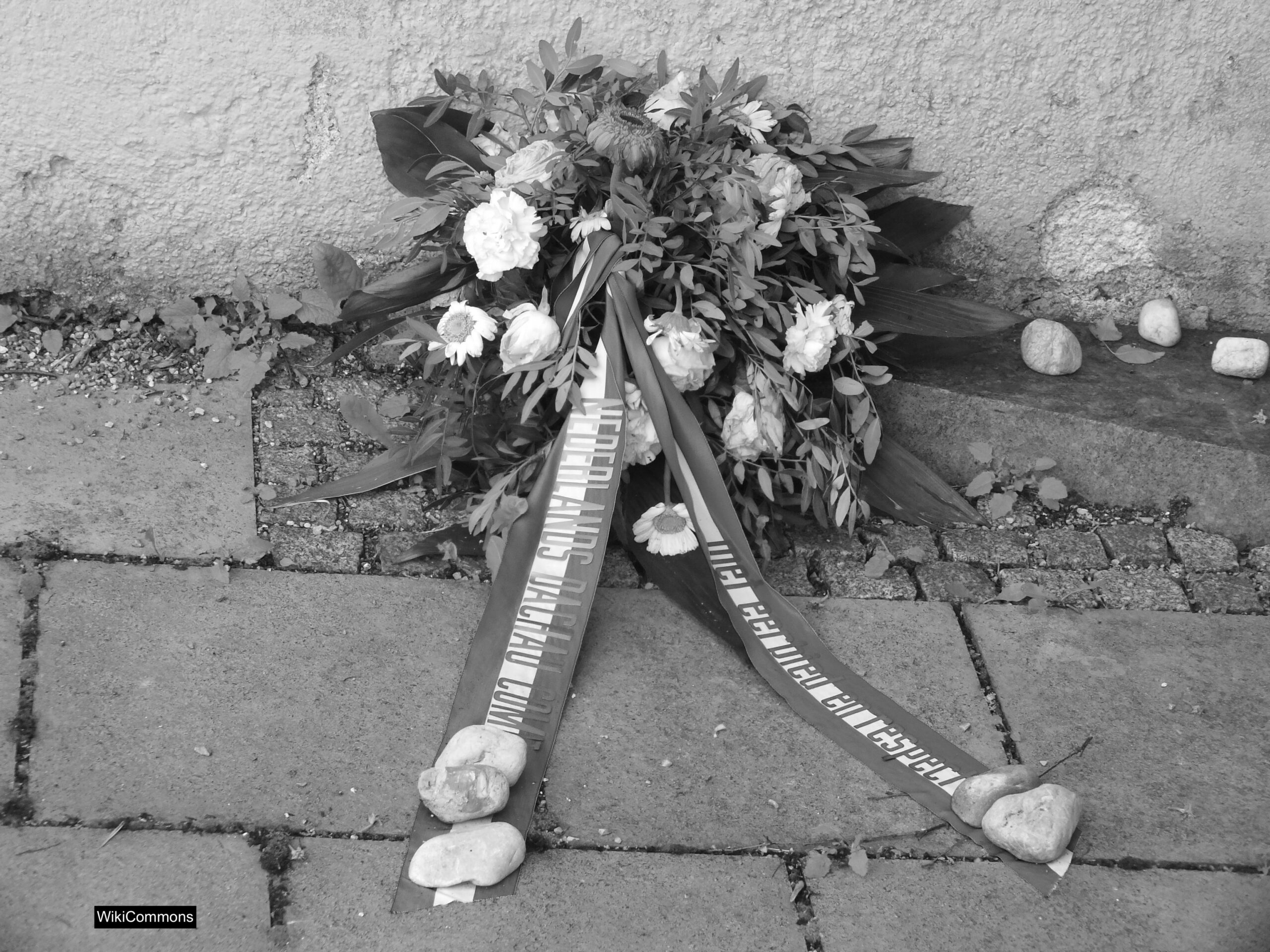
There are memorials along the route of the death march, in Fürstenfeldbruck, München-Allach, München-Pasing, Krailling, Gräfelfing, Planegg, Gauting, Grünwald, Berg-Aufkirchen and Wolfratshausen. They are marked on the map on the right.

 About
About History
 Education
 Quilts
 FIlms
FIlms Photos
 News Media & Events
 Publications
 Donate