Members of the Boys were held in Nazi labour and concentration camps and used as slave labourers.
From 1933-1945 Nazi Germany operated over 1,000 concentration camps and subcamps in its own territory and across German occupied Europe. Among them was the Auschwitz concentration camp complex or which Auschwitz III-Monowitz was a part.
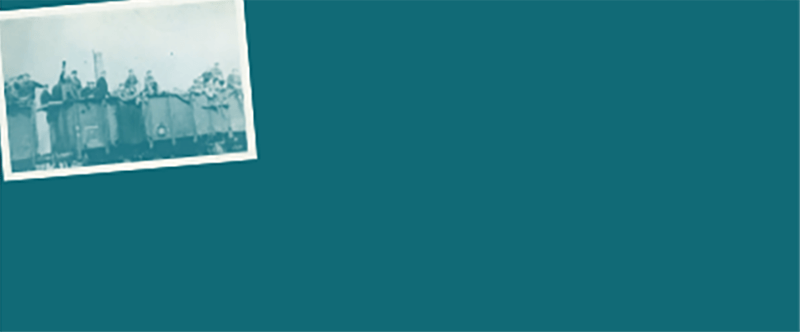
As the camps were dissolved thousands of people among them members of the Boys endured horrific evacuations from the camps on foot, in freight wagons and open top trains, as well as perilous journeys across the Baltic Sea.
The Boys were teenage and child-Holocaust survivors, who were brought to the UK after the war for rest and rehabilitation.
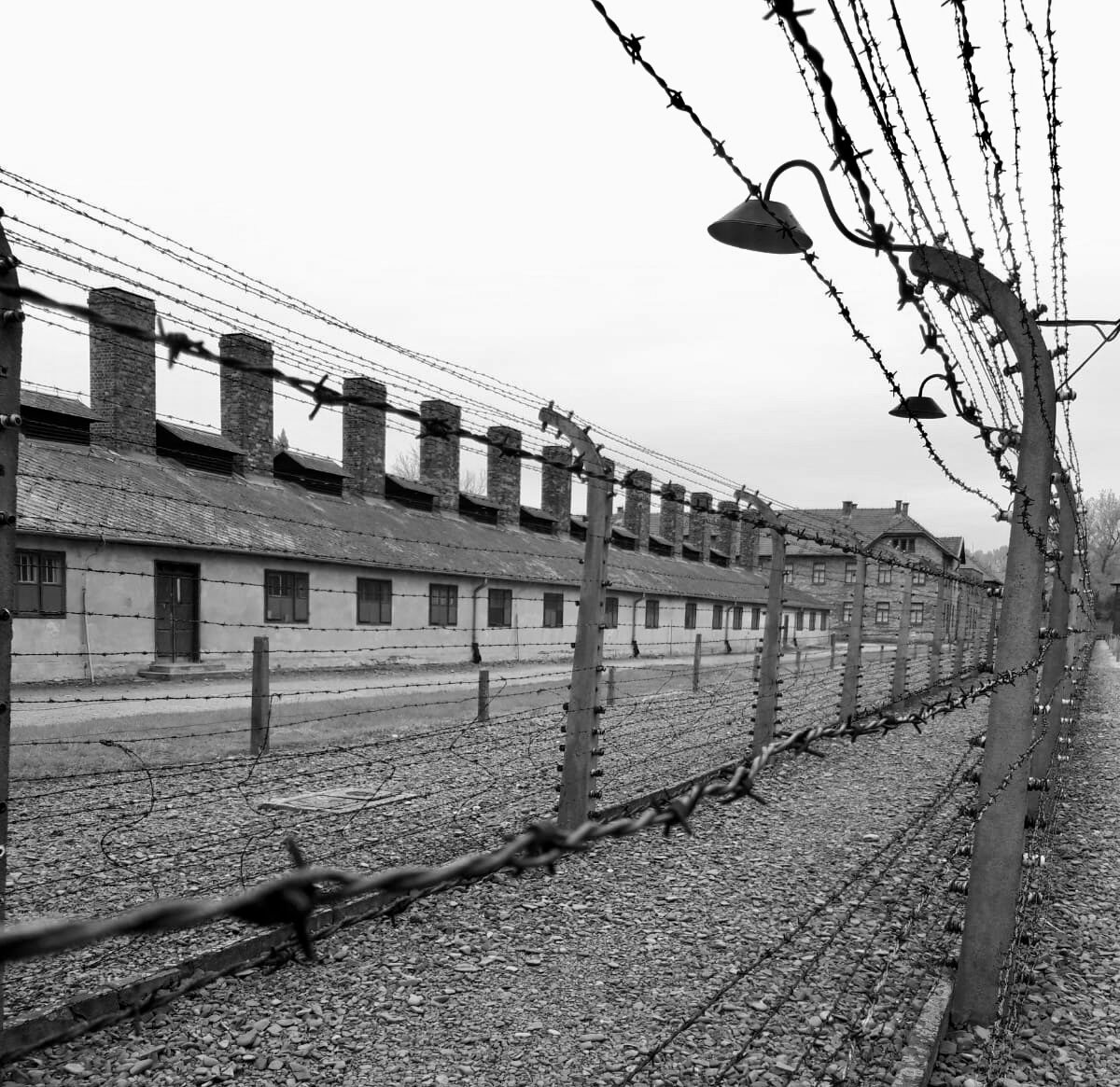
The former Auschwitz concentration camp.
On 18 January 1945, almost 10,000 inmates considered by the SS to be fit to walk were issued double bread rations. In the evening, they gathered for roll-call and in columns of 1,000 were marched out of the camp.
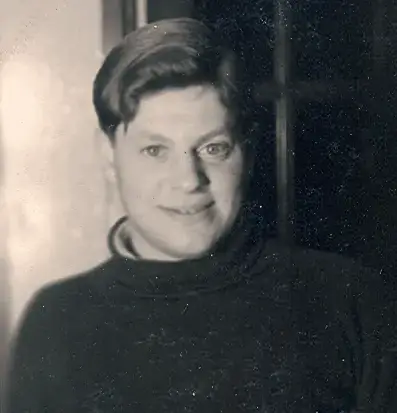
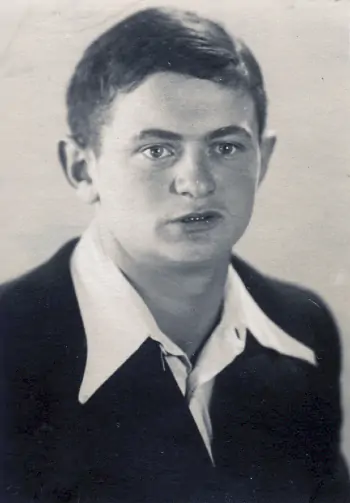
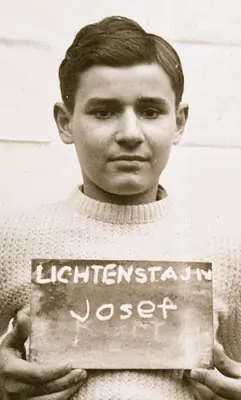
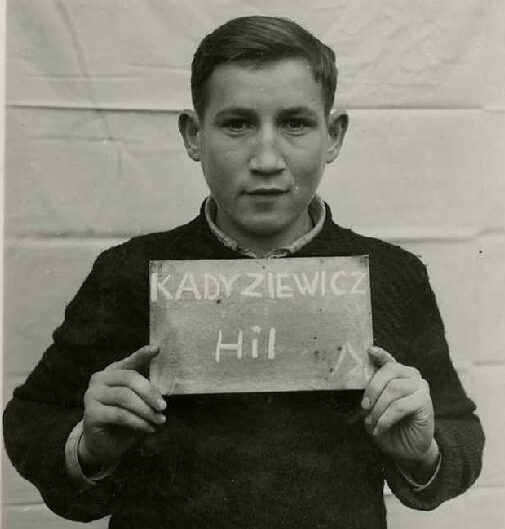
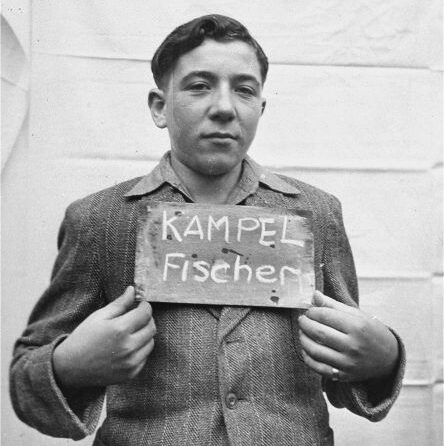
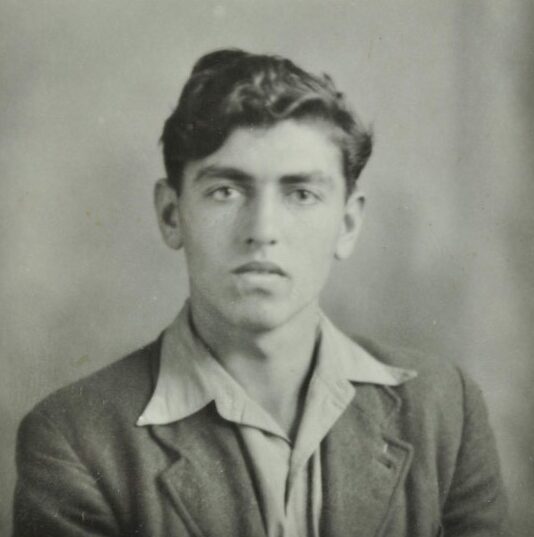
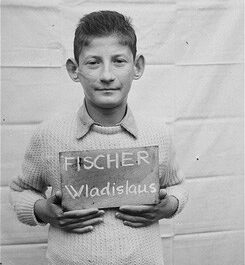
Some of the Boys who endured the death march from Auschwitz III. These photographs were taken after the liberation.
They wore thin prison uniforms and wore wooden clogs. They walked all night and the following one through deep snow. Those who lagged behind were shot.
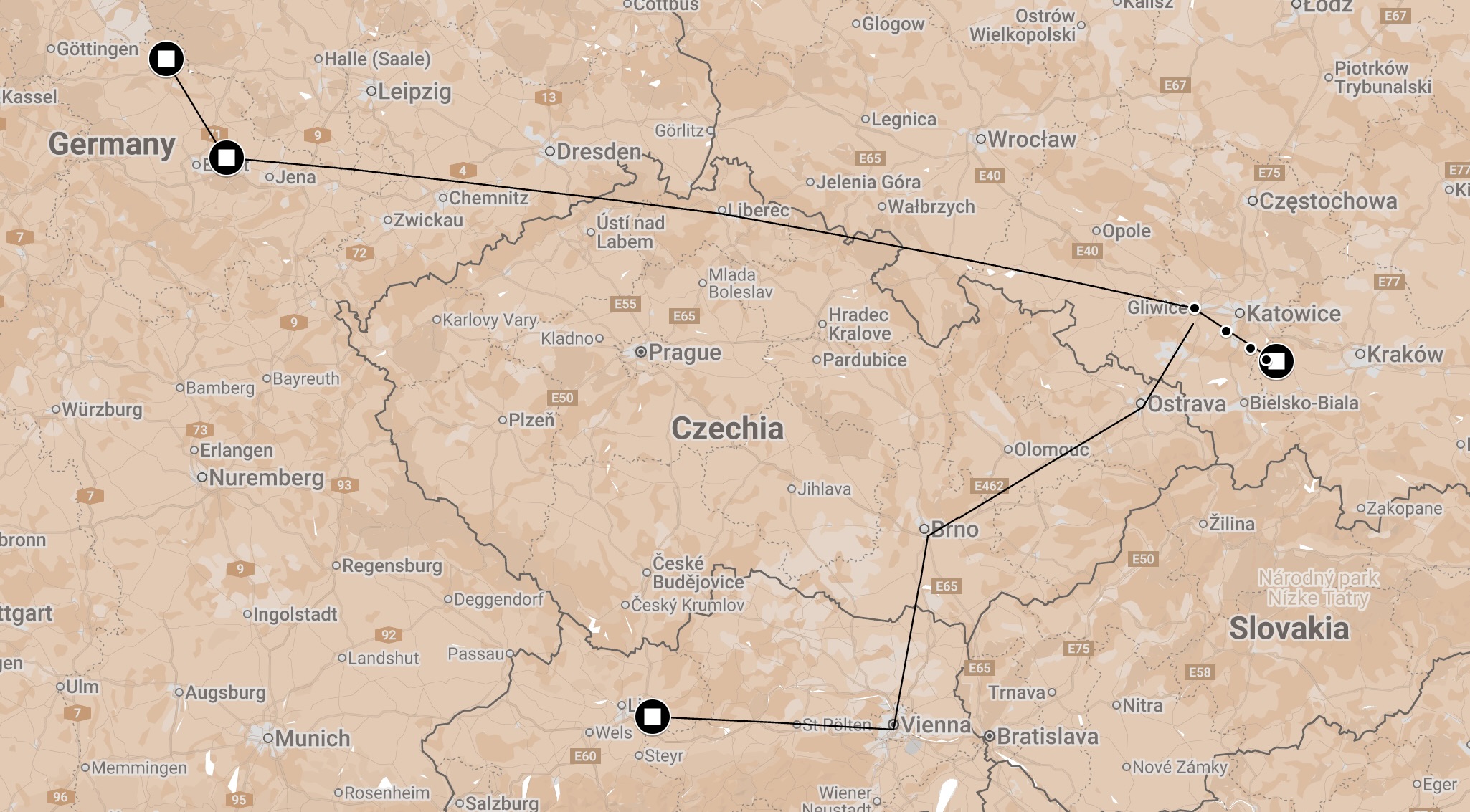
Their destination was Auschwitz subcamp of Gleiwitz about 80km from Auschwitz III-Monowitz. The columns walked through modern-day Oświeçim, Mikołów and Bieruń.
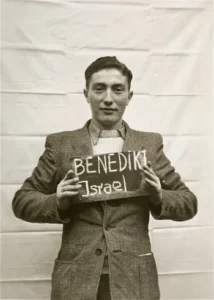
Salek Benedikt
“l turned my head to have a last look at the camp, my abode for the last six months. And I remembered. I remembered the long hours of hard work at the building site, in all weathers, without shelter.
I remembered the heavy weight or the sacks of cement on my shoulders, the dangerous task of lifting and carrying railway sleepers.
And, above all the persistent hunger.
I also remembered the people who came forward to help me without having been asked –
Mr Abramski – my father’s tailor.
Moniek Finkelstein from Poddzbice.
Szlamek – an orphan in the Lodz Ghetto (my parents looked after him).
Mr lckowicz – a patron of my parent’s restaurant.
And the anonymous British Prisoner of War – when we went without food after the bombing at the Buna, he offered me a sandwich and a pear.
Without the help of these good people, I probably would not have survived Auschwitz!
It was stiIl dark; ahead of me, I could just discern the stooped figures of my fellow inmates turning in a westerly direction. Soon, I joined them on the main road.
We marched in silence.
The SS guards seemed excited. They were driving us faster. Those who could not keep up, they shot. Anyone who faltered.
The march must have lasted two days. We suffered many casualties. Our immediate destination was Gleiwitz Concentration Camp”
Salek Benedikt, ’45 Aid Society Journal, 2000. Benedikt was 20 years old when he endured the death march from Auschwitz III-Monowitz.
During the two days march the columns from Monowitz were joined by other prisoners from the Auschwitz subcamps of Fürstengrube, Janinagrube, Günthergube and Bobrek.
They stayed in Gleiwitz I and II for two nights before being transported in freezing conditions in crowded open topped freight wagons to the Buchenwald, Mittlebau-Dora and Mauthausen concentration camps. Here many of the prisoners endured arduous slave labour in appalling conditions.
Auschwitz III-Monowitz was liberated by the Red Army on 27 January 1945.
 About
About History
 Education
 Quilts
 FIlms
FIlms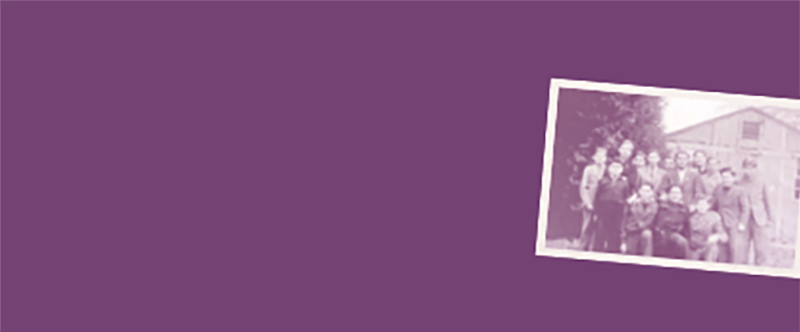 Photos
 News Media & Events
 Publications
 Donate