
Members of the Boys were held in Nazi labour and concentration camps and used as slave labourers.
From 1933-1945 Nazi Germany operated over 1,000 concentration camps and subcamps in its own territory and across German occupied Europe. Among them was the Fürstengrube subcamp of the Auschwitz concentration camp complex.
As the camps were dissolved thousands of people among them members of the Boys endured horrific evacuations from the camps on foot, in freight wagons and open top trains, as well as perilous journeys across the Baltic Sea.
The Boys were teenage and child-Holocaust survivors, who were brought to the UK after the war for rest and rehabilitation.
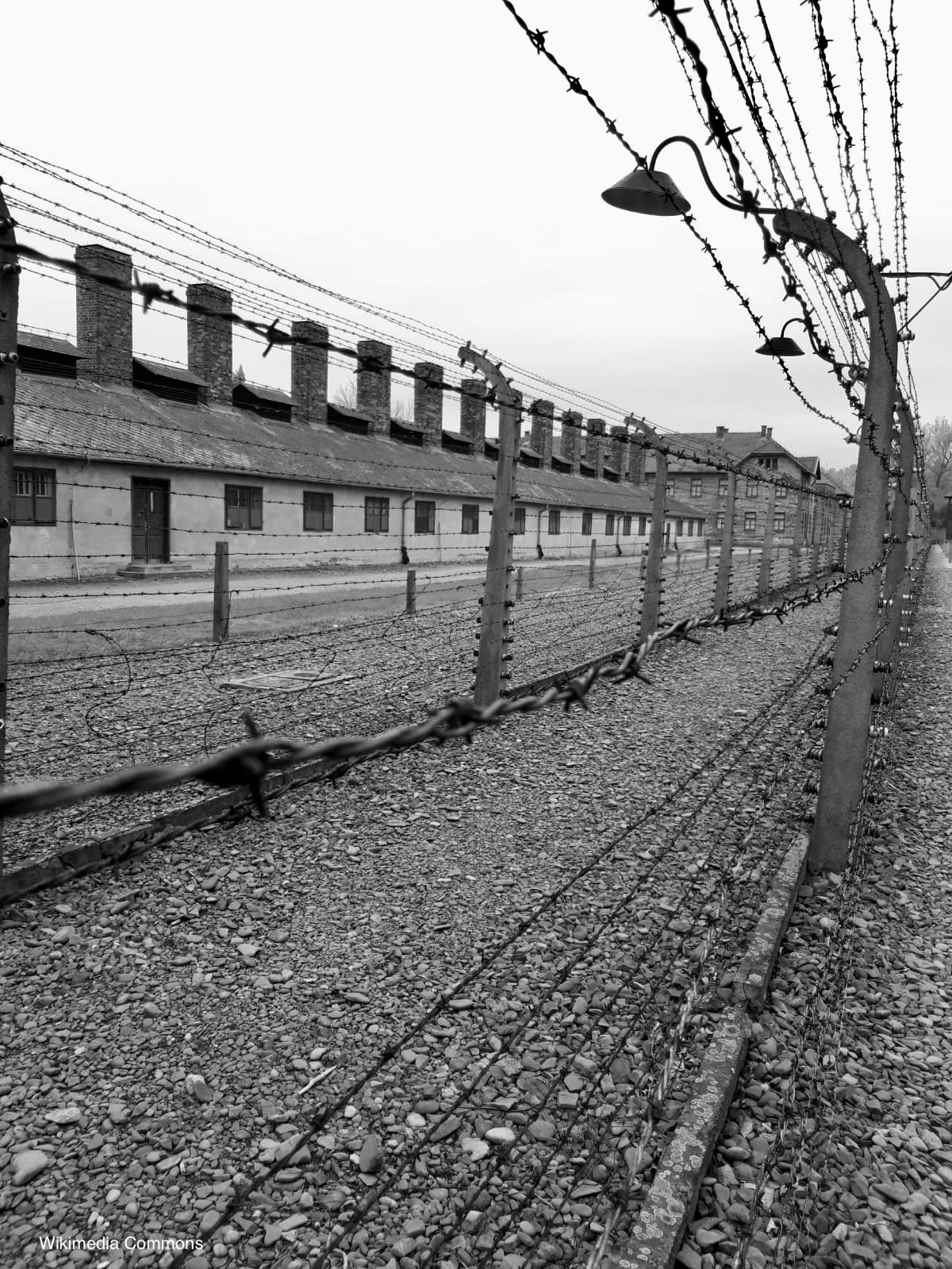
The former Auschwitz concentration camp.
On 19 January 1945, as the Red Army advanced, the camp was evacuated.
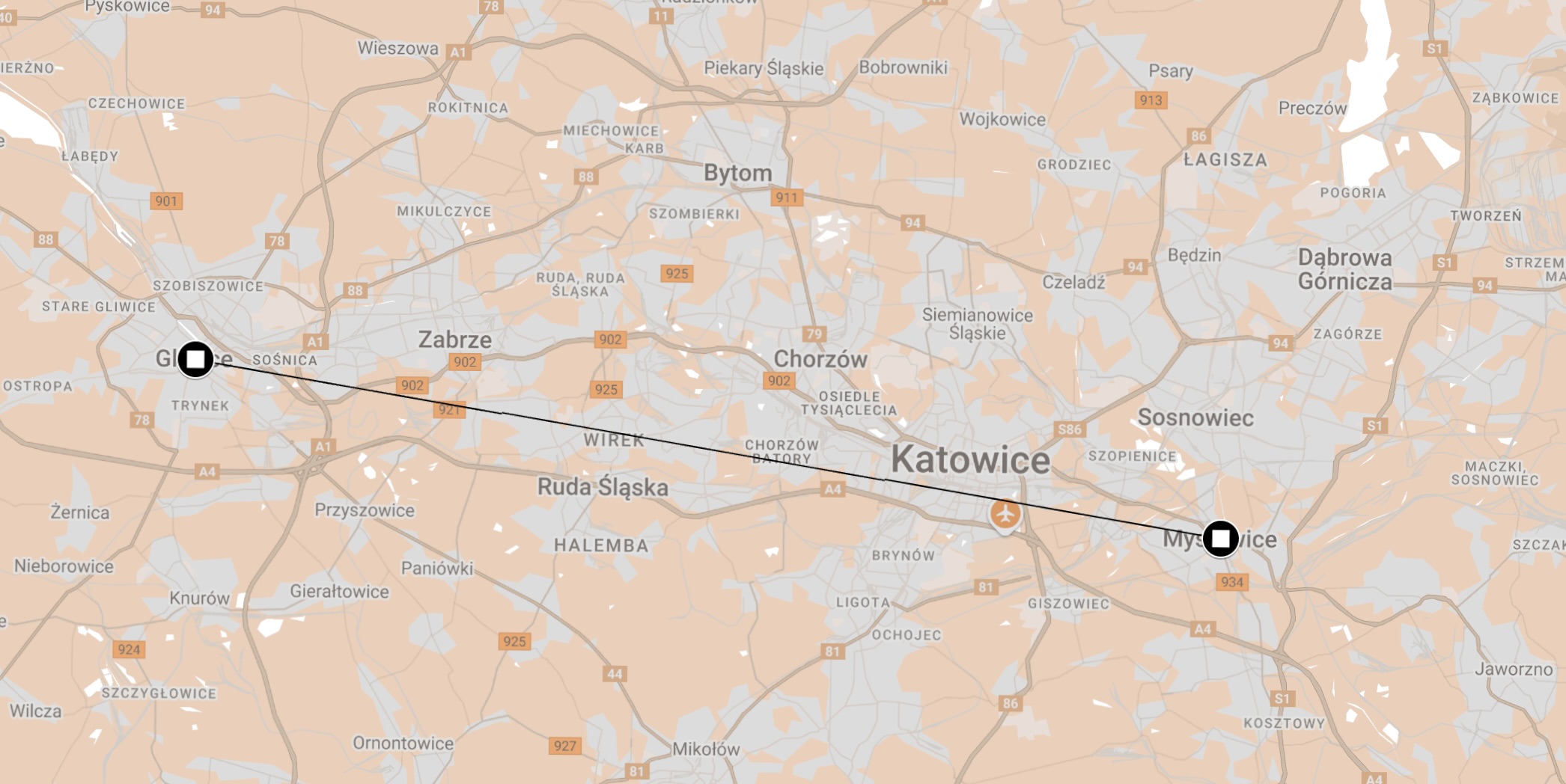
Under the command of Oberscharführer Max Schmidt, 1,283 prisoners mostly Jewish prisoners were marched out of the camp towards Mikołów. On 20 January, they arrived at Gleiwitz and were housed in the former subcamp Gleiwitz II, where they joined prisoners from Auschwitz III-Monowitz, as well as some of the other subcamps. Some prisoners slept in the open as the camp was overflowing.
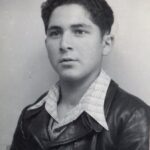
Sam Pivnik in 1945.
“We were formed up into a column. And they made us wait all afternoon. This was different from the usual treck to the mine entrance. There must have been 700 of us wrapped in what ever rags we had shuffling along as best we could, sliding and scraping on the ice … The SS marched with us, to the head and rear of the column and along our flanks. They looked as grim and miserable as we did, collars up, rifles and rucksacks on their backs. No one looked behind. No one was going back …
The weather was terrible. Polish winters are always grim, but for men weakened by slave labour and starvation, it was lethal.”
On 27 January 1945 at about 4pm a dozen or so SS men entered the Fürstengrube subcamp and killed most of the remaining prisoners. Some were shot and others burned to death when the SS set their barracks on fire. Only a dozen or so prisoners survived the massacre by hiding or lying motionless beneath heaps of bodies when it was over. Polish miners took them into their care after liberation.

 About
About History
 Education
 Quilts
 FIlms
FIlms Photos
 News Media & Events
 Publications
 Donate