
From 1933-1945 Nazi Germany operated over 1,000 concentration camps and subcamps in its own territory and across German occupied Europe. Among them was the Rehmsdorf-Tröglitz concentration camp, a subcamp of the Buchenwald concentration camp in Germany.
As the camps were dissolved thousands of people, among them members of the Boys, endured horrific evacuations from the camps on foot, in freight wagons and open top trains, as well as perilous journeys across the Baltic Sea.
The Boys were teenage and child-Holocaust survivors, who were brought to the UK after the war for rest and rehabilitation.
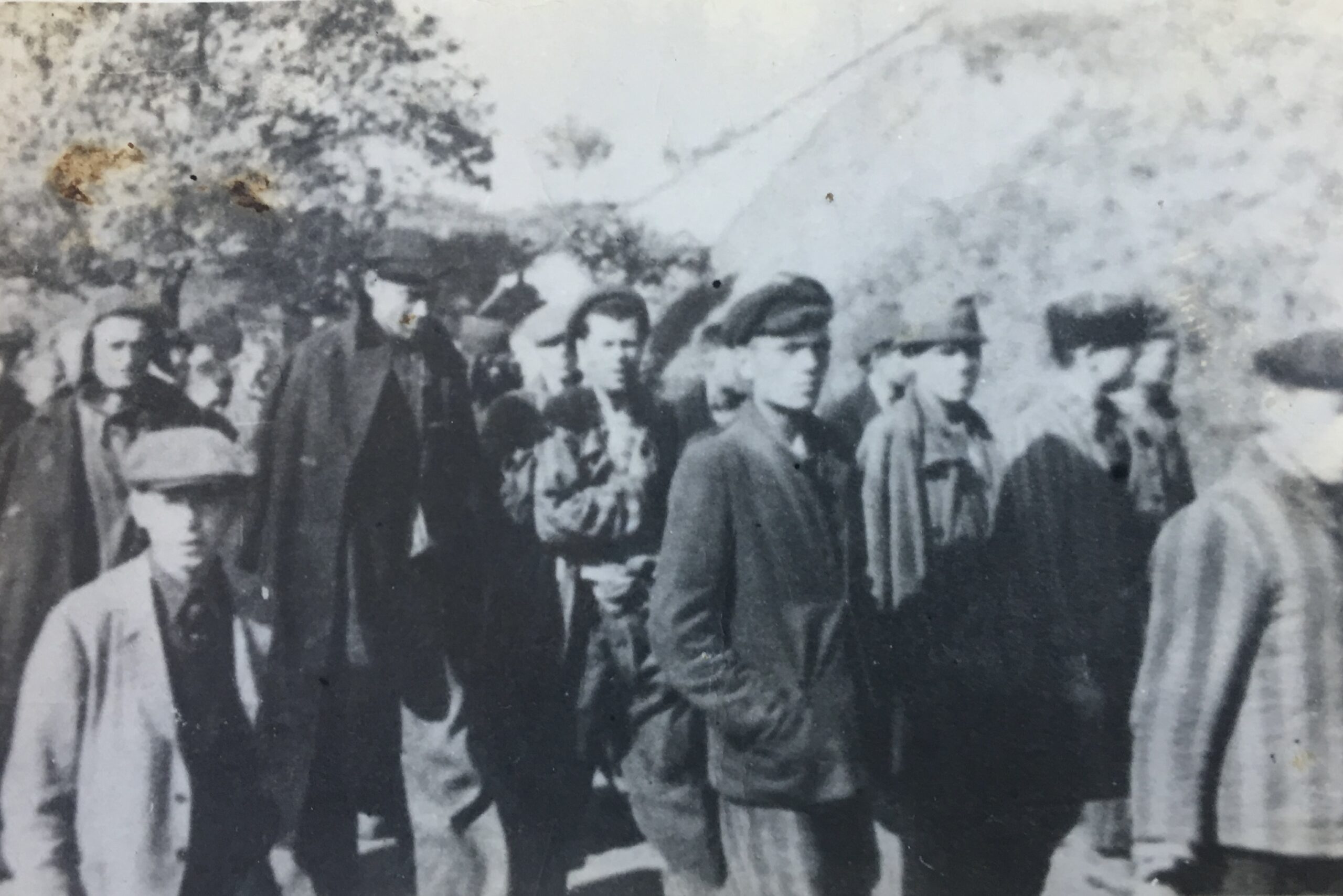
The death march from Rehmsdorf-Troglitz spring 1945.
As American troops approached, on 6/7 April 1945, 2,775 prisoners were evacuated from the Rehmsdorf-Tröglitz concentration campcomplex in overcrowded open freight cars. The destination was the Theresienstadt Ghetto where they arrived on 20 April 1945. For those members of the Boys who have been on the death marches from Auschwitz – just months before – the agony was now repeated.
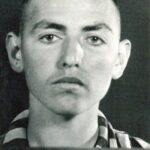
David Herman photographed on arrival at Buchenwald.
“As the train continued its journey, I could see the bombs dropping. I suppose I felt happy, because I could see, first hand, that these bombs were hurting the Germans. The bombs were not selective and the SS were now in just as much danger as we were. They looked very anxious. As long as they were preoccupied, they left us alone and did not hurt us. We spent five days on the train. During that time it made very slow progress. We were on the train twenty-four hours a day, but sometimes as much as a third of the time was spent sitting stationary on the tracks, or moving backwards onto reserve tracks in order to let a German military transport train get through.
During those five days, we were only given food once.”
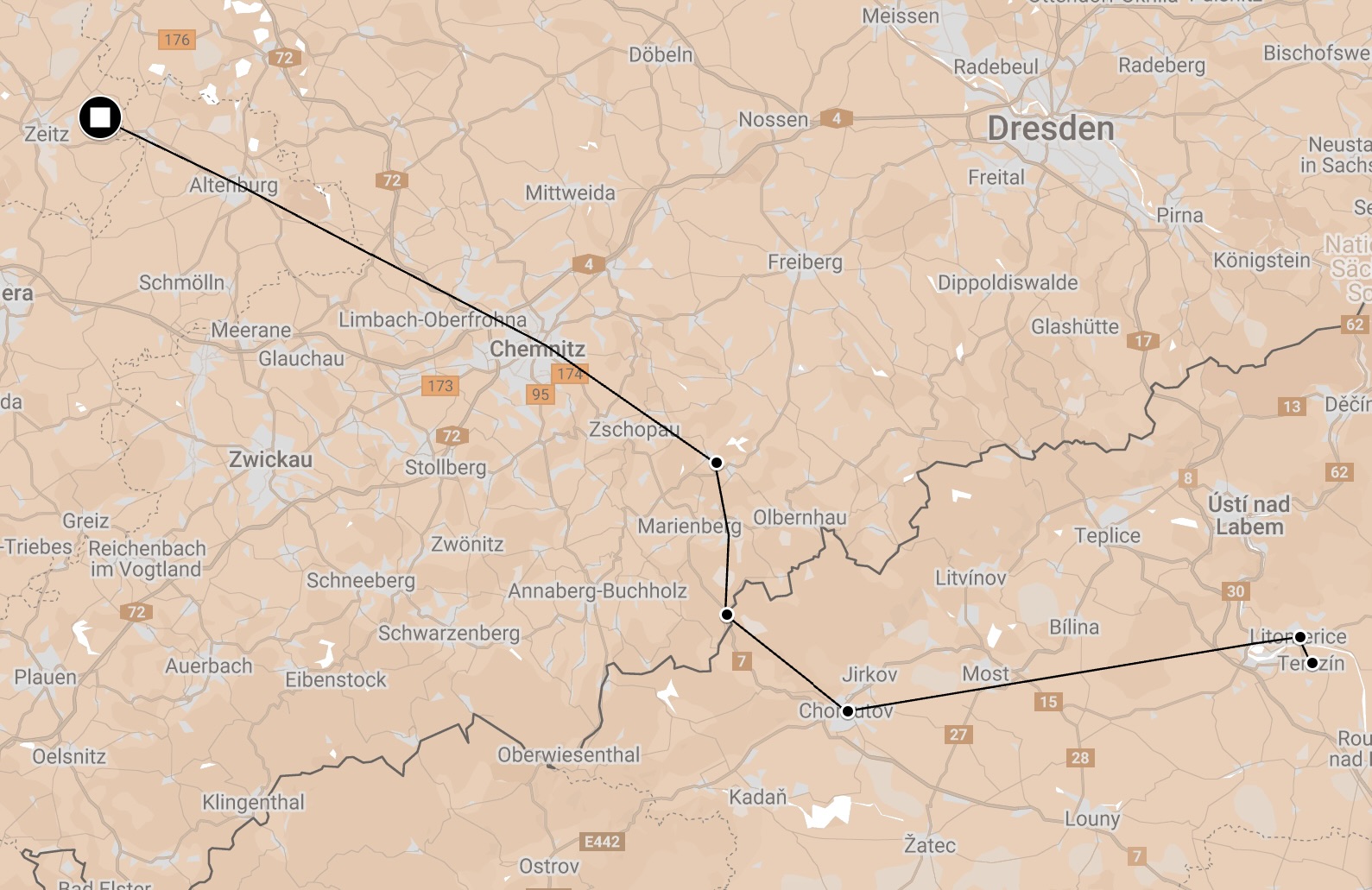
Route
The SS evacuated the Rehmsdorf camp on the night of April 6-7, 1945 in open coal wagons. It was almost a week later, on 12 April, that the train reached Pockau-Lengefeld, 100km away.
At the next station, Marienberg-Gelobtland, 144 bodies were unloaded and buried in mass graves. After a low-level air raid in Reitzenhain, during which some prisoners escaped, a merciless manhunt ensued, involving members of the police and the Hitler Youth.
On 18 April, the forced march to Theresienstadt began, claiming at least another 354 victims.
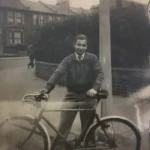
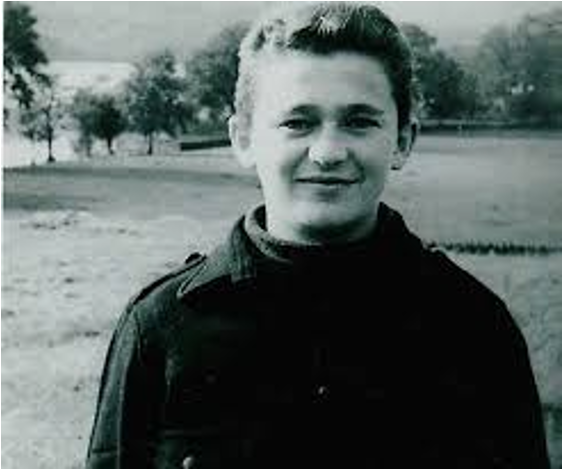
Mendel Silberstein in England after the war.
“I personally had no power to leave the train. I stayed on, and then I saw that the SS men had left their bags. I looked in and found a whole loaf of bread and a sausage. I ate it all up. It gave me some energy. I left the train and headed for the village. I came to the first house – a farm. I took some chickens, tore them apart, and ate the livers. Today as I think about it, I know that it gave me power to carry on …
They gathered us at a point from which we started our march on foot … This march took about twelve to fourteen days. No food, no water. Every few minutes we heard a shot and knew one of us was killed. So everyday we were fewer and fewer. There were more guards than prisoners. On the way, everything that was green or alive was eaten by us. We ate grass. We peeled the skin off trees and ate it. I remember once I even swallowed live little frogs.”
Mendel Silberstein, quoted in Marin Gilbert, The Boys: The Story of 732 Young Concentration Camp Survivors (Wiendenfeld & Nicholson, 1996).
Silberstein was 17 years old when he endured the death march.
The evacuation now continued on foot with the 1,800 of the 3,000 prisoners who had survived. Allied fighter planes had strafed the columns of fleeing German soldiers and civilians and the roadside was covered in corpses and burning vehicles. Another 1,200 prisoners lost their lives on the march through Bohemia, around 500 are said to have been murdered on their arrival in Theresienstadt, so that only 75 survived.
“Finally we crossed the border into Czechoslovakia at the small town of Chomutov. Everything changed in a moment. People came out of their homes and workplaces to see what was happening. Hundreds of people lined the streets: there were Czechs of all ages, young and old, men, women and children. They were shocked and angered by what they saw. They were visibly upset to see us nearly starved to death, covered with ulcers and swellings, as we staggered along under armed guard. We were all so weak by this point that we could barely walk. Many of the towns people began to clap there hands, stamp their feet, and jeer at the SS, while others openly wept as they watched us pass by … Now, suddenly, here was a reminder that there were still people in the world who cared.”

 About
About History
 Education
 Quilts
 FIlms
FIlms Photos
 News Media & Events
 Publications
 Donate