
After liberation, members of the Boys spent months living in displaced persons (DP) camps. Many of the Boys had been slave labourers in the Nazi concentration camp system.
DP camps were temporary housing established for displaced persons and former inmates of the Nazi concentration camps. The camps were set up in Germany, Austria and Italy after World War II by the Allied forces.
Members of the Boys were also cared for in children’s homes set up and run by UNRAA, charitable organisations and the surviving Jewish community. One example of these was the group of children’s homes established by the Czech humanitarian Premysl Pitter in villages south of Prague. Many members of the Boys passed through these homes before travelling to Britain.
The Boys were teenage and child-Holocaust survivors, who were brought to the UK after the war for rest and rehabilitation.
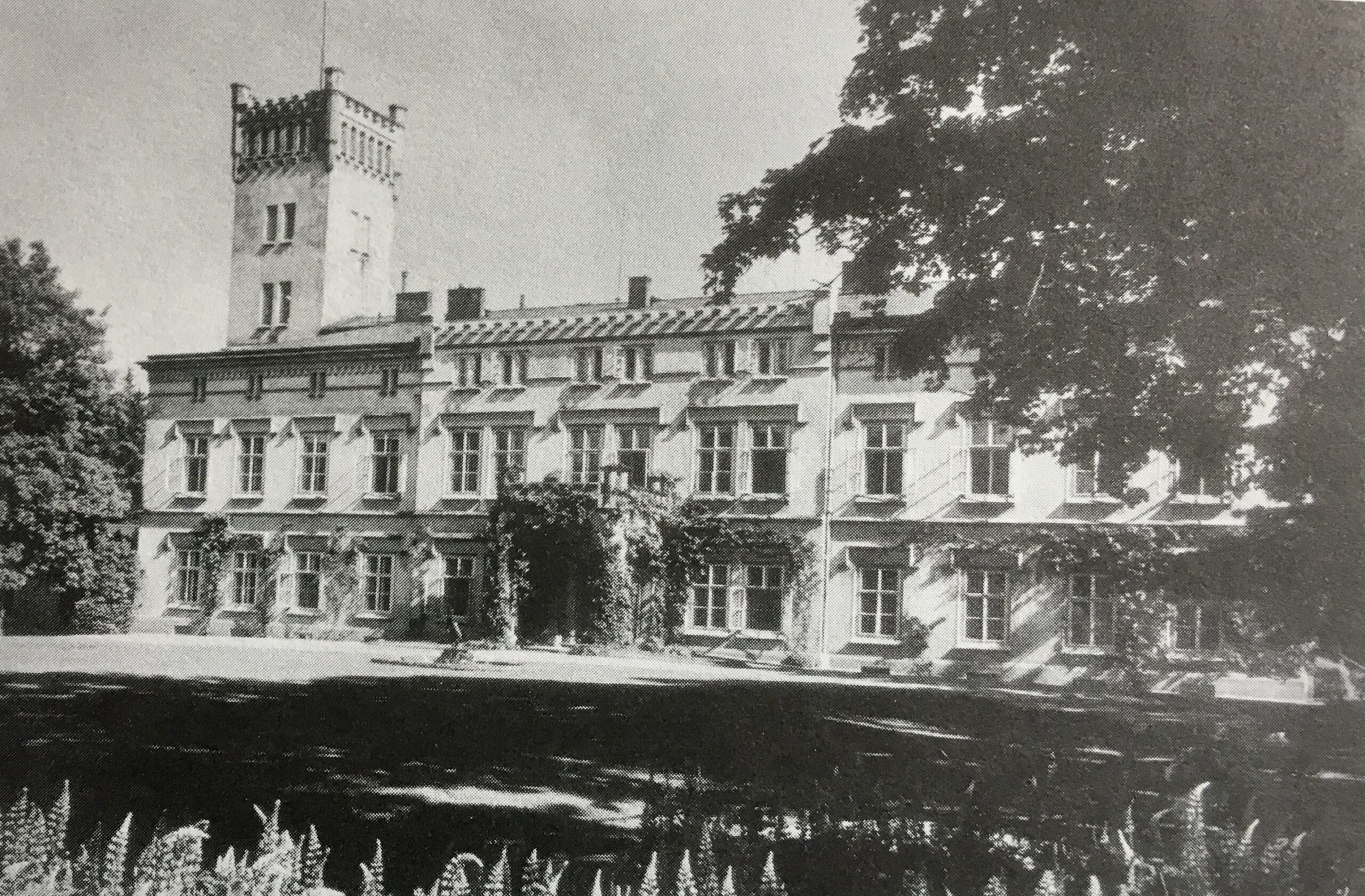
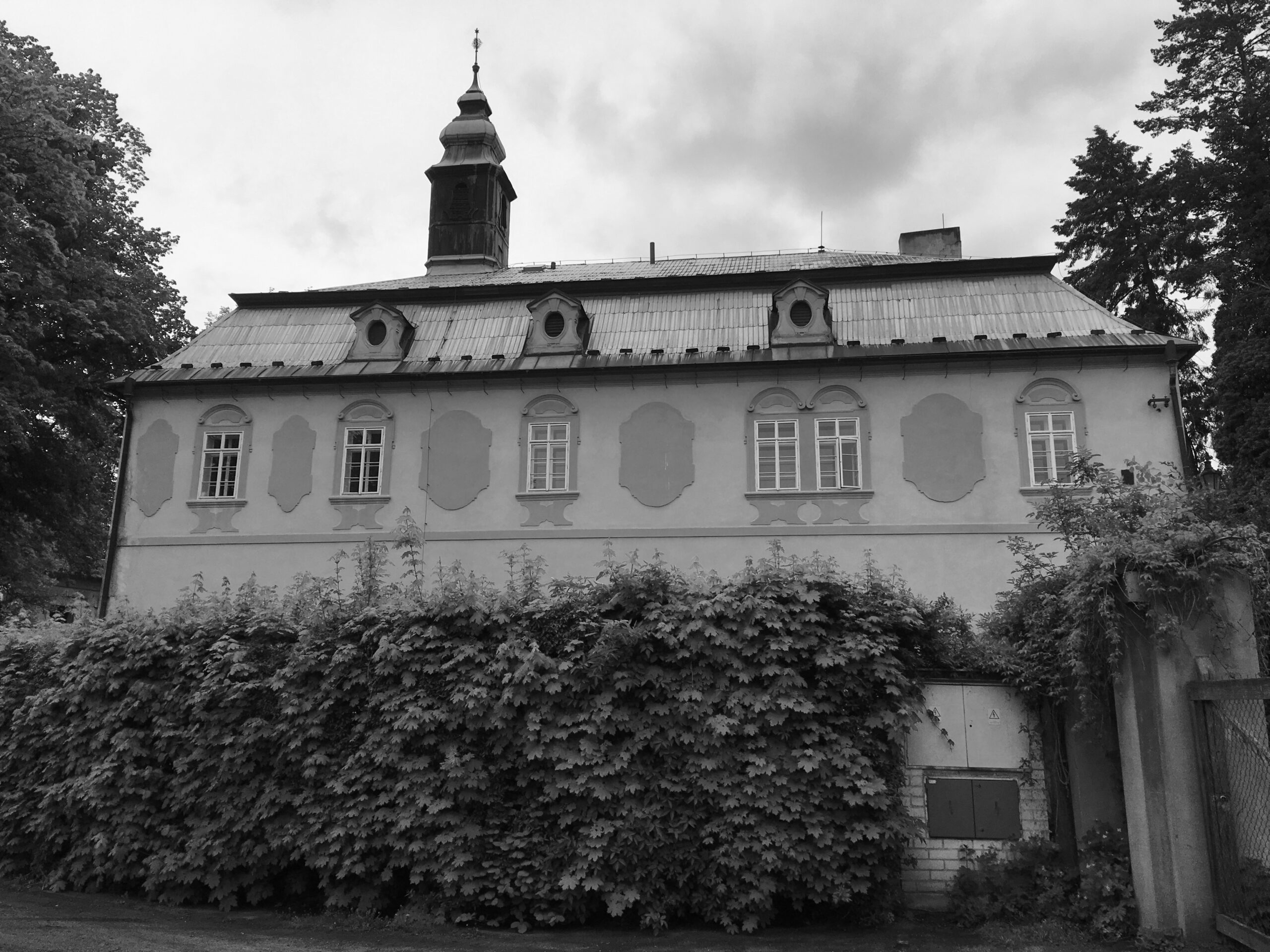
Kamenice Castle
Caring for child Holocaust survivors in large country houses was not a uniquely British idea. A series of children’s homes were set up immediately after the end of World War II in castles in Czechoslovakia, south of the capital, Prague. Many members of the Boys were to pass through them.
Background
The homes were organised by Přemysl Pitter, a Christian humanitarian and pacifist, who in the 1930s had cared for orphaned children in Milic House, which was also an after-school club in the working class Žižkov quarter of Prague.
After the Nazi occupation, Pitter and his life-long companion, Swiss-born Olga Fierz, continued to help Jewish children despite the dangers. They delivered food parcels to families under the cover of darkness and when the moment of deportation came, they provided families with the supplies they needed for the transportation.
Immediately after the liberation, Pitter was appointed to the Czech National Council and he went straight to the former Theresienstadt Ghetto to look for ‘his’ children. He discovered that they were no longer alive but that there were hundreds of other small children and adolescents whose lives were threatened by a typhus epidemic. To save the youngest, Pitter organised the evacuation of all those capable of travelling.
Přemysl Pitter and Olga Fierz
Pitter was born in Prague in 1895. After serving in the Austro-Hungarian Army during World War I, Pitter became involved in social justice and non-violence. In the 1920s and 1930s, he founded Milíč House, where he worked to support impoverished children in Prague.
Olga Fierz was born in Zurich in 1900 and trained as a teacher and social worker. She met Pitter in Prague in the 1920s and became his lifelong collaborator, sharing his Christian humanist beliefs and commitment to non-violence.
During the Nazi occupation of Czechoslovakia, Pitter risked his life to hide Jewish families and provide food and protection to those in danger. After the liberation of Czechoslovakia in 1945, he and Fierz organised the rescue and rehabilitation of hundreds of children from concentration camps and orphanages. Thirty-seven of the Boys were among the children cared for in Pitter’s Castles, with 32 of them travelling to the UK as part of the first group of the Boys in August 1945.
After the Communist coup of 1948, Fierz and Pitter were exiled to Germany, where they continued to assist refugees at the Valka DP camp near Nuremberg, and published humanitarian works. They later settled in Switzerland.
Pitter and Fierz received the honour of Righteous Among the Nations in 1964 and 1966, and trees were later planted in their honour at Yad Vashem, the Israeli Holocaust memorial in Jerusalem. In 1973, Pitter was awarded the Order of Merit First Class of the Federal Republic of Germany and was posthumously awarded the Czech Republic’s Order of Tomáš Garrigue Masaryk in 1991.
Pitter died in Zurich in 1976 and Fierz in 1990.
Rescue from Theresienstadt
On 15 May 1945, Pitter requisitioned four castles, which had been confiscated from their former German owners, in Aktion Zamek, or “Operation Castles” (zamek means castle in Czech).
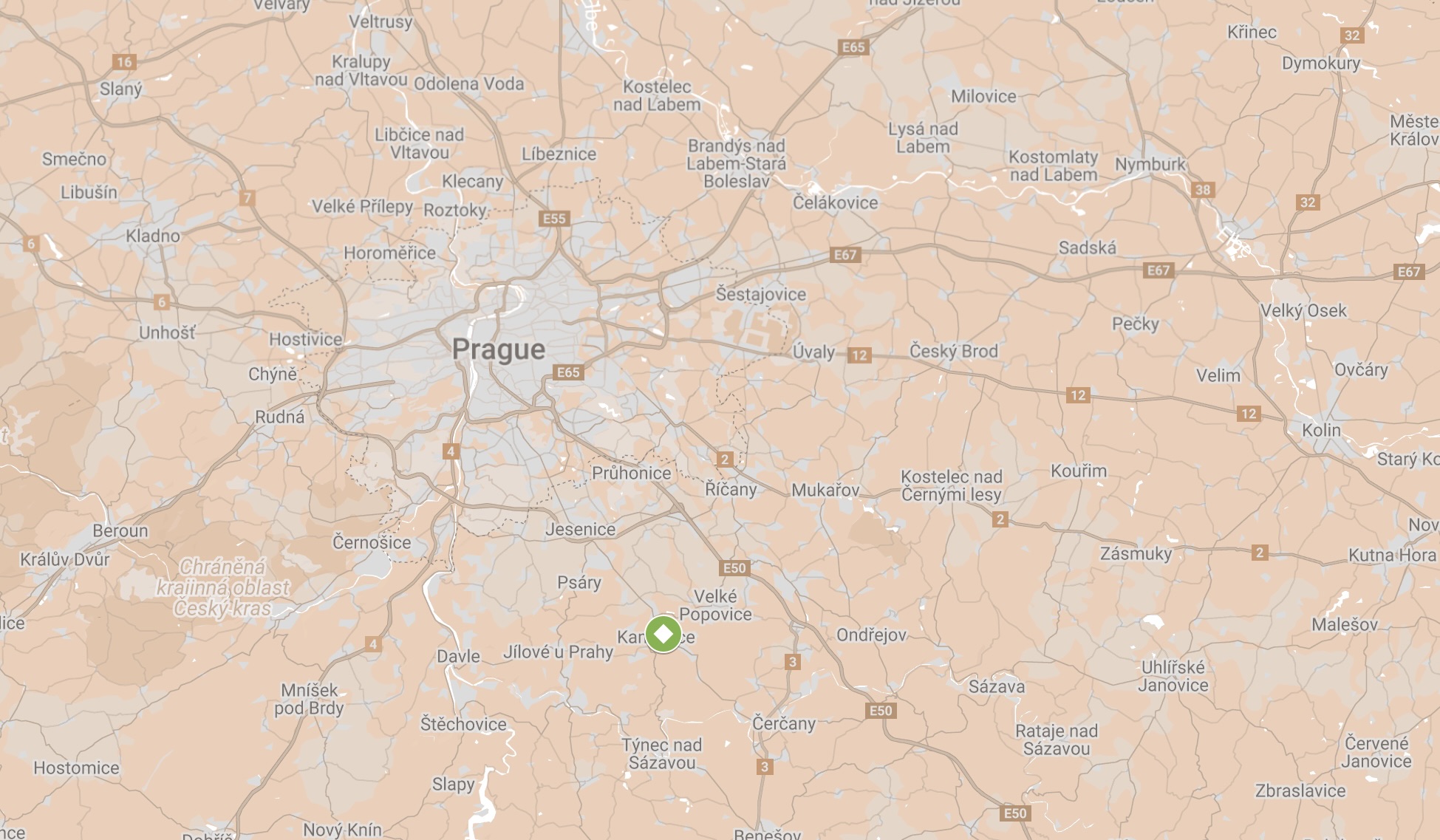
The castles were in a cluster of villages called Kamenice, Lojovice, Olešovice and Štiřín, about 25km south of Prague. The children’s homes were supported by the United Nations Relief and Rehabilitation Administration, UNRRA, that had been founded to help countries devastated by World War II. The project became known as Pitter’s Castles.
On 22 May 1945, Pitter brought the first 40 Jewish children to their new home in Olešovice by bus. A supper of white rolls, butter, eggs and sweet semolina was served in the dining room under a white, stuccoed ceiling illuminated by huge chandeliers. It was an unimaginable luxury and the children were frightened that the whole thing was a Nazi trick. Many had been filmed in the Nazi propaganda film made in Theresienstadt.
One immediate issue for Pitter and his staff was the noise the children made as they shouted at top of their voices, a habit they had picked up in the noisy overcrowded ghetto.
On 2 June, more children from Theresienstadt arrived at the elegant manor house in Štiřín. By July 1945, Pitter was caring for 150 children who had been liberated in the ghetto.
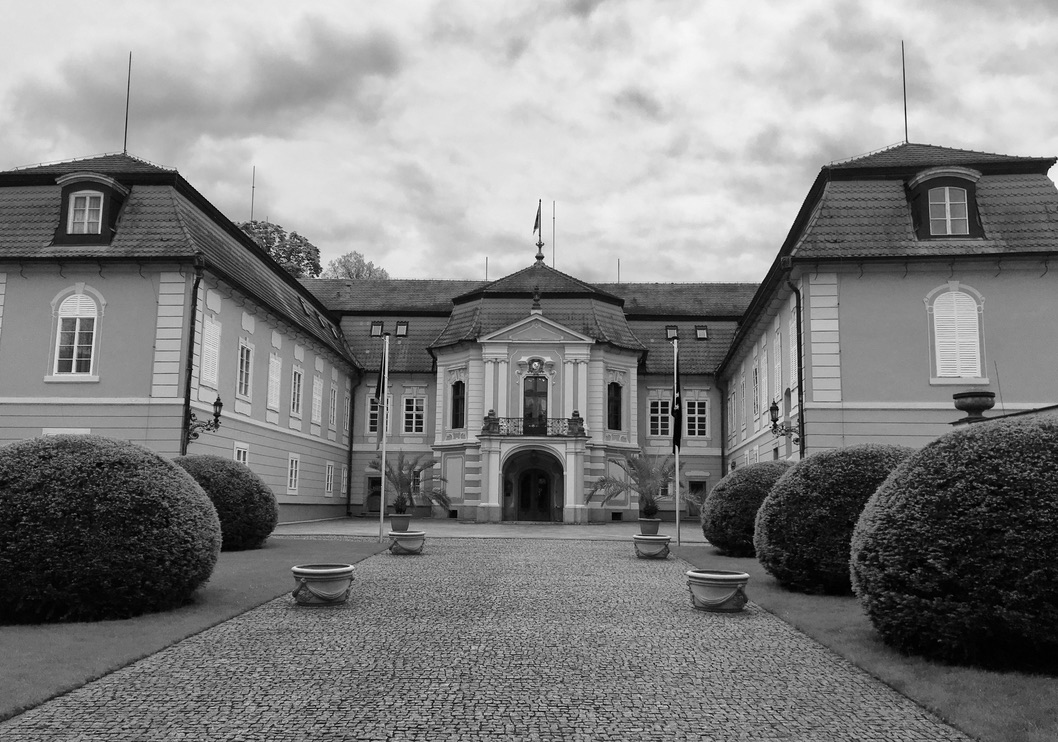
Stirin Castle
Daily Life
The manor houses were full of beautiful art works and had large libraries of German books. There were daily lessons, even in Latin, walks across the beautiful countryside meadows and frequent Bible sessions.
Despite the emphasis on Christian teaching, correspondence in the archives in Prague shows that Pitter wanted his Jewish children to remain as a group, growing up surrounded by those who had had similar experiences. The children were in close contact with the children in the other castles which were all within walking distance of each other.
Wolfgang Sinai Adler
One of the older children who were cared for in Štiřín was Wolfgang Adler, later Sinai Adler. Adler went on to become a rabbi. In his memoir Your Rod and Your Staff; A Young Man’s Chronicle of Survival (Feldheim, 1992), he recalled:
“During one of his weekly visits, Pitter noticed that I was wearing a hat at one of the meals. Since it is not acceptable in the gentile culture to wear a head-covering while eating, he removed my hat as he passed by and took it with him. One of the counsellors explained to him afterwards that I wore the hat as part of my religious observance, and therefore it should not be viewed as impolite. Sure enough my hat was returned to me.
Twenty years later, those who were given shelter by Pitter invited him to Israel and, upon his arrival, a reception was held in his honour in a hall located in Tel Aviv. I was also invited to participate and, upon entering the hall, he paused by my side, staring at me in wonder. He asked me, ‘Are you …?’ When I replied ‘Yes,’ he asked me, ‘Do you forgive me for taking your hat?'”
In Czechoslovakia, however, Pitter was a controversial character, as he cared not only for Jewish children but also for German children orphaned in the brutal expulsion of the country’s German population.
It was a move that cost Pitter his seat on the Social Commission.
The Boys in Pitter’s Castles
Documents in the Přemysl Pitter archives at the Comenius National Pedagogical Museum in Prague show that 37 of the Boys spent time in the castles. This was less than 10% of the total number of children Pitter cared for. Between May 1945 and May 1947, 810 children were looked after in the homes.
The experiences of the smallest children, who came as part of the first group of the Boys, is a story within a story. The children had nearly all been born in Austria, Czechoslovakia or Germany. They had spent months or years in the ghetto – some arriving as babies.
A total of 32 out of the 37 children that were cared for in the castles flew to Great Britain as part of the first group of the Boys, leaving Prague in August 1945. They remained in the castles until the moment of their departure. The night before they left there was a special meal cooked over a campfire in fields. The next morning, they were woken at dawn and taken by bus to the Belgická orphanage in Prague. There they joined the first group of the Boys and were taken to the airport. It is for this reason that the youngest members of the first group do not appear in the iconic picture of the group taken in Prague’s’ Old Town Square in August 1945.
The group also included some teenagers. Among them was Lydia Folkart, who was taken by Pitter from Theresienstadt so she could help look after the younger children. She would go on to become a leading child psychotherapist and is now known as Lydia Tischler.
Milic House continued to operate after the war and many orphaned Jewish children in Prague found their way to the home. From there they were placed in the castles for recuperation. A further six members of the Boys, who were among Pitter’s children, left for the UK in February 1946, as part of the third group of the Boys. One additional member of the Boys, Abraham Herman, who had been in Štiřín castle, came to the UK via Germany in 1947 to join his brother David.
Pitter’s Children in the UK
The documents show Pitter believed the children would spend only a short time in Britain before being sent to British Mandate Palestine. This plan was never implemented. In the UK, his intentions were either unknown or disregarded.
After their arrival in the UK, the youngest children were placed under the care of the child psychologist Anna Freud, the daughter of Sigmund Freud, and some were put up for adoption by British or American families.
Aftermath
The other children saved from Theresienstadt by Pitter that did not travel to the UK with the Boys went to Israel and were brought up together on a kibbutz.
After the communist coup, Pitter and Fierz fled the country. His legacy was suppressed under the communist regime, and his story was largely erased from public memory.
 About
About History
 Education
 Quilts
 FIlms
FIlms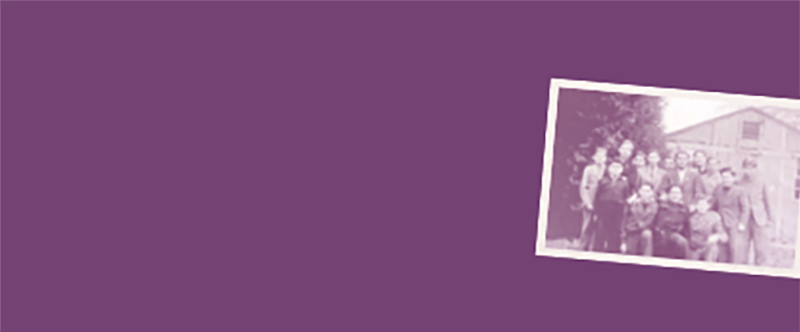 Photos
 News Media & Events
 Publications
 Donate