Members of the Boys were imprisoned in the Beregszász Ghetto.
The Beregszász Ghetto was one of a network of ghettos set up by Nazi Germany in Hungary after it was invaded by German forces in March 1944.
The Boys were teenage and child-Holocaust survivors, who were brought to the UK after the war for rest and rehabilitation.
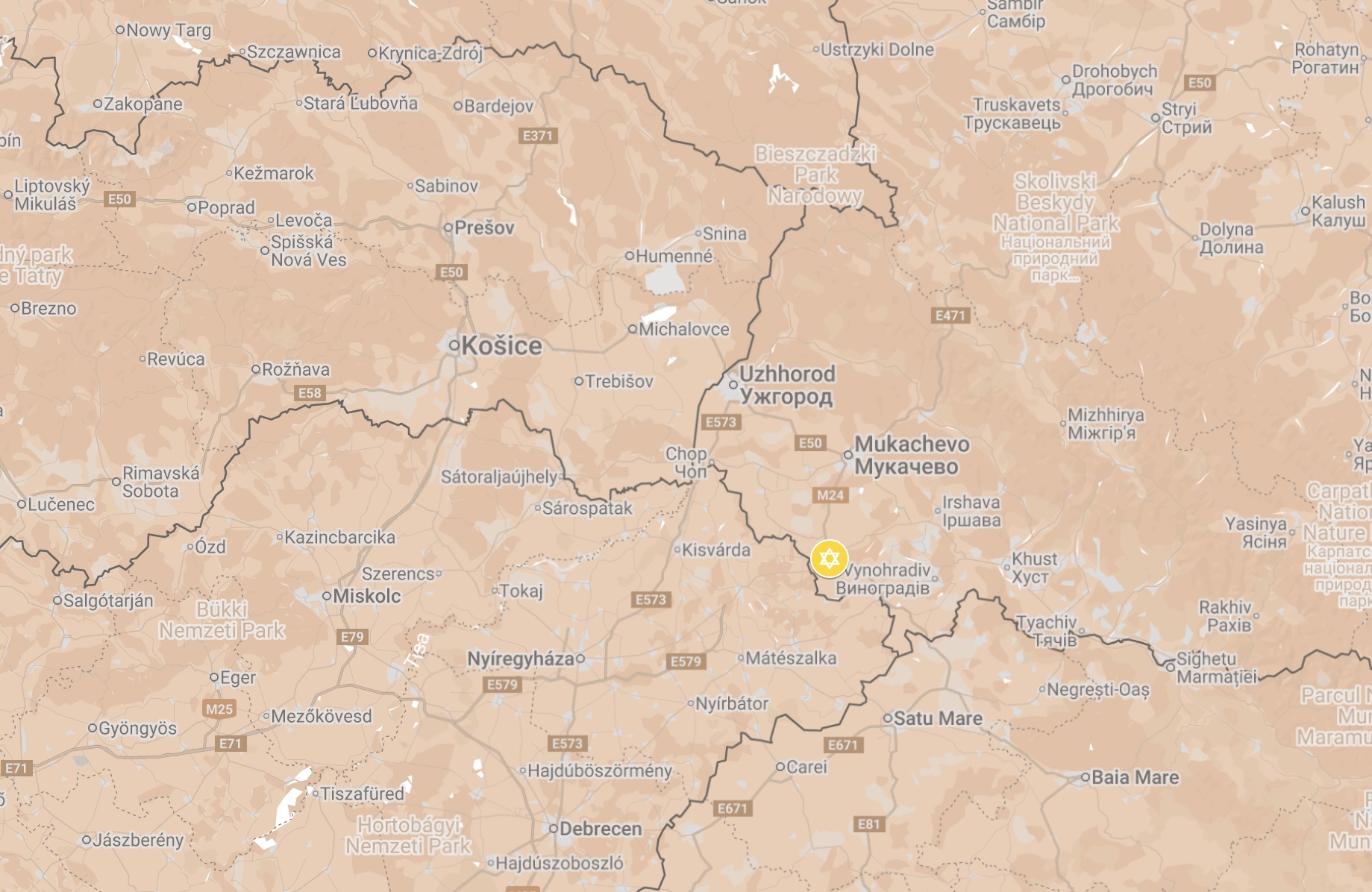
Beregszász is today Berehove, a city in Zakarpattia Oblast, western Ukraine. It is situated near the border with Hungary. In the interwar years it was Berehove in the state of Czechoslovakia. Berehove was annexed by Hungary from Czechoslovakia under the First Vienna Award in 1938. It was then known by its Hungarian name of Beregszász.
To find out more about the Boys who grew up in Berehove click here.
Overview
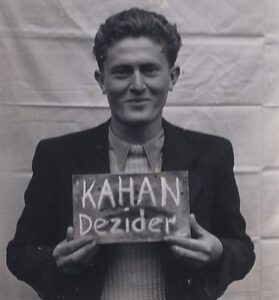
Dezider Kahan, pictured after the liberation, was held in the ghetto.
The Nazi invasion of Hungary began in March 1944, and on 19 March 1944, the German army entered Berehove. At the time, the Jewish community in the area was largely comprised of elderly men, women, and children, as the younger men had either fled to the Soviet Union or had been conscripted into Hungarian labour battalions.
On 15 April 1944, the 8th day of Passover, a ghetto was set up in the brick factory in Vari. The ghetto housed around 12,000 Jews from Beregszász and surrounding areas, making it one of the largest ghettos in the region during the Holocaust. This was significantly higher than the 8,000 originally estimated for Beregszász alone.
Daily Life
Life in the Beregszász Ghetto was harsh. Overcrowding, food shortages, poor sanitation, and the spread of disease quickly took their toll. Many residents relied on charity or traded what little they had to survive, while some able-bodied men were forced to work in German-controlled workshops or construction projects. However, the majority of the population remained confined to the ghetto, awaiting deportation.
Due to its short existence, cultural and social life was almost non-existent, and unlike larger ghettos like Warsaw or Łódź, Berehove lacked any organised resistance or communal activities.
Despite the harsh conditions, religious and communal leaders tried to offer support and maintain some semblance of normality. Families continued to practice their faith as best they could in secret, even as their living conditions deteriorated.
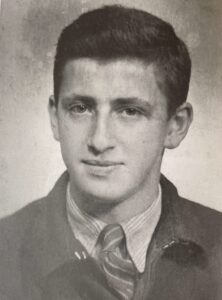
Hugo Gryn after the liberation.
One of the Boys, Hugo Gryn, recalled witnessing executions in the ghetto. His account, as shared in his book Chasing Shadows, provides a glimpse into the terror at the moment of deportation:
“A young lieutenant was walking up and down in front of us. There was something unusual about him, but it took me several ‘rounds’ to notice that his pistol was hanging on a leather strap, instead of in its usual place in a case. Two wagons further on, I noticed a small man making his way to a heap of linen behind them. His wife watched him with a small baby in her arms. He reached the heap and pulled out some white sheets, which I suppose were napkins, when a piercing scream went up, followed by a shot. I was looking at the man all the time, who dropped the napkins, raised his arms to his chest and fell to the ground. A small stream of blood was quite visible from where I stood, but my attention was drawn to the figure of the fainting woman: the same one who had been holding the baby and must have screamed when she saw the officer aim.”
Hugo Gryn, Chasing Shadows – with Naomi Gryn (Penguin, 2001).
Gryn was 14 years old when he was deported to Auschwitz II-Birkenau.
Deportations
The first deportation from Beregszász occurred on 15 May 1944, followed by additional transports on 17 May and 19 May 1944. The entire Jewish population of the ghetto was sent to Auschwitz-Birkenau extermination and concentration camp, located over 430km away. The deportations were carried out in multiple stages. On arrival at Auschwitz, most Jews were immediately sent to the gas chambers, while a smaller number were selected for forced labour.
Memorialisation
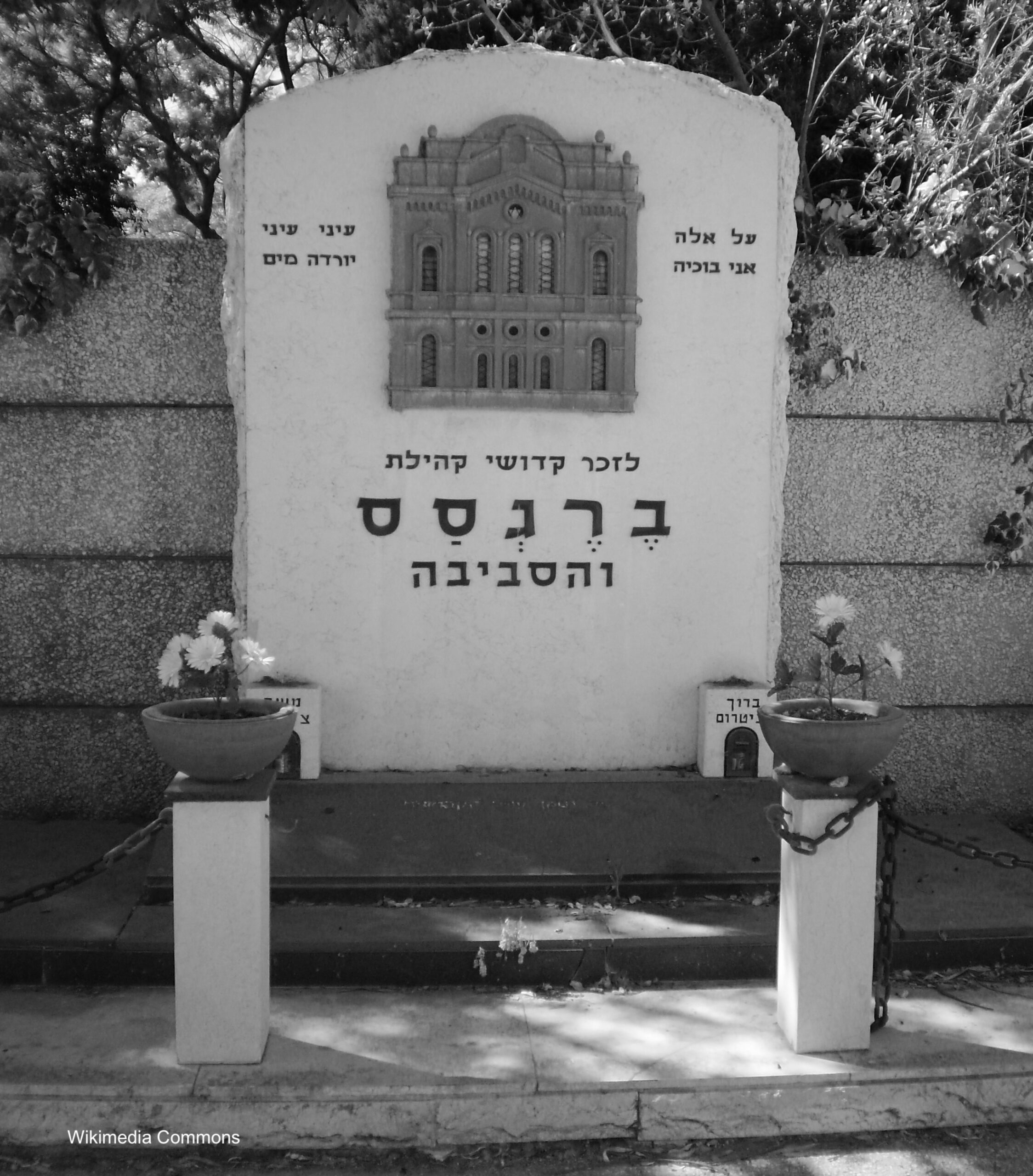
The Jewish cemetery and the town’s synagogue remain, and in 2016, a memorial plaque was installed on Vulytsya Zrini to remember the victims of the Holocaust. Annual remembrance events are held to honour the victims of the Beregszász Ghetto. To find out more about visiting Berehove click here.
 About
About History
 Education
 Quilts
 FIlms
FIlms Photos
 News Media & Events
 Publications
 Donate