Members of the Boys were imprisoned in the Białystok Ghetto.
The Białystok Ghetto was one of a network of ghettos set up by Nazi Germany in which Jews were forced to live in occupied Poland. The Białystok Ghetto was established to imprison Jews and isolate them from the rest of the population until the Nazi leadership could decide on an answer to the so-called “Jewish Question.”
The Boys and their families were forced to spend years living in dire conditions. The ghettos were not designed for the vast numbers of people forced to find space to live within them. As a result, multiple families shared cramped and insanitary accommodation.
The Boys were teenage and child-Holocaust survivors, who were brought to the UK after the war for rest and rehabilitation.
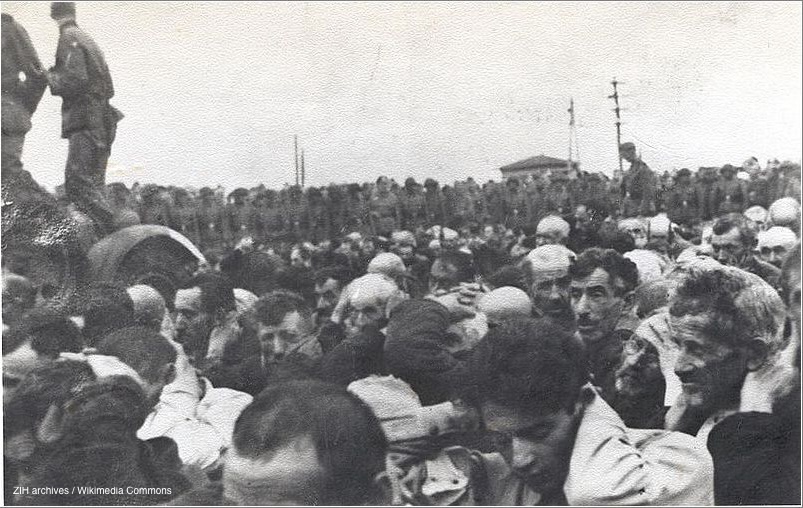
Liquidation of the Białystok Ghetto 15-20 August 1943.
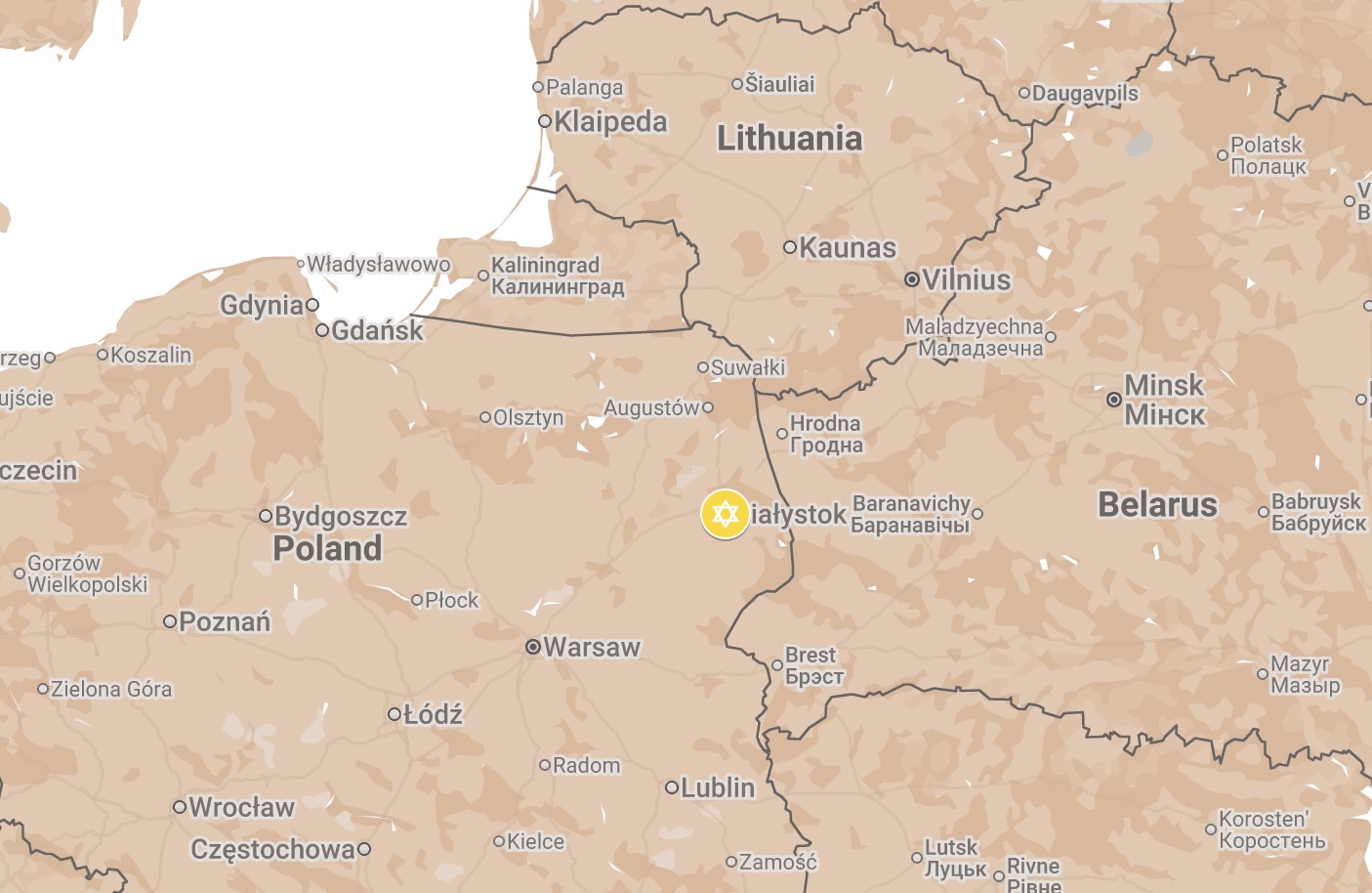
Białystok is 198km northeast of Warsaw and was part of Soviet-occupied Poland until the German invasion of the Soviet Union in June 1941. Many Jews fled there from the Nazi occupied section. To read more about the history of Białystok click here.
Overview
The Białystok ghetto was set up on 26 July 1941. About 50,000 Jews from the city and its surroundings were confined in the ghetto. The Nazis intention was to isolate the Jewish population from the rest of the city.
Layout
The ghetto was located to the north-western section of the city centre. It stretched between present-day Lipowa, Przejazd, Poleska and Sienkiewicza streets and was divided by the Biala river. All Poles who lived there were ordered to move out. The ghetto was sealed on 1 August 1941 and the Jewish population were isolated from the rest of the city.
There were two gates, one on Jurowiecka and one on Kupiecka street. The ghetto was surrounded by a wooden wall topped by barbed wire, with three entrances manned by the Jewish Ghetto Police, who were overseen by the Germans. Leaving the ghetto without permission was punishable by death.
Daily Life
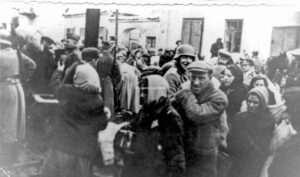
Bialystok Ghetto 1943
Most inmates were put to work as slave labourers for the German war effort, primarily in large textile, shoe and chemical companies operating both inside and outside the ghetto.
Up to three Jewish families were placed in single rooms divided by curtains. Conditions were appalling and disease widespread. Food rations were strictly enforced and cut to a minimum as time passed. The smuggling of food from the outside was punishable by death.
The Judenrat (Jewish council), composed of 24 Jews, held its first meeting on 2 August 1941. Its main obligation was supplying forced labour, but it also ran soup kitchens, infirmaries, schools, and the Jewish police.
Deportations
The first deportations began in September 1941, when 4,500 of the weakest and poorest Jews were shot in the surrounding forests.
In February 1943, some 10,000 Jews were deported to Treblinka and 2,000 were murdered in the ghetto. Meanwhile, approximately 7,600 inmates were relocated into a new central transit camp within the city for further selection. Those fit to work were sent to the Majdanek concentration camp and then on to Poniatowa and Blizyn slave labour camps and the Auschwitz concentration camp complex. Those considered not fit to work were gassed in Majdanek. More than 1,000 Jewish children were sent first to the Theresienstadt Ghetto in Czechoslovakia and from there to Auschwitz II-Birkenau where they were murdered.
Jewish Resistance
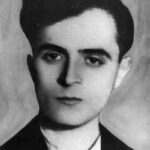
Mordechai Tenenbaum
There was a significant resistance movement in the ghetto. In December 1941, a Jewish resistance organisation was formed led by Tadeusz Jakubowski and Niura Czerniakowska. At first they carried out acts of sabotage in the factories.
In the night of 16 August 1943, an armed insurrection against the German troops and their auxiliaries carrying out the liquidation of the ghetto began. The uprising lasted until 15 September 1943. The uprising was the second largest after the Warsaw Ghetto Uprising and was led by Mordechai Tenebaum.
A few hundred Jews were able to escape to the vast Knyszyn Forest where they formed a partisan unit.
Aftermath
The remaining ghetto inmates were either killed in the fighting or taken from the Poleski station to Auschwitz II-Birkenau, Majdanek or Treblinka.
Memorialisation
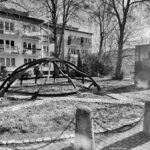
The Great Synagogue Memorial.
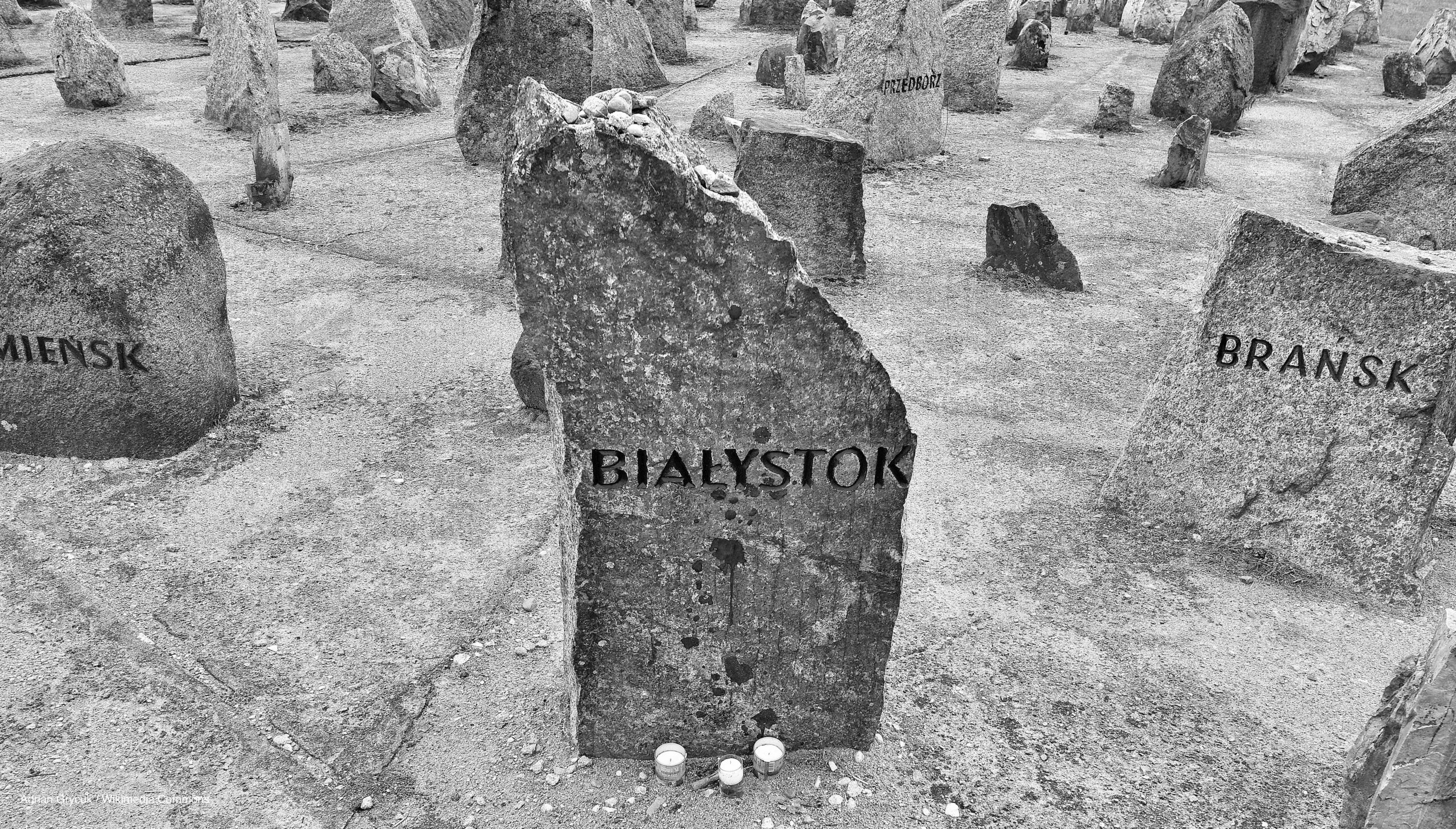
Considerable efforts have been made in Białystok to remember the city’s Jewish population and the Holocaust. For more details on visiting Białystok click here.
 About
About History
 Education
 Quilts
 FIlms
FIlms Photos
 News Media & Events
 Publications
 Donate