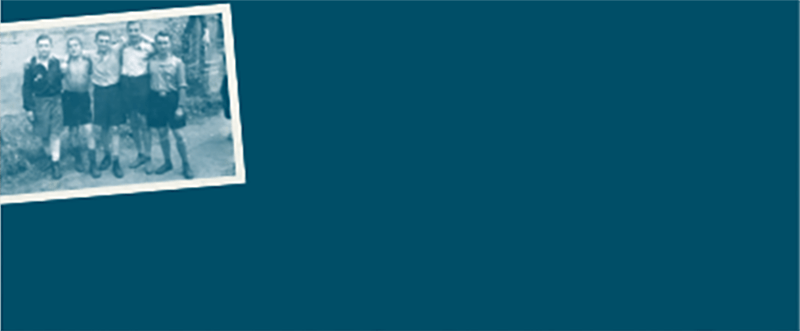
Members of the Boys were imprisoned in the Działoszyce Ghetto.
The Działoszyce Ghetto was one of a network of ghettos set up by Nazi Germany in which Jews were forced to live in occupied Poland. As with other ghettos in Czechoslovakia, Latvia, Lithuania and Poland, the Działoszyce Ghetto was established to contain the region’s Jews and isolate them from the rest of the population until the Nazi leadership could decide on an answer to the so-called “Jewish Question.”
The Boys and their families spent years living in dire conditions. The ghettos were not designed for the vast numbers of people forced to find space to live within them. As a result, multiple families shared cramped and insanitary accommodation.
The Boys were teenage and child-Holocaust survivors, who were brought to the UK after the war for rest and rehabilitation.
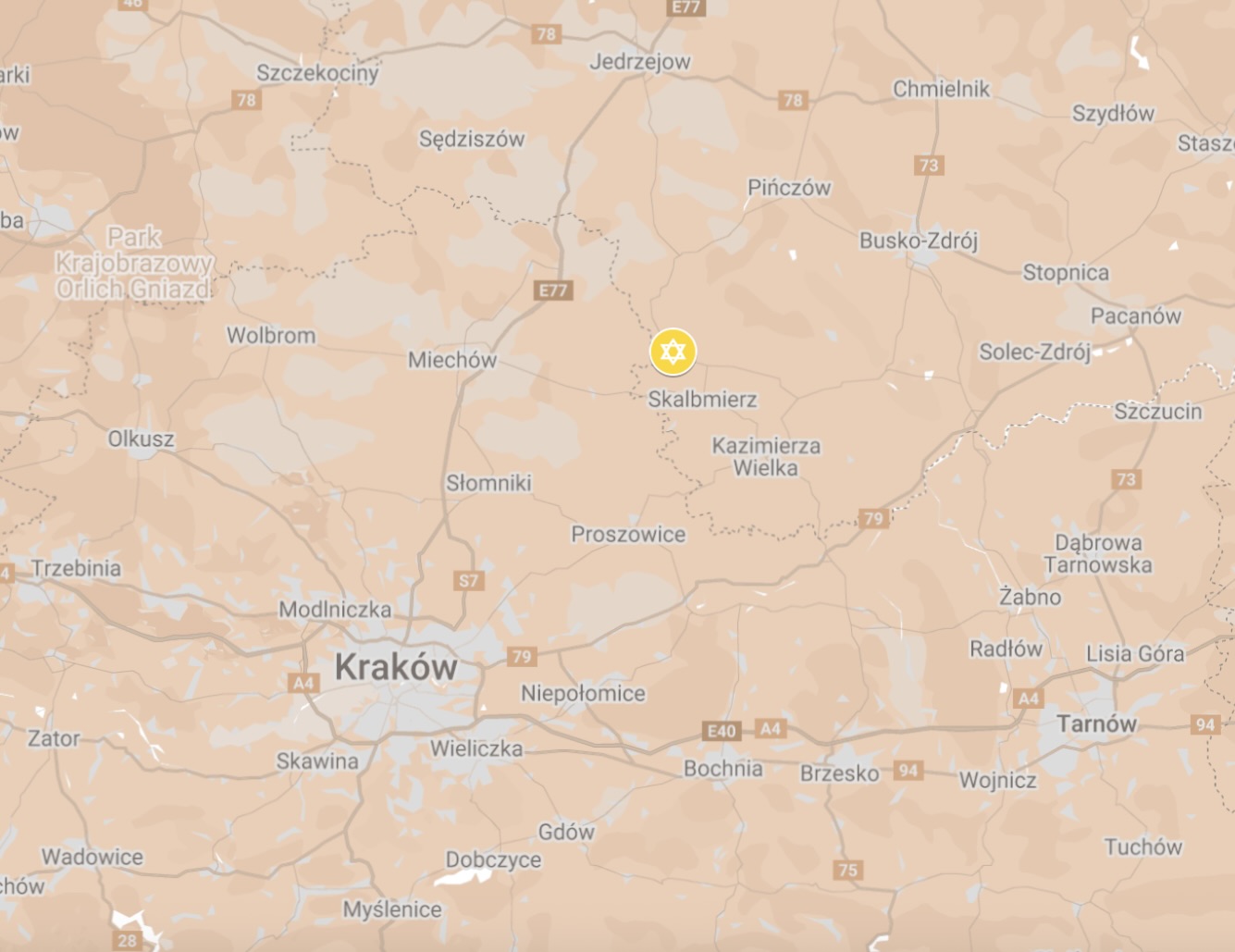
Działoszyce is in southern Poland, 54km northeast of Kraków.
Overview
In 1939, there were 7,000 Jews in Działoszyce, who were joined by 5,000 Jews expelled from Lublin, Kraków, Poznan and Warsaw. The ghetto was established by the Germans in April 1940.
Layout
Jews could live anywhere in the town but were not permitted to leave without permission.
Daily Life
As in all the ghettos, life in the Działoszyce Ghetto was extremely harsh. The ghetto was overcrowded, and families were forced to share apartments. There was a shortage of food and poor sanitation. Hunger and disease claimed many lives. Jews were only allowed out of the ghetto if they had permission and risked being shot if caught outside its perimeters.
Deportations
On 2 September 1942 the town was surrounded by the German police and their auxiliary units, who arrived on the gauge railway. With little warning the entire Jewish population was ordered to gather in the market square. A selection was carried out. About 500 young men were selected for slave labour. Some were taken in open-topped wagons and transported to the Kraków-Płaszów concentration camp. Several hundred were moved to the Prokocim labour camp. To find oput more about the camps click here.
In the morning, about 6,000 Jewish people were forced onto freight wagons and taken to the station in Miechów, 25km away, where a transit camp had been set up at the train station to hold Jews from Miechów and Ksiaż Wielki. The entire area was floodlit and surrounded by guards with machine guns. At this point another selection took place. Jews were taken to the Mielec labour camp, among them Abraham Solomon’s father and sisters. Over 5,000 people were then taken in freight trains to the Bełżec extermination camp over 300km away.
3 September 1942
At 5am on 3 September 1942, during the deportation of Jews from the Działoszyce Ghetto the Germans selected about 1,500 Jewish people, mostly the women and children and the elderly. Five large pits had already been dug just outside the town. Two were in the cemetery and three next to it. The Jews were transported in carts from the market square. They were then forced to strip naked and were forced into the pits. The Germans shot them with rifles. After the massacre the bodies were covered with lime to speed up decomposition before the pits were covered with earth. The shooting continued until 2pm in the afternoon.
Thirteen-year-old Abraham Salomon, later one of the Boys, testified at the United Holocaust Memorial Museum that he was working in the fields on a hillside and saw the shootings and the deportation train. He ran away but was later taken from Nove Radomsko as a slave labourer. His mother and younger brothers were among those shot in the pits.
Jewish Resistance
Jews who fled from the town formed partisan groups. The largest of which, Zygmunt, was organised by Zalman Fajnsztat and Michael Majtek. The unit was active until February 1944 when many of its members were killed in battle near the village of Pawlowice. The surviving Jewish partisans joined different Polish guerrilla units.
Liquidation
Several hundred Jews remained in Działoszyce, including members of the Judenrat (Jewish council), who gathered up the Jews belongings. A number of Jews returned to Działoszyce and the Jewish population rose to about 1,100 people. They were then taken to Bełżec extermination camp.
Memorialisation
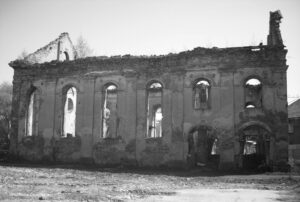
Działoszyce Synagogue
The tiny town of Działoszyce has never recovered from the Holocaust and today’s population, numbering just 3,000 people, is one-fifth of what it was before the war.
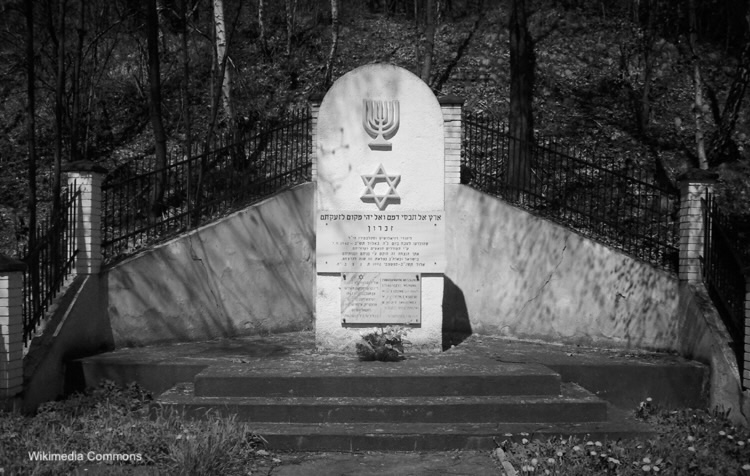
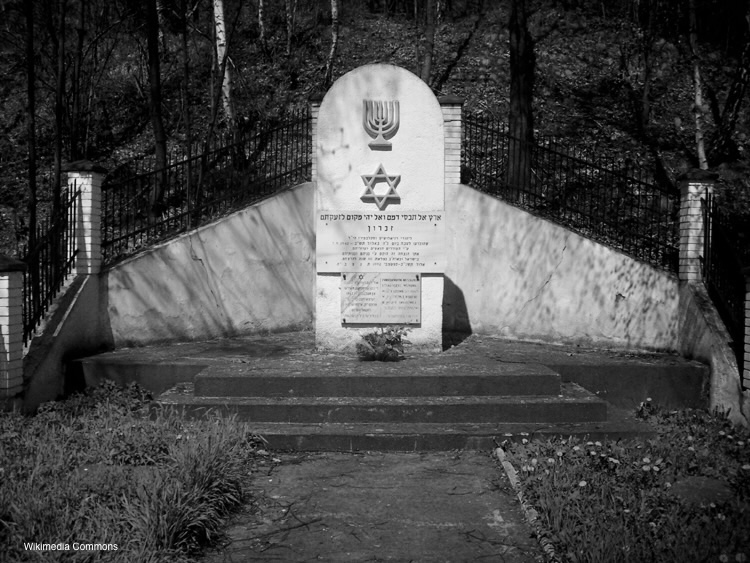
The synagogue on ulica Skalbmierska was built in 1852 and considered one of the most beautiful in Poland. It now stands as a haunting ruin and is a striking memorial. There is a Holocaust memorial in the cemetery.
 About
About History
 Education
 Quilts
 FIlms
FIlms Photos
 News Media & Events
 Publications
 Donate