
Members of the Boys were imprisoned in the Glowaczów Ghetto.
The Glowaczów Ghetto was one of a network of ghettos set up by Nazi Germany in which Jews were forced to live in occupied Poland. As with other ghettos in Czechoslovakia, Latvia, Lithuania and Poland, the Glowaczów Ghetto was established to contain the region’s Jews and isolate them from the rest of the population until the Nazi leadership could decide on an answer to the so-called “Jewish Question.”
The Boys and their families were forced to move from their homes and were held in ghettos in Nazi controlled Czechoslovakia, Latvia, Lithuania and Poland, where they spent years living in dire conditions. The ghettos were not designed for the vast numbers of people forced to find space to live within them. As a result, multiple families shared cramped and insanitary accommodation.
The Boys were teenage and child-Holocaust survivors, who were brought to the UK after the war for rest and rehabilitation.
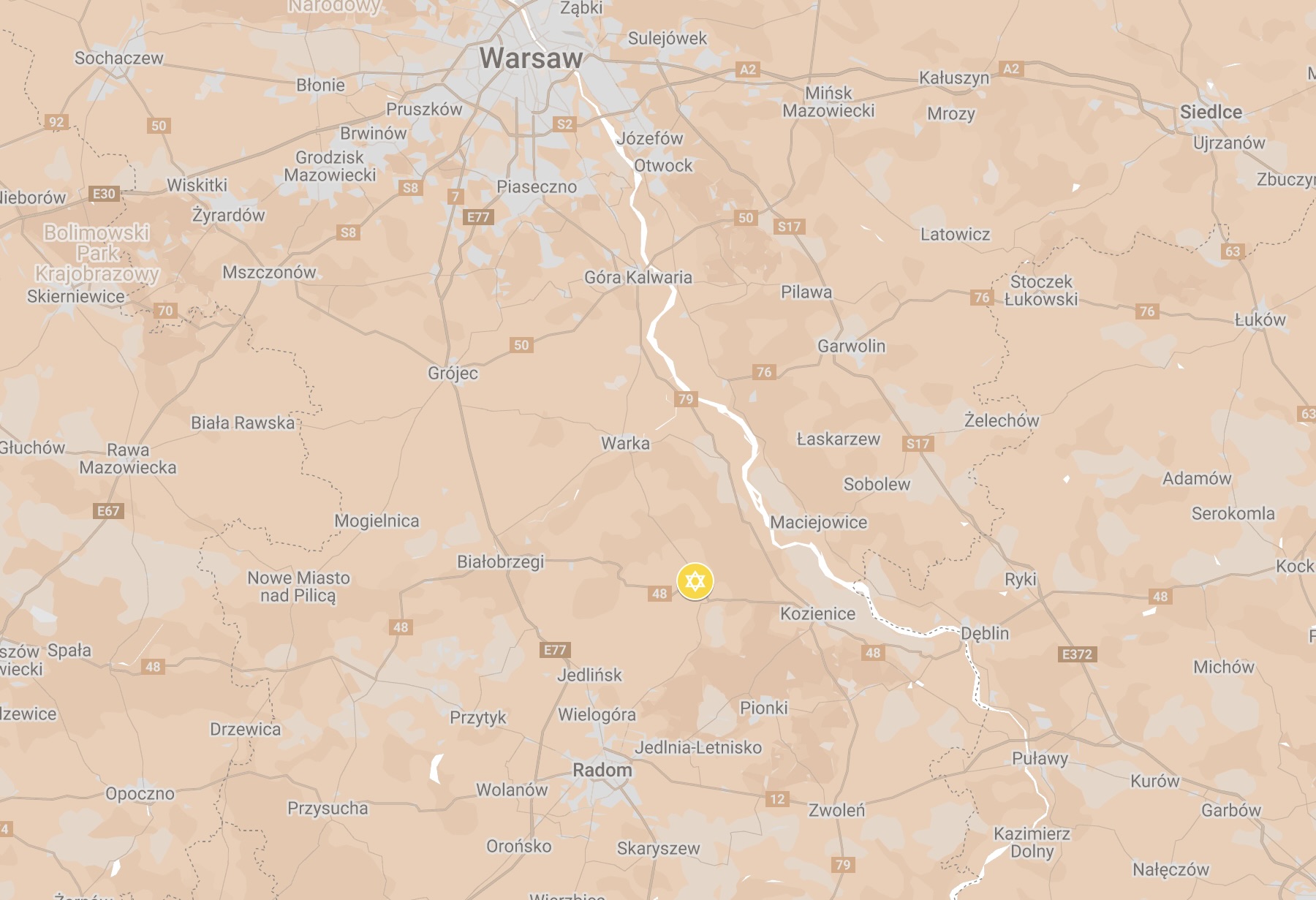
Głowaczów is located in east-central Poland, near Kozienice.
Overview
Before World War II, the town was home to a Jewish community of approximately 1,500. Under Nazi occupation, a ghetto was established in 1941 and held around 2,000 individuals.
Layout
The ghetto was located in the centre of Głowaczów, where many Jewish families had lived prior to the war. The area was not surrounded by a wall, but movement was tightly controlled by German forces and local police units.
Daily Life
Conditions in the Głowaczów Ghetto were overcrowded and unsanitary. Clean water and food were scarce, and hunger was widespread. Religious observance and education continued in secret. Some individuals maintained underground schools for children, while others held private religious services. Able-bodied men sent to work on road construction or in nearby forests.
Deportations
The first deportations from Głowaczów took place in mid-1942, targeting the elderly and those unfit to work. The final mass deportation was on 27 September 1942, when the remaining Jewish population was gathered, marched to the railway station in nearby Garbatka, and transported to Treblinka extermination camp. They were killed immediately upon arrival.
Jewish Resistance
There was no organised resistance in the Głowaczów Ghetto, though individual acts of defiance occurred. Some individuals helped children escape or hid religious artefacts.
A small number of individuals managed to escape and fled into nearby forests. Some were sheltered by Polish families or joined partisan groups, though many were later captured.
Memorialisation
Today, Głowaczów’s pre-war Jewish community is remembered by a memorial stone near the site of the former ghetto.
 About
About History
 Education
 Quilts
 FIlms
FIlms Photos
 News Media & Events
 Publications
 Donate