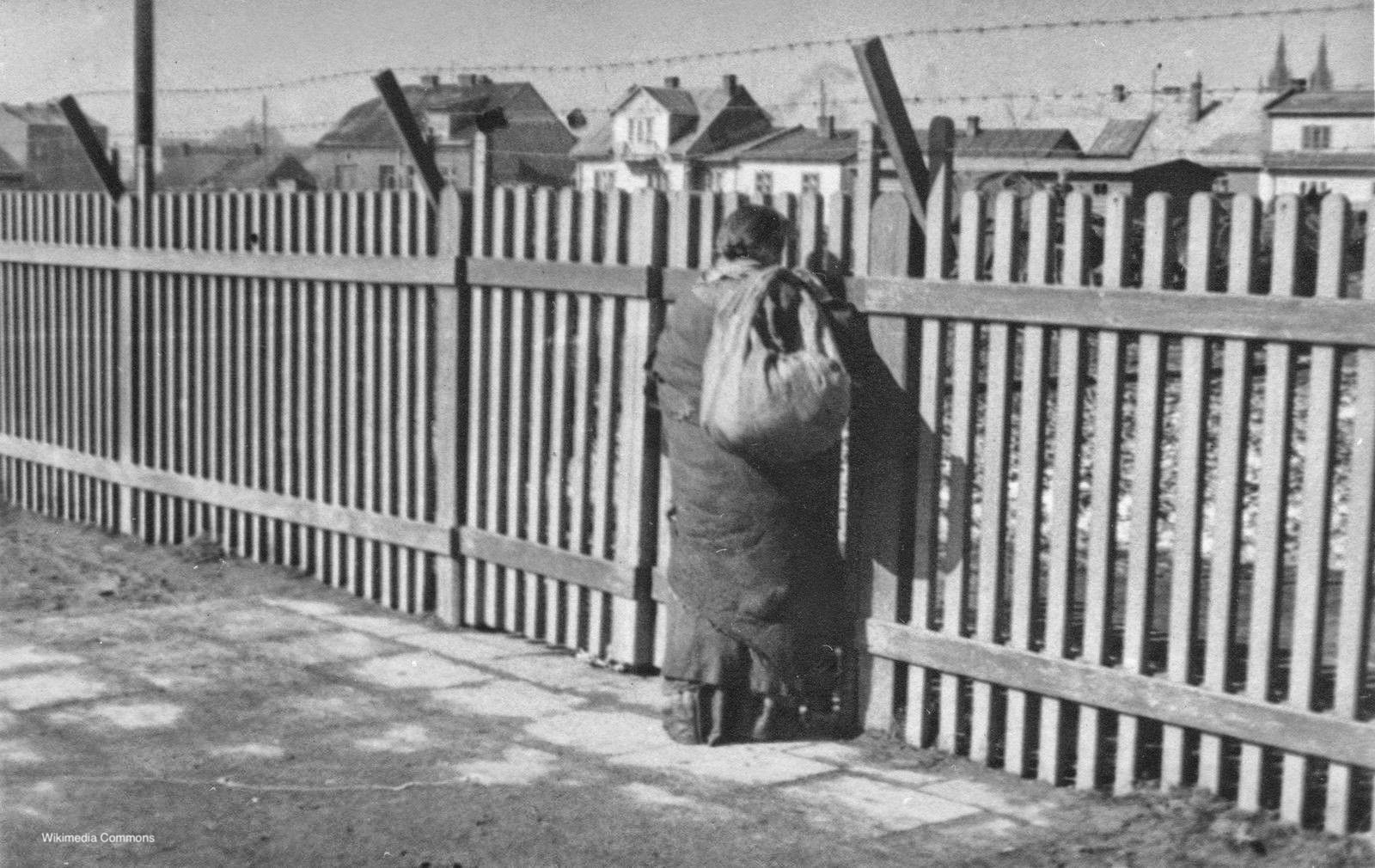
Members of the Boys were imprisoned in the Kielce Ghetto.
The Kielce Ghetto was one of a network of ghettos set up by Nazi Germany in which Jews were forced to live in occupied Poland. As with other ghettos in Czechoslovakia, Latvia, Lithuania and Poland, the Kielce ghetto was established to contain the region’s Jews and isolate them from the rest of the population until the Nazi leadership could decide on an answer to the so-called “Jewish Question.”
The Boys and their families spent years living in dire conditions. The ghettos were not designed for the vast numbers of people forced to find space to live within them. As a result, multiple families shared cramped and insanitary accommodation.
The Boys were teenage and child-Holocaust survivors, who were brought to the UK after the war for rest and rehabilitation.
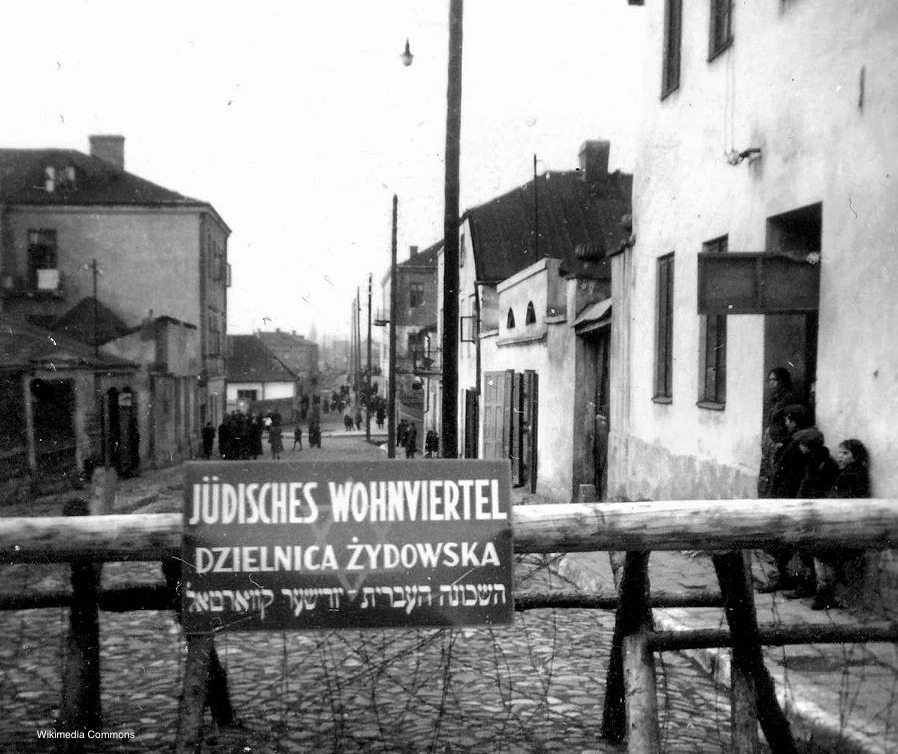
Kielce Ghetto.
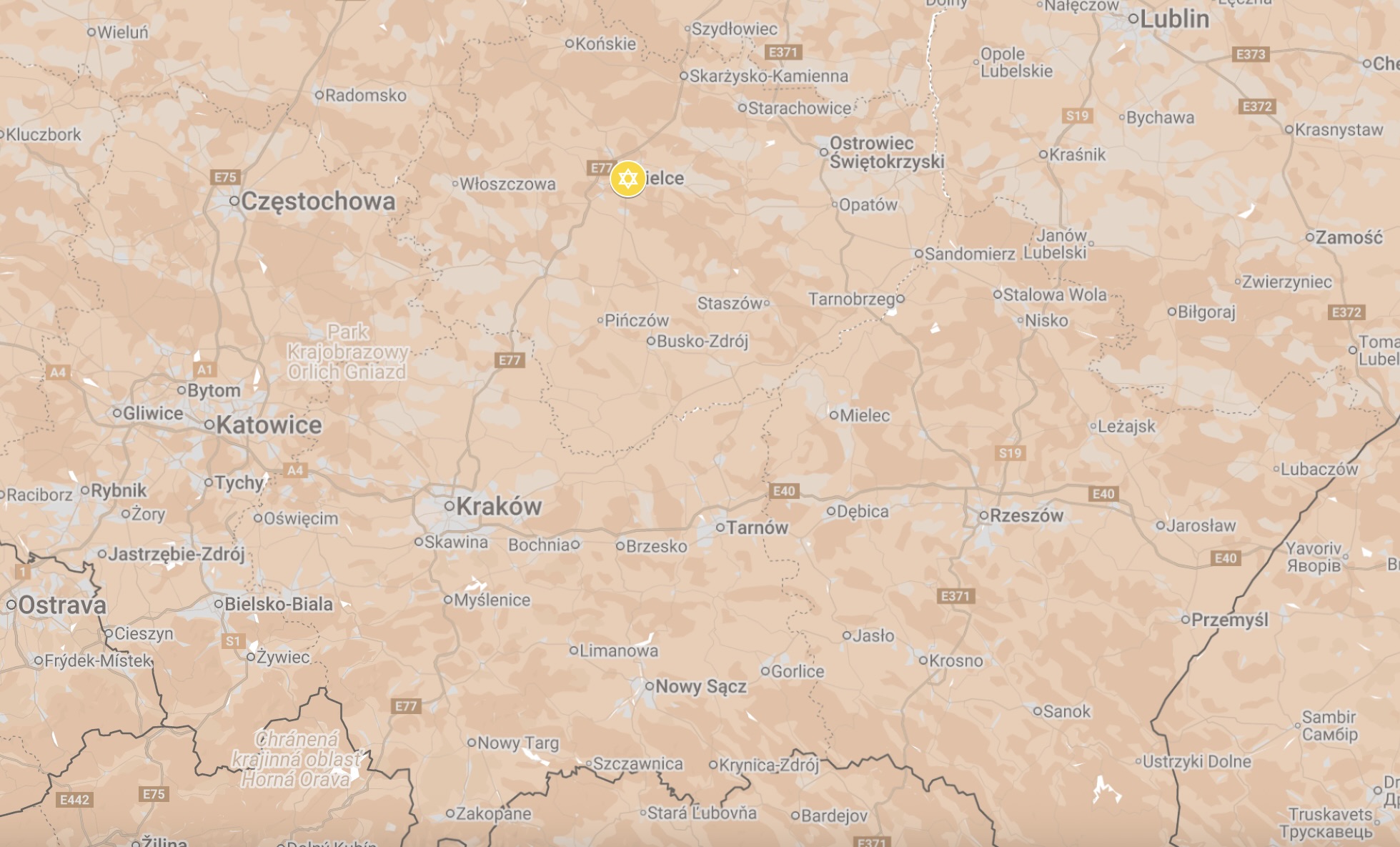
Kielce is a city in south-central Poland. It is the capital of the Świętokrzyskie Voivodeship. To find out more about the region and the Boys who grew up there click here.
Overview
Between the onset of war in September 1939 and March 1940, the Jewish population of Kielce expanded from 18,000 to 25,400.
The Kielce Ghetto was created in April 1941. The ghetto gates were closed on 5 April 1941.
Layout
The ghetto was split in two, along Warszawska Street (Nowowarszawska) with the Silnica River running through it. The so-called large ghetto was set up between the streets of Orla, Piotrkowska, Pocieszka, and Warszawska to the east, and the smaller ghetto between Warszawska on the west, and the streets of Bodzentyńska, St. Wojciech, and the St. Wojciech square.
Daily Life
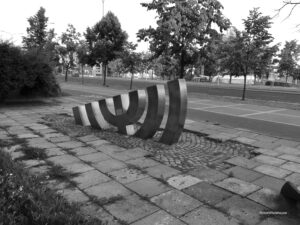
Kielce Ghetto Memorial
Meanwhile, further expulsions elsewhere and deportations to Kielce continued until August 1942 at which time there were 27,000 prisoners crammed in the ghetto. Trains with Jews arrived from the entire Kielce Voivodeship, and also from Vienna, Poznań, and Łódź.
The severe overcrowding, rampant hunger, and outbreaks of epidemic typhus took the lives of 4,000 people before mid-1942.
Several forced-labour enterprises were set up in the city by the SS, including HASAG Granat Werke with 400–500 Jews manufacturing munition, as well as the Ludwigshütte (prewar Ludwików foundry) with 200–300 slave labourers; the Henryków woodworking plant, and various workshops for German war economy. The Jews who worked in these factories were almost the only ones who survived the ghetto’s liquidation.
Jewish Resistance
The Jewish clandestine resistance, under the leadership of Dawid Barwiner (Bachwiener) and Gerszon Lewkowicz, attempted to procure weapons, but they were largely unsuccessful. The secret production of arms and ammunition for the planned uprising failed abruptly when the chief of Jewish police, Wahan Spiegl (Spiegel), informed the Gestapo on the goings-on in the German metal shops.
Liquidation
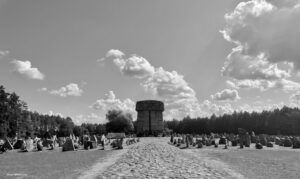
Treblinka Memorial, Poland.
The liquidation of the ghetto took place in August 1942, when over 21,000 men, women and children were deported to their deaths at the Treblinka extermination camp and several thousands more shot, face-to-face.
The first ghetto liquidation action took place on 20 August 1942. During roundups, all Jews unable to move were shot on the spot including the sick, the elderly, and the disabled. Around 6,000–7,000, mostly women and children, were herded onto Okrzei Street and transported to Treblinka extermination camp. Within four days, 1,200 people including patients of the Jewish hospital were shot face-to-face and 20,000–21,000 Jews were led into waiting Holocaust trains, sent to Treblinka, and murdered in the gas chambers.
By the end of 24 August 1942, there were only 2,000 people left in the ghetto.
Aftermath
All surviving Jewish skilled workers were in the labour camps at Stolarska and Jasna Street within the small ghetto, including members of the Judenrat (Jewish council). The labour camp functioned for several more months, supplying slave labour to German factories that were still running.
In May 1943, some Jewish prisoners from Kielce were taken to forced-labour camps in Starachowice, Skarżysko-Kamienna, Pionki, and Bliżyn. On 23 May 1943, the German police collected 45 Jewish children who had stayed behind at the liquidated camp. They were brought to the Pakosz Cemetery and shot.
In September 1943, as the Soviet front advanced westward, what remained of the Kielce slave labour facilities was gradually abandoned. The remaining skilled workers were sent to the Auschwitz concentration camp complex.
Kielce was the site of the Kielce pogrom of 4 July 1946 in which 37 Polish Jews and 2 ethnic Poles were murdered.
Memorialisation
In 2007, menorah-shaped monument, half-sunk in the ground, was designed by artist Marek Cecula who is also a Kielce-born Holocaust survivor. For more information on visiting the region click here.
 About
About History
 Education
 Quilts
 FIlms
FIlms Photos
 News Media & Events
 Publications
 Donate