Members of the Boys were imprisoned in the Kraków Ghetto.
The Kraków Ghetto was one of a network of ghettos set up by Nazi Germany in which Jews were forced to live in occupied Poland. As with other ghettos in Czechoslovakia, Latvia, Lithuania and Poland, the Krakow ghetto was established to contain the region’s Jews and isolate them from the rest of the population until the Nazi leadership could decide on an answer to the so-called “Jewish Question.”
The Boys and their families were forced to move from their homes and were held in ghettos in Nazi controlled Czechoslovakia, Latvia, Lithuania and Poland, where they spent years living in dire conditions. The ghettos were not designed for the vast numbers of people forced to find space to live within them. As a result, multiple families shared cramped and insanitary accommodation.
The Boys were teenage and child-Holocaust survivors, who were brought to the UK after the war for rest and rehabilitation.
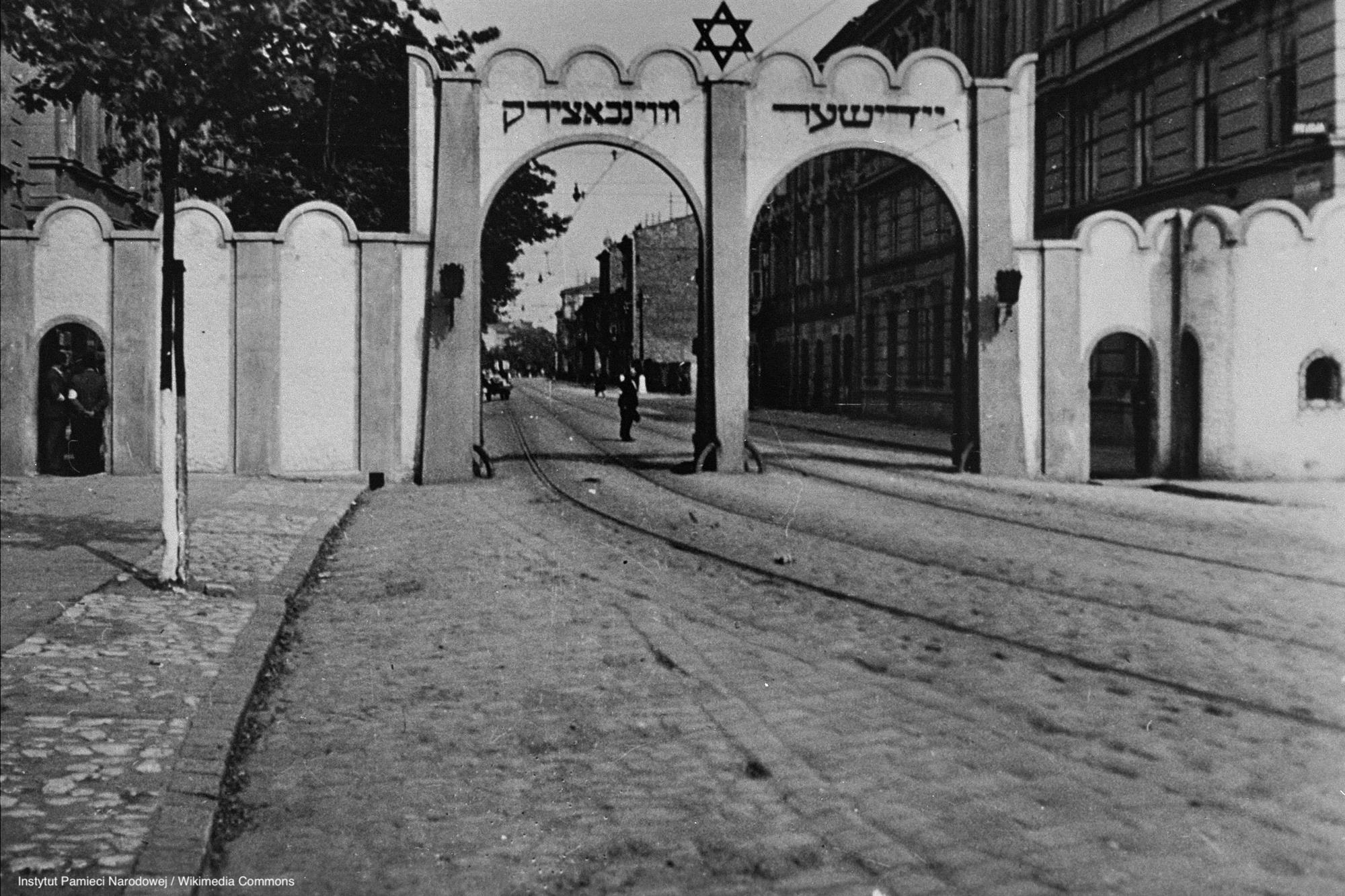
Ghetto Gate in Kraków, Poland.
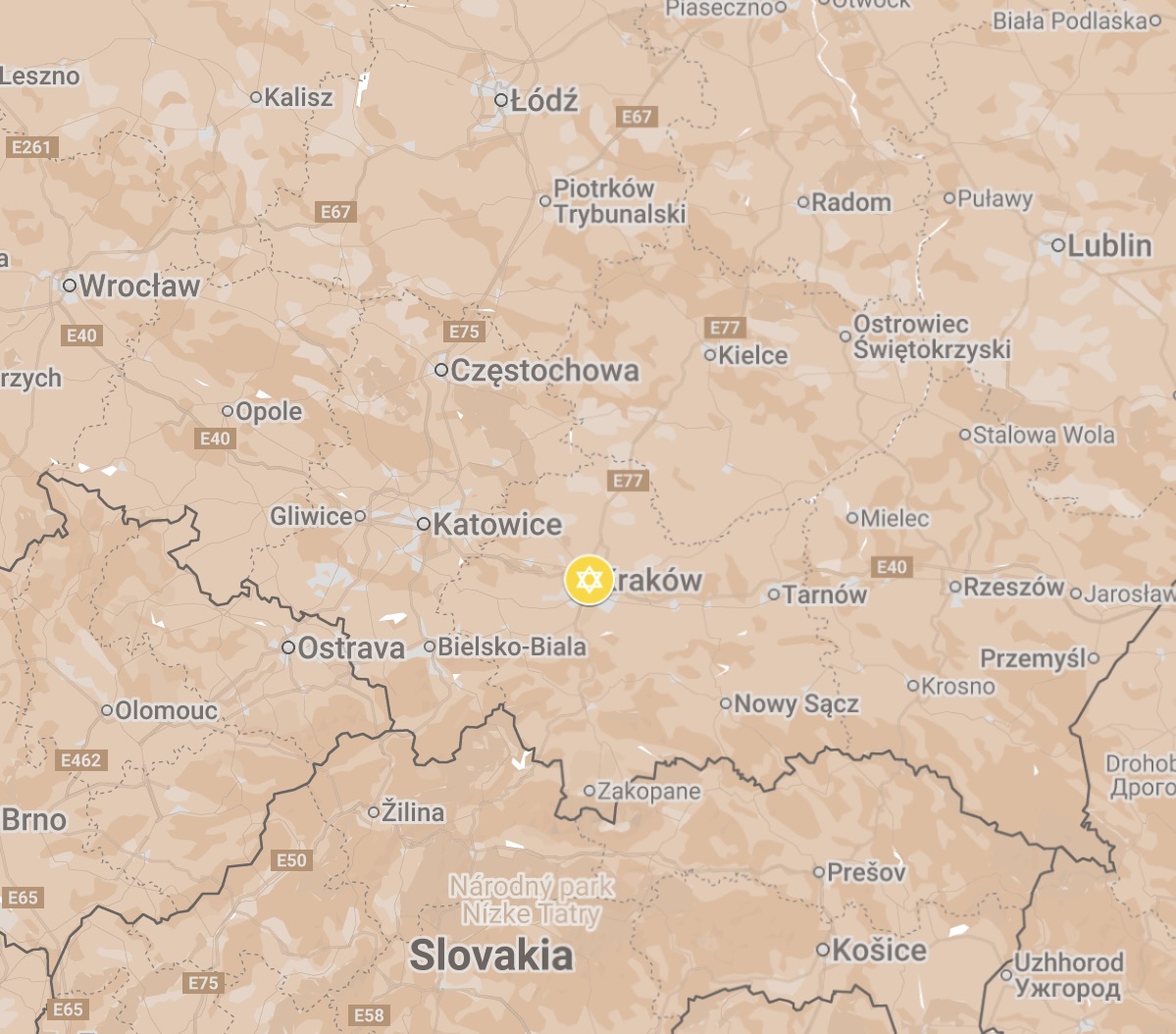
Kraków, in southern Poland, was made the capital of the General Government, part of occupied Poland not directly incorporated into Germany. To find out more about the city and surrounding areas as well as the Boys who grew up there click here.
Of the more than 68,000 Jews in Kraków at the time of the German invasion, only 15,000 workers and their families were permitted to remain. From May 1940 to 15 August 1940, a voluntary expulsion program was enacted and about 10,000 Jews were deported to the Lublin District in November 1940.
On 3 March 1941, the establishment of the Kraków Ghetto was ordered. The Kraków ghetto was officially established on 20 March 1941.
The Photographs
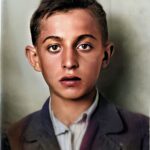
Gerson Frydman
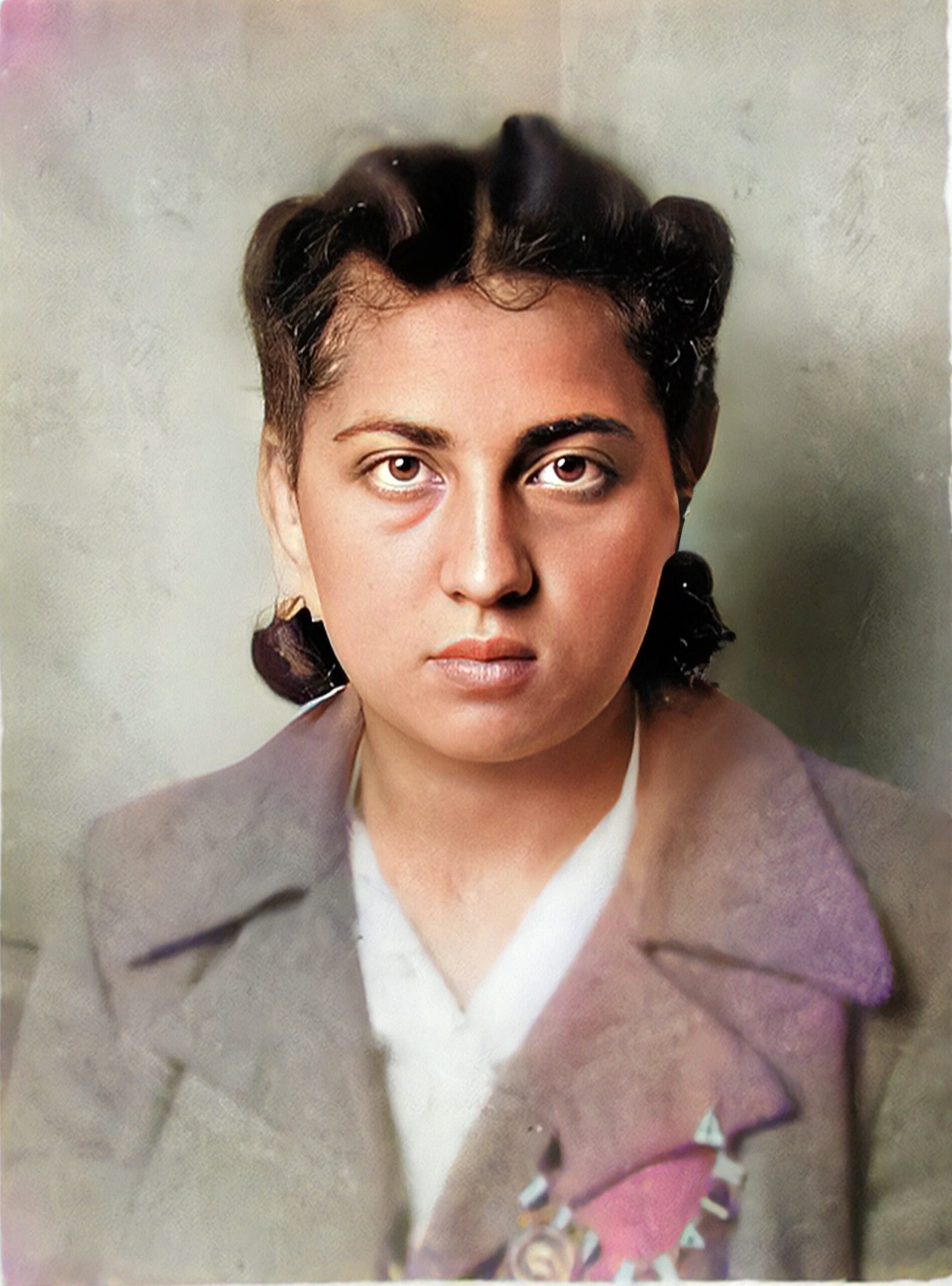
A census of Jewish residents in Krakow was carried out in July and August of 1940. It produced a database that could be used to persecute the Jews in the city. The daughter of Gerson Frydman, Robin Frydman-Schall, found her father’s family on this database which is now held in the Jewish Historical Institute in Warsaw. It was a unique find as her father was the only one who survived the Holocaust. The photographs which she colourised can be seen in the gallery on the right of this page.
Layout
The ghetto was set up in the Podgórze suburb of Kraków. This was not the traditional Jewish quarter, which was in Kazimierz. Displaced Polish families from Podgórze took up residences in the former Jewish dwellings outside the newly established ghetto.
The ghetto stretched from Podgórski Market Square to Limanowskiego Street and from Józefińska Street to Zgody Square, which is today’s Bohaterów Getta Square.
Aproximately 15,000 Jews were crammed into an area previously inhabited by 3,000 people. All windows and doors that opened onto the ‘Aryan’ side were bricked up. By late 1941 there were 18,000 Jews in the ghetto.
The ghetto was guarded by the German and Polish police but the only police force inside the ghetto was the Jewish Police.
In April 1941, the ghetto was enclosed by a wall made of barbed wire and stone. The stones were designed to look like tombstones.
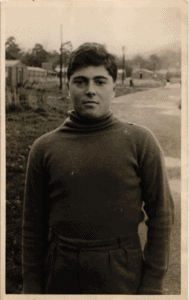
Jan Kurtz, pictured in Windermere in 1945, was held in the ghetto.
The ghetto was accessible by three entrances: one near the Podgórze Market, Limanowskiego Street, and the Plac Zgody. Although Jews from the surrounding area where brought into the ghetto, its size of reduced.
In December 1942. the Kraków ghetto was divided into two parts: Ghetto ‘A’ and Ghetto ‘B’. Ghetto ‘A’ was intended for people that were working and Ghetto ‘B’ was for everyone else.
Jewish Resistance
Young people of the Akiva youth movement joined forces with other Zionists to form a local branch of the Jewish Fighting Organization, ŻOB, and organised a resistance movement in the ghetto, which was supported by the Polish underground Armia Krajowa.
The group carried out a variety of resistance activities including the bombing of the Cyganeria cafe – a gathering place of Nazi officers. Unlike in Warsaw, their efforts did not lead to a general uprising before the ghetto was liquidated. After the liberation, the surviving members of the resistance joined the Jewish Underground and helped other survivors to make their way illegally to the Palestine Mandate.
Daily Life
Although the practice of religion was banned, that did not stop the Jews in the Kraków ghetto from practicing their religion. There was also an active cultural life.
Conditions were dire. Severe overcrowding bred disease and their were shortages of food and fuel.
The card index of the inhabitants of the Krakow Ghetto is one of the few that survived the war.
The Ghetto Pharmacy
The only pharmacy enclosed within the Kraków Ghetto boundary belonged to the Polish Roman Catholic pharmacist Tadeusz Pankiewicz, permitted by the German authorities to operate his Under the Eagle Pharmacy upon his request. The scarce medications and tranquillizers supplied to the ghetto’s residents often free of charge – apart from health-care considerations – contributed to their survival.
Pankiewicz passed around hair dyes to Jews who tried to cross the ghetto walls illegally and pretend to be Poles. In recognition of his heroic deeds in helping countless Jews in the ghetto during the Holocaust, he was bestowed the title of the Righteous among the Nations by Yad Vashem, the Israeli Holocaust Memorial.
Liquidation
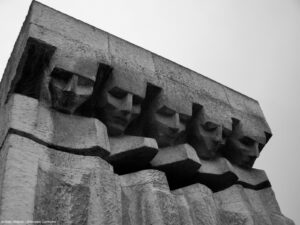
Kraków-Płaszów Memorial.
The ghetto was liquidated between June 1942 and March 1943, with most of its inhabitants deported to the Bełżec extermination camp, Kraków-Płaszów concentration camp, and Auschwitz II-Birkenau concentration and extermination camp. After the action, the ghetto was again reduced in size. It was now supervised exclusively by the SS and Gestapo and divided into two sections: ‘A’ and ‘B’.
In the second half of November 1942, the deportations of Jews from nearby villages and the surrounding areas of Krakow were completed. Those who managed to survive were sent to the Krakow ghetto. In December, those in section ‘A’ were transferred to Kraków-Płaszów concentration camp.
The final liquidation of the Kraków ghetto began on 13 March 1943. Those with work permits were moved to Kraków-Płaszów. The rest were gathered in Zgody Square. Between 700–2,500 were shot and 3,000 people were taken to the Auschwitz II-Birkenau concentration and extermination camp. All but 26 women and 15 men went straight to the gas chambers.
Aftermath
After the action was over, members of the Judenrat (Jewish council) and the Jewish police were forced to sort out the bodies of those murdered in the ghetto. They were then taken to Kraków-Płaszów in November 1943.
About 2,000 Jews survived the German occupation. After the war, Kraków hosted several court trials of German war criminals, including Amon Leopold Goeth, who was tried and sentenced to death by hanging in 1946.
Memorialisation
The main memorial is in Plac Bohaterów Getta. For information on visiting Kraków click here.
 About
About History
 Education
 Quilts
 FIlms
FIlms Photos
 News Media & Events
 Publications
 Donate