
Members of the Boys were imprisoned in the Lutsk Ghetto.
The Lutsk Ghetto was one of a network of ghettos set up by Nazi Germany in which Jews were forced to live in occupied Poland. As with other ghettos in Czechoslovakia, Latvia, Lithuania and Poland, the Lutsk Ghetto was established to contain the region’s Jews and isolate them from the rest of the population until the Nazi leadership could decide on an answer to the so-called “Jewish Question.”
The Boys and their families spent years living in dire conditions. The ghettos were not designed for the vast numbers of people forced to find space to live within them. As a result, multiple families shared cramped and insanitary accommodation.
The Boys were teenage and child-Holocaust survivors, who were brought to the UK after the war for rest and rehabilitation.
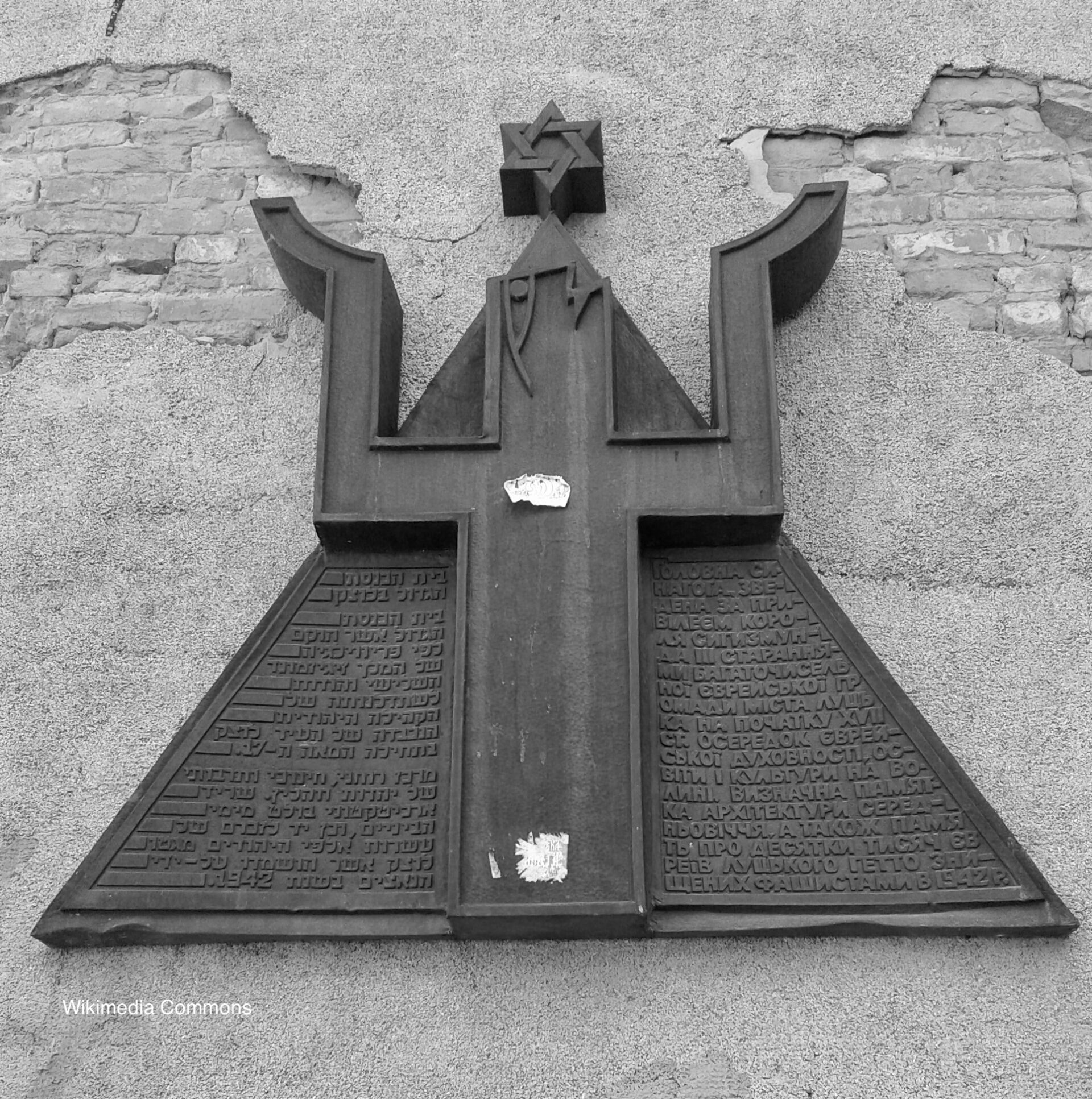
Memorial in Lutsk on the synagogue.
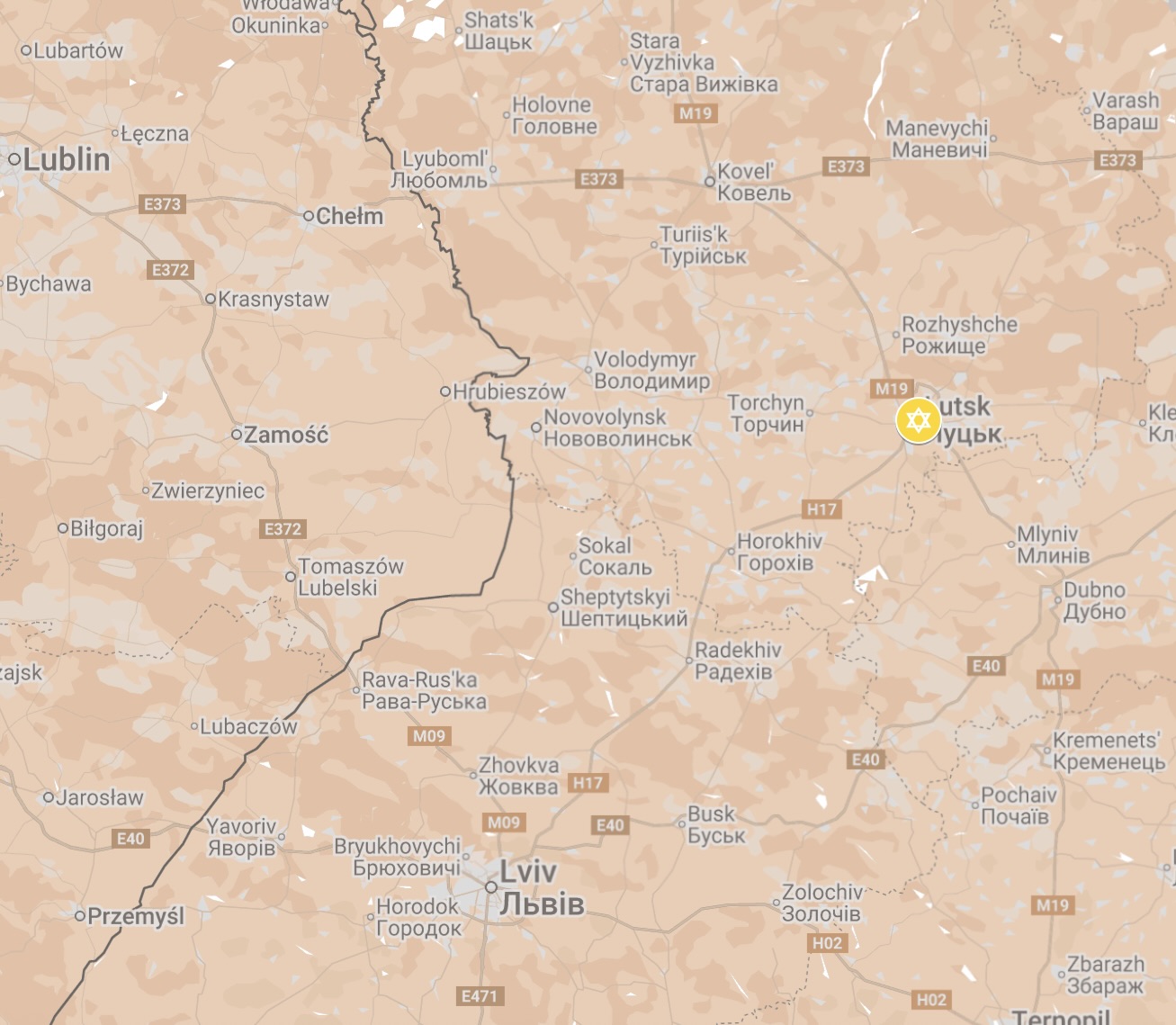
Lutsk is a city on the Styr River in northwestern Ukraine.
Overview
Before World War II, Lutsk (Łuck), then part of Poland, had a thriving Jewish community. Jews made up nearly half of the city’s population—approximately 17,500 people. It was part of Soviet occupied Poland between 1939 and June 1941.
In June 1941, Germany invaded the Soviet Union and captured Lutsk on 25 June. By December 1941, the Nazis had confined the surviving Jewish residents to a ghetto.
Layout
The Lutsk Ghetto was established in one of the city’s poorest districts, near the old Jewish quarter. It was surrounded by barbed wire. Thousands of Jews from surrounding villages were forcibly relocated into the overcrowded ghetto.
Conditions were appalling—families were crammed into small, dilapidated homes, often with multiple families sharing a single room. There was little access to food, clean water, or medicine. Ukrainian auxiliary police and German SS officers controlled the area, enforcing strict curfews and punishing any attempt to leave.
Unlike the large ghettos in Poland, which sometimes existed for years, the Lutsk Ghetto functioned primarily as a temporary holding zone before mass executions.
Daily Life
The German authorities allocated only minimal food rations. Malnutrition became widespread, and disease spread rapidly due to the overcrowded and unsanitary conditions.
Men and women were subjected to forced labour. Many worked in German-run workshops, repairing roads or manufacturing goods for the Wehrmacht. Others were assigned to gruelling construction projects. Beatings and executions were commonplace, as even minor infractions were punished with death.
Despite the horrific conditions, residents tried to maintain some form of normality. Parents risked their lives to teach their children, and secret prayer gatherings took place.
Mass Shootings
The first massacre occurred on 2 July 1941, when over 1,000 Jewish men were taken to an airfield near the city and shot. Over the following months, German forces continued targeting the Jewish population with systematic killings.
The final liquidation of the Lutsk Ghetto took place in August 1942, culminating in one of the largest massacres in Volhynia.
On 19-23 August 1942, approximately 15,000 Jews were rounded up and taken to Polanka Hill, an area just outside the city. German SS units and Ukrainian auxiliary police forced the victims to strip before shooting them into pre-dug mass graves. Eyewitnesses said the ground at Polanka Hill reportedly “moved” for hours afterward, as many of the victims were buried alive.
By November 1942, almost the entire Jewish population of Lutsk had been murdered.
Jewish Resistance
Some Jews managed to escape the ghetto and flee to the forests, where they joined Soviet partisan groups. Some children were hidden with Polish neighbours.
Aftermath
After the war, the Jewish community in Lutsk was not re-established. Survivors who returned found that their homes had been taken over by new occupants, and most eventually left.
Memorialisation
There is a memorial at Polanka Hill. The Great Synagogue of Lutsk, which was partially destroyed during the war, still stands as a historical landmark.
 About
About History
 Education
 Quilts
 FIlms
FIlms Photos
 News Media & Events
 Publications
 Donate