
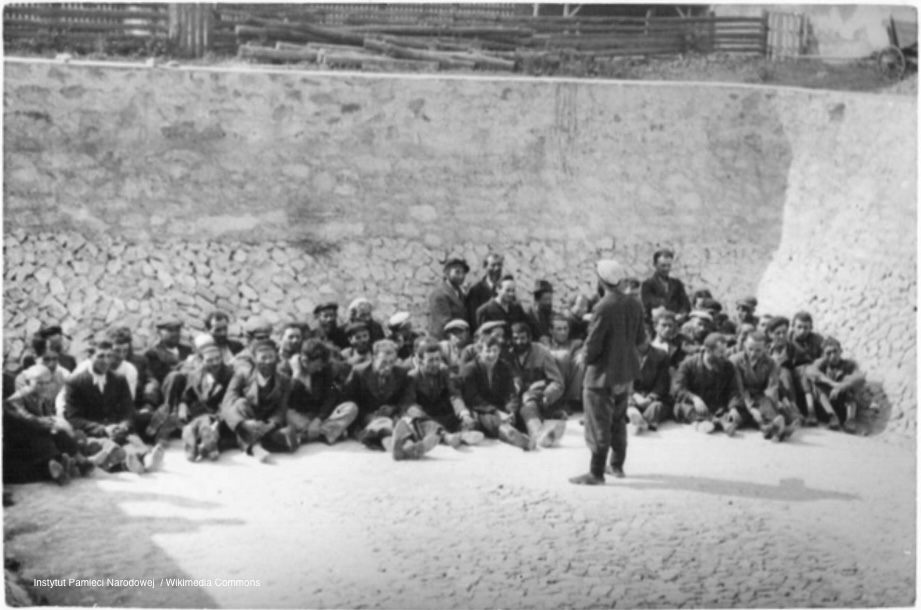
Members of the Boys were imprisoned in the Opatów Ghetto.
The Opatów Ghetto was one of a network of ghettos set up by Nazi Germany in which Jews were forced to live in occupied Poland. As with other ghettos in Czechoslovakia, Latvia, Lithuania and Poland, the Opatów Ghetto was established to contain the region’s Jews and isolate them from the rest of the population until the Nazi leadership could decide on an answer to the so-called “Jewish Question.”
The Boys and their families spent years living in dire conditions. The ghettos were not designed for the vast numbers of people forced to find space to live within them. As a result, multiple families shared cramped and insanitary accommodation.
The Boys were teenage and child-Holocaust survivors, who were brought to the UK after the war for rest and rehabilitation.
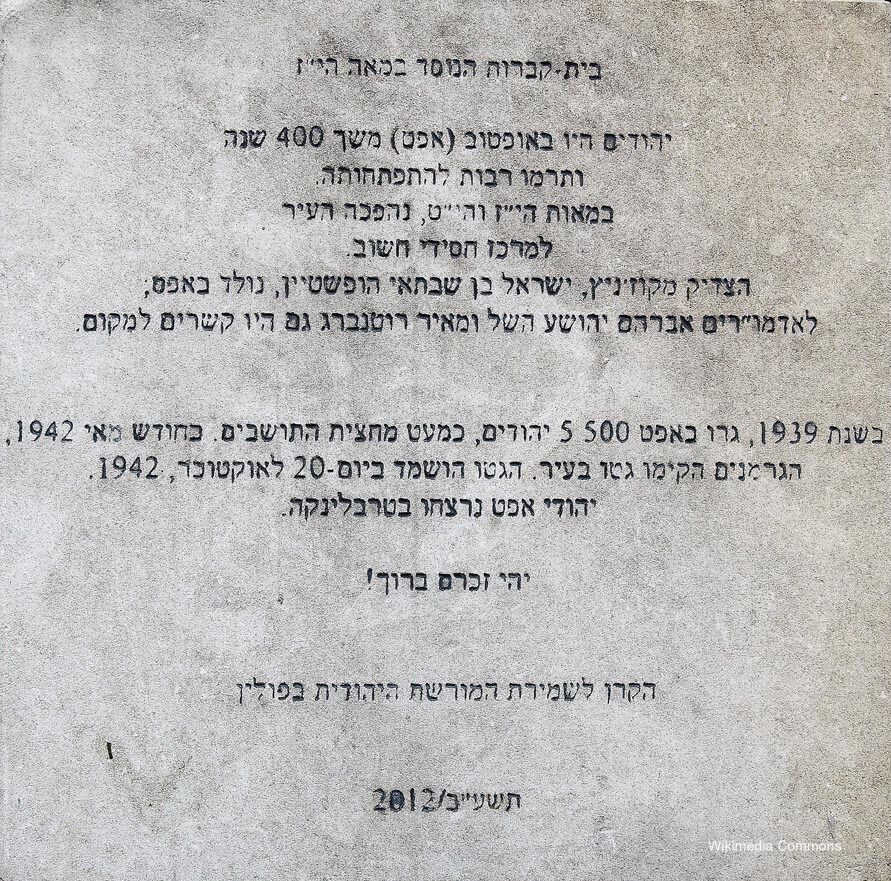
Opatow Ghetto Memorial Plaque
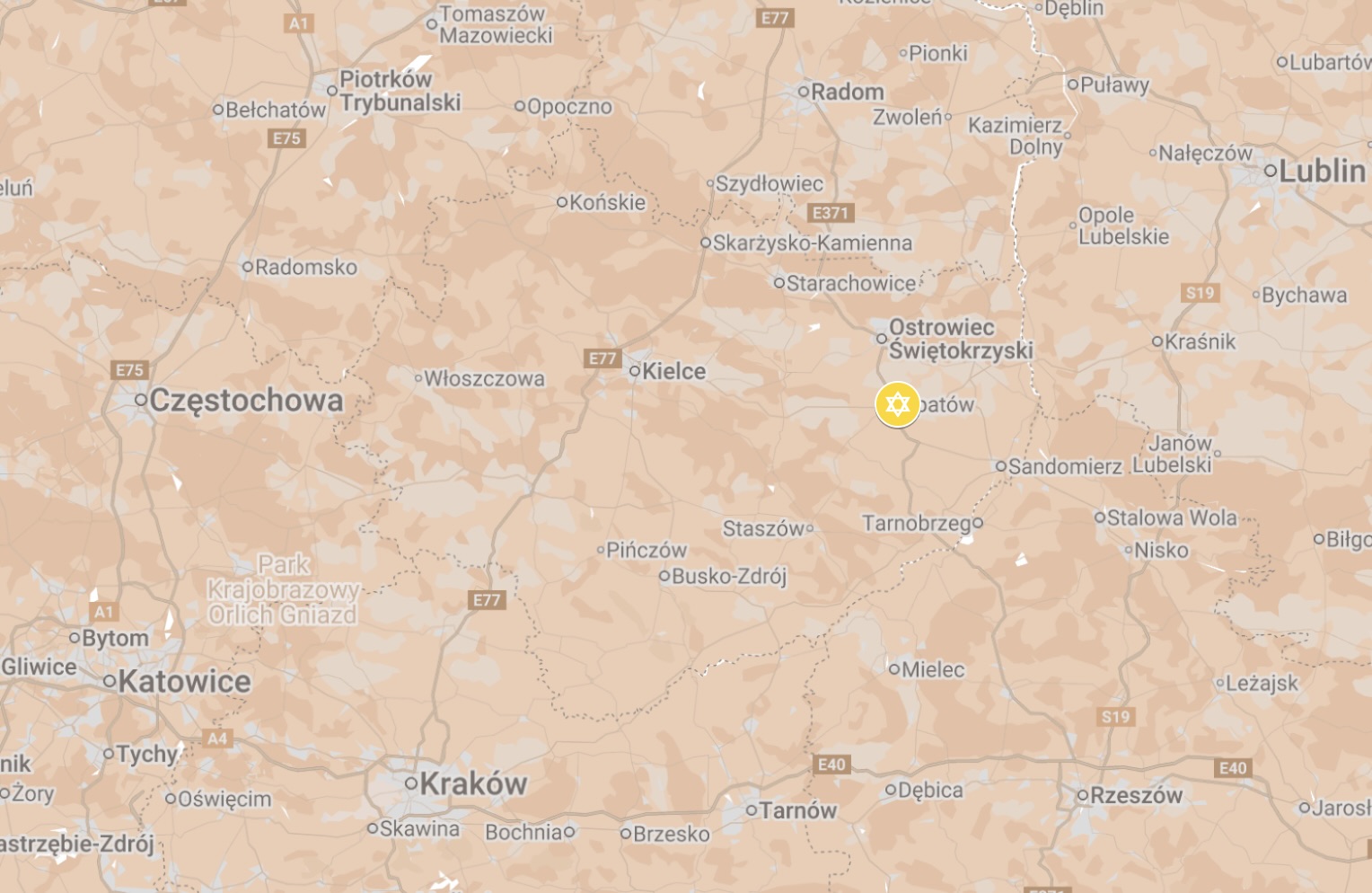
Opatów is a town in southeastern Poland. To find out more about Świętokrzyskie Voivodeship and the Boys who grew up there click here.
Overview
The Opatów Ghetto held about 10,000 Jews including a group deported from the Czechoslovakia and Austria. Initially, the ghetto, set up by Nazi Germany in 1940, was an open ghetto. It included Joselewicza, Zatylna, Wąska and Starowałowa Streets. Non-Jewish Poles were forced out of the area.
All shops were kept open, but food stamps were introduced to limit the distribution of regulated foods such as meat and grain. Severe overcrowding led to a steadily increasing number of deaths.
Dissolution
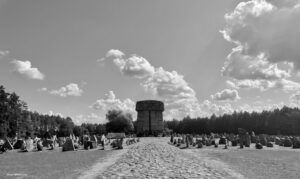
Treblinka Memorial, Poland.
The ghetto was sealed on 13 May 1942 in preparation for its liquidation. On 20 October 1942, the SS rounded up 6,500 Jewish men, women and children in the centre of town in Targowica Square. They were marched 18km to the station at Jasice. Those who could not keep up were shot. There they were loaded onto trains and taken to the Treblinka extermination camp. The journey took three days.
Only one person escaped death, 19 year old Samuel Willenberg. He was later to escape from Treblinka.
About 2,000 slave labour prisoners remained as workers for Oemler GmbH. In 1943-1944, they were sent to other labour camps in Sandomierz, Starachowice and Radom. Others were sent to Skarżysko-Kamienna.
Aftermath
The German authorities organised a sale of everything left behind in the abandoned ghetto. Impoverished Polish families took blankets, pillows and winter clothing to survive.
Opatów was liberated by the Red Army on 16 January 1945. Only about 300 Jews are known to have survived, about 50 of whom returned home but were greeted with hostility.
Memorialisation
A monument at the site of the former Jewish cemetery in Opatów commemorates the victims, as well as a plaque at the location of the destroyed synagogue. Although much of the cemetery was damaged, several gravestones remain.

 About
About History
 Education
 Quilts
 FIlms
FIlms Photos
 News Media & Events
 Publications
 Donate