
Members of the Boys were imprisoned in the Przemyśl Ghetto.
The Przemyśl Ghetto was one of a network of ghettos set up by Nazi Germany in which Jews were forced to live in occupied Poland. As with other ghettos in Czechoslovakia, Latvia, Lithuania and Poland, the Przemyśl ghetto was established to contain the region’s Jews and isolate them from the rest of the population until the Nazi leadership could decide on an answer to the so-called “Jewish Question.”
The Boys and their families spent years living in dire conditions. The ghettos were not designed for the vast numbers of people forced to find space to live within them. As a result, multiple families shared cramped and insanitary accommodation.
The Boys were teenage and child-Holocaust survivors, who were brought to the UK after the war for rest and rehabilitation.
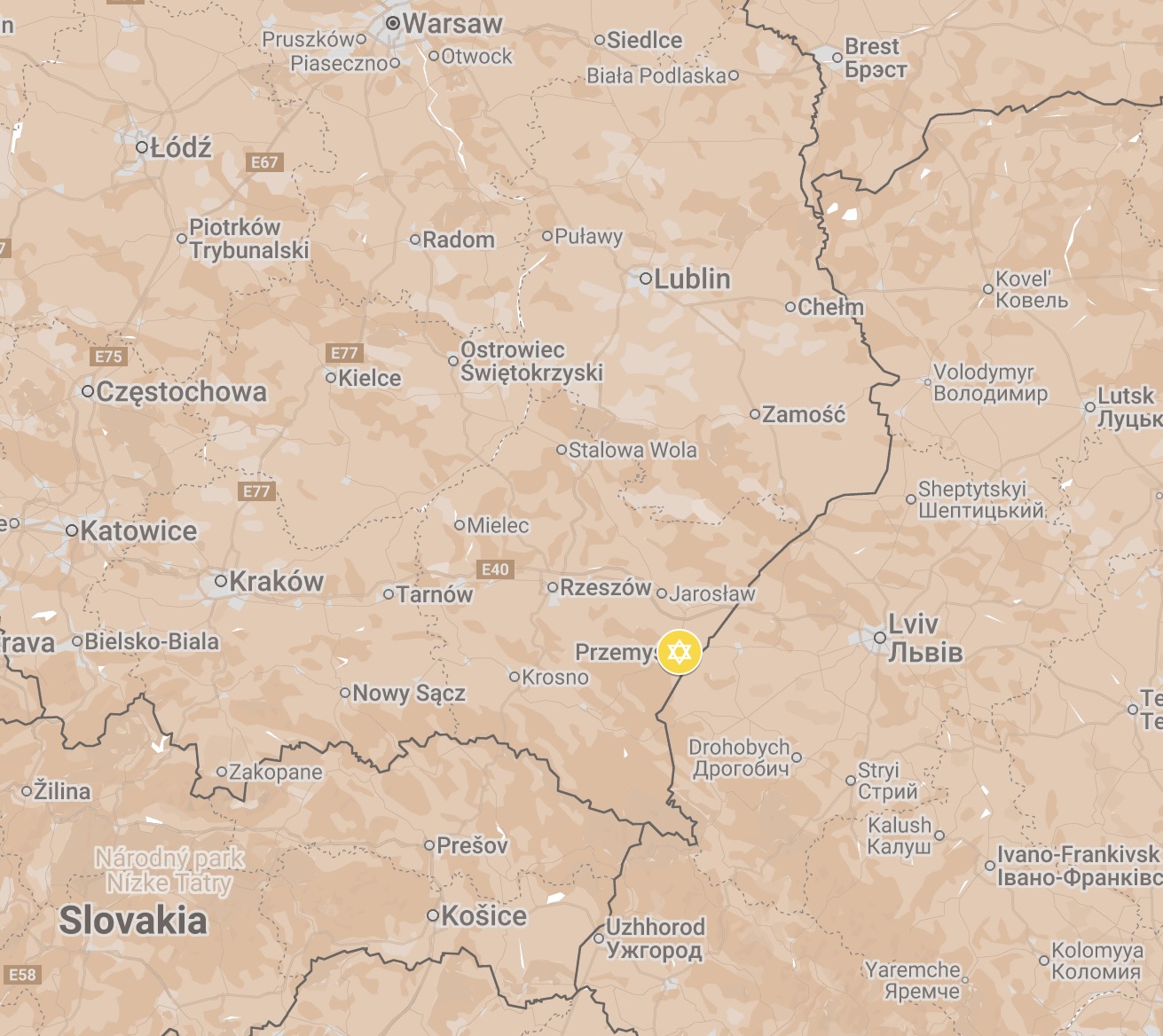
Przemyśl is a city in southeastern Poland near the Ukrainian border. To find out more about the region and the Boys who grew up there click here.
Overview
In September 1939, the city was divided along the San River into two occupation zones – German and Soviet. By the end of the year, the Nazis had expelled almost all the Jews across the river, leaving only 66 people who were shot.
In July 1941, after the German invasion of the Soviet Union, the Jews were forced to move to the Garbarze district. About 17,000 people lived in this small area. From December, the district was guarded by the Schutzpolizei.
In June 1942, the local Gestapo commander, Adolf Benthin, demanded that 1,000 people be handed over to work in the Janowska labour camp in Lvov, present-day Lviv. After initial hesitation, the Judenrat (Jewish council) selected a list of 1,000 young men who were captured by the Jewish police on 18 June. On 20 June, as they were being deported, their families gathered to say goodbye. The Gestapo opened fire and the deportation was disrupted.
As a result a ghetto was set up on 16 July 1942. Jews who had previously lived in other parts of Przemyśl were forced to move there, as well as about 5,000 people from the Jewish communities of the surrounding towns of Bircza, Krzywcza, Niżankowice and Dynów, which increased the overcrowded ghetto population to about 22,000-24,000 people. Many people were shot during the operation.
Layout
It was forbidden to leave the ghetto without a pass. All entrances were closed except for the crossing at Wiktorii (Jagiellońska) and Lwowska Streets. Due to rumours about the deportation of Jewish communities, many Jews tried to get work for the Wehrmacht in the hope it would protected them against deportation.
Deportations
About ten days after the ghetto was sealed, the first stage of its liquidation began. On the night of 26-27 July 1942, the ghetto was surrounded and blocked by German, Ukrainian and Estonian police. The next day, between 3,580 and 6,500 Jews were arrested and deported to the Bełżec extermination camp.
The residents of Przemyśl had been warned that any help given to Jews during the deportation and plundering of Jewish property would be punishable by death. About 2,500 ghetto residents, including the elderly, the sick, and children, were taken to a nearby forest in Grochowce, where they were shot.
The local German commander, Major Max Liedtke, and his adjutant Albert Battel managed to save and postpone the deportation of the Jewish workers, for which they were later awarded the Righteous Among the Nations medals. The next day, the ghetto area was reduced and its residents were forced to move to a newly designated area and leave all their belongings in their former location.
On 31 July 1942, during another deportation action, about 3,000 Jews were deported to the Bełżec extermination camp. They were mainly residents of Kopernika and Czarnieckiego streets.
Another transport was sent on 3 August. Patients were murdered in their hospital beds and executions took place in the Jewish cemetery.
The remaining Jews tried to obtain false Aryan papers, escape to Romania or Hungary, or prepare shelters with food supplies. They also tried to obtain work that the Nazis could consider essential for the German economy and army.
Between 18 October-17 November 1942, the Germans carried out another deportation action in the ghetto. About 4,000 Jews were transport to the extermination camp in Bełżec, about 500 of whom had tried to hide.
After this action, craftsmen and specialists who worked for the Wehrmacht were moved to camps adjacent to the factories. At the end of 1942, the ghetto was divided into parts A and B. The former housed about 800 forced labourers (along with 300 “illegal” children and elderly people who were family members of the workers). In February 1943, ghetto A was officially transformed into a labour camp. About 4,000 Jews considered unfit for work were gathered in ghetto B.
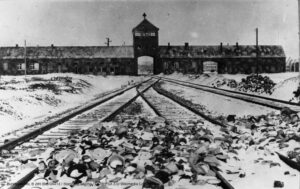
Auschwitz-Birkenau concentration camp.
On 2 September 1942, the liquidation of Ghetto B began. Most of the Jews took refuge in hiding places, but the Germans found most of them. About 3,500 Jews were deported to the Auschwitz II-Birkenau extermination and concentration camp. About 100 people were taken to the labour camp in Szebnie. 1,580 people who had hidden were shot.
Liquidation
On 11 September 1943, the ghetto was formally liquidated. The last 3,500 inhabitants were sent to Auschwitz II- Birkenau.
Between 28 November 1943 and 2 February 1944, about 1,000 Jews living in the former ghetto A were either shot or sent to various labour camps: in Stalowa Wola, Szebnia, Płaszów or to Auschwitz II-Birkenau. By the spring of 1944, about 120 Jews remained in hiding in Przemyśl, but most of them were tracked down and murdered in the following months, after the liquidation of the ghetto in February 1944.
Jewish Resistance
In mid-April 1943, a group of young people escaped to the forest to join the partisans. Most of them were shot by the Ukrainians. From September 1943, Żegota, part of the Jewish underground, also operated in Przemyśl, providing false documents, work cards, money, and assisting private individuals and institutions in helping Jews.
Aftermath
In January 1945, there were 415 Jews registered in Przemyśl. Fewer than 250 of them were pre-war residents of the city.
Memorialisation
There is a memorial in the Jewish cemetery and several plaques. For more information about visiting the region click here.

 About
About History
 Education
 Quilts
 FIlms
FIlms Photos
 News Media & Events
 Publications
 Donate