
Members of the Boys were imprisoned in the Skarżysko-Kamienna Ghetto.
The Skarżysko-Kamienna Ghetto was one of a network of ghettos set up by Nazi Germany in which Jews were forced to live in occupied Poland. As with other ghettos in Czechoslovakia, Latvia, Lithuania and Poland, the Skarżysko-Kamienna Ghetto was established to contain the region’s Jews and isolate them from the rest of the population until the Nazi leadership could decide on an answer to the so-called “Jewish Question.”
The Boys and their families were forced to move from their homes and were held in ghettos in Nazi controlled Czechoslovakia, Latvia, Lithuania and Poland, where they spent years living in dire conditions. The ghettos were not designed for the vast numbers of people forced to find space to live within them. As a result, multiple families shared cramped and insanitary accommodation.
The Boys were teenage and child-Holocaust survivors, who were brought to the UK after the war for rest and rehabilitation.
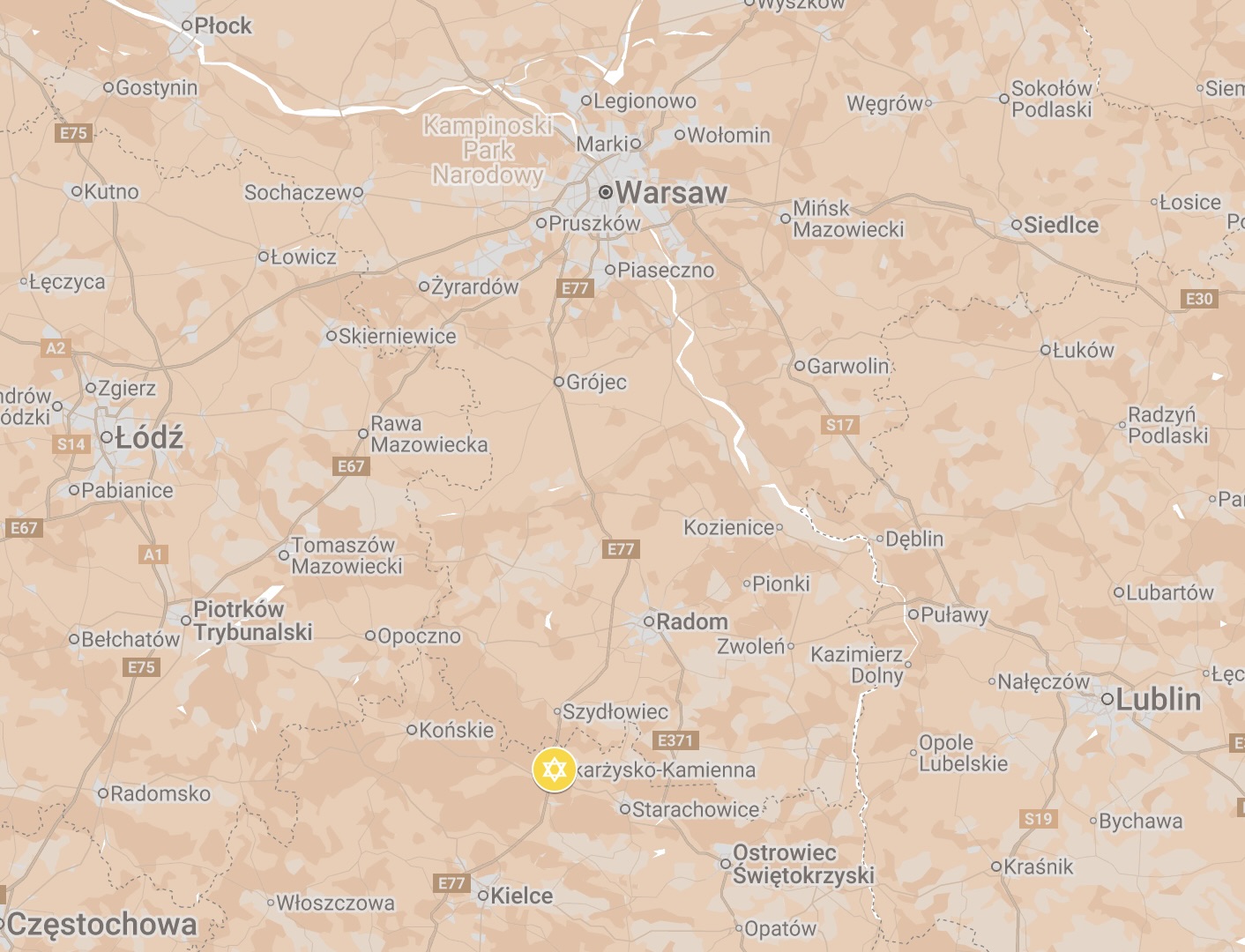
Skarżysko-Kamienna is a city in Świętokrzyskie Voivodeship in south-central Poland. To find out more about the region and the Boys who grew up there click here.
Overview
The Skarżysko-Kamienna Ghetto was established in May 1941. At its peak, the ghetto held an estimated 6,000 Jews.
Layout
The Skarżysko-Kamienna Ghetto was concentrated in a designated area of the town, with Jewish residents forced to relocate from other districts. Barbed wire and checkpoints restricted movement, and German and Polish police units patrolled the perimeter. There was a designated section for forced labourers who were taken to work on nearby industrial sites. Limited medical and relief services were organised by the Judenrat (Jewish council).
Daily Life
Conditions in the Skarżysko-Kamienna Ghetto were extremely difficult. Jews were crammed into small wooden houses, with multiple families occupying each building. Sanitation was almost non-existent, leading to frequent outbreaks of typhus and dysentery. The Judenrat attempted to organise medical aid, but the lack of medicine and overcrowded conditions made disease nearly impossible to control.
Food rations from the Germans were completely inadequate, so many people turned to trade or smuggling to survive. Hunger was widespread, and deaths from malnutrition became a daily reality. Still, some managed to keep religious and cultural traditions alive, holding secret prayer meetings and lessons for children.
Most able-bodied men and boys were forced into labour at nearby industrial sites, including ammunition factories operated by the German company Hasag. Others were put to work in construction, railway maintenance, or other local industries, while women were assigned to textile work or agriculture.
Deportations
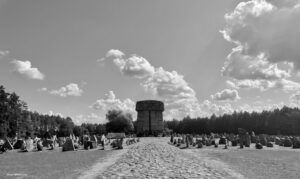
Treblinka Memorial, Poland.
The first major deportation from the Skarżysko-Kamienna Ghetto took place in August 1942. Hundreds of Jews were rounded up and transported to Treblinka, where they were murdered upon arrival. Deportations continued in stages throughout the following months, with the majority of the ghetto’s population sent to extermination camps by the end of 1942.
A number of skilled labourers were selected for continued work in the HASAG forced labour camps. Conditions there were extremely harsh, with long hours, minimal food, and little medical care.
Liquidation
The final liquidation of the Skarżysko-Kamienna Ghetto took place in late 1942. German forces, assisted by local auxiliary police, surrounded the ghetto and forced the remaining inhabitants onto freight trains. Those who were unable to work were sent to Treblinka, while a group of skilled workers were transferred to HASAG-operated forced labour camps. Some Jews attempted to escape into the surrounding forests or sought refuge with sympathetic Polish families. While some survived, many were captured and executed.
Jewish Resistance
There was no organised uprising in the Skarżysko-Kamienna Ghetto. However, some Jews attempted to resist through escape or by joining partisan groups operating in the area. Others engaged in acts of defiance such as smuggling food, hiding their children, or continuing religious practices in secret.
Memorialisation
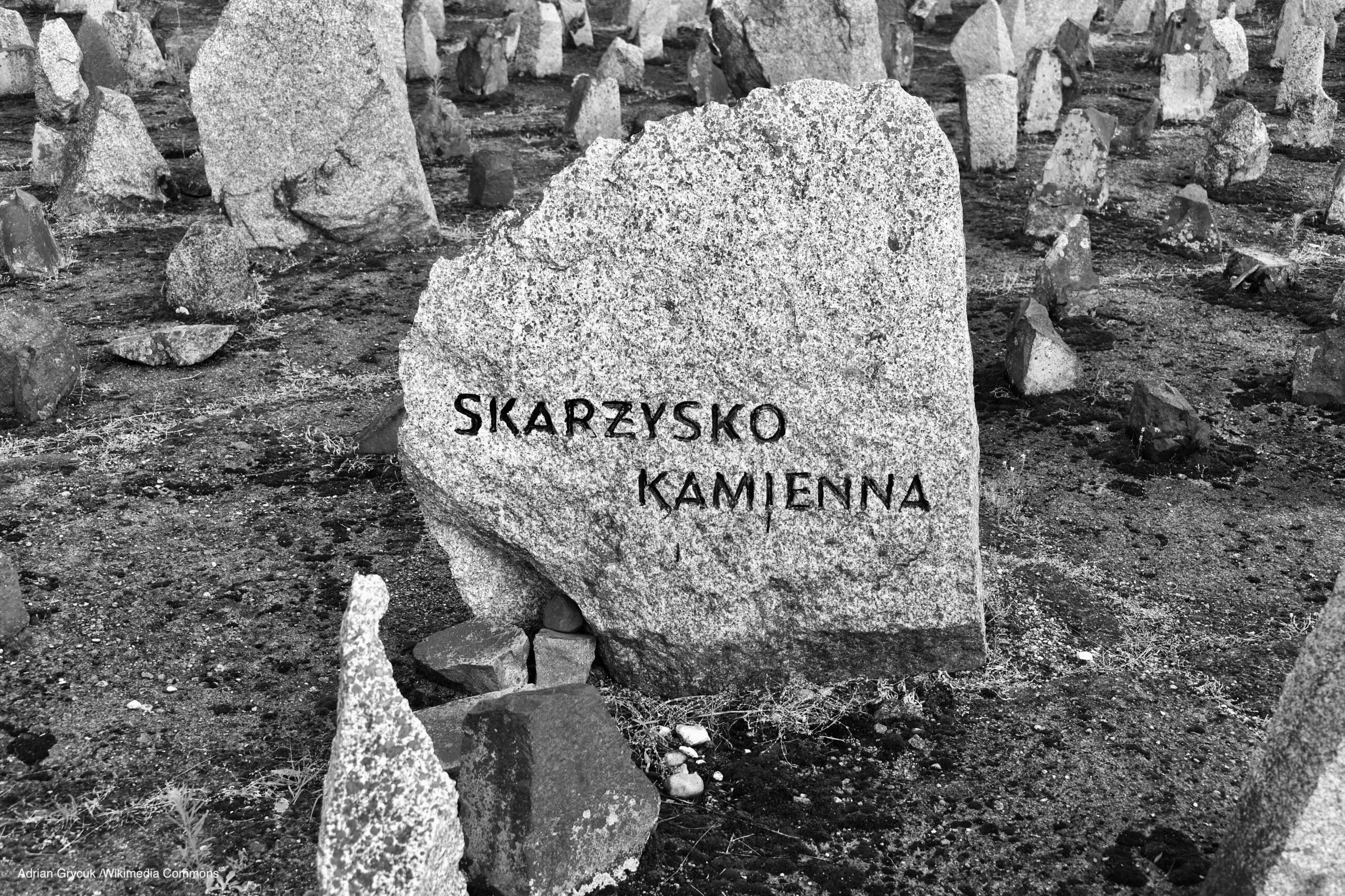
Today, the history of the Skarżysko-Kamienna Ghetto is commemorated by a memorial at the Jewish cemetery and plaques at sites linked to the HASAG forced labour camps.

 About
About History
 Education
 Quilts
 FIlms
FIlms Photos
 News Media & Events
 Publications
 Donate