Members of the Boys were imprisoned in the Trembowla Ghetto.
The Trembowla Ghetto was one of a network of ghettos set up by Nazi Germany in which Jews were forced to live in occupied Poland. As with other ghettos in Czechoslovakia, Latvia, Lithuania and Poland, the Trembowla Ghetto was established to contain the region’s Jews and isolate them from the rest of the population until Nazi leadership could decide on an answer to the so-called “Jewish Question.”
The Boys and their families spent years living in dire conditions. The ghettos were not designed for the vast numbers of people forced to find space to live within them. As a result, multiple families shared cramped and insanitary accommodation.
The Boys were teenage and child-Holocaust survivors, who were brought to the UK after the war for rest and rehabilitation.
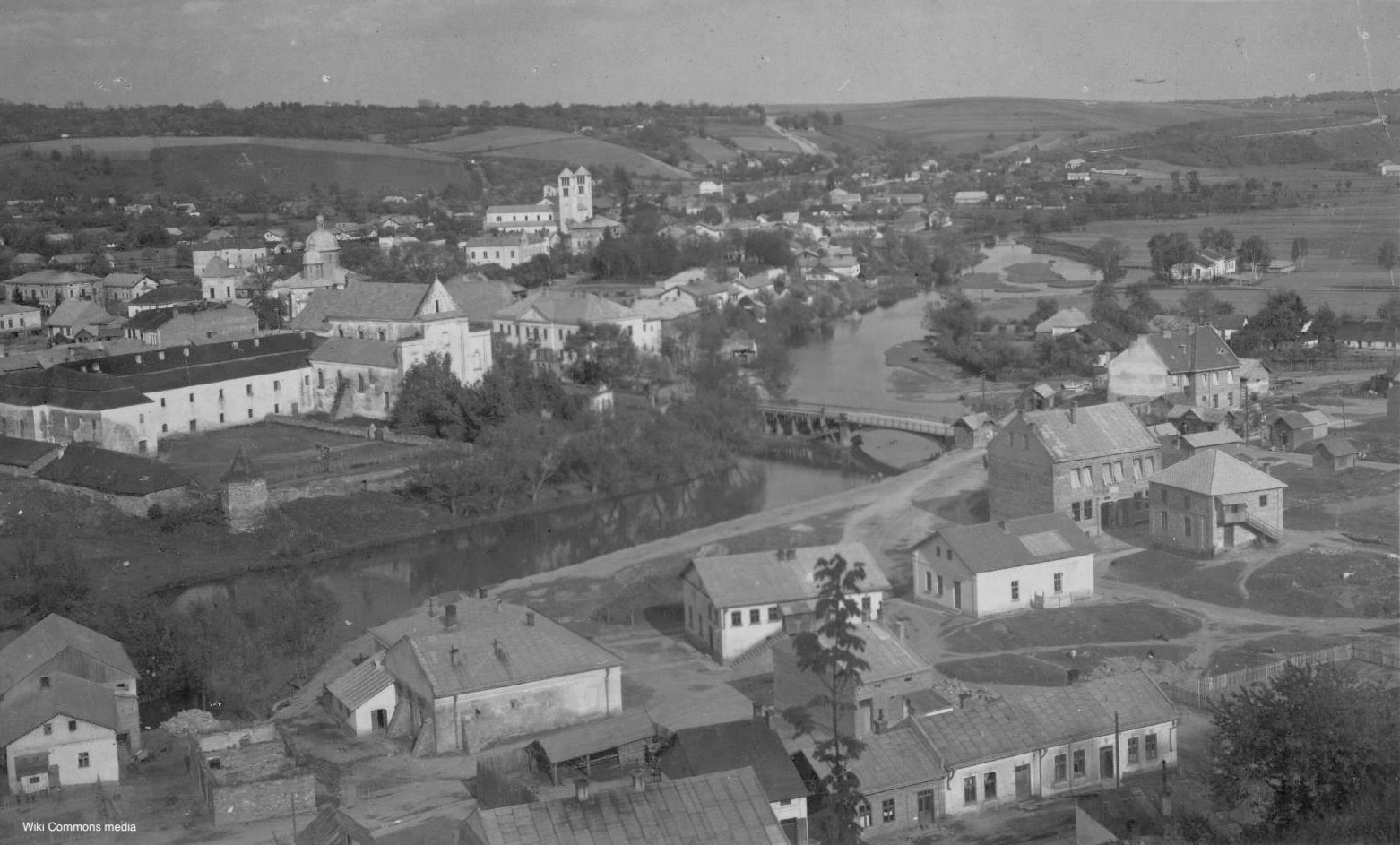
Trembowla.
Overview
Before the war, Trembowla had a significant Jewish population of around 2,500, approximately 35–40% of the town’s population of 7,000–8,000.
From 1939 to 1941, the Soviet Union occupied eastern Poland. Trembowla became part of the Ukrainian Soviet Socialist Republic (Ukrainian SSR). During this period, it was known as Terebovlya. The Jewish residents faced immediate persecution. The Soviets nationalised private businesses, including Jewish-owned enterprises, and arrested community leaders.
In 1941, the Nazis invaded the Soviet-occupied eastern territories as part of Operation Barbarossa. Until 1944, the town was once again known as Trembowla. Executions were carried out by the Einsatzgruppen (Nazi firing squads). In October 1941, at least 600 Jews were rounded up and executed outside the town. In 1942, the Nazis established a ghetto in Trembowla to concentrate and segregate the Jewish community.
Layout
The Trembowla Ghetto was located in a confined area of the town, surrounded by barbed wire and guarded by Nazi and Ukrainian police. Overcrowding was severe, with multiple families crammed into single rooms. Sanitation was poor, and disease spread rapidly.
Daily Life
Life in the ghetto was marked by extreme hardship. Food was scarce, and many residents suffered from severe malnutrition. Rations provided by the authorities were minimal, often consisting of only a few hundred grams of bread per person per day. Many Jews were forced to work in German-controlled workshops and construction projects, such as repairing roads and manufacturing goods for the German war effort.
However, some aspects of community life continued. Families held secret prayer gatherings, ran underground schools, and smuggled food from the outside to survive. But above all, there was constant fear—at any moment, deportation could come.
Deportation & Liquidation
The first deportations from the Trembowla Ghetto occurred in late 1942, when approximately 2,000 Jews were sent to the Bełżec extermination camp. Survivor testimonies recount the chaotic scenes at the collection point, where families were torn apart, and many were brutally beaten before being forced onto trains.
The final liquidation took place in June 1943. The remaining inhabitants were either executed on site or deported to their deaths at Bełżec. The liquidation of the ghetto marked the near-total destruction of Trembowla’s Jewish community.
Jewish Resistance
Some individuals managed to escape and join partisan groups hiding in the nearby forests. Notably, a small group of young men, led by Moshe Friedman, attempted an armed resistance during the final liquidation but were ultimately killed.
Aftermath
Following the Holocaust, the Jewish community of Trembowla was never re-established. Survivors who returned found their homes looted or occupied by others. Many emigrated to Israel, the United States, Canada and Argentina.
Memorialisation
A Holocaust memorial stands at the site of the mass execution, and Holocaust remembrance events are held annually to honour the victims of the Trembowla Ghetto.
 About
About History
 Education
 Quilts
 FIlms
FIlms Photos
 News Media & Events
 Publications
 Donate