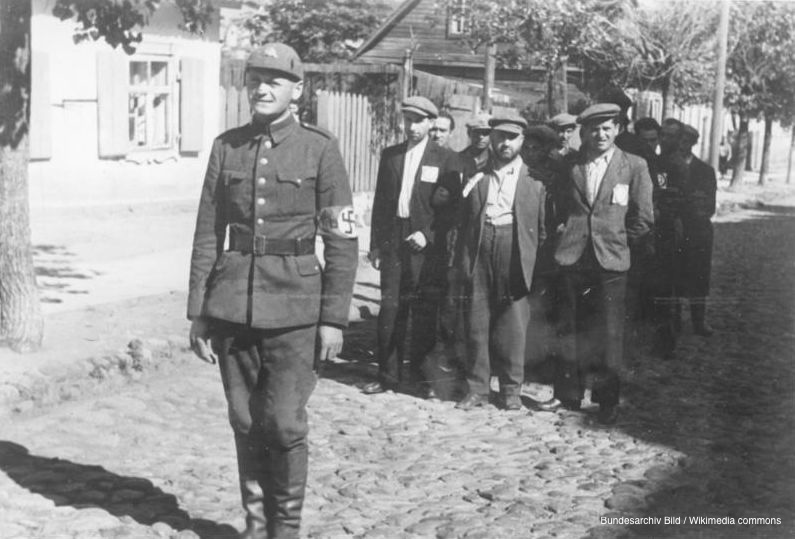
Members of the Boys were imprisoned in the Vilna Ghetto.
The Vilna Ghetto was one of a network of ghettos set up by Nazi Germany in which Jews were forced to live in occupied Poland. As with other ghettos in Czechoslovakia, Latvia, Lithuania and Poland, the Vilna Ghetto was established to contain the region’s Jews and isolate them from the rest of the population until Nazi leadership could decide on an answer to the so-called “Jewish Question.”
The Boys and their families were forced to move from their homes and were held in ghettos in Nazi controlled Czechoslovakia, Latvia, Lithuania and Poland, where they spent years living in dire conditions. The ghettos were not designed for the vast numbers of people forced to find space to live within them. As a result, multiple families shared cramped and insanitary accommodation.
The Boys were teenage and child-Holocaust survivors, who were brought to the UK after the war for rest and rehabilitation.
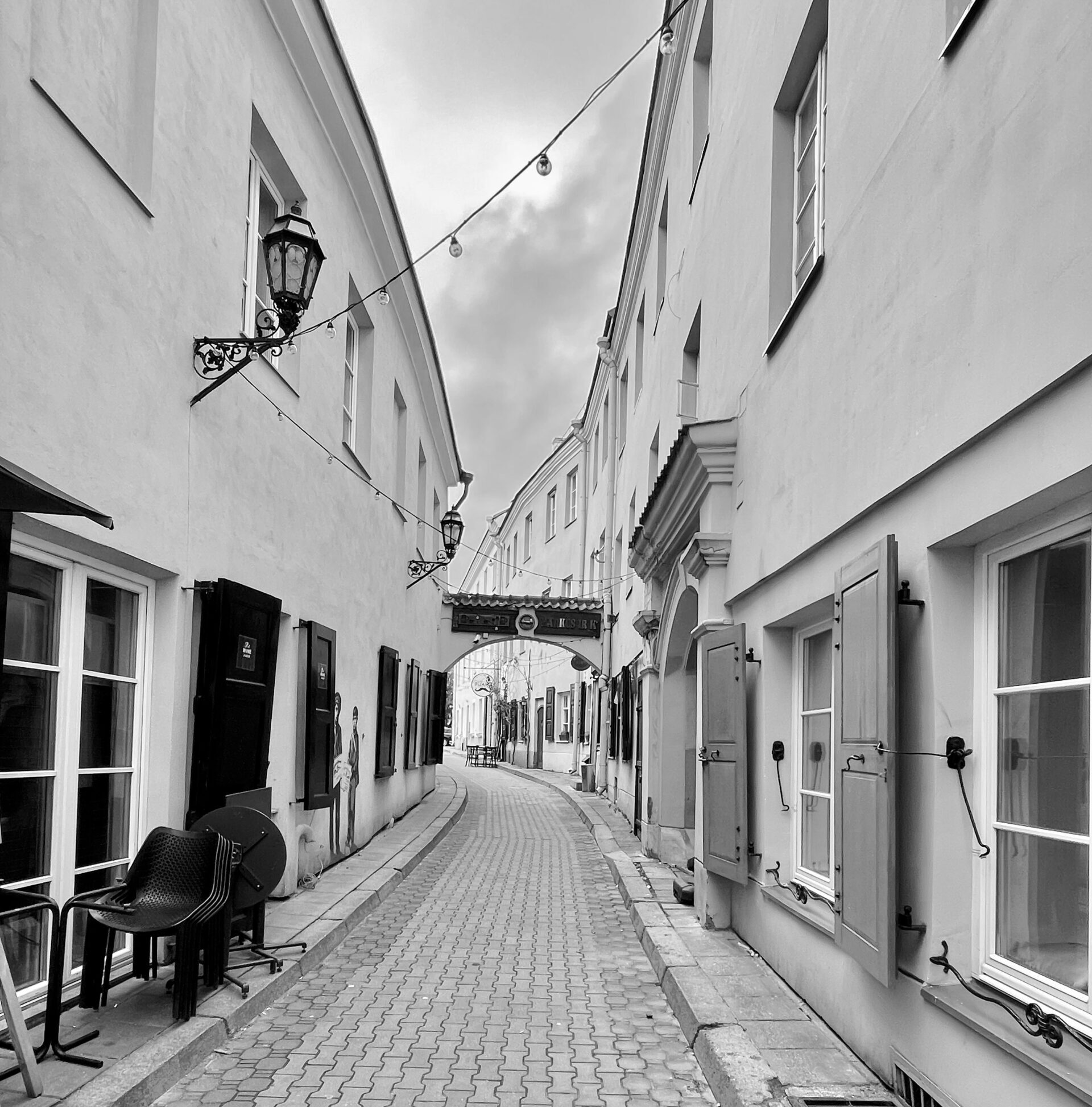
The former Vilna Ghetto.
Before World War II, the Lithuanian capital, Vilnius, was one of Europe’s most important Jewish cities, a centre for Jewish political, intellectual and religious thought. Today, the city is overwhelmingly Lithuanian but until 1941, 45% of the population were Jews.
Jews in Lithuania were Litvaks, who had a distinctive Yiddish dialect. Many Litvaks were proponents of the Haskalah, a Jewish cultural and educational movement that emerged in the late 18th century.
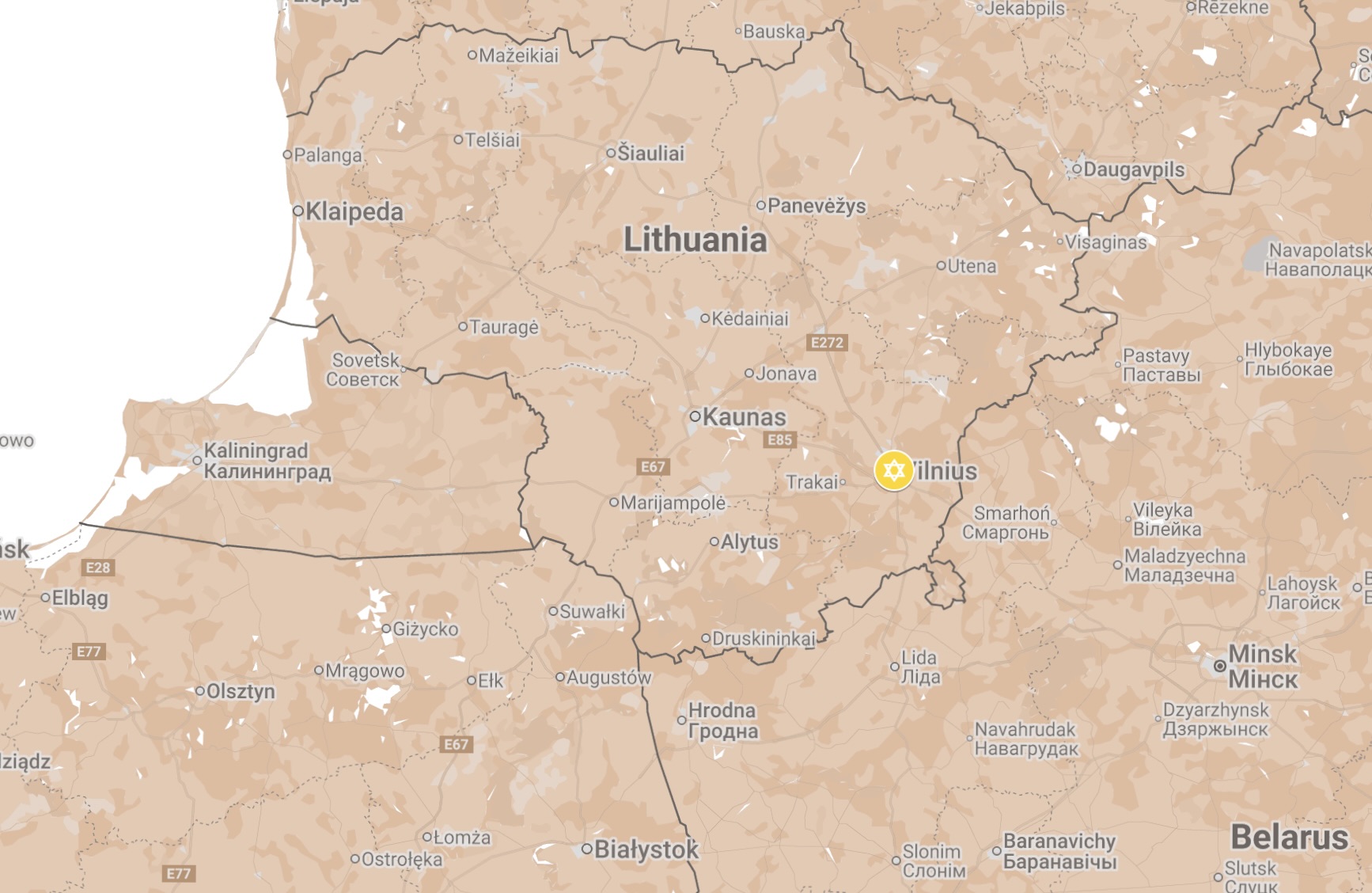
Vilnius, known as Wilno in Polish, is now the capital of Lithuania but was part of Poland in the interwar years. When Hitler and Stalin divided Poland between them in 1939, Vilnius and Lithuania fell under Soviet control. The city then became part of Lithuania.
After the German invasion of Poland in September 1939, refugees pushed Lithuania’s Jewish population up to about 250,000. When Hitler invaded the Soviet Union on 22 June 1941, German forces took just five days to reach Vilnius and antisemitic violence began immediately.
In the autumn of 1941, two ghettos were set up in Vilnius.
Structure
The Little Ghetto, which held 11,000 people, existed for a month before it was liquidated in October 1941.
About 29,000 Jews were held in the Great Ghetto.
The entrance to the former Little Ghetto was located at the beginning of Stiklių gatve. The area was the 16th-century Jewish Quarter. Vokiečiu gatve ran between the two ghettos. The Judenrat (Jewish council) was located at Rūdninku 8.
The Paper Brigade
The Germans appropriated the Strašūnas Library’s rare collections to place them in an Institute for the Investigation of the Jewish Question in Berlin. Not sufficiently versed in Jewish culture to know what was of value, they recruited a group of intellectuals to sort through the material.
Dubbed ‘The Paper Brigade’ by ghetto inmates, they risked their lives to save rare books and manuscripts, hiding them in at least ten secret caches.
After the war, surviving members of the brigade retrieved much of their treasure and immediately set up a museum in the former ghetto library.
During the Soviet era, the collection was smuggled out of Lithuania and taken to YIVO’s new headquarters in New York.
Mass Shootings
The Paneriai Forest (Ponar in Yiddish) was and still is popular with day trippers from Vilnius hunting berries and mushrooms, but it was also the site of one of the Shoah’s horrific killing fields.
During the Soviet occupation, the Red Army dug several huge round pits in which to store aircraft fuel outside the village of Aukštieji Paneriai, 14km southwest of Vilnius. The Germans used them as ready-made death pits. They hold the remains of 75,000 people, mostly Jews but also Soviet prisoners of war and Poles murdered by the Germans and Lithuanian collaborators between 1941 and 1943.
There are death pits across mile upon mile of eastern Europe, but Paneriai is one of the most important because of the eyewitness accounts that partisan leader Abba Kovner heard of the massacre, which not only convinced him that armed resistance was the only way forward, but sowed the seeds in his mind that there was no future for any Jews in Europe.
Jewish Resistance
There was an important underground armed resistance in the ghetto, the United Partisan Organisation (FPO; Fareinikte Partizaner Organizacie). At its inaugural meeting, 24-year-old Abba Kovner delivered his famous speech, calling on the audience: ‘Let us not go to the slaughter like sheep. We are not strong, but the butchers can be answered in only one way: Self-defence.’
Kovner and members of the unit fled into the forests when the ghetto was eventually liquidated in September 1943 and fought as a partisan unit.
Kovner was convinced that there was no future for the Jews in Europe and spent hours after the liberation in July 1944 pouring over maps, planning to lead the survivors to the Palestine Mandate. The Jewish Soviet journalist Ilya Ehrenburg warned Kovner that there was no future for Zionists in the Soviet Union and that he would be in danger if he stayed. Kovner was forced to flee to Poland in the late summer of 1944. He and his fellow partisans helped to create an escape route for the survivors who chose to follow him.
Aftermath
After the liquidation of the Great Ghetto in September 1943, around 1,250 Jews were transferred to a labour lamp on Subačiaus gatve 2km east of the city centre.
After the liberation, the Jewish partisans took control of organising the survivors. Lists of the survivors’ names were drawn up at the Choral Synagogue, and at the Jewish Committee office on Gedimino Prospeckt (above the present-day McDonald’s at No. 15), where there was a wall where people could write their names and leave messages. Testimonies were taken down according to a set questionnaire with the intention that they would be used at future trials.
Memorialisation
After World War II, parts of eastern Poland and the Baltic states were annexed by the Soviet Union. The Baltic states became independent countries in 1991, but it was only in 1998 when the states began the formal process of joining the European Union that any proper discussion of the Holocaust took place.
Modern-day Vilnius is a major tourist centre for Jewish heritage and there are numerous memorials and museums. Kovno’s former bunker does bot appear on tourist maps as the Jewish partisans fought with the Red Army, something that does not fit with the current national narrative.
 About
About History
 Education
 Quilts
 FIlms
FIlms Photos
 News Media & Events
 Publications
 Donate