Many members of the Boys endured death marches, on which many of their friends and relatives died. Many of the prisoners were sick with typhus and dysentery, others were malnourished and exhausted from months of punishing slave labour in unsanitary conditions.
The Boys were child-Holocaust survivors who were later brought to the UK after the war for rest and rehabilitation.
The largest death marches departed from the Auschwitz and Stutthof concentration camps. They began on a range of different dates and took various routes across both western and eastern Europe.
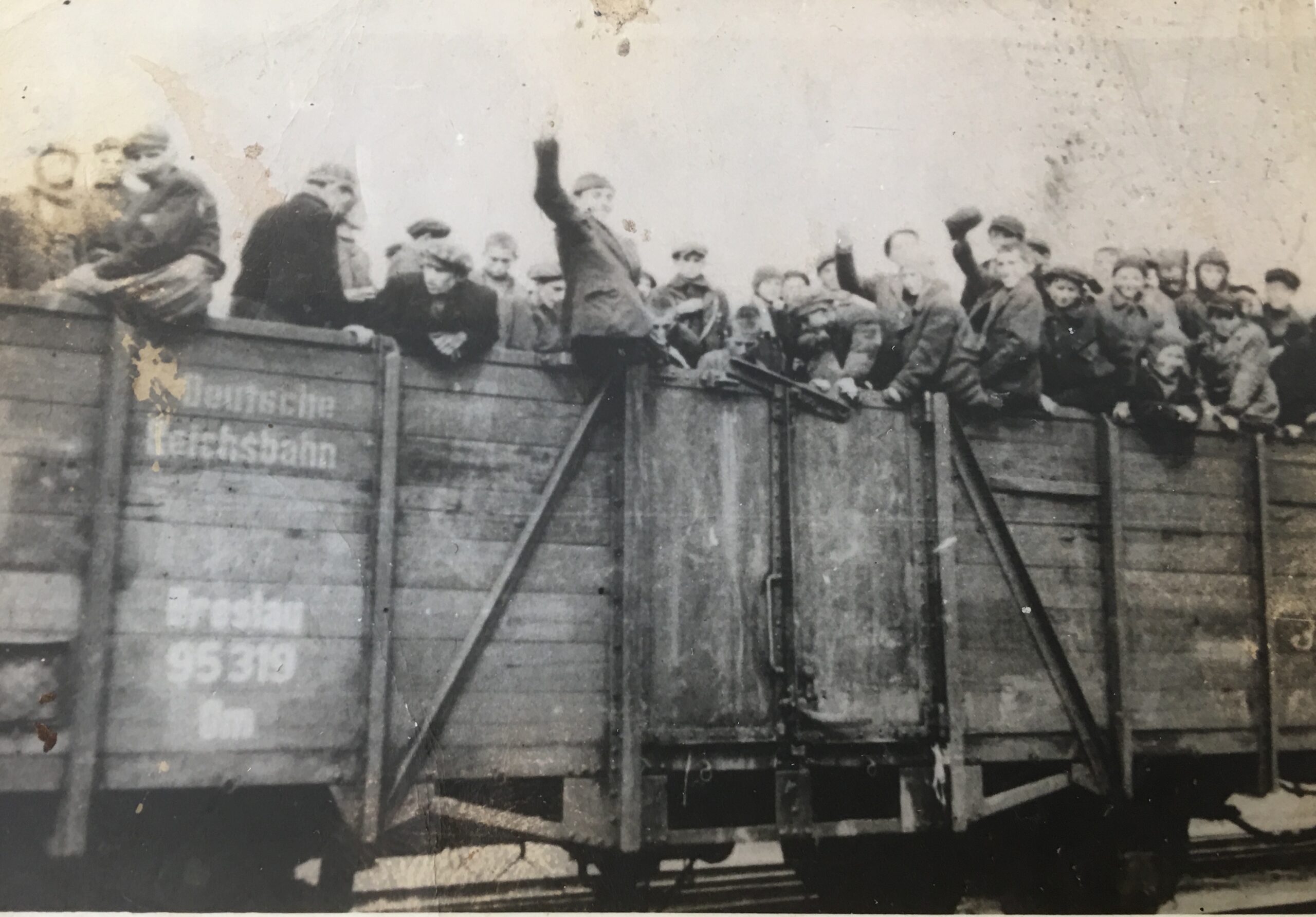
The liberation of the Boys ob the death train from Buchenwald to Theresienstadt 8 May 1945
As Nazi Germany faced defeat with the Allies drawing near, the SS evacuated the concentration camps by forcibly moving their captives to camps further inside the Third Reich on foot, by train and in some cases by boat.
Due to the huge number of prisoners who died during the marches, these forced evacuations became known as ‘death marches’.
In the summer of 1944, Soviet forces broke through the German defences in what is present-day Belarus. They then liberated Majdanek concentration camp.
The Majdanek camp had not been completely evacuated and the horrendous scenes that the Red Army soldiers discovered were front page news in both Soviet and western media. As a result, the SS leader Heinrich Himmler ordered that all prisoners in the concentration camps and their subcamps should be forcibly evacuated towards the heart of the Reich.
Himmler’s Motives
Himmler did not want the prisoners to tell their liberators about the crimes that had been committed against them. Furthermore, the SS gave instructions to destroy the infrastructure that had been built to carry out the Final Solution. For this reason, the crematoria were blown up in an attempt to erase the evidence prior to the arrival of the Allied forces.
The Nazis intended to use the prisoners to continue producing armaments and build fortifications. Himmler and some of the other SS leaders also hoped that they could use the Jewish concentration camp prisoners as hostages to bargain for a peace agreement with the western Allies that would ensure the survival of the Third Reich.
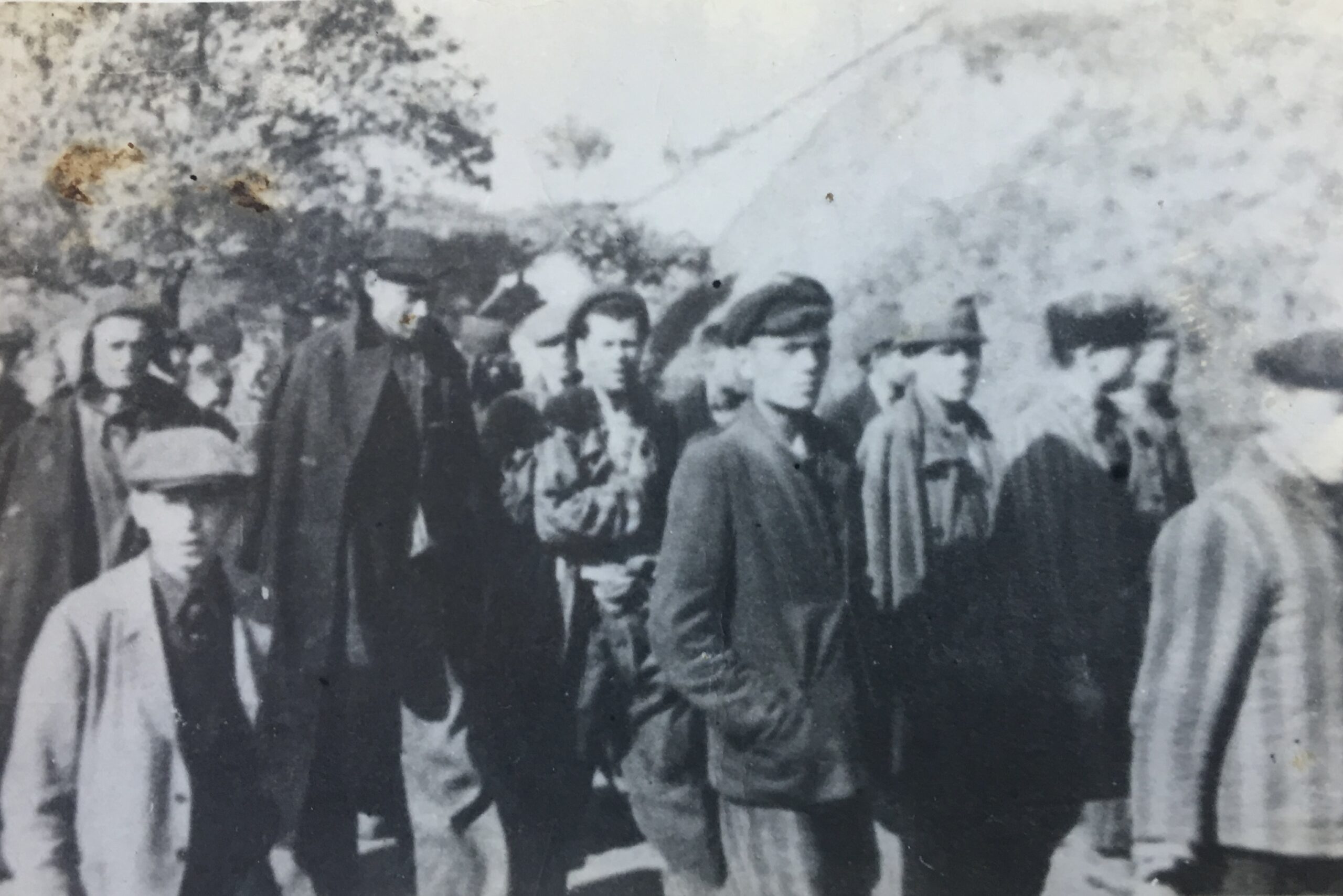
The death march from Rehmsdorf-Troglitz spring 1945.
The Marches Begin
The evacuations and death marches began immediately after the liberation of Majdanek and continued through the freezing winter of 1944-45. The marches occurred right up to the final moments of the Third Reich throughout the exceptionally cold spring of 1945.
The SS had orders to kill prisoners who could no longer walk. The prisoners walked with virtually no food or water. It is likely that it was the prisoners who first coined the phrase death march, Todesmärsche in German, as they had the impression that the SS wanted them all to die.
Thousands died of starvation, exhaustion and exposure. In one example, more than 3,000 prisoners were evacuated from the Rehmsdorf slave labour camp in the late spring of 1945, but less than 300 of them survived to see Theresienstadt where they arrived approximately three weeks later.
Ivor Wieder after the liberation.
“We were in Dora for a couple of months, and from Dora, we were taken to Bergen Belsen concentration camp by train. We had to march there from the station but so many people were too weak to walk, and when they fell, the Germans killed them right away.
People used to fall shouting, “Help me! Help me get up!” However again, you couldn’t help because they would’ve dragged you down. The Germans couldn’t care less who they shot.”
The Death Trains
The death trains were operated by the German railway company Deutsche Reichsbahn under the control of Nazi Germany.
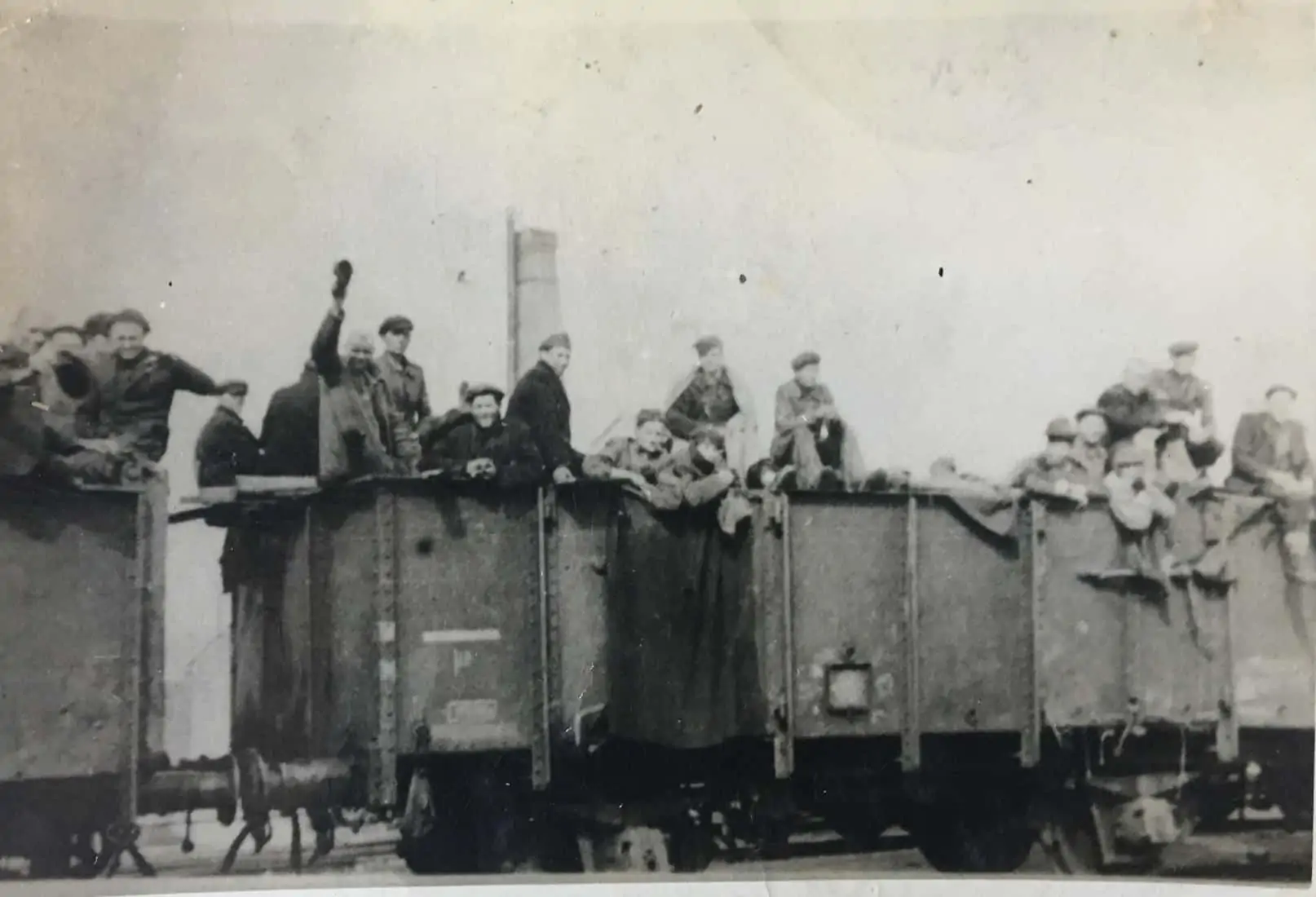
The death train from Buchenwald to Theresienstadt: the Boys are liberated 8 May 1945.
Many of the death trains were open-topped wagons and the prisoners were transported in he depth of winter in brutal conditions without food or water. In one example, the trains took prisoners in open coal trucks from Wodzisław Sląski during the evacuation of Auschwitz to Mauthausen in Austria, where the transport was diverted to Buchenwald in Germany.
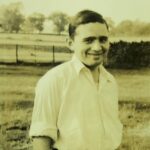
Alexander (Sender) Riseman
“The wagons were full of snow which we had to clear with our bare hands before we could get on.
When the train started moving we were all exhausted and we could hardly stand. We travelled for two days without food or water. We kept alive by eating snow. Then the train stopped outside a camp called Gross Rosen. We waited there about 6 hours. The SS guards were told there was no room in the camp for us, so the train started off again …
We travelled all night. In the morning we were surrounded by dead bodies. We were ordered to throw them out into the snow. Then the Germans picked out some men from the train to dig ditches and to bury the corpses.
We travelled like this from Auschwitz until we arrived at Buchenwald concentration camp.”
Sender Riseman, To Hell and Back (1994). Riseman was 18 years old when he endured a death train to Buchenwald.
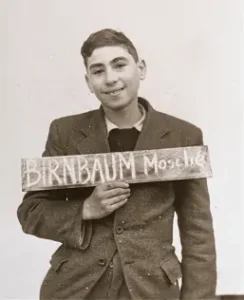
Moshe Birnbaum in 1945.
The Death Boats
The death boats were used to move prisoners along canals and rivers, evacuation transports also sailed across the Baltic Sea.
Some prisoners, among them Moshe Birnbaum and Arthur Isaaksohn both later members of the Boys, were held on ships in the Baltic and others marched into the sea where they drowned.
Identifying the death marches the members of the Boys endured is ongoing historical research. So far these death marches have been associated with members of the Boys:
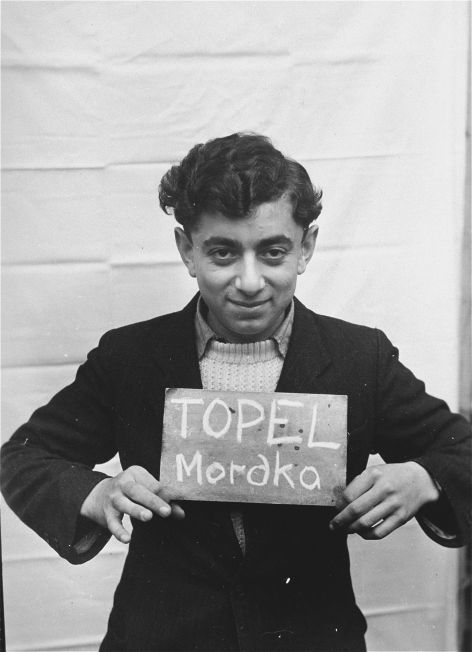
The ’45 Aid Society is active in Holocaust education.
To find out more about the resources we offer click here.
Our Education Team can advise on how to deliver the story of the Boys by booking a suitable speaker and can help teachers devise lesson plans.
Critical Thinking Questions
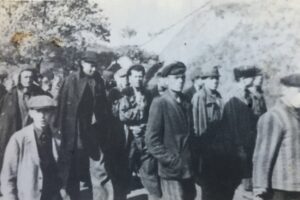
The death march from Rehmsdorf-Troglitz spring 1945 which members of the Boys survived.
For a full list of Critical Thinking Questions click here.

 About
About History
 Education
 Quilts
 FIlms
FIlms Photos
 News Media & Events
 Publications
 Donate