Members of the Boys were imprisoned in a network of ghettos by the Nazis across eastern Europe between 1939-45. The Boys were teenage and child-Holocaust survivors, who were brought to the UK after the war for rest and rehabilitation.
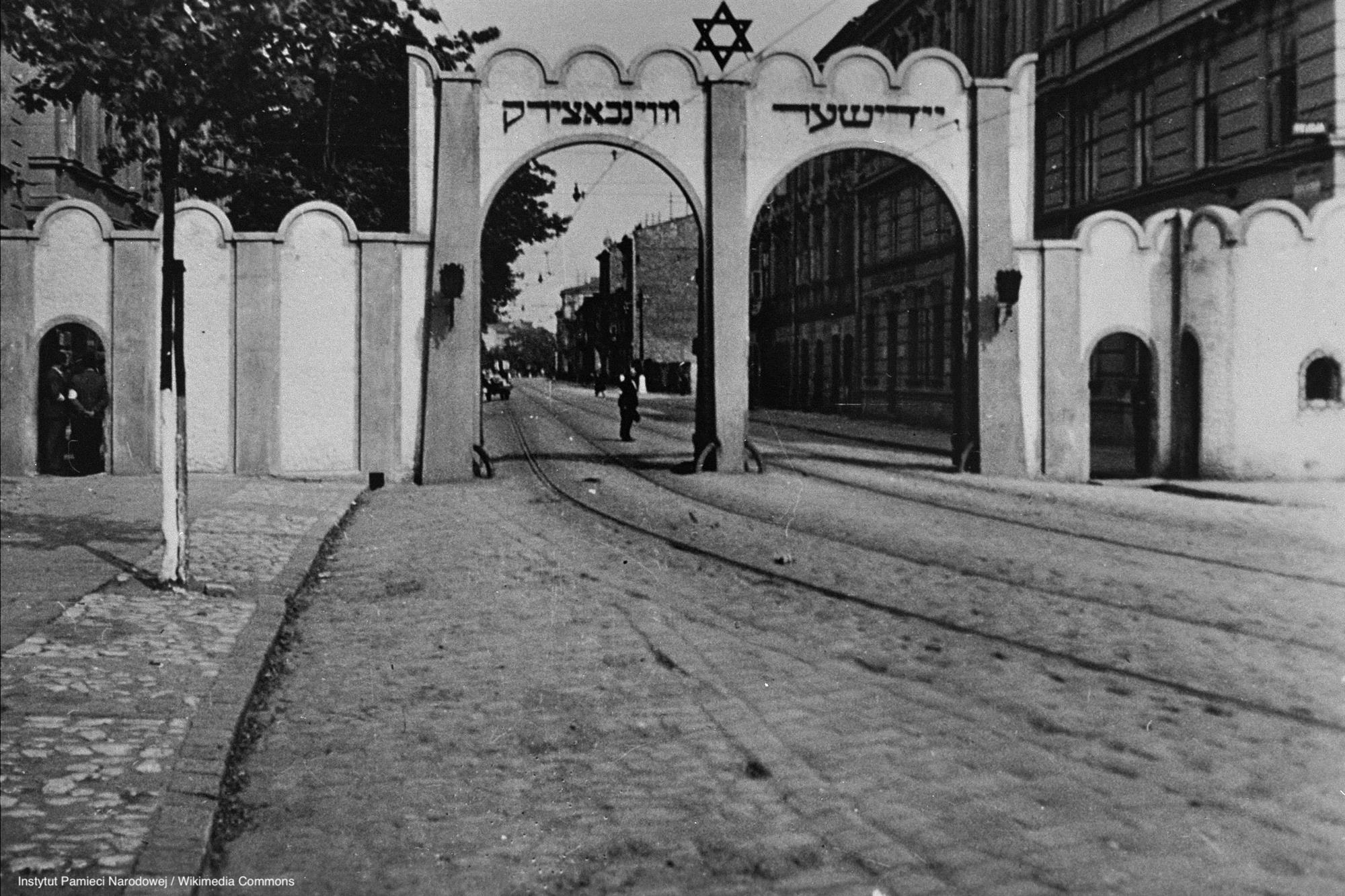
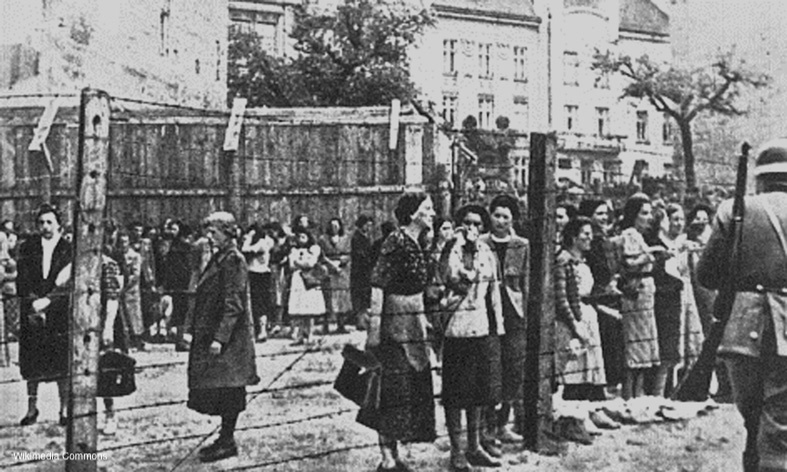
The Boys and their families were forced to move from their homes and spent years living in the ghettos in dire conditions in Nazi occupied Czechoslovakia, Latvia, Lithuania and Poland. The ghettos were not designed for the vast numbers of people forced to find space to live within them. As a result, multiple families shared cramped and insanitary accommodation.
Ghettos in Hungary, and those areas of Czechoslovakia and Romania annexed to Hungary, existed for a short period of time in the spring of 1944 and functioned as transit camps prior to deportation to the Auschwitz concentration camp complex.
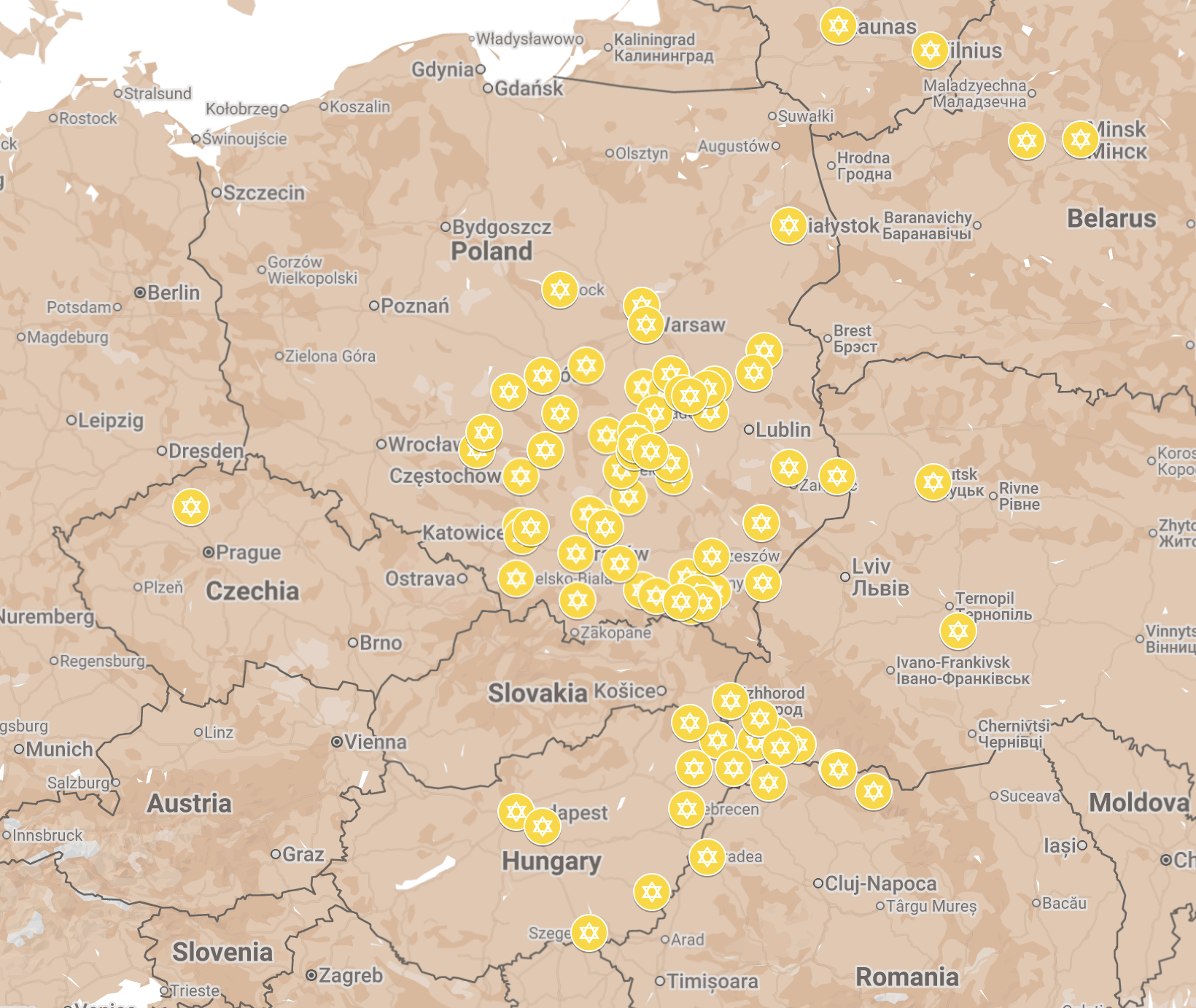
Map of the ghettos in which members of the Boys were imprisoned.
There were no ghettos in modern-day Austria and Germany, which formed heart of the Third Reich, or occupied Italy where other members of the Boys lived. In Austria and Germany, Jews were often forced to live in special Jewish houses prior to deportation.
Background
This was not the first time in history that Jews had been confined to living in specific parts of towns and cities. The word ghetto comes from the area of Venice where Jews were forced to live in Venice between 1516–1797.
Jews in the Russian Empire had also been restricted as to where they could live. The overwhelming majority lived in an area called the Pale of Settlement that existed from 1791 to 1917.
Overview
After Germany invaded Poland on 1 September 1939, ghettos were set up in hundreds of locations across occupied Poland. They were usually referred to as the ‘Jewish quarter’ in official documents. Most ghettos were established between October 1939 and July 1942 to confine, isolate and exploit Poland’s Jewish population of about 3.5 million.
“More people were brought into the ghetto from surrounding small towns. The overcrowding was really bad now. In some cases, two families were living in one room. The two synagogues were also converted into living quarters. We were getting less bread now and the soup wasn’t as good as it had been and there was much less of it. I still refused to wear the yellow patches. People were getting arrested more and more every day. No one knew why or what happened to them after their arrest.”
Henry Golde was 11 years old were he was imprisoned in the ghetto in the Polish town of Płock.
Ghettos were never part of a long-term plan but an ad hoc reaction to developments on the ground. The function of the ghettos would also change as the war continued. They would evolve into holding pens prior to a selection for slave labour, mass shootings and deportation to extermination camps.
Identifying the ghettos where members of the Boys were imprisoned is ongoing historical research.
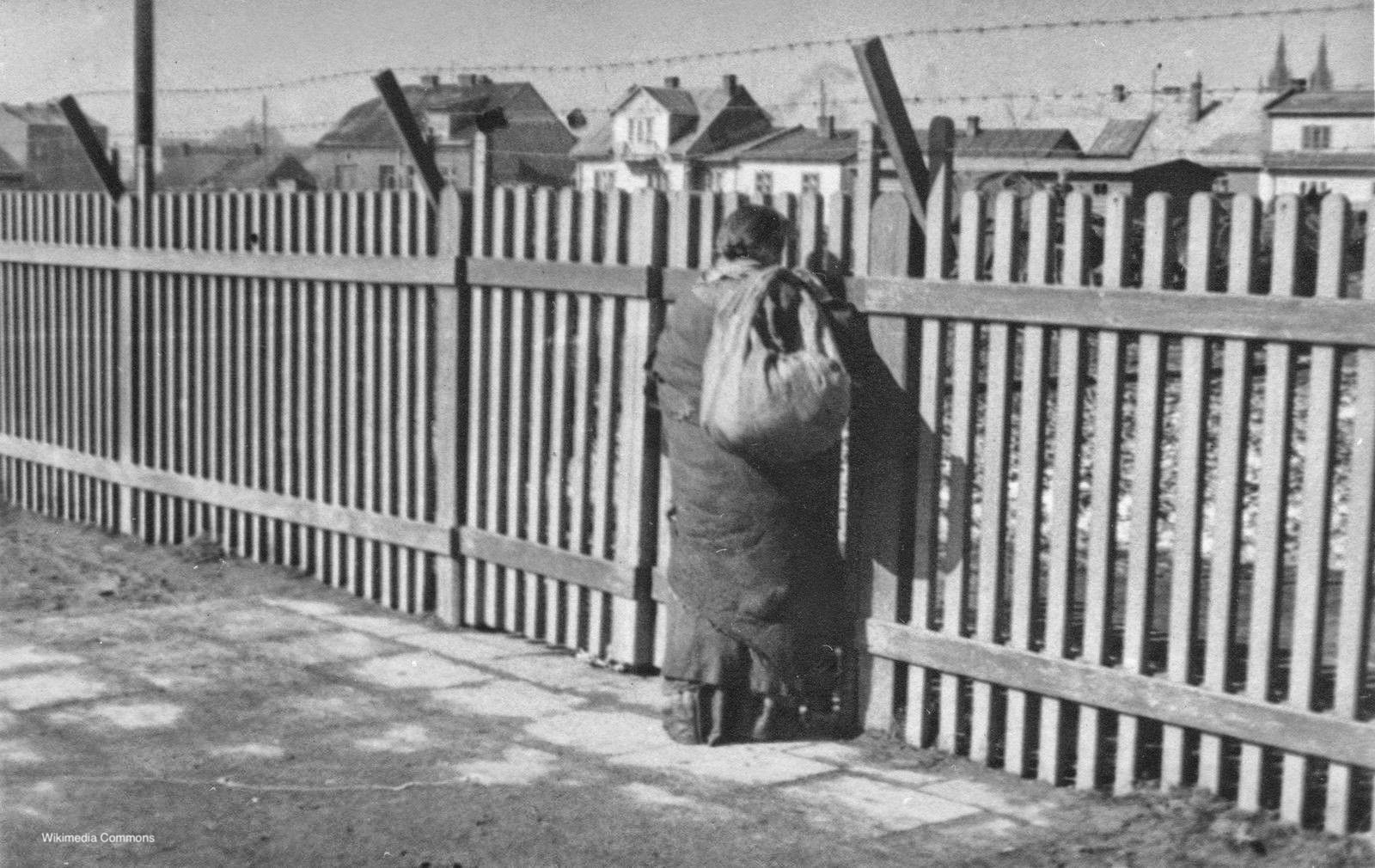
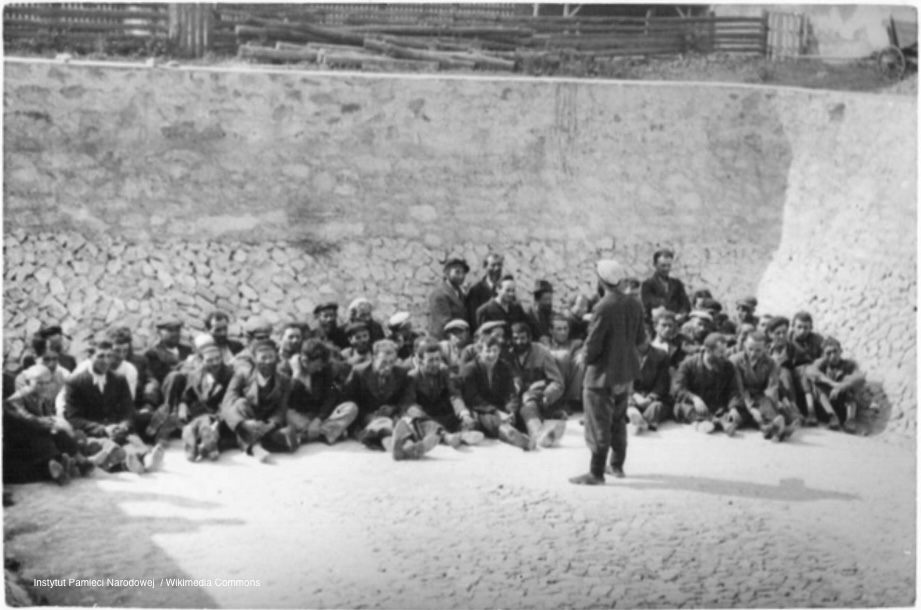
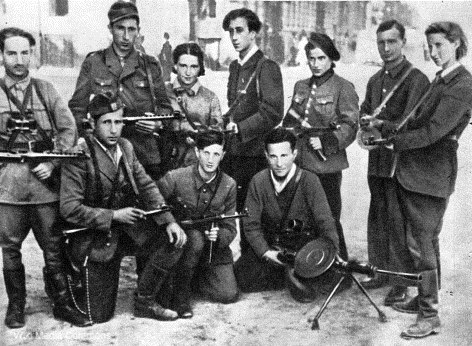
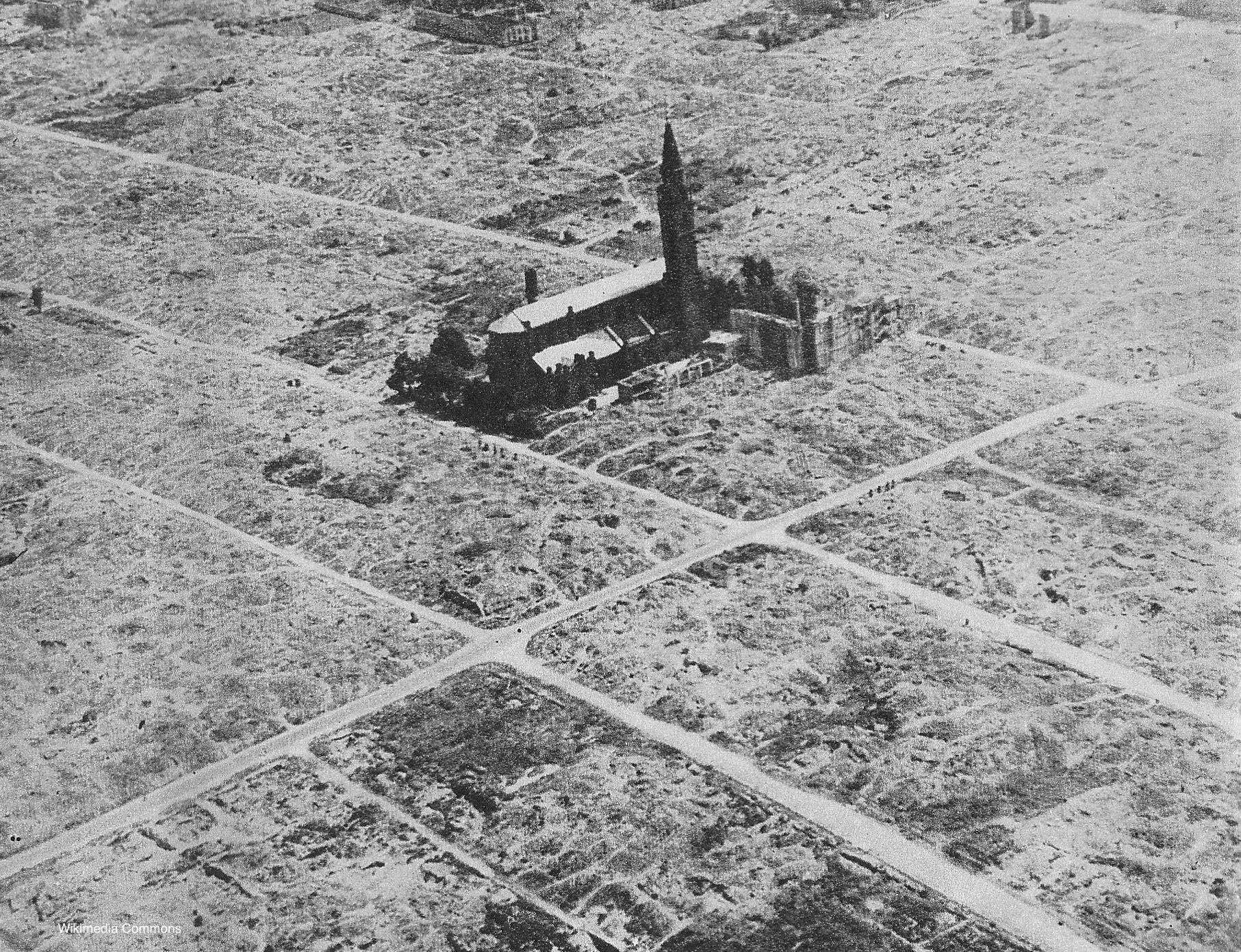
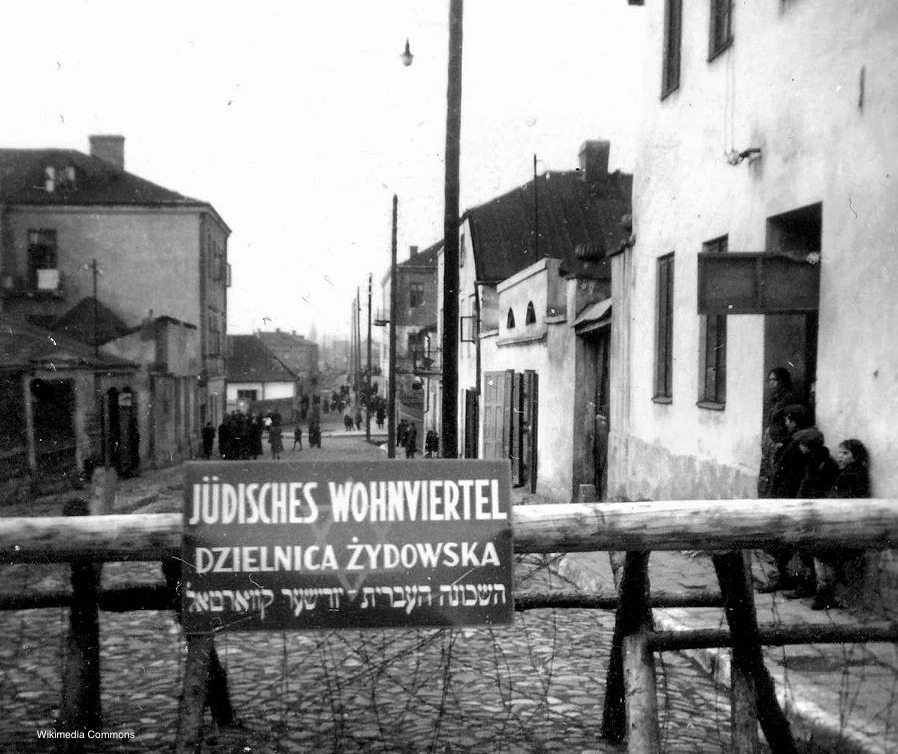
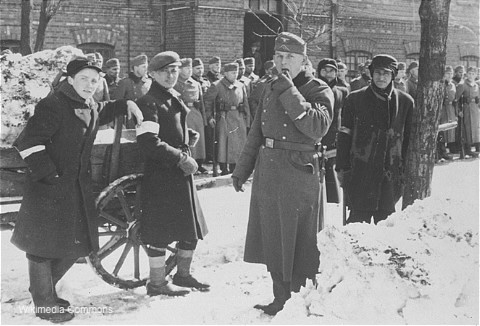
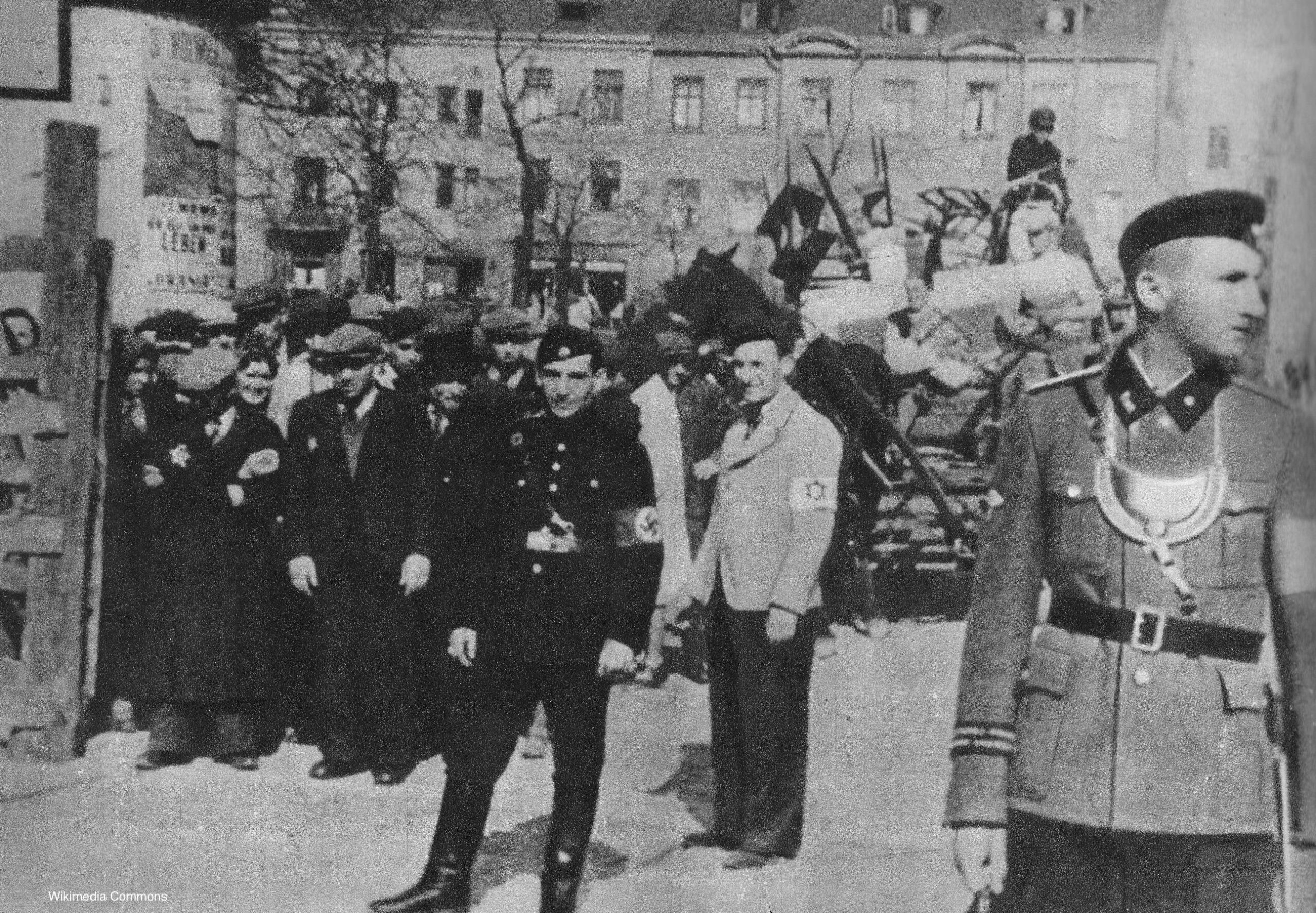
Between 1939 and 1941 not all of Poland was under German control. According to the secret clauses of the Molotov-Ribbentrop Pact signed in August 1939, German and the Soviet had agreed to simultaneously occupy and divide the country.
The Soviet occupation was a crucial turning point. Although the Jews who lived in the territories occupied by the Soviet Union suffered – their businesses were nationalised, and many were deported to the Gulag – many Polish Jews fled into occupied territory and those who lived there preferred to live under Soviet rather than Nazi control. As a result, Jews were widely seen as Soviet sympathisers, fuelling the widely held belief in the Judeo-Bolshevik myth.
The part of the area occupied by the Germans in western Poland that had been given to Poland in the 1919 Treaty of Versailles was incorporated into the Third Reich. The remaining part of the country under German control became a colonially administrated area called the General Government led by Hans Frank.
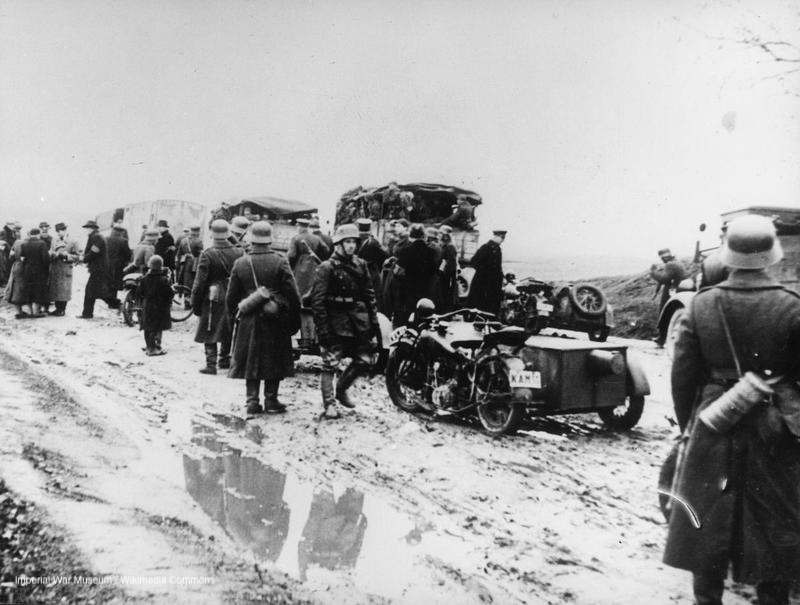
On 30 January 1939, Hitler addressed the Reichstag, saying, ‘should international financial Jewry in and outside of Europe succeed in plunging the nations once again into a world war, the result will not be the Bolshevisation of the world and thus the victory of Jewry, but the annihilation of the Jewish race in Europe’; although, as historian David Cesarani has points out in Final Solution: The Fate of the Jews 1933-39, ‘Hitler’s menacing oration was prophetic but not programmatic’.
The belief that it was Jews who had stabbed Germany in the back in World War I was a key part of Nazi antisemitism. When Britain and France declared war on Germany following the invasion of Poland, Hitler blamed the dilemma of a war on two fronts on what he saw as an international Jewish conspiracy. Jews were now perceived as a real, not a potential, enemy and a fifth column of spies and saboteurs. Their isolation, containment and eventual expulsion was crucial for the Nazis, especially as in occupied Poland, the Nazis found an unprecedented number of Jews were not only living inside the territories annexed to the Third Reich but also in the General Government.
Although the Jews were confined to living in certain areas of towns and cities, the purpose of the first ghettos was exploitation, containment and isolation prior to emigration.
The driving force of Nazi policy in Poland was Lebensraum. The expulsion of the Jews was just one element of German racial imperialism which involved the demographic restructuring of the conquered Polish lands so they could be settled by ethnic Germans.
Between 1939-41, senior Nazis, among them Adolf Eichmann. developed a series of plans to force the Jews to emigrate.
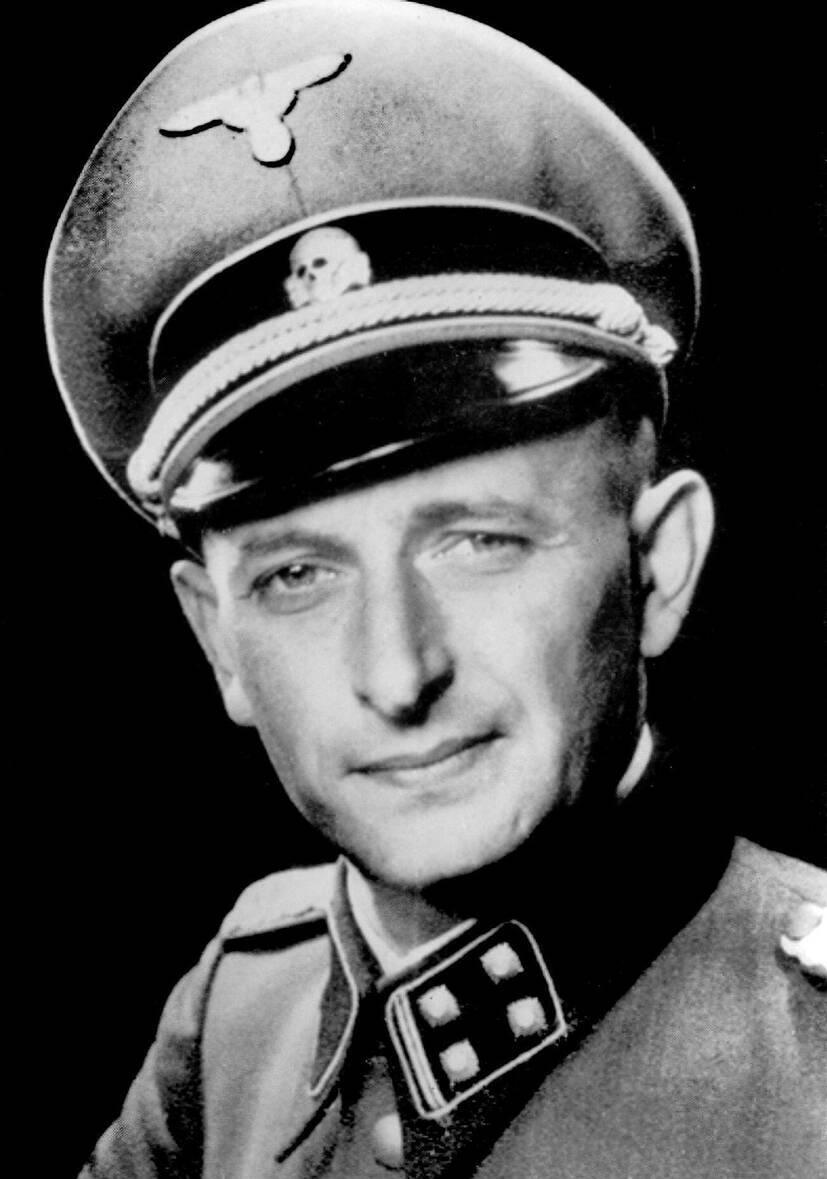
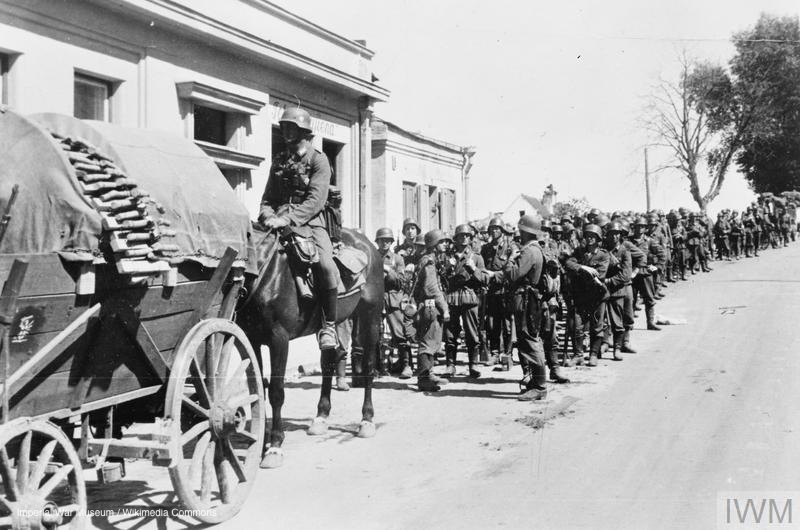
The year 1941 was a turning point in history of the Holocaust as it ushered in the era of mass murder which began in Yugoslavia after the German invasion in April 1941. Then on 22 June 1941 Germany invaded the Soviet Union.
Most Polish Jews lived in the area to which Jewish settlement had been confined in the Russian Empire, known as the Pale of Settlement. Much of this area had been occupied by the Soviet Union in 1939 or was within its borders. Once the Germans invaded and occupied the former Pale of Settlement hundreds of thousands of Jews came under Nazi control.
At this stage the plan was that the Jews would be eventually expelled beyond the Urals once the Soviet Union had been defeated. Military setbacks and the emergence of partisans were to push anti-Jewish measures in a murderous direction.
In a significant development the SS were tasked with creating a series of Einsatzgruppen to ensure rear-area security. Jews were seen as communist enemies. According to the historian Christopher Browning, the army moved from abdication of responsibility to outright participation in a crusade against the ‘Jewish-Bolshevik enemy’ that involved the mass murder of the Jewish population.
This would change the role that ghettos played in Nazi policy.
Jews were also now seen as a drain on food supplies and their rations cut to the minimum. As the as the already meagre rations given to those living in ghettos were reduced life became harder and many died from starvation. By now the Jewish population had no assets and valuables to be appropriated and the only way they could be exploited was as a labour force. Only those Jews considered by the Nazis as fit for work were to be spared.
When ghettos were set up in the occupied eastern territories in the autumn of 1941, the first selections took place in Lviv and Ivano-Frankivsk.
The invasion of the Soviet Union changed the course of the war, bringing the communists into resistance activity across Europe. The Nazi way of thinking saw Jews at every turn and a dangerous fifth column across the continent. It prompted Hitler to order the expulsion of the remaining 250,000 Jews in the Greater Reich and 88,000 in the Protectorate of Bohemia and Moravia.
The decision was taken that the Reich Jews would be deported to newly established Theresienstadt Ghetto and to ghettos further east. It was a turning point. To make room for them, thousands of Jews already in the overcrowded ghettos in Minsk and Riga were shot, as were many of the Jews deported from the Reich.
Ghettos had now become holding pens prior to mass murder.
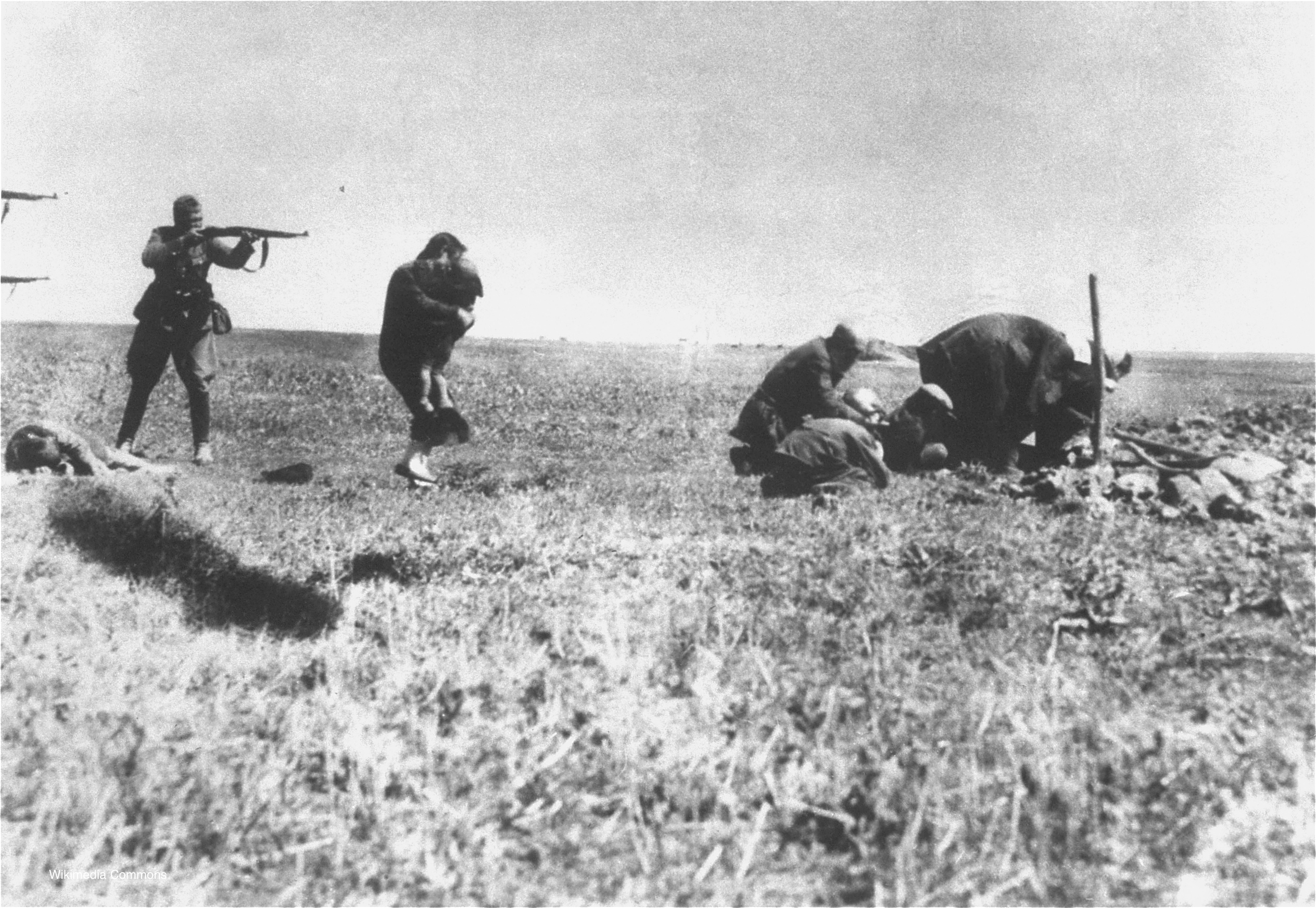
Mass shootings were public, took a toll on the killers and were expensive and time consuming, so in the autumn of 1941 experiments for the use of poisonous gas in mass murder took place in Auschwitz, and the creation of extermination camps at Bełżec, Chełmno and Sobibór began.
These experiments came as the German advance across Soviet territory was halted in late October. Expulsion of Jews from Nazi-occupied territory was no longer an assured possibility.
It radicalised Nazi thinking. In October 1941, a ban on emigration of Jews from Nazi-occupied Europe was implemented. Gas vans were used for mass murder in Belgrade and at Chełmno in December 1941.
Hitler was also convinced that America’s Jews were driving the country to war. After the Japanese attack on Pearl Harbor, on 11 December Hitler declared war on the United States, signalling a turning point in the war for Europe’s Jews: there was now a coherent clarity to anti-Jewish policy and Hitler was determined to annihilate the Jews.
The organisation and timetable of that operation was finalised at the Wannsee Conference in January 1942. Between 1942 and the summer of 1944, selections were made in the ghettos and those considered by the Nazis as unfit for work were murdered in the extermination camp and in mass shootings.
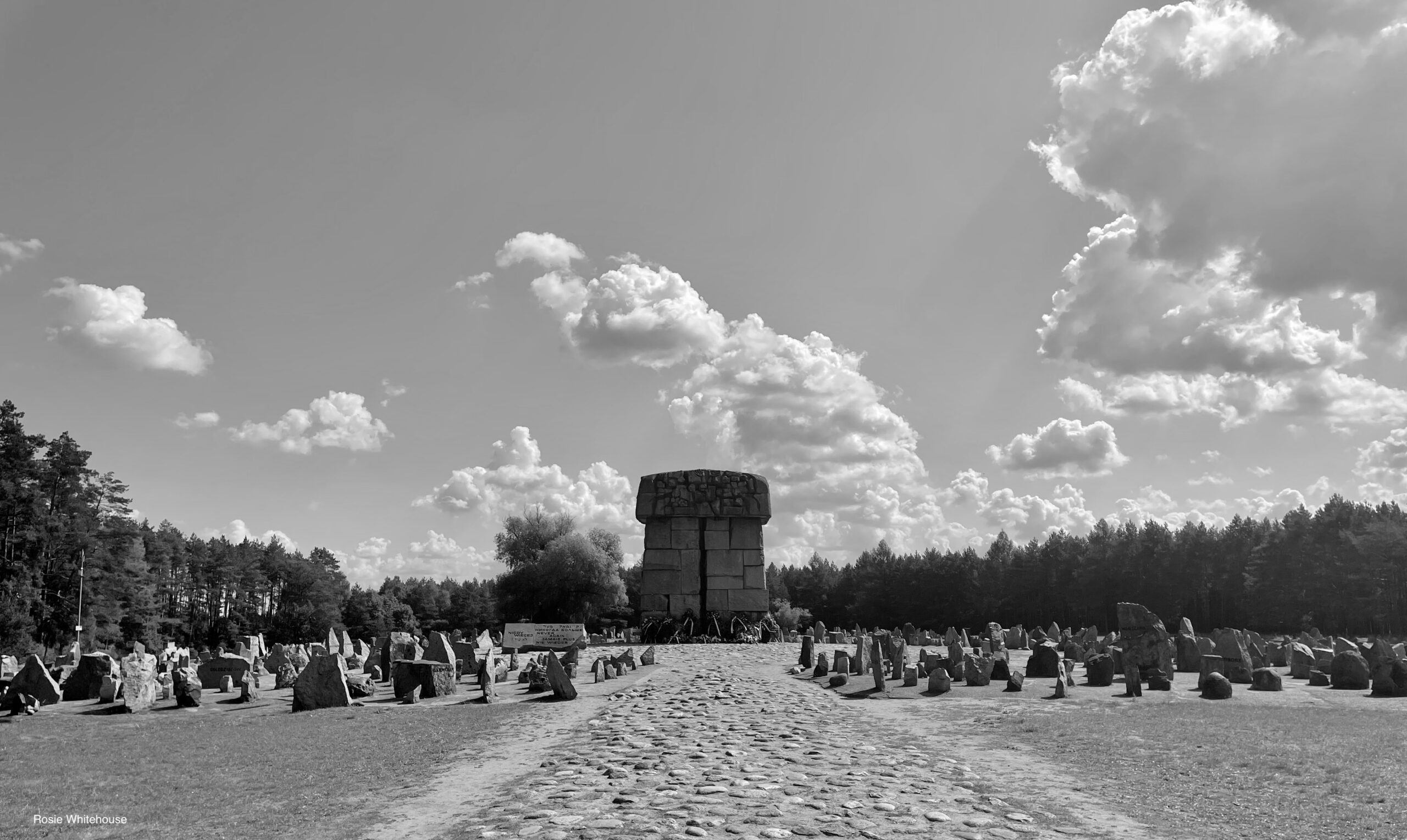
The first gassing of Jews took place at Auschwitz II- Birkenau on 15 February 1942. Extermination camps began operation in Bełżec in March, Sobibór in May and Treblinka in July of the same year.
After the German invasion of Hungary, ghettos in Hungary, and those areas of Czechoslovakia and Romania annexed to Hungary, existed for a short period of time in the spring of 1944 and functioned as transit camps prior to deportation to the Auschwitz concentration camp complex.
The ’45 Aid Society is active in Holocaust Education. To find out more about the resources we offer click here.
Our Education Team can advise on how to deliver the story of the Boys by booking a suitable speaker and can help teachers devise lesson plans.
Critical Thinking Questions
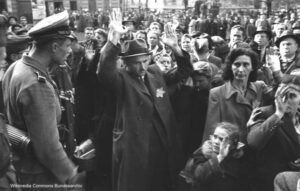
Budapest Ghetto
For a full list of Critical Thinking Questions click here.
Glossary
Aktion A Nazi military or police operation to forcibly assemble Jews prior to shootings or deportation.
Deportation Forced removal of Jews in the Third Reich and German occupied countries from their homes.
Extermination Camp A camp set up by the Nazis for the mass murder of Jews, primarily by poison gas.
Ghetto Under the Nazis a ghetto was a very clearly defined district, often walled or fenced in and surrounded by armed guards, in which only Jews were forced to live in the worst possible conditions. All, except the Theresienstadt Ghetto, were eventually dissolved and the Jews were murdered. The word ghetto was first used in Venice in 1516 to describe an area of a town or city where Jews were required to live.
Judenrat Jewish councils set up to maintain order and carry out the orders of the German army.
Selection A term for the process of separating Jews deemed suitable for hard labour from the remainder, who were then sent to their deaths. This usually took place either in a ghetto roundup or on arrival at a concentration camp.
To see the full Glossary click here.
 About
About History
 Education
 Quilts
 FIlms
FIlms Photos
 News Media & Events
 Publications
 Donate