
The Boys were teenage and child-Holocaust survivors, who were brought to the UK after the war for rest and rehabilitation.
The Boys had survived the Holocaust as slave labourers in the Nazi concentration camp system, in hiding and by living alone.
After arrival in the UK, members of the Boys spent time in the reception centres before being moved to children’s homes known as hostels. Others were sent direct to boarding school or yeshivas, and those who were sick spent time in sanatoriums.
Some of the members of the Boys were lucky enough to find relatives or were taken in by foster families but the majority were moved to hostels.
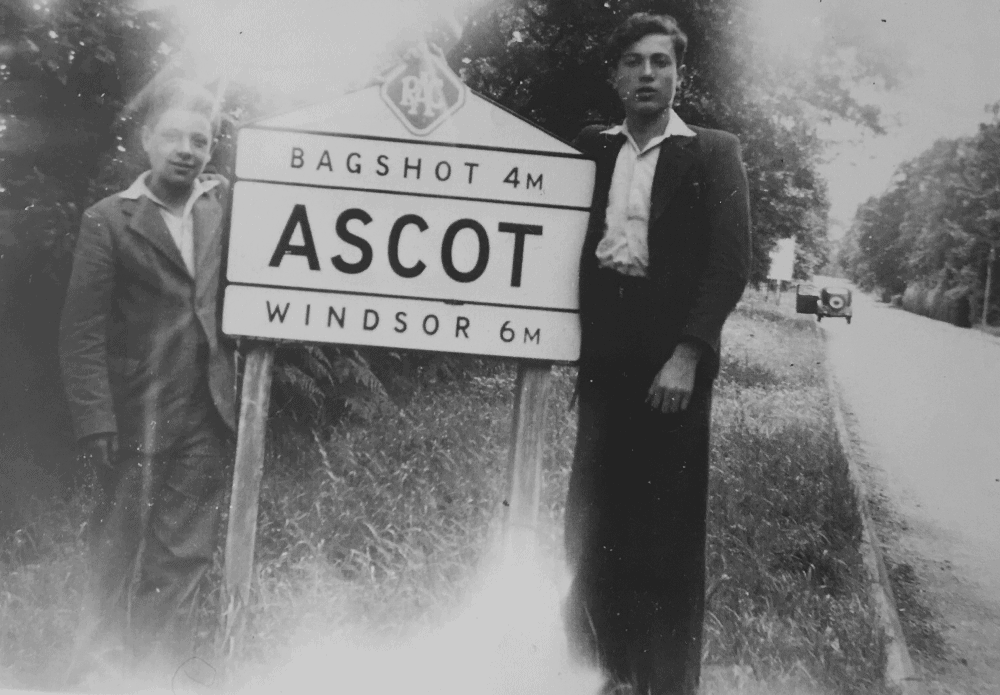
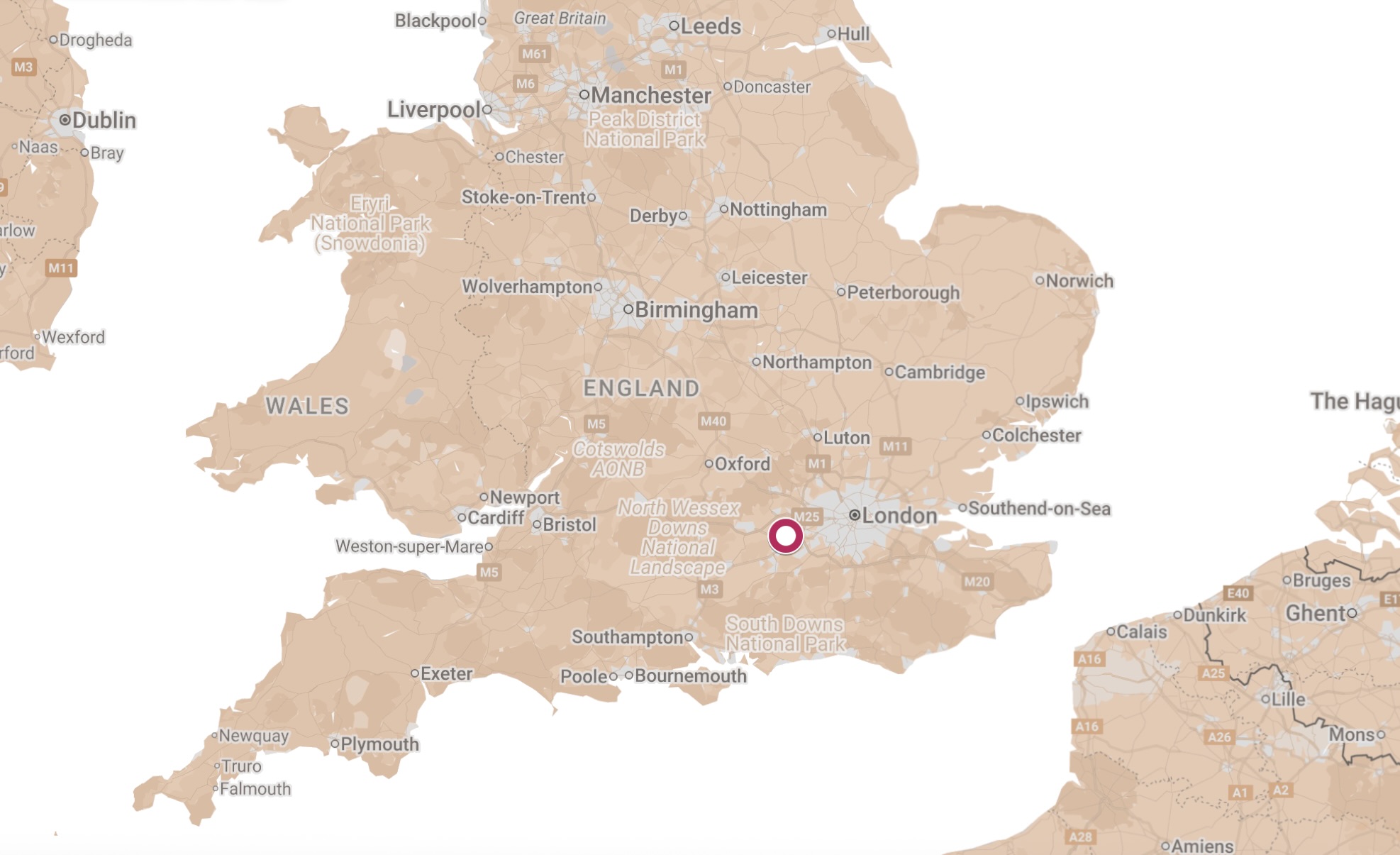
Ascot was one of these hostels.
Overview
The hostel was in Woodcote House, which had a large garden full of rhododendron bushes and belonged to a member of the local council. It had been used to house Jewish children evacuated from London during the second half of World War II.
The house was demolished in the mid-1990s and is now a gated housing development.
The Staff
The head of the hostel was Manny Silver. He spoke Hebrew and a smattering of Yiddish. He was only slightly older than the boys and was just 22 years old.
The matron was Stella Myerowtz. Her parents had been born in Russia and she spoke fluent Yiddish. Sliver and Myerowitz married while at Ascot.
Working alongside Silver were three members of staff who had come to England as Jewish refugees before the war.
Ester Weisner had been born in Magdeburg in Germany in 1923 and her family had been murdered in the Holocaust. She was a member of Bachad and was sent to Ascot when some boys who should have been sent to Liverpool were sent there by mistake. Her first husband was a doctor from Liverpool, Dr Sidney Newman. Also from Bachad were Josef Honig and Traudel Honig.
Also on the staff was Heinz Samuel, who had been a youth worker in Austria before the war. He was very popular with the Boys.
The Ascot Story
The young survivors cared for at Ascot came from a number of central and eastern European countries.
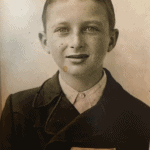
Stephen Wolkowitz just after the liberation.
“My group travelled south, first by train to London, then by double-decker bus to Ascot and a house called Woodcote. It was on Windsor Road, a main road next to the famous racecourse. Sitting upstairs at the front of the bus, we were terrified that the bus would strike the overbridges.
I was in Ascot for about a year. Young English volunteers taught us English. We were given second-hand bicycles, which were shared one-between-two-boys. I learnt to ride the bike on Ascot racecourse. It was also a time of practical jokes and fun. We had bunks and would play tricks on one another. The top bunk would have its mattress support unhooked so the occupant would fall through. We found little red berries in the garden with white sticky interiors that, when spread on the sheets, made you itch like mad. While one boy was sleeping, the others would sew his over-sized pyjamas to the mattress.
There was a cinema in Ascot, which we went to using an underpass tunnel to reach the other side of the racecourse. It was here that I saw my first Tarzan movie starring Johnny Weissmuller.”
Stephen Wolkowicz Missing Childhood (2014).
Although local residents recall them being happy and lively children, the boys who arrived at Woodcote had endured unimaginable persecution. Rehabilitation started with the basics; many of the boys were taught table manners and persuaded not to stockpile food. Their experiences meant that every mealtime the children sneaked slices of bread from the table to hide in their pockets and under the pillows of their beds.
The emphasis at Woodcote was on the future and providing the children with the skills to build a new life. The languages used in Woodcote were German and Yiddish, but the boys were issued with English textbooks donated by the British Council. The warden Manny Silver described the boys as having a “devouring need to learn.”
The hostel was run on a co-operative basis and classes were not compulsory. The Boys were taught English, Maths and Geography as well as Hebrew, as most of the Boys wanted to go Palestine.
While at Ascot, many of the Boys recall shopping in the high street, going to the cinema, riding bikes and rowing on the river. The Boys also talk of playing football on the racecourse, which was at this point not fenced off, and of socialising with local girls. They were given suits by the tailoring firm Burton, and money to buy shoes. The congregation at the Maidenhead synagogue were also involved with caring for the Boys.
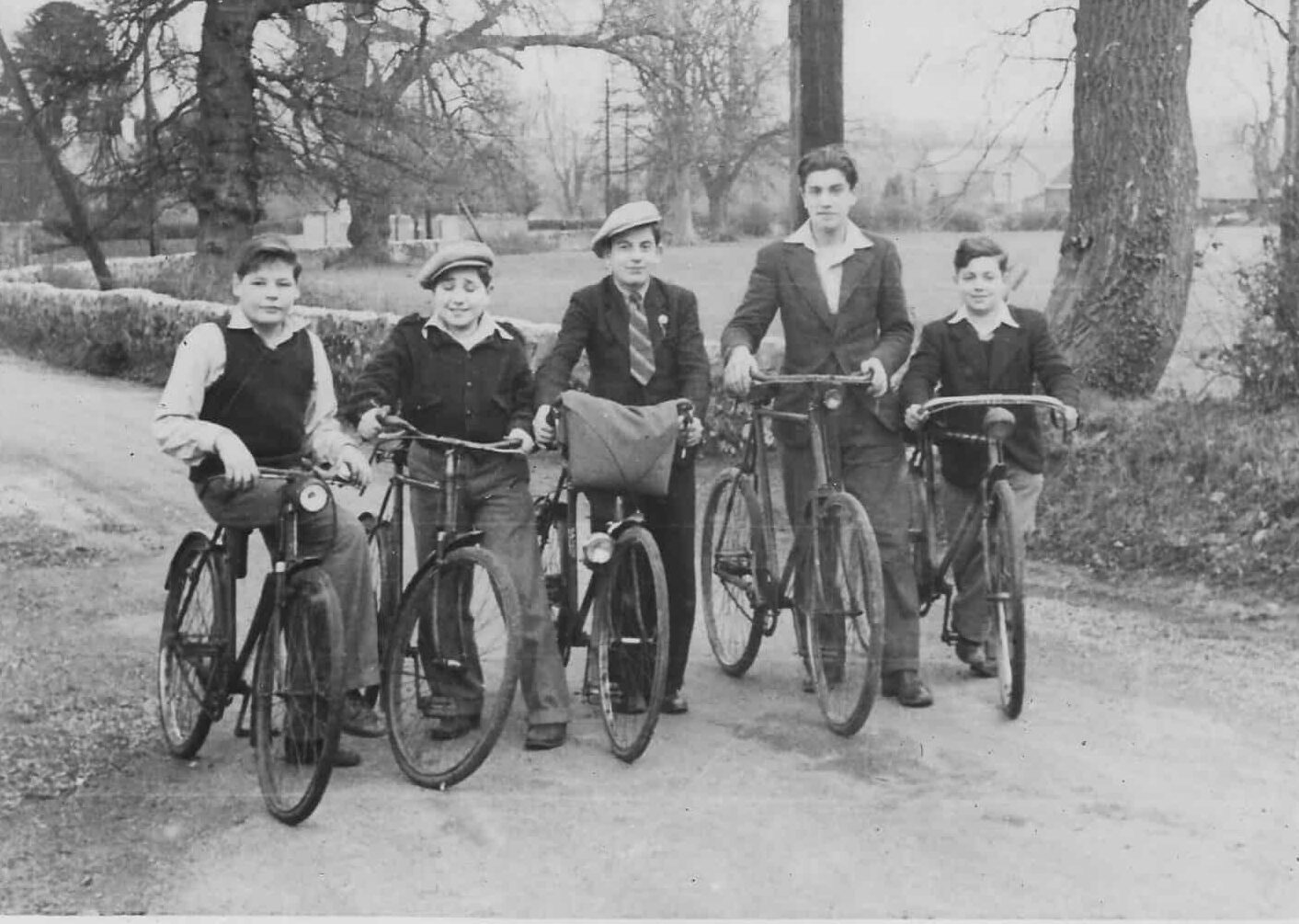
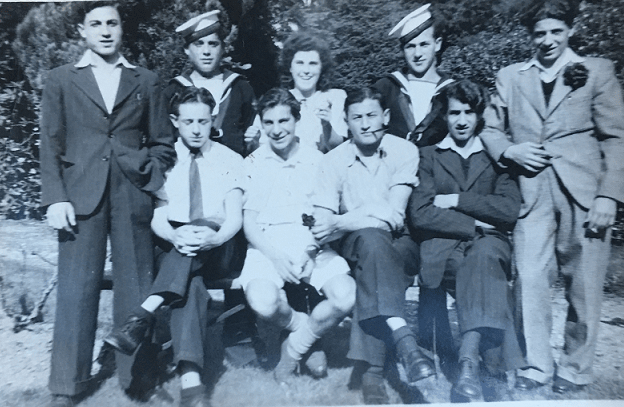
Benek Englard first from left and Herman Rosenblat fourth from left.
The Committee for the Care of the Concentration Camp Children considered Ascot a failing hostel that was badly run. So in June 1946, the hostel head Manny Silver was dismissed. The Boys were so angry that they went to Leonard Montefiore’s office in Bloomsbury Square in London and protested violently. Nevertheless, Silver was replaced.
The hostel closed in December 1946 and the Central British Fund noted the high cost of the repairs needed before the house was returned to it previous owner.
Memorialisation
There was virtually no knowledge of the hostel in Ascot until BBC Online published an article about the hostel in May 2018. Since then there has been considerable interest in the story from the local press, Channel 5’s Do the Right Thing featured the story in February 2019.
In the autumn of 2018, the Ascot Holocaust Education Project was set up by local residents and a memorial plaque marks the site of the hostel.

 About
About History
 Education
 Quilts
 FIlms
FIlms Photos
 News Media & Events
 Publications
 Donate