The Boys were teenage and child-Holocaust survivors, who were brought to the UK after the war for rest and rehabilitation.
The Boys had survived the Holocaust as slave labourers in the Nazi concentration camp system, in hiding and by living alone.
After arrival in the UK, members of the Boys spent time in the reception centres before being moved to children’s homes known as hostels. Others were sent direct to boarding school or yeshivas, and those who were sick spent time in sanatoriums.
Some of the members of the Boys were lucky enough to find relatives or were taken in by foster families but the majority were moved to hostels.
Overview
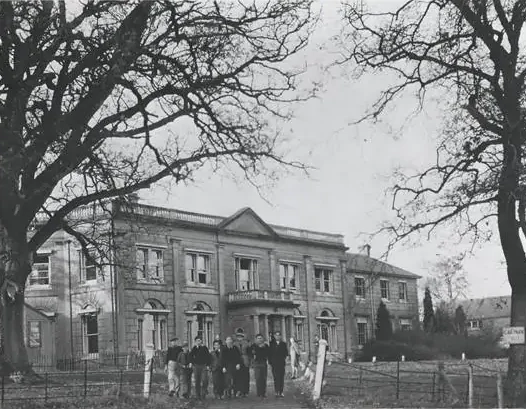
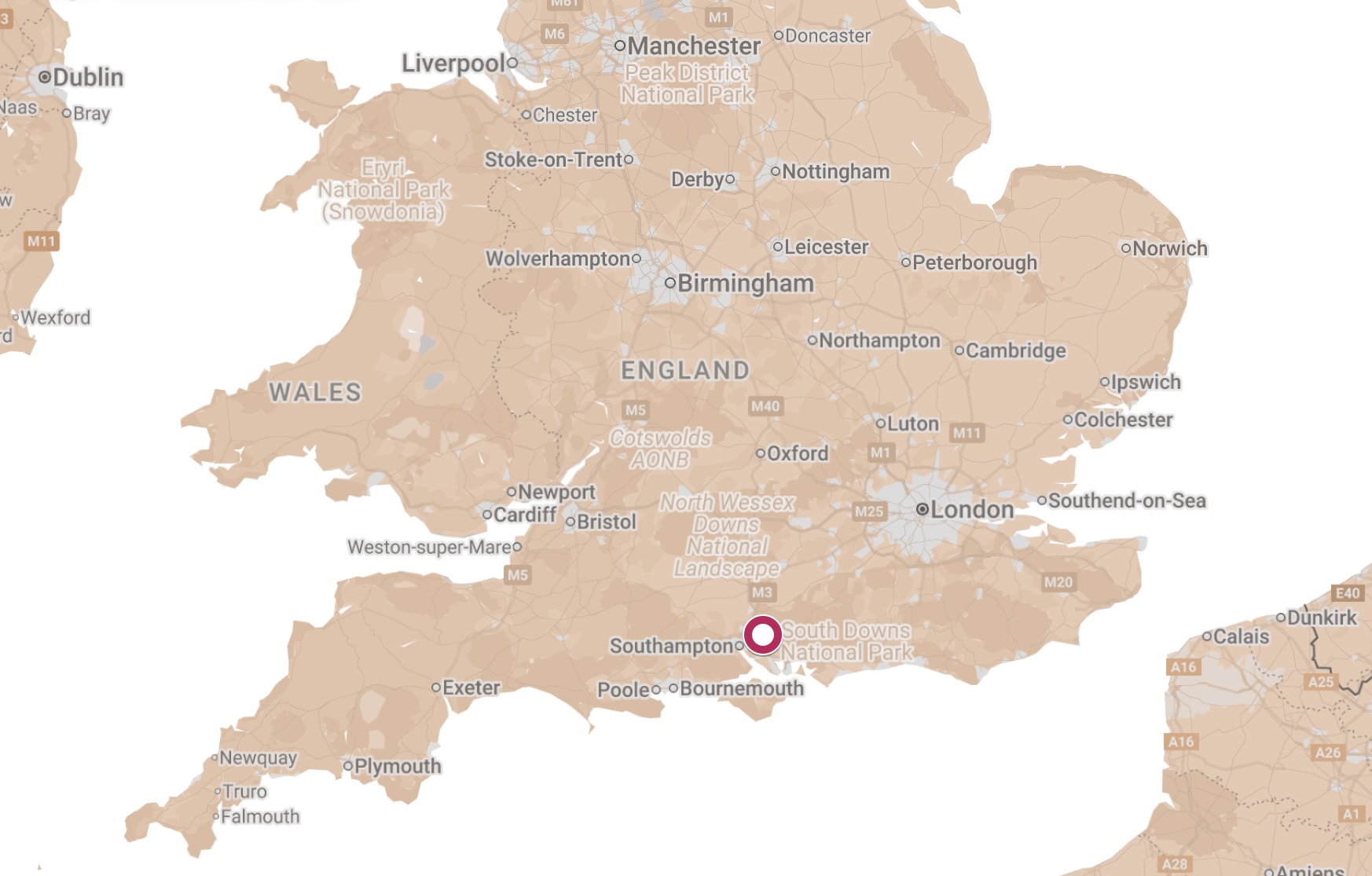
Wintershill Hall was located in the village of Durley not far from Southampton, on the south coast of England.
The house was owned by James Montefiore, a relation of Leonard Montefiore, and was chosen because it was close to Stoney Cross airfield in the New Forest, which had been a base for RAF bombers. It was a large Georgian mansion surrounded by gardens and parkland.
The house was sold in 1946 and is now a private home.
The Staff
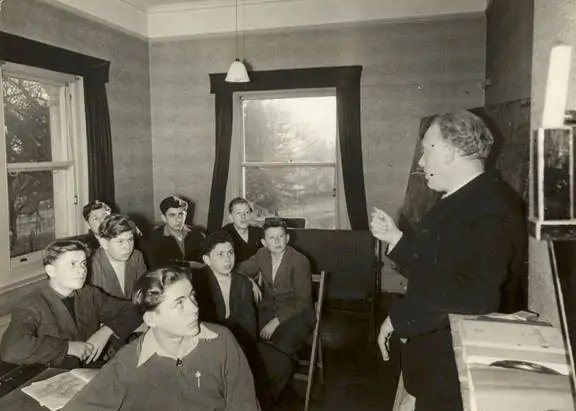
Dr Friedmann takes a lesson in Wintershill Hall.
Dr Fridolin ‘Ginger’ Friedmann ran the hostel.
He was a progressive German Jewish educator. Mrs Katz was his secretary.
Member of the religious Zionist organisation Bachad also played an important role among the staff. They included: Shimon Brody, a Mrs Goldstein, Herbert Laster, Sabine Stang and Ruth Richtenberg, who had both been in the Windermere reception centre.
Prior to the boys arrival, Shalom Marcovitch, of the Bachad leadership, gave a speech to staff. He had headed up the first Jewish relief team to arrive in the former Bergen-Belsen concentration camp and had spent time with the children.
“Almost every aspect was new and fascinating, including getting to know the large group, discovering a new way of life with beds, bathtubs, food and movies. The people taking care of us were the nicest people I had yet met. They cared for us with love and respect, yet without intrusion into my individuality. This was at a time when the only love I could comprehend was that of my family, which was now gone.”
Jack Rubinfeld written testament, 1995.
Rubinfled was 17 years old when he was in Wintershill Hall. He had survived the Przemysl Ghetto, labour camps as well as a death train.
The Wintershill Hall Story
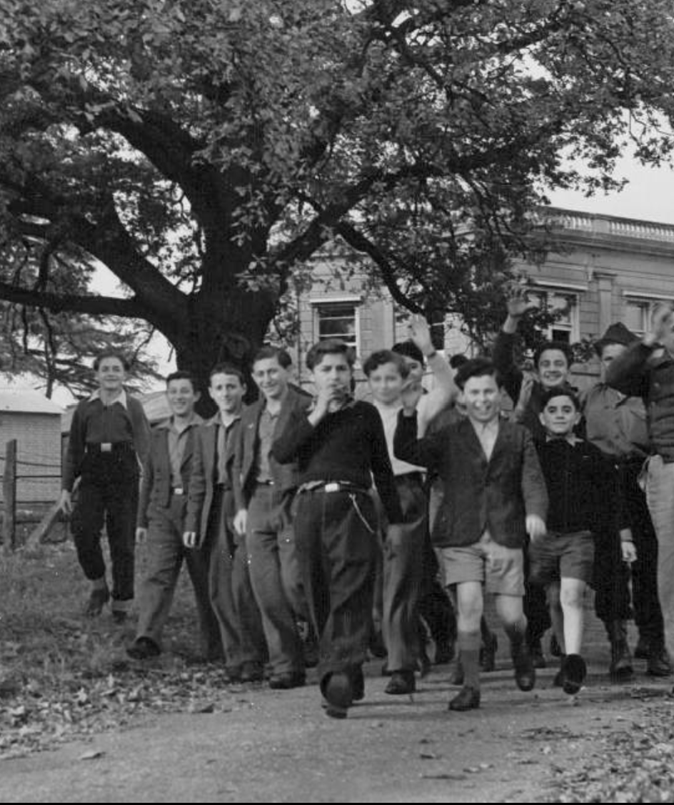
In October 1945, 128 boys and 28 girls arrived in the UK. They had been in displaced person’s camps in the American and British section of occupied Germany and the children’s home in Kloster Indersdorf, near Dachau, in Bavaria. They were taken to a reception centre in Wintershill Hall.
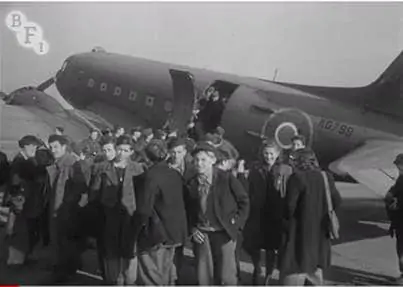
The Boys arriving at Stoney Cross airbase 1945.
“One morning recently I went down to visit the hostel at Durley, a tiny hamlet in a part of Hampshire where you see nothing much but quiet brown fields, an occasional thatched cottage, and a lot of windy sky. Wintershill Hall, where this particular hostel has been set up, is a large, rather gloomy-looking Georgian mansion whose conventional pattern of park, formal gardens, and greenhouses has been somewhat altered by a block of army huts. A Star of David was chalked on a pillar of the portico, where an electric bell, its push button missing invited one to klinge. Before I could do so, the door was opened by a young man in spectacles, who wore a beret and a dark blue lumberjacket, on one sleeve of which the Star was indistinctly chalked.”
Mollie Panter-Downes, The New Yorker, 2 March 1946.
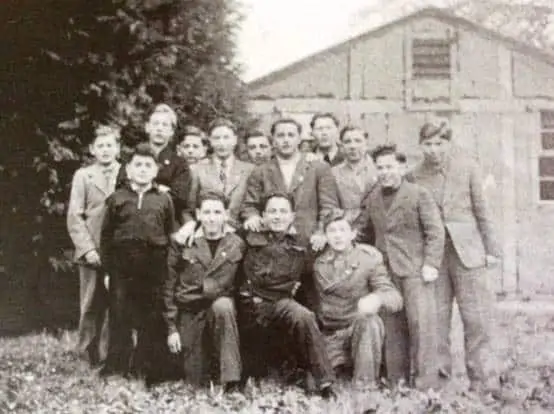
In March 1946, the New Yorker published an article on the reception centre. Friedmann told the reporter that the majority of the children wanted to stay as a group and go to the Palestine Mandate together.
He found the children exceptional linguists and noted that they spoke multiple languages. Alongside English, they were taught Hebrew and what Friedmann called Palistinography. Friedmann spoke to the children in German and then repeated what he said in English.
Local boys from Durley played football with them. It was Central British Fund policy that the Boys were seen playing football as it was considered a key sign of Britishness.
The Boys had second-hand bicycles and went to the village shop and the local cinema.
They were given pocket money and could spend it on whatever they wished. Friedmann noted that they expected the best of everything and were highly critical if clothes they were given were not of the best quality.
Friedmann told the New Yorker that they all smoked, even the youngest children.
Despite their desire to go to the Palestine Mandate, the minutes of the meeting of the Committee for the Care of the Concentration Camp Children show that the children refused to be moved in a group to Polton House, a training farm where young people wishing to settle in Palestine were taught agriculture. The children said it was too far away.
 About
About History
 Education
 Quilts
 FIlms
FIlms Photos
 News Media & Events
 Publications
 Donate