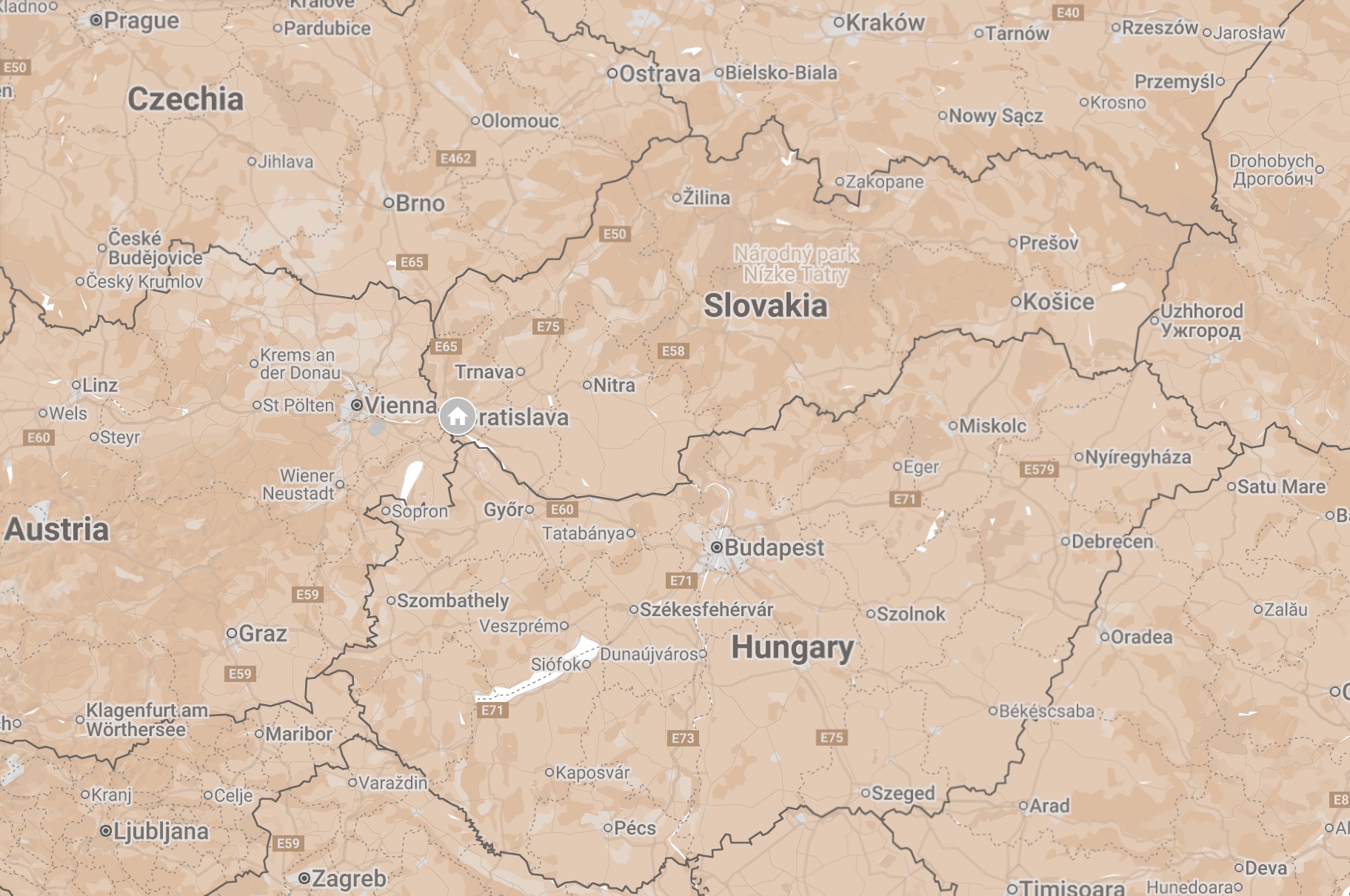
Members of the Boys were born in Bratislava in Czechoslovakia, now the capital of Slovakia.
The Boys were teenage and child-Holocaust survivors, who were brought to the UK after the war for rest and rehabilitation.
Members of the Boys were held in Nazi labour and concentration camps and used as slave labourers. They had also survived World War II in hiding or as lone children.
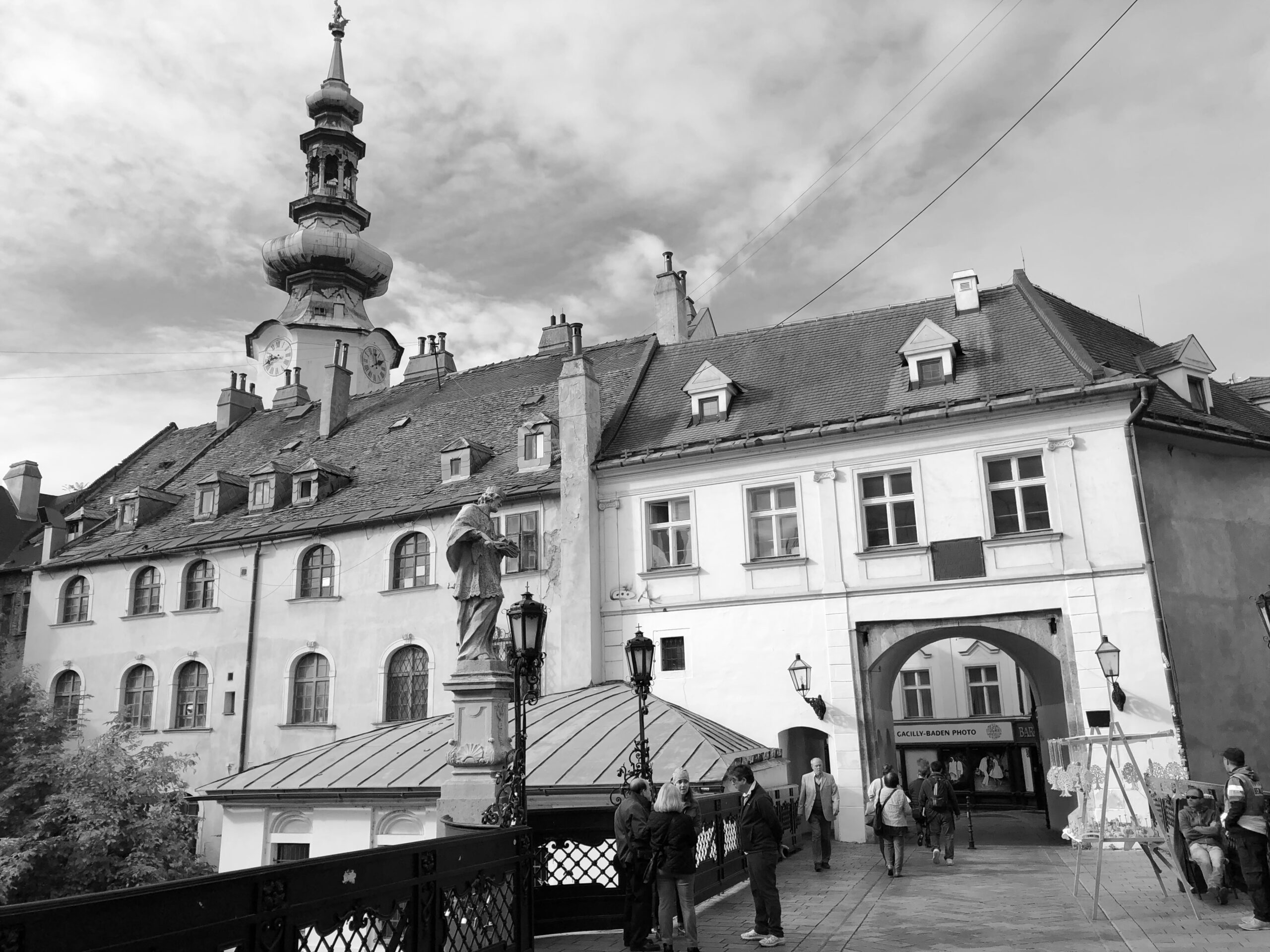
Jews first arrived in Bratislava in the 10th century but a community only began to develop in the 17th century. The city was known by it German name of Pressburg for much of its history.
Pre-war
In 1930, approximately 15,000 Jews lived in Bratislava, which had a total population of 120,000. On the eve of the Holocaust the Jewish community was the largest in Slovakia.
Jews were active in local politics and cultural life. The city was a Jewish religious and political centre and home to the renowned Pressburg Yeshiva, as well as the Zionist Organisation of Slovakia.
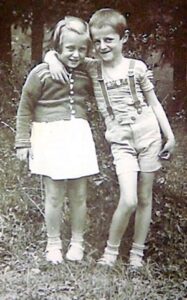
Paul Loewner and his sister Hanna Tanner, both members of the Boys, were born in Bratislava.
In March 1938, following the annexation of Austria to Germany, hundreds of Jewish refugees arrived in the city.
Antisemitism was an issue in the inter-war period, as after the city’s inclusion in Czechoslovakia, the local Slovak population identified the Jews with the city’s former German and Hungarian elites. There were serious anti-Jewish riots in 1938 and 1939. As a result many Jews left Bratislava.
Wartime
After the creation of the Slovak state in March 1939, a Nazi ally, persecution of the Jews began immediately. Between March and October 1942, the Hlinka Guard (the paramilitary wing of the Slovak People’s Party), alongside Slovak police and military personnel, concentrated 58,000 Jews in labour camps, mainly in Novaky, Sered and Vyhne. There were no ghettos in the wartime Slovakian state.
By March 1942, when the deportations began, nearly half of the city’s Jews had been evicted, and dispersed in smaller towns across the country.
German forces occupied Bratislava in September 1944 and approximately 2,000 of the remaining Jews were sent to the Auschwitz II-Birkenau concentration and extermination camp in occupied Poland.
The vast majority of Bratislava’s Jews were murdered in the Holocaust.
Liberation
Of the over 15,000 Jews living in Bratislava in 1940 only about 3,500 survived. Jews returning to Bratislava from the war met with indifference and sometimes even hostility.
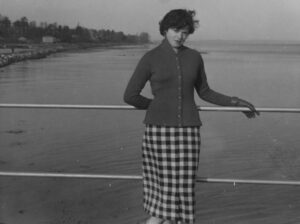
Rachel Levy was one of the Boys who spent time in Bratislava after the liberation.
Immediately after the war, Bratislava became the centre of Slovak Jewry due to the fact that many Slovak Jewish survivors preferred to settle in the relative safety of Bratislava as opposed to their former hometowns in the country. A number of the Boys spent time in the city.
Restitution issues and high levels of antisemitism led most survivors to believe that there was no future for the Jewish community in Slovakia. There were anti-Jewish riots in 1946 and 1948.
Despite this, Bratislava was a major transit point in the Jewish exodus out of eastern Europe in the years after the Holocaust, as Jews headed for the American occupied zone of Austria.
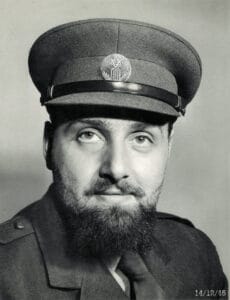
Rabbi Solomon Schonfeld
From 1945 until February 1949, more than 150,000 Jewish migrants passed through Bratislava, most of them walking across the bridge at nearby Devinska Nova Ves.
Rabbi Solomon Schonfeld, who brought the Fifth Group of the Boys to UK spent time in Bratislava after the liberation looking for orphaned Jewish children.
Aftermath
About 2,000 Jews remained in Bratislava in 1949, when the communist government took control of the country. Under communism Jewish religious and cultural life was gradually restricted and the property of Jewish organisations was nationalised.
In the 1960s, restrictions on Jewish life were eased and some Jews allowed to leave for Israel. Many more Jews left the city after the fall of communism.
Present-day
It is estimated that about 800 Jews now live in Bratislava.
Bratislava is a good place to start a trip to Slovakia, and it is in easy reach of Vienna.
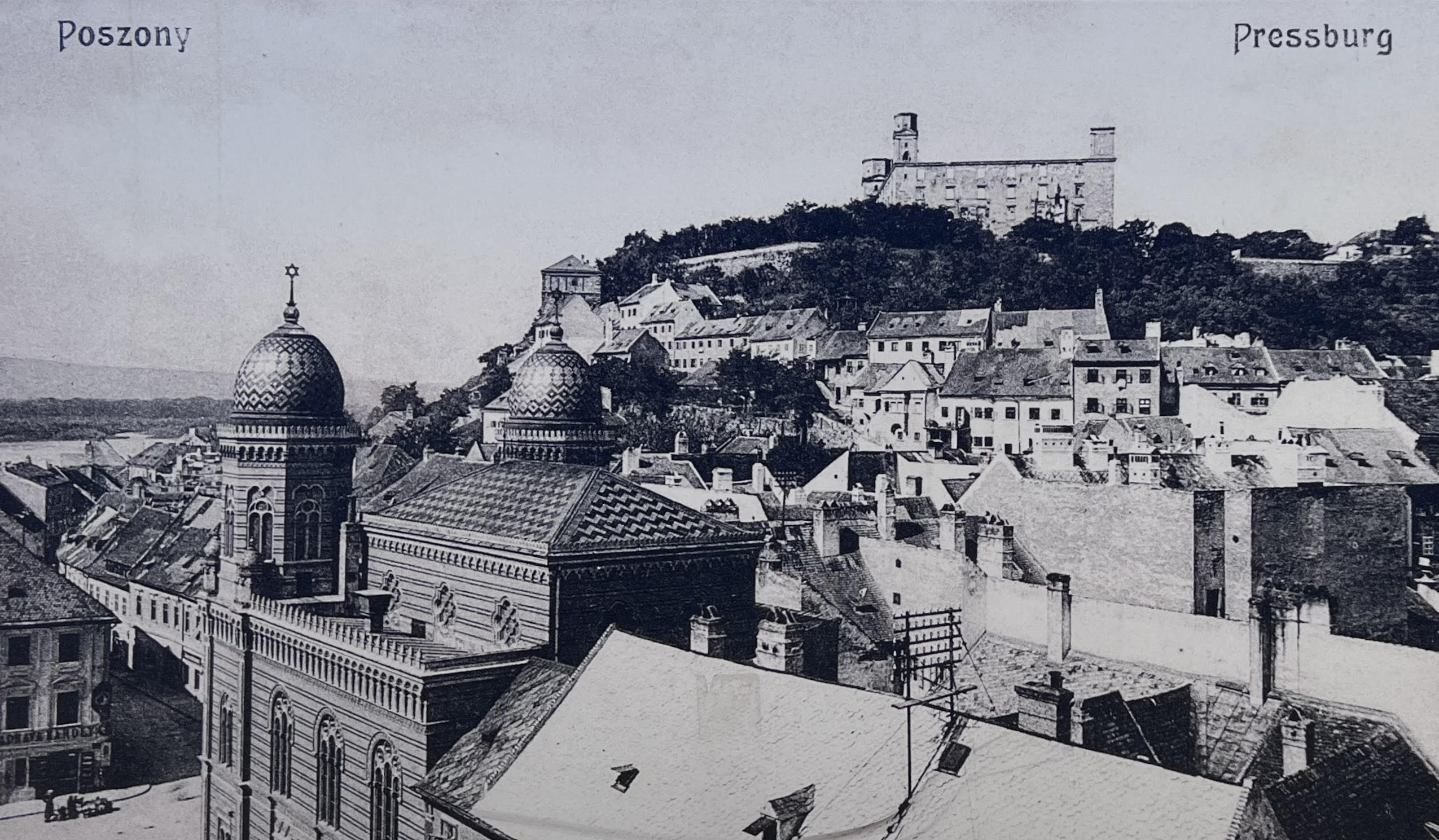
Sadly much of the old Jewish Quarter was demolished in the 1960s during a communist-era development programme and is now covered by the bus station.
Getting there
Bratislava airport is the largest in Slovakia. There is also a bus service from Vienna airport to Bratislava 40km away.
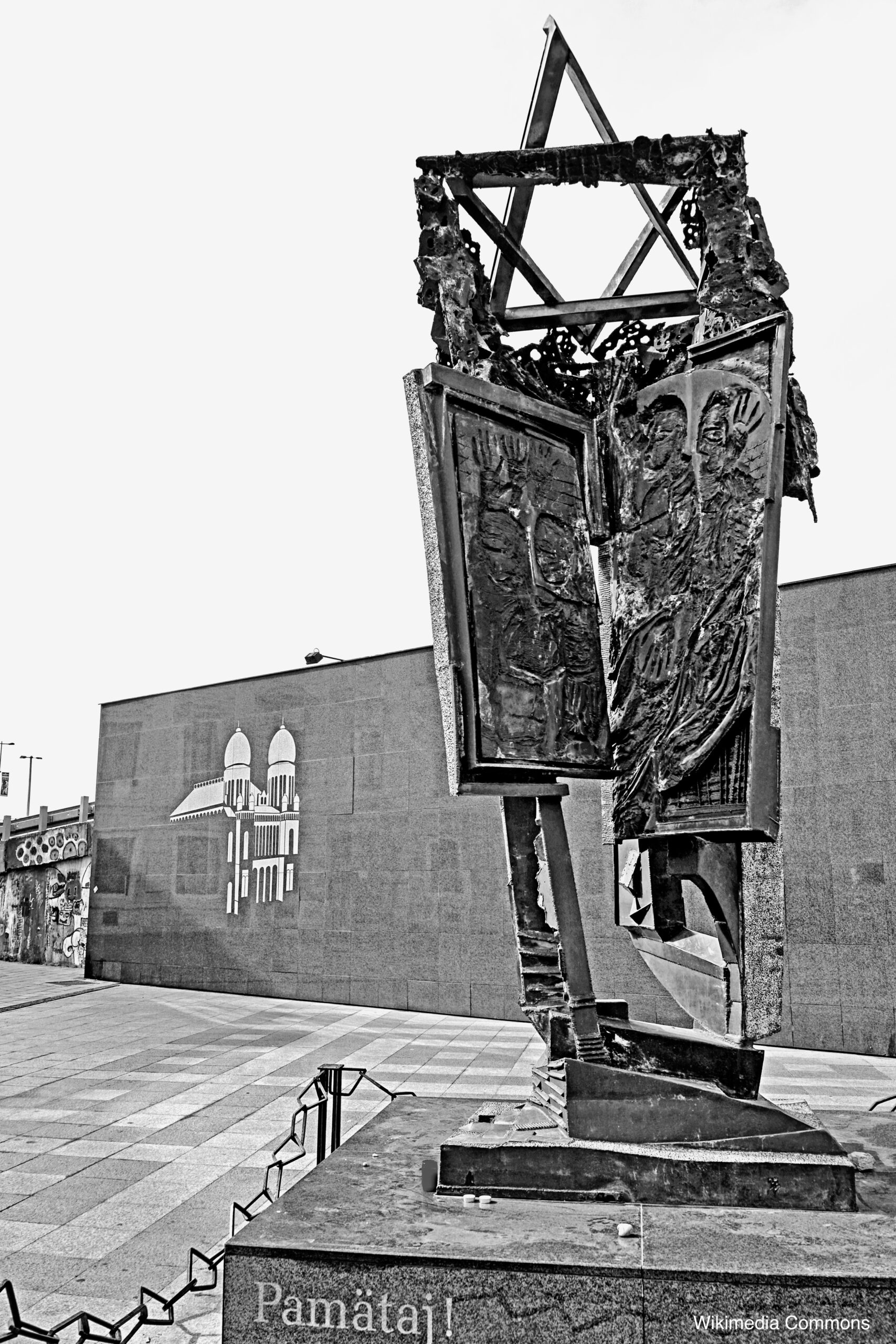
Holocaust Memorial in Bratislava, Slovakia.
Getting around
Bratislava is easily explored on foot. You will need a car to explore the rest of Slovakia but it is possible to visit Sered, Košice and other principle towns by train.
Museum of Jewish Culture (Múseum Židovskej Kultúry; Židovská 297; entry fee) The museum has 7,000 objects in its collection and focuses on everyday life and Jewish festivals. It is located in the Zsigray mansion, one of the surviving buildings from the original Jewish quarter.
Holocaust Memorial (Rybné Square) The memorial erected in 1996, stands on the site of the former Neolog Synagogue, which was demolished in 1969.
Synagogue (Heydukova 11–13) Bratislava has one functioning synagogue built in the 1920s in a Cubist design.
Devínska Nová Ves
Bratislava sits on the border with Austria. As a result, it was an important stopping point for Jewish refugees from eastern Europe in the immediate aftermath of the Holocaust. Once the survivors arrived in Bratislava, many of them were taken to Devínska Nová Ves, 14km northwest of the city. The town is separated from Austria by the pretty Morava River, and in 1946 thousands of Jews were among the 100,000 who walked across the border here.
Today, there is a cycle route, the Cyklomost Slobody, the Freedom Bridge which leads into Austria. It was built in 2012 to celebrate the newfound liberty of the post-Soviet world. Sadly, though, you will find no mention of the Jewish refugees who passed this way after the war. They have been forgotten.
Sered
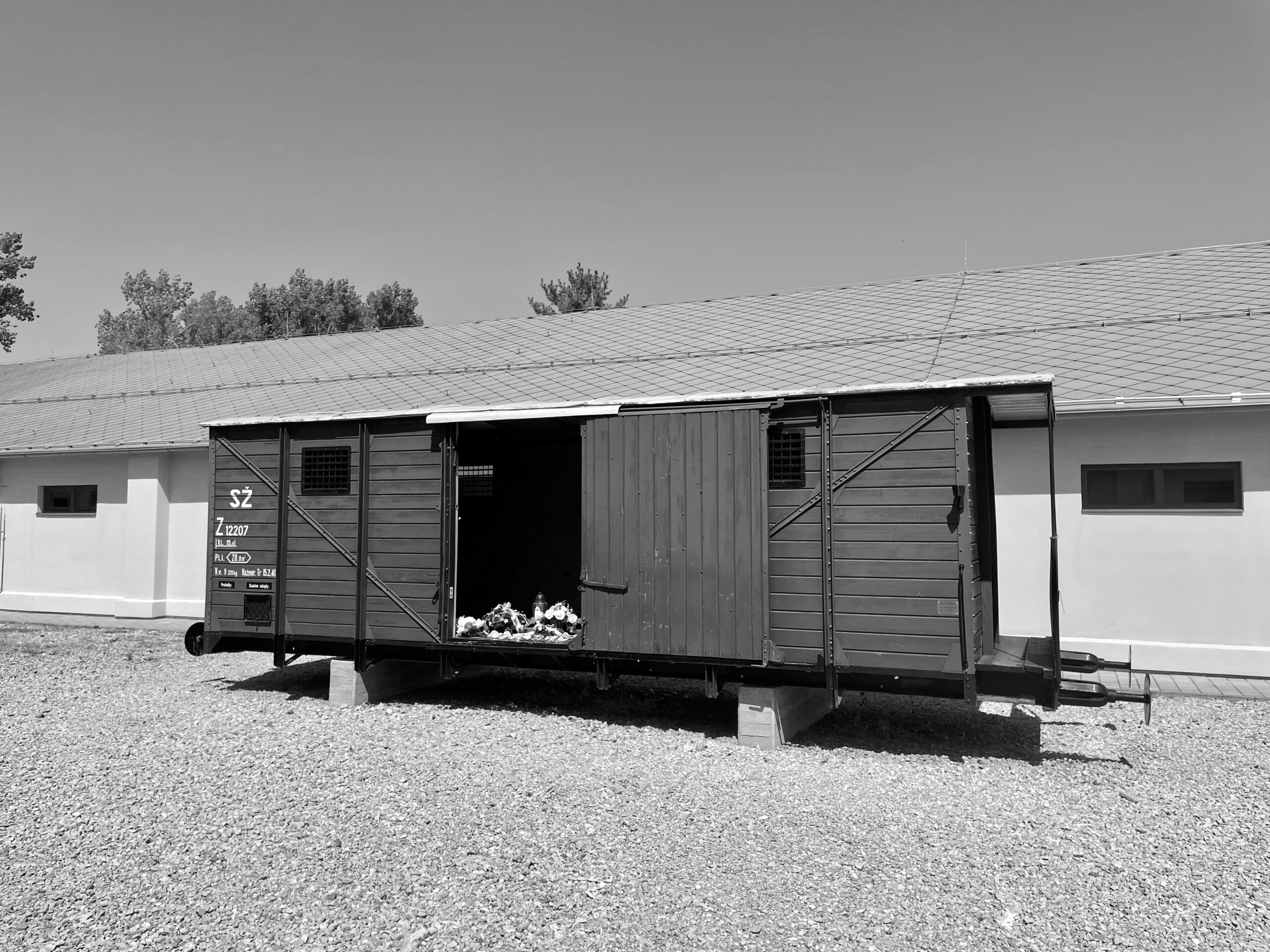
Slovakia has only one Holocaust museum, in Sered, 67km northeast of Bratislava, at the site of the former Sered concentration camp. To find out more click here.
 About
About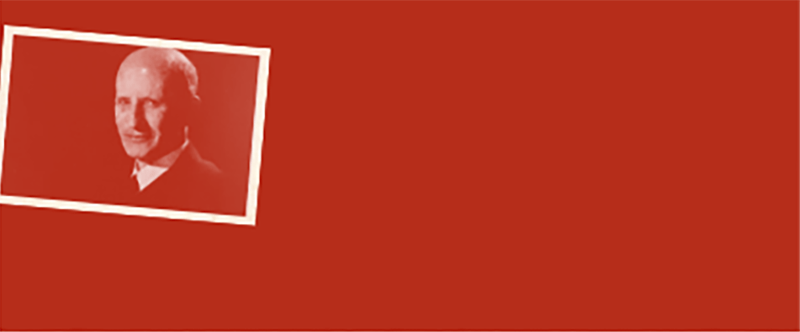 History
 Education
 Quilts
 FIlms
FIlms Photos
 News Media & Events
 Publications
 Donate