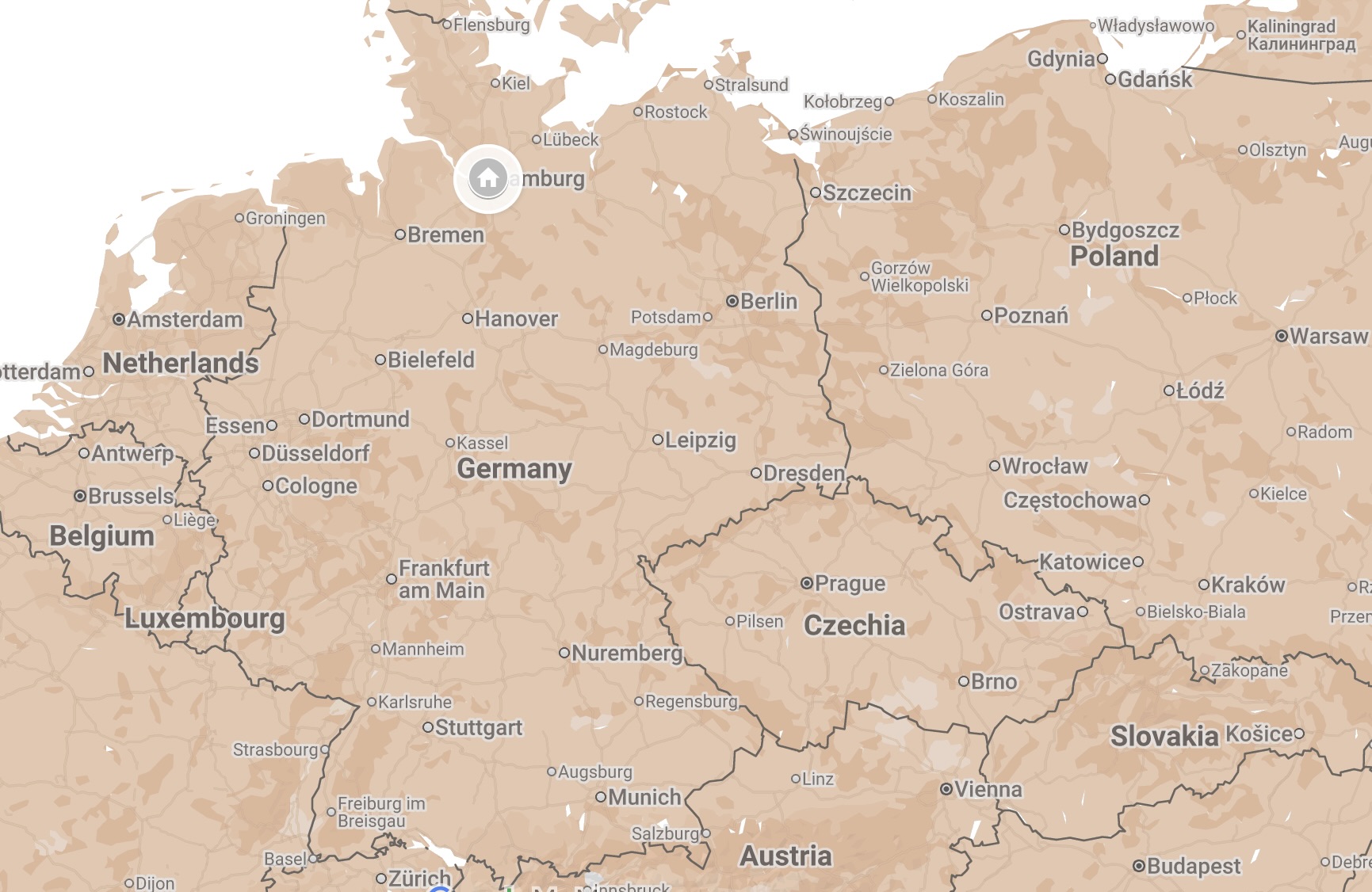
Members of the Boys were born in Hamburg in Germany.
The Boys were teenage and child-Holocaust survivors, who were brought to the UK after the war for rest and rehabilitation.
Members of the Boys were held in Nazi labour and concentration camps and used as slave labourers. They had also survived World War II in hiding or as lone children.
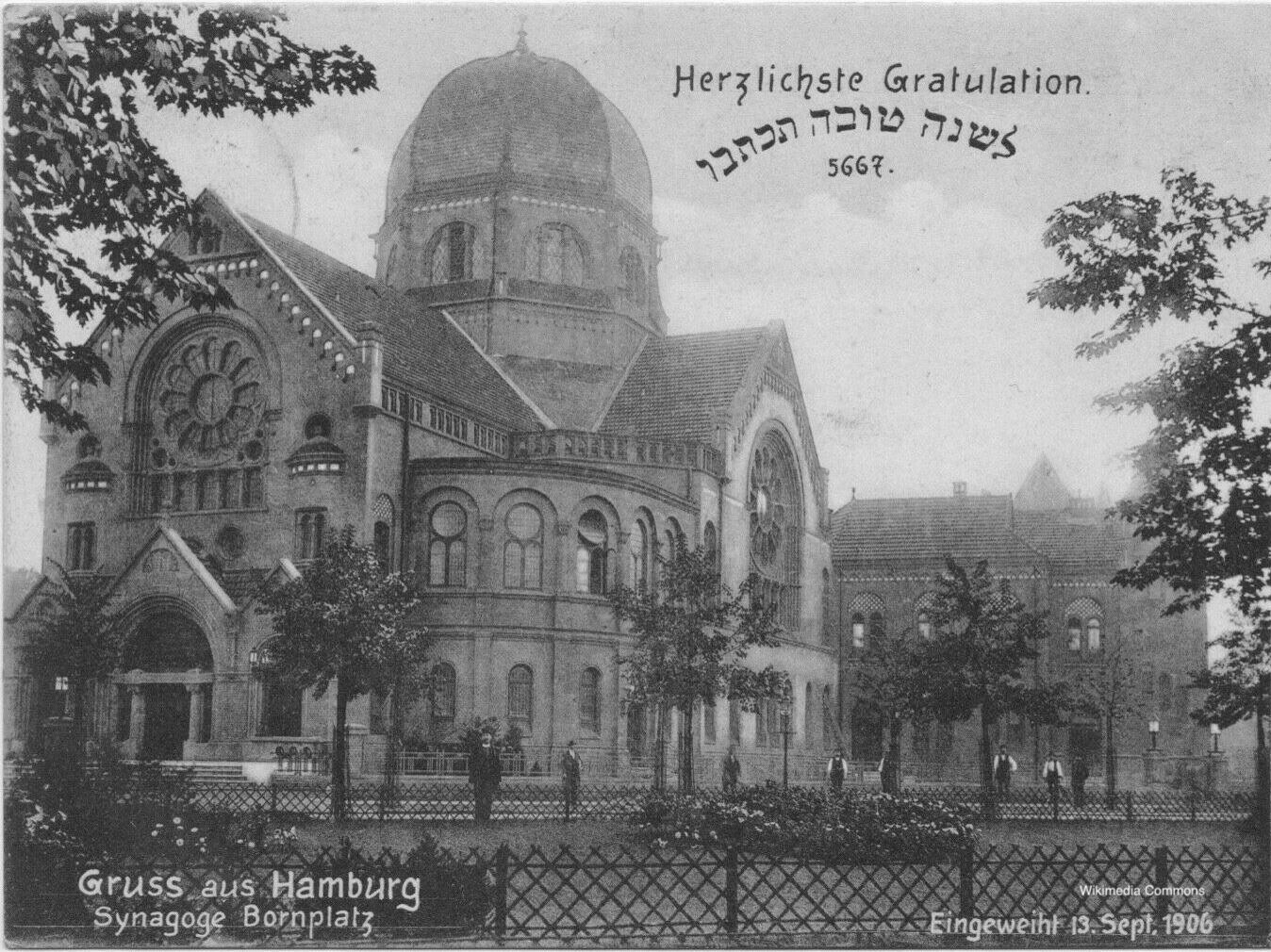
Hamburg Synagogue before World War II.
Getting there
Hamburg is easily accesible by air, bus, rail and sea.
Getting around
Hamburg has an efficient U- and S-Bahn system. The memorial at the former Neuengamme concentration camp is 30km southeast of Hamburg. If you do not have your own transport, catch the train from Hamburg Central Station to Bergedorf, then take bus 127 or 227.
The Bergen-Belsen memorial is 102km south of Hamburg in Lower Saxony. Take a train from Hamburg Central Station to Celle and then bus 100 or 110.
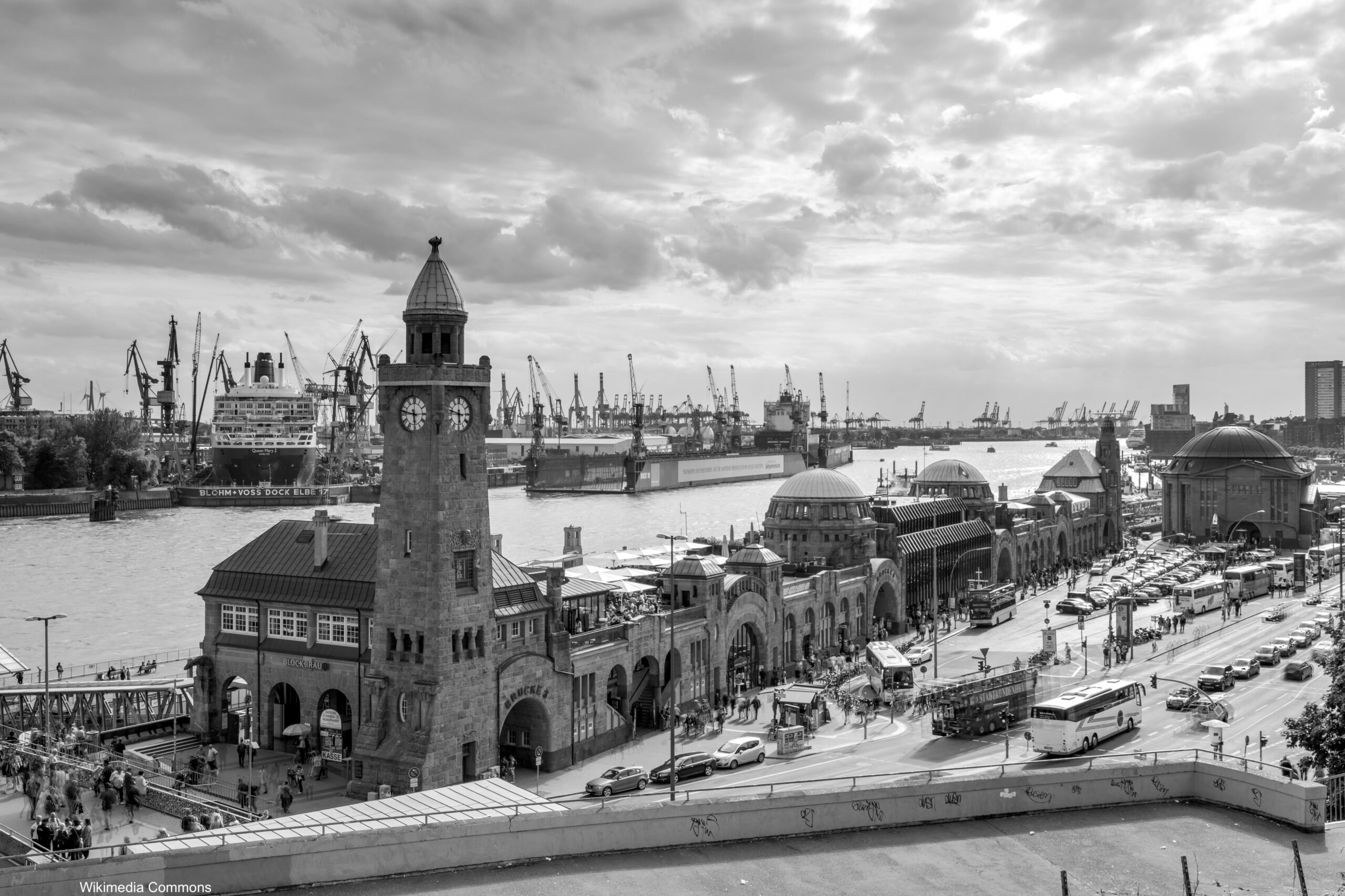
Hamburg, Germany
What to See
Memorials
Stolpersteine There are memorial stones for Elli and Leonhard Hymans at Loogestieg 4.
Hannover Station Memorial (Denkmal Hannoverscher Bahnhof; Uberseeallee – next to the Holiday Inn) In the middle of eastern Hafen City is the site of the former Hannoverscher Bahnhof. The memorial is in a small park, Lohsepark, on the site of the former platform 2.
A plaque at Hamburg Central Station by the Mönckebergstrasse exit also recalls the deportations from the Hannover Station.
Jewish Refugee Boats Near where the ferries depart and the museum ships are docked (Bridge 3), there are monuments to two Jewish refugee ships, the St Louis and the Exodus.
Gestapo Memorial (Stadthausbrücke 8) The memorial by the entrance to the Hamburg Building Authority reminds passers-by that this was once the Gestapo HQ. Called Stigma, it is made up of red paving stones that look like bloodstains on the pavement.
Hamburg’s Dammtor Station (Dammtor Bahnhof) There is a moving bronze memorial called The Final Parting dedicated to the 1,000 children who left from Hamburg on the Kindertransport. It is situated on the south side of the station.
Platz der Jüdischen Deportierten Memorial (Moorweide park) Jews were gathered here in 1942 prior to deportation from the station at Dammtor.
The Great Synagogue (Bornplatz) The synagogue was destroyed during Kristallnacht in 1938 and demolished in 1939. This is currently a controversial spot as a new synagogue is being built here. Critics say the construction will erase Nazi crimes.
Museums
Museum for Hamburg History (Museum für Hamburgische Geschichte; Holstenwall 24) has a permanent exhibition on the Jews of Hamburg which covers in detail the persecution and deportation of Hamburg’s Jewish residents.
Poppenbüttel Prefabricated Building Memorial (Gedenkstätte Plattenhaus Poppenbüttel; Kritenbarg 8; free) 17km north of Ohlsdorf, this was the Sasel satellite camp of Neuengamme. The camp was for women brought into the city to clear rubble from the bombing and to build prefab accommodation. It functioned from September 1944 to May 1945 and was one of eight such camps holding in all 2,800 women among them members of the Boys.
Deportation Memorial (Platz der Republik, Altona) is a memorial to the local Jewish community.
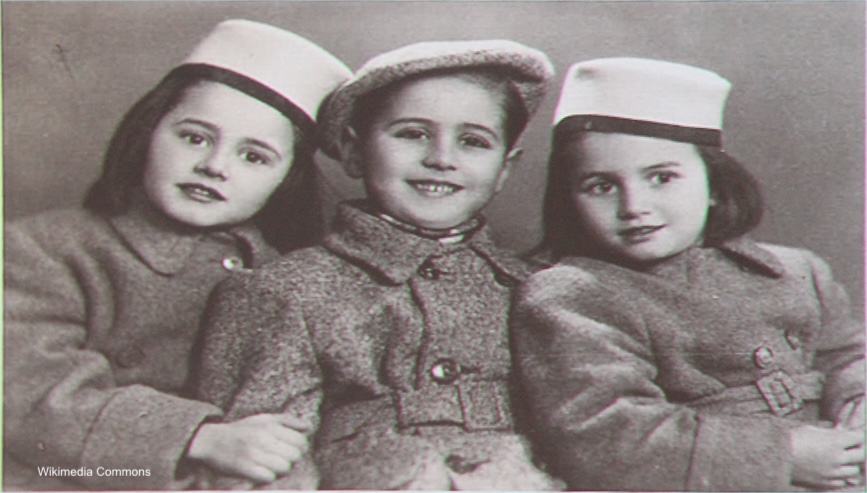
The Bucci sisters with their cousin Sergio.
Bullenhuser Damm Memorial (Gedenkstätte Bullenhuser Damm; Bullenhuser Damm 92; free) The memorial and small museum in Rothenburgsort east of the centre, is one of the most important memorials in Hamburg and has particular resonance for the story of the Boys.
The memorial remembers 20 Jewish children and 28 adults who were hanged by the SS on the night of 22 April 1945. The children, among them the young cousin, Sergio, of Liliana and Andra Bucci from Italy, had been brought from Auschwitz to the nearby Neuengamme concentration camp.
From there they were taken to a school in the Rothenburgsort that had been used as a subcamp of Neuengamme. The children, ten girls and ten boys aged between five and 12 were subjected to medical experiments and deliberately infected with tuberculosis bacteria rubbed into open wounds. Fearful of being convicted for war crimes, the SS killed the children.
The story only entered into public memory in the late 1970s when the journalist Günter Schwarberg discovered the children’s identities. Until this point the Bucci sisters had had no idea what had become of their cousin. The two girls were among the youngest survivors of Auschwitz and were brought to the UK in 1946.
Cemetery
Ohlsdorf Jewish Cemetery (Ilandkoppel 6) Established in 1883, the cemetery was closed in 1943 and makeshift housing for those who had lost their homes in the bombing was put up on the site. It reverted to being a Jewish cemetery in 1945, and in 1951 a memorial stone with an inscription in German and Hebrew was placed here dedicated to the Jews murdered in the Holocaust. An urn containing the ashes of prisoners from Auschwitz was placed in front of it in 1957.
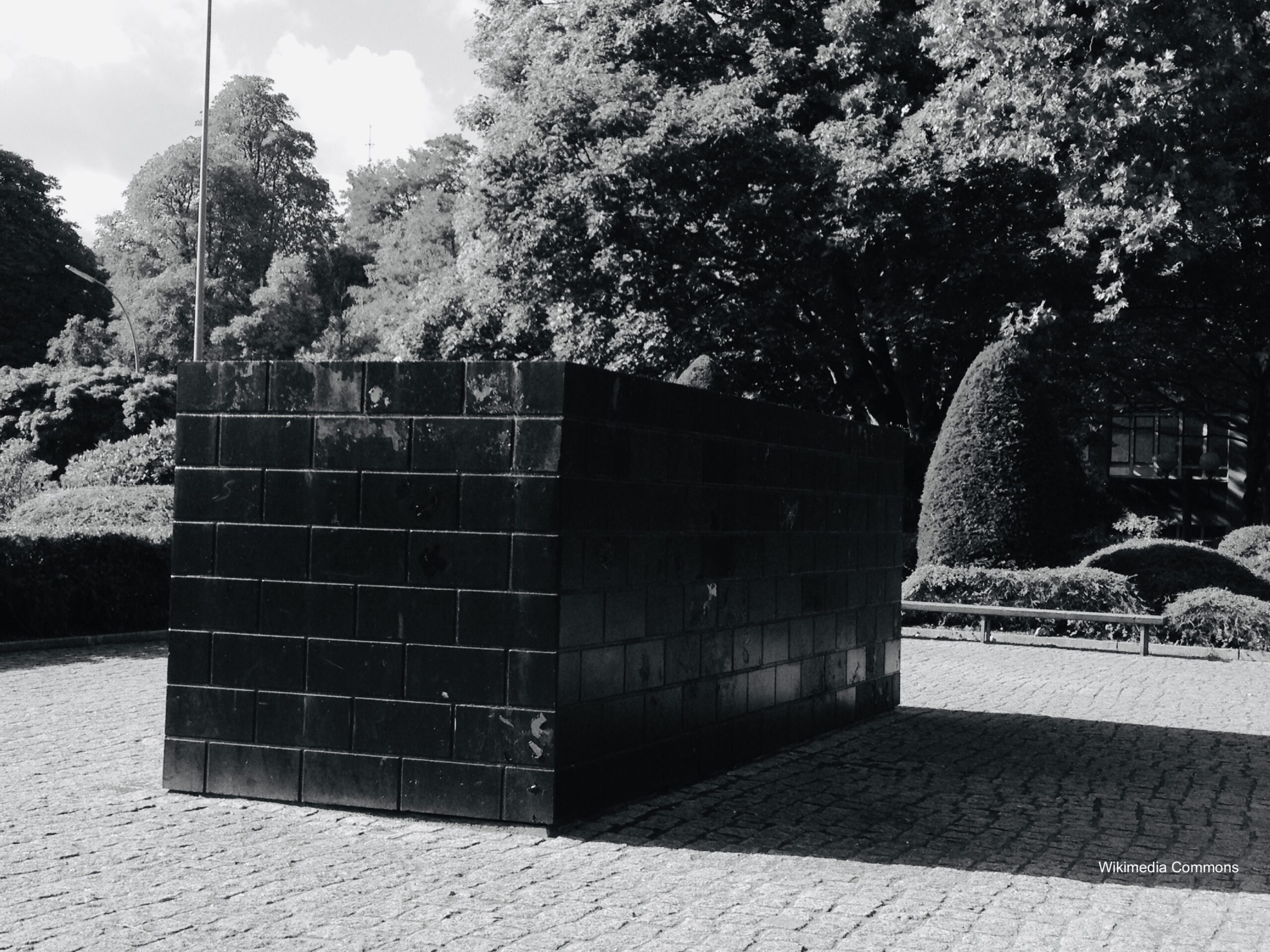
Neuengamme
Neuengamme on the outskirts of Hamburg opened as concentration camp in 1938. Although none of the Boys are believed to have been held in the main camp, they were subjected to slave labour in its subcamps. To find out more click here.
Neuengamme Memorial Site (Gedenkstätte Neuengamme; Jean-Dolidier-Weg 75; w kz-gedenkstaette-neuengamme.de; free).
The memorial site spans an area of 600,000m2 and is over a 1km long, some parts of which are always accessible.
The main exhibit, ‘Traces of History’, is located in a former cell block, where the introductory film gives a quick overview of the camp. An exhibition about the crimes of the SS is housed in the former SS garages; and a further two exhibitions on slave labour are located in the former brickworks and the site of the Walther factory. In the remains of the prison there is a further small exhibit.
Bergen-Belsen
The former concentration camp is a site of particular importance in the story of the Boys. Many members of the Boys were prisoners in the camp, the vast majority arriving on death marches. After the liberation part of the Second Group of the Boys was formed in the Belsen-Hohne DP Camp. To find out more about the camp click here, for more on the DP camp click here.
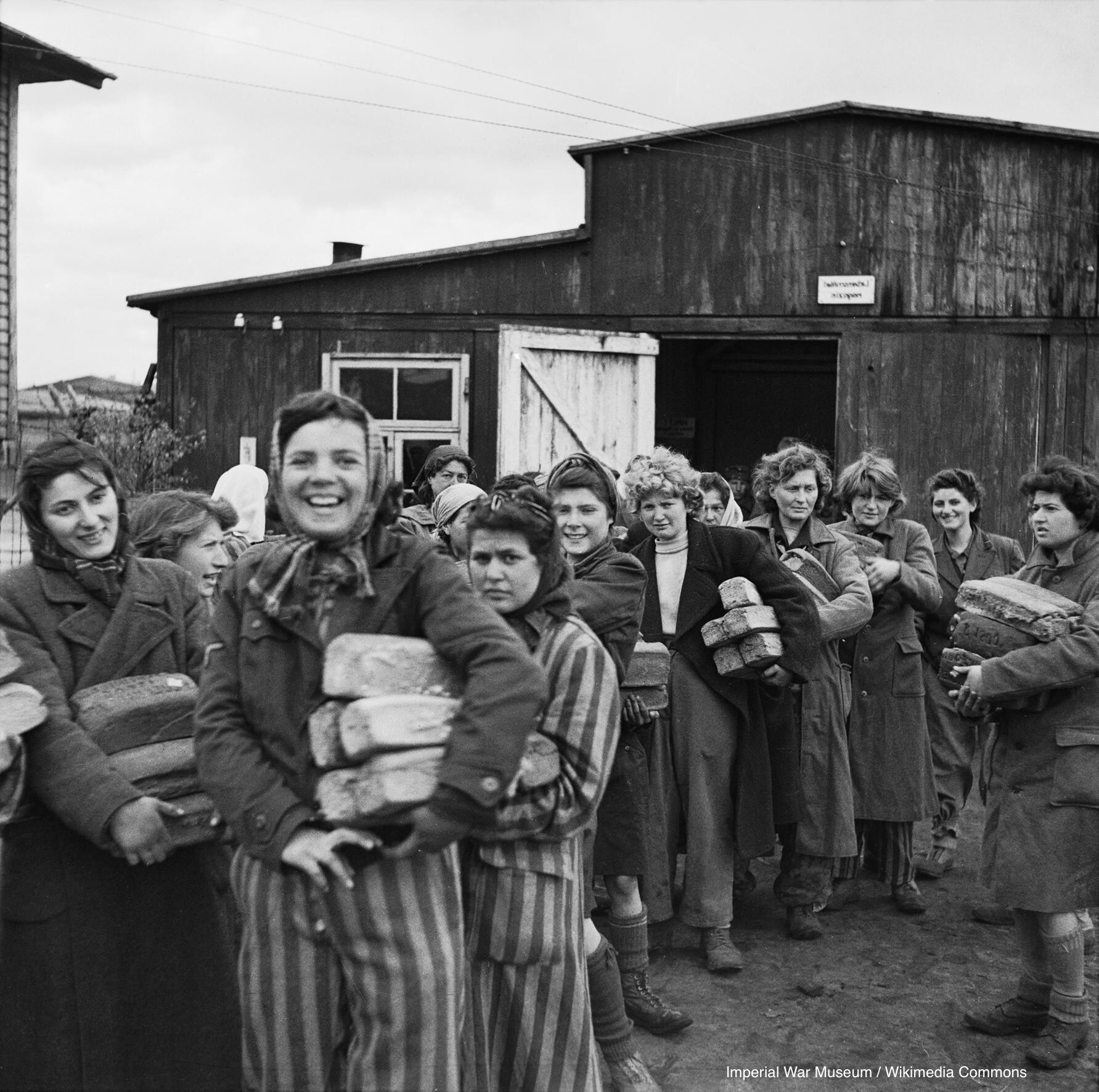
The Liberation of Bergen Belsen Concentration Camp, April 1945.
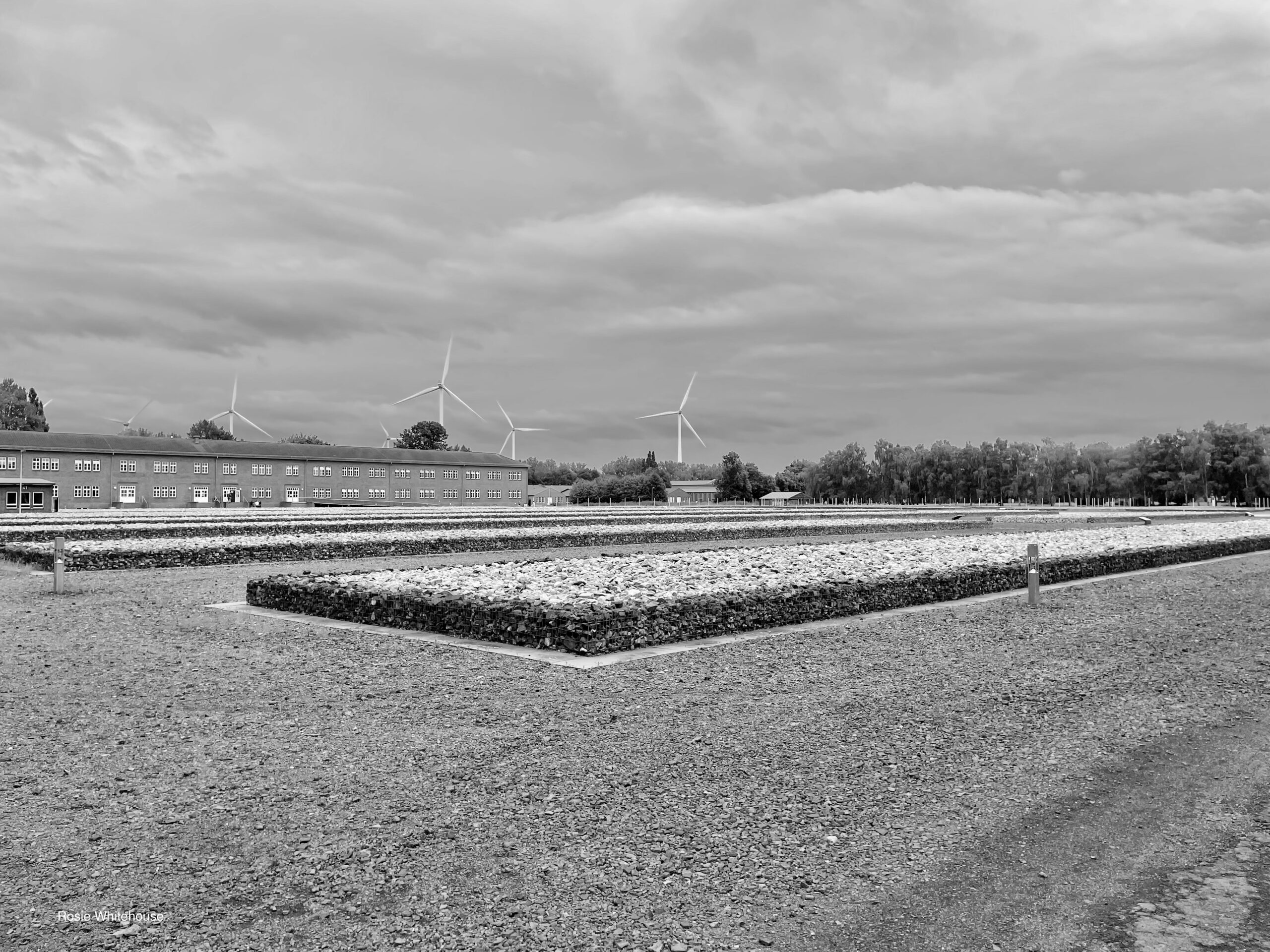
Bergen-Belsen Memorial Site (Gedenkstätte Bergen-Belsen; Anne Frank Platz, Loheide; w bergen-belsen.stift ung-ng.de; free) The former camp is now a large clearing in the forest. On the site you will find 17 information steles with short texts and photographs that provide information about the history of the camp and mark the site of the buildings.
The permanent exhibition has 45 video points and covers the history of the camp and the story of the displaced persons camp in the Hohne barracks.
There is a series of memorials, 13 mass graves and 15 individual graves. The gravestone memorial to Anne Frank and her sister is symbolic. No-one knows where her remains lie.
North of the camp on the L298 there is a memorial at the ramp where prisoners were transported to and from the camp.

 About
About History
 Education
 Quilts
 FIlms
FIlms Photos
 News Media & Events
 Publications
 Donate