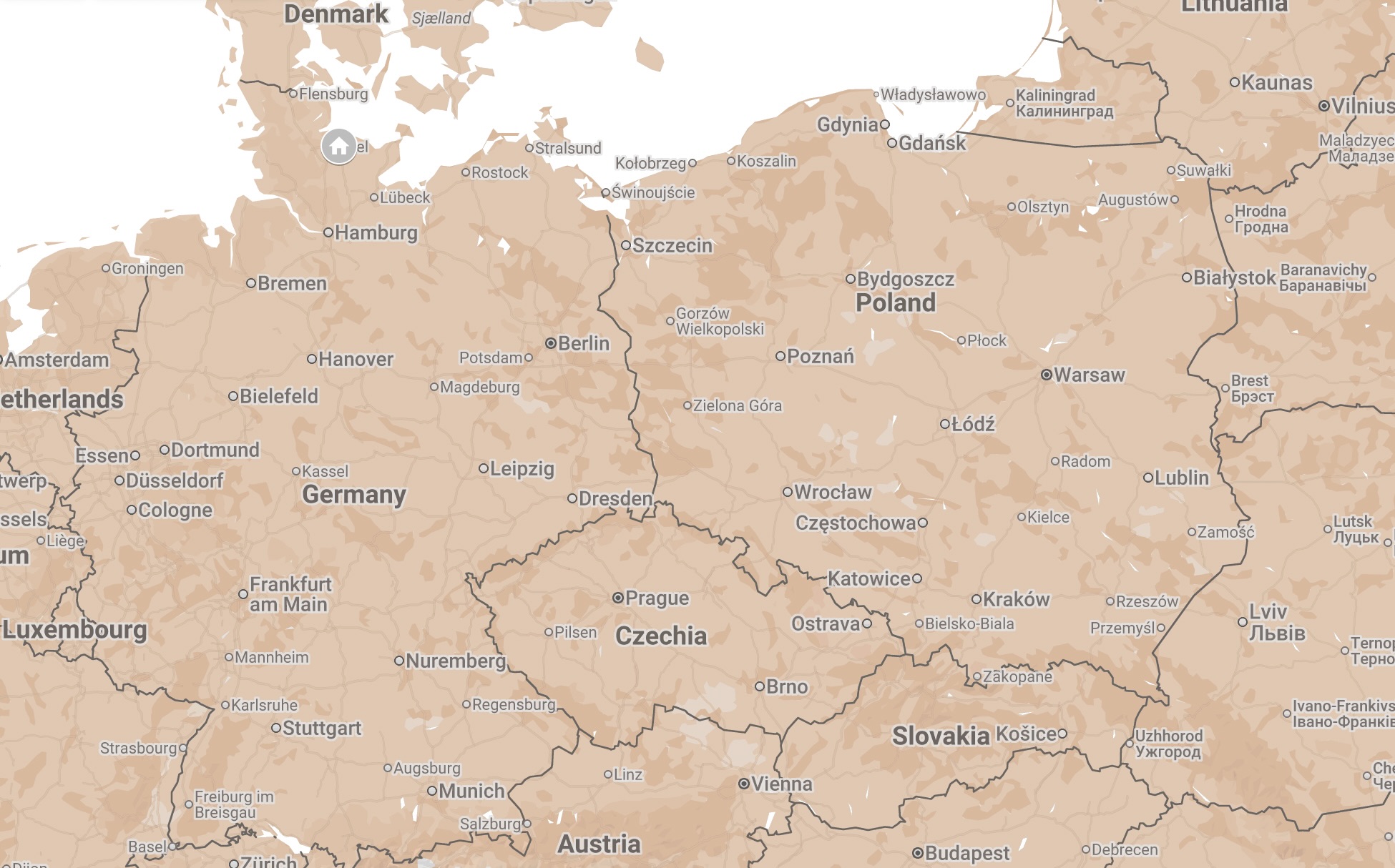
Members of the Boys were born in Kiel in Germany.
The Boys were teenage and child-Holocaust survivors, who were brought to the UK after the war for rest and rehabilitation.
Members of the Boys were held in Nazi labour and concentration camps and used as slave labourers, they had also survived World War II in hiding or as lone children.
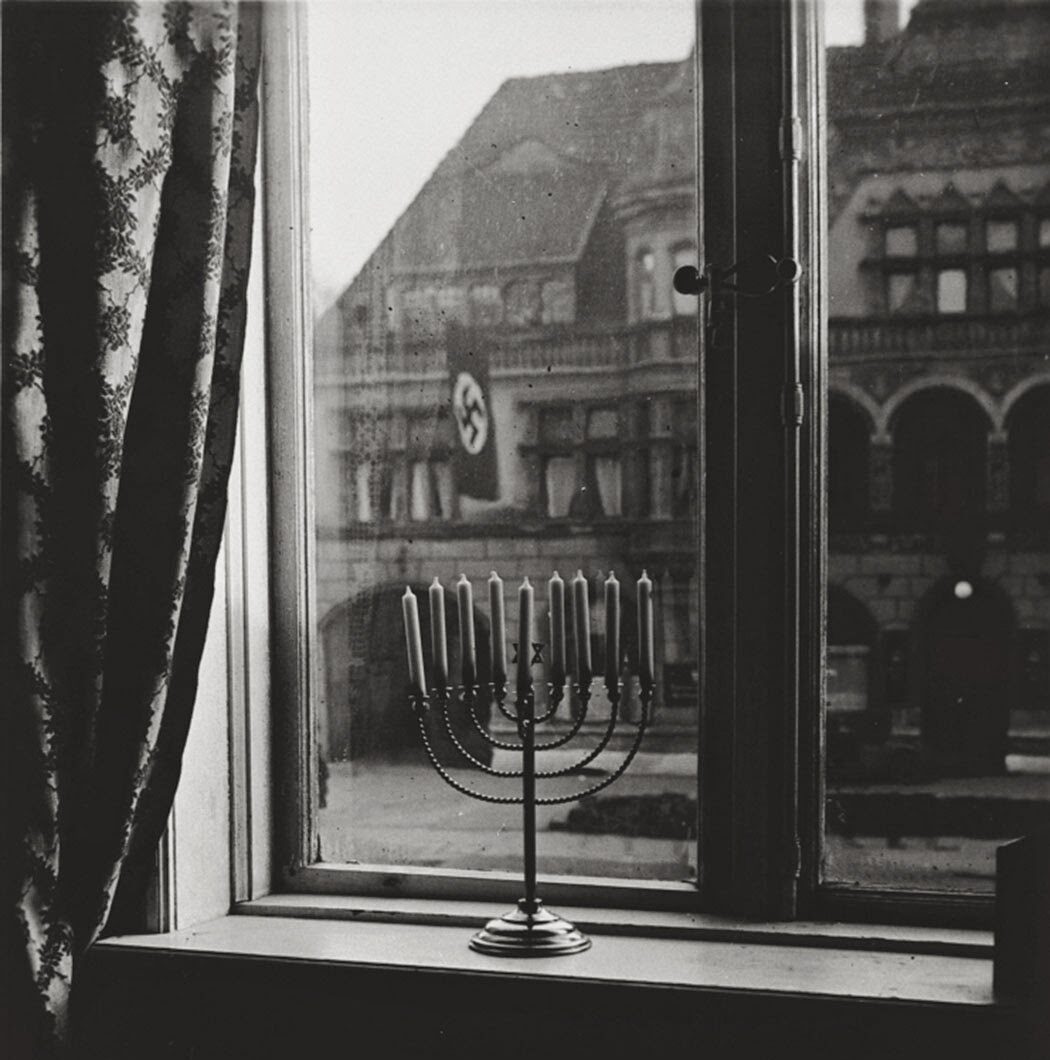
A menorah defies the Nazi flag 1931.
Before the Nazis came to power in 1933, an estimated 1,900 Jews lived in Schleswig-Holstein in the north of Germany, mostly in Lübeck and Kiel.
Background
Persecution of the Jews began in Kiel earlier than in the rest of Germany. Already in 1932, before Hitler came to power, public notices saying “Jews forbidden from entering” had started to appear across the city.
In August 1932, Kiel’s synagogue and a Jewish-owned department store were bombed.
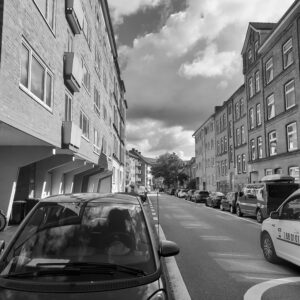
Koldingstrasse, Kiel
Otto and Anna Senkpiel lived on Koldingstrasse in Kiel with their six children. The names of four of whom are known: Otto-Benjamin (b. 1925, Günther, Lieselotte and Gisela (b. 1931).
Anna Senkpiel was born in 1900 in the Russian city of Brest-Litovsk. She was the third child of the Jewish fabric merchant. During World War I, she met Otto Senkpiel, a German soldier and native of Kiel, with whom she moved to Kurdwitz/Silesia in 1919, where Senkpiel worked as a local police officer and farm manager.
In 1927, the couple moved to Kiel with their daughter and two sons. Here, Anna Senkpiel and her children joined the Jewish community. Her husband remained a Methodist.
The Great Depression Otto lost his job, so his wife, a seamstress, earned the living for their family. After the Nazi takeover, Otto was offered a job with the municipality, but only on the condition that he separate from his Jewish wife and children—a demand Otto Senkpiel refused. Instead, he worked as a painter, in construction, and as a cinema doorman, but was frequently ill due to the emotional strain, leaving Anna Senkpiel to continue providing for the family, which became increasingly difficult for her as a Jew.
Persecution In 1936 Günther was expelled from school, denied an apprenticeship as a Jew by and emigrated to the Palestine Mandate. His sister Lieselotte followed him in 1939.
That same year, Anna was placed in a Jewish orphanage in Hamburg so she could attend a Jewish school. In 1942, she was already on a deportation list, but managed return to her parents.
Holocaust Otto-Benjamin, who had also hoped to go to Palestine, was enduring forced labour in a Berlin shoe factory. Constantly threatened with deportation, he asked his father in 1942 to bring him back to Kiel.
Auschwitz-Birkenau concentration camp.
When the Kiel Gestapo rejected Senkpiel’s request, Otto-Benjamin went into hiding. His father was subsequently interrogated by the Kiel Gestapo. He was severely beaten and died after release. The family received no further word from Otto-Benjamin, who was murdered in Auschwitz on 30 November 1944.
In Hiding After the death of her husband, Anna Senkpiel lived in constant fear of deportation. Bombed out of her home in Kiel for the second time in August 1944, she went into hiding in Kleinmeinsdorf near Plön with her 13-year-old daughter Gisela and her two-and-a-half-month-old illegitimate daughter Edith.
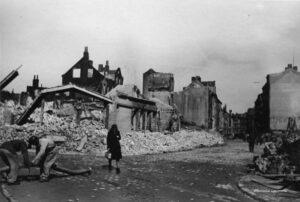
Kiel 1944
She was discovered in November when she desperately needed a ration card for the infant. In mid-November, she and the two children were arrested, taken to Berlin under police guard, and from there deported to Theresienstadt on 8 December 1944.
Post-war Destitution After the war Anna Senkpiel was impoverished and unable to care for Gisella who came to Britain as part of the First Group of the Boys. Her half-sister Edith also survived. Anna returned to Kiel but was refused a state pension. To find out more click here.
Third Reich
With the Nazi rise to power, the community was exposed to severe repression and persecution: Jewish professors were dismissed from the university and the works of 28 Jewish authors – mainly lecturers in Kiel University – were removed from the library of the university. Anti-Jewish boycotts were held all over the city.
In November 1938, the synagogue was burned down and Jewish homes were looted on Kristallnacht. Large numbers of Jews began emigrating and by 1939 there were only 299 Jews remaining in Kiel. Those who remained were expelled in 1940. Kiel’s last 12 Jews were deported to the Theresienstadt Ghetto.
Aftermath
After the war 11 Jews returned to Kiel. Kiel is now home to two independent Jewish communities with approximately 550 members.
Getting there
The nearest airport if Hamburg. Kiel is accessible by bus, car, ferry and rail.
What to See
Memorials
Memorial for the Destroyed Synagogue (Mahnmal für die zerstörte Synagoge; Goethestrasse)
A monument commemorating the 1910 synagogue destroyed in 1938.
Jewish Houses (Judenhäuser) There were no ghettos in Germany but Jews were held in special houses prior to deportation. Locations where the Gestapo forcibly quartered Jewish residents before deportation are at Kleiner Kuhberg 25 and Flämische Straße 22a.
Jewish Community
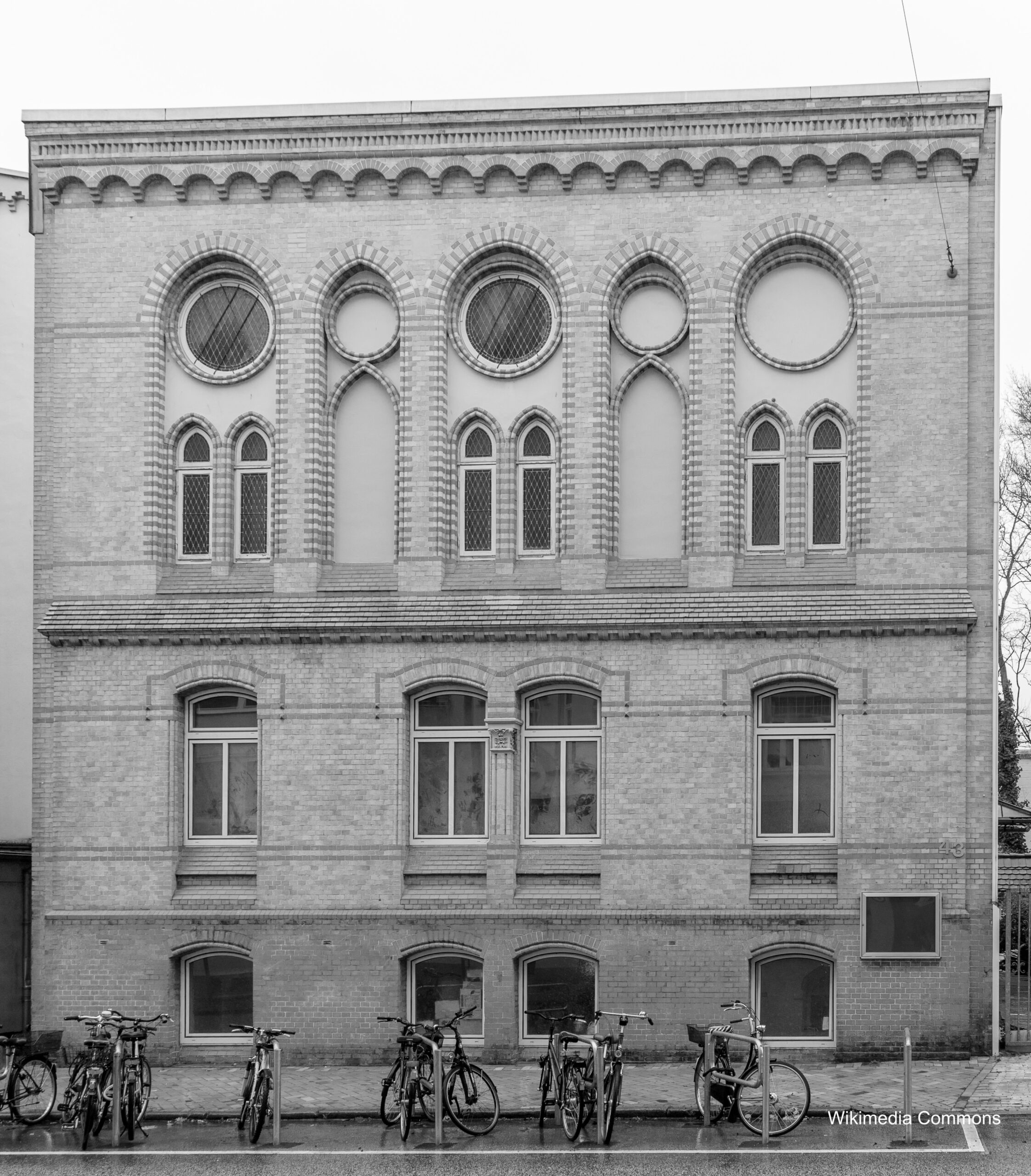
Mishkan Shalom Synagogue (Waitzstrasse 43) Inaugurated in 2024, it serves as a new, central place of worship and community in the heart of Kiel.
Synagogue am Schrevenpark (Jahnstrasse 3) Originally established in 1891, the synagogue was destroyed in 1938, it was reconstructed in 2008 and serves a Liberal Ashkenazi community.
Cemetery
Old Jewish Cemetery (Michelsenstrasse):A historic, walled cemetery located in Kiel that survived WWII and remains in use.

 About
About History
 Education
 Quilts
 FIlms
FIlms Photos
 News Media & Events
 Publications
 Donate