Members of the Boys were born in Starachowice and Wierzbnik.
The Boys were teenage and child-Holocaust survivors, who were brought to the UK after the war for rest and rehabilitation.
Members of the Boys were held in Nazi labour and concentration camps and used as slave labourers. They had also survived World War II in hiding or as lone children.
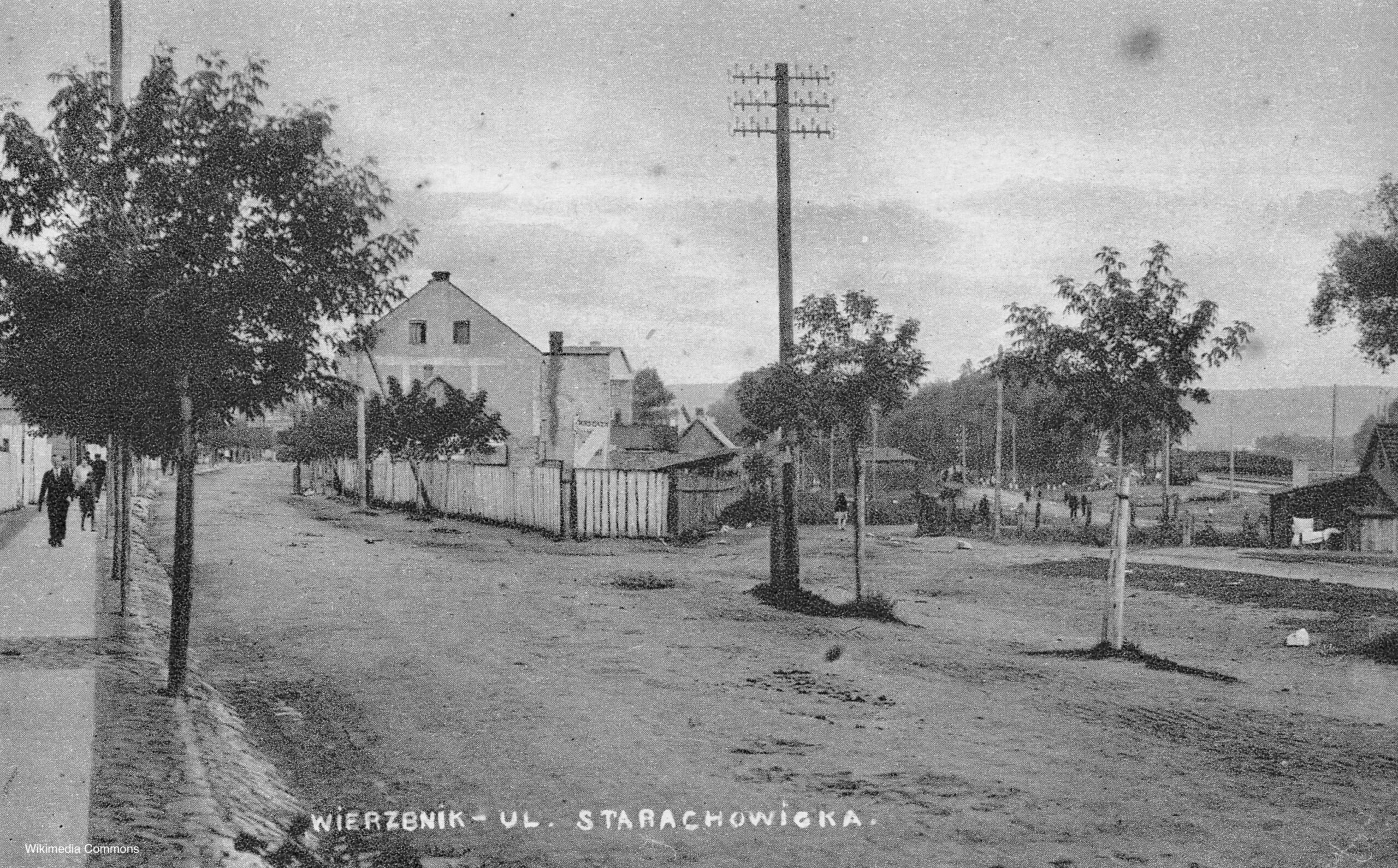
Wierzbnik, ul. Starachowicka, 1928.
Background
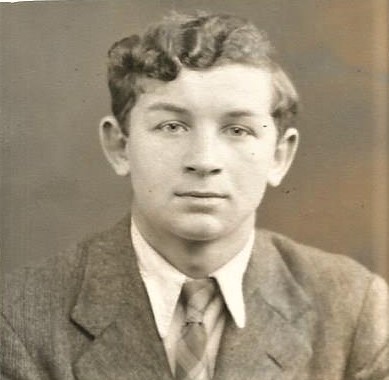
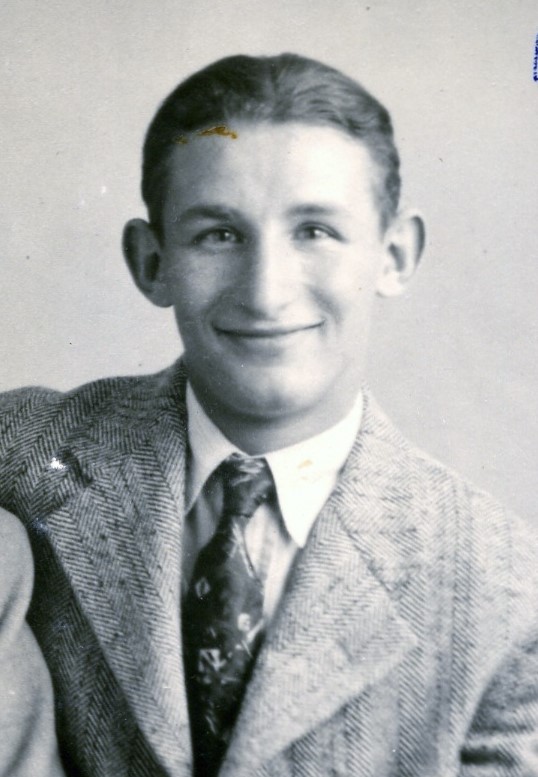
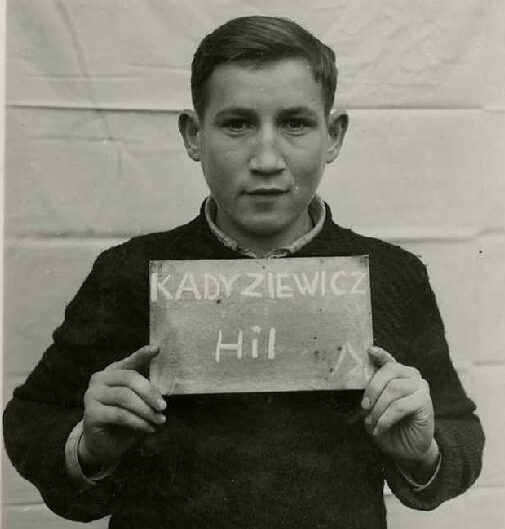
Three of the Boys for whom Starachowice-Wierzbnik was home. These pictures were all taken after World War II.
World War II
The German army occupied Starachowice on 5 September 1939 and persecution of the Jews began immediately.
Many refugees from Łódź arrived in Starachowice swelling the Jewish population, as Łódź was part of Polish territory incorporated into the Third Reich.
A ghetto was set up in Starachowice in 1940. Those fit to work were taken as forced labour to the iron ore works, which was now a key part of the Nazi war effort and later became the Herman Goering Werke. Among them were those who later became members of the Boys. To find out more about the ghetto click here.
The camp had an unusually high survival rate because the SS used a Jewish council to run the camp.
A number of other members of the Boys were also in the camp, including Simon Kalmowitz from nearby Kielce, Salek Benedict from Łódź and Schmul Laskier from Warsaw.
The Starachowice Ghetto was liquidated on 27 October 1942. Those who were not taken into slave labour were taken to the Treblinka extermination camp. About 1500 became slave labourers and 5000 were murdered.
The labour camp was closed in July 1944 and the workforce, which included a number of the Boys, was deported to the Auschwitz II-Birkenau concentration and extermination camp.
Aftermath
Some survivors who returned to Starachowice were murdered after the liberation and the vast majority of the survivors left Poland. Most of them settled in Israel.
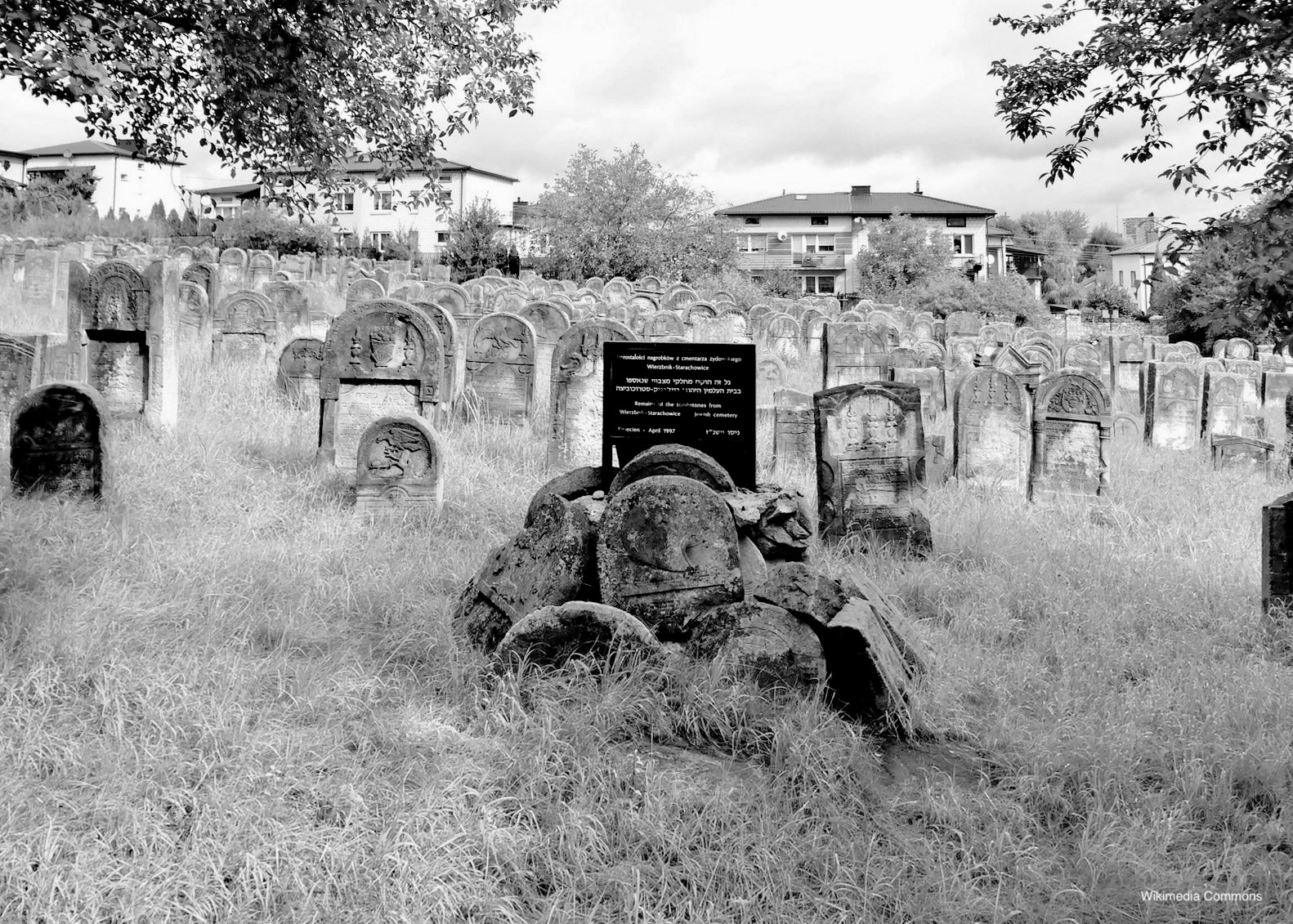
The synagogue is no longer standing but the city does have a very well preserved Jewish cemetery.
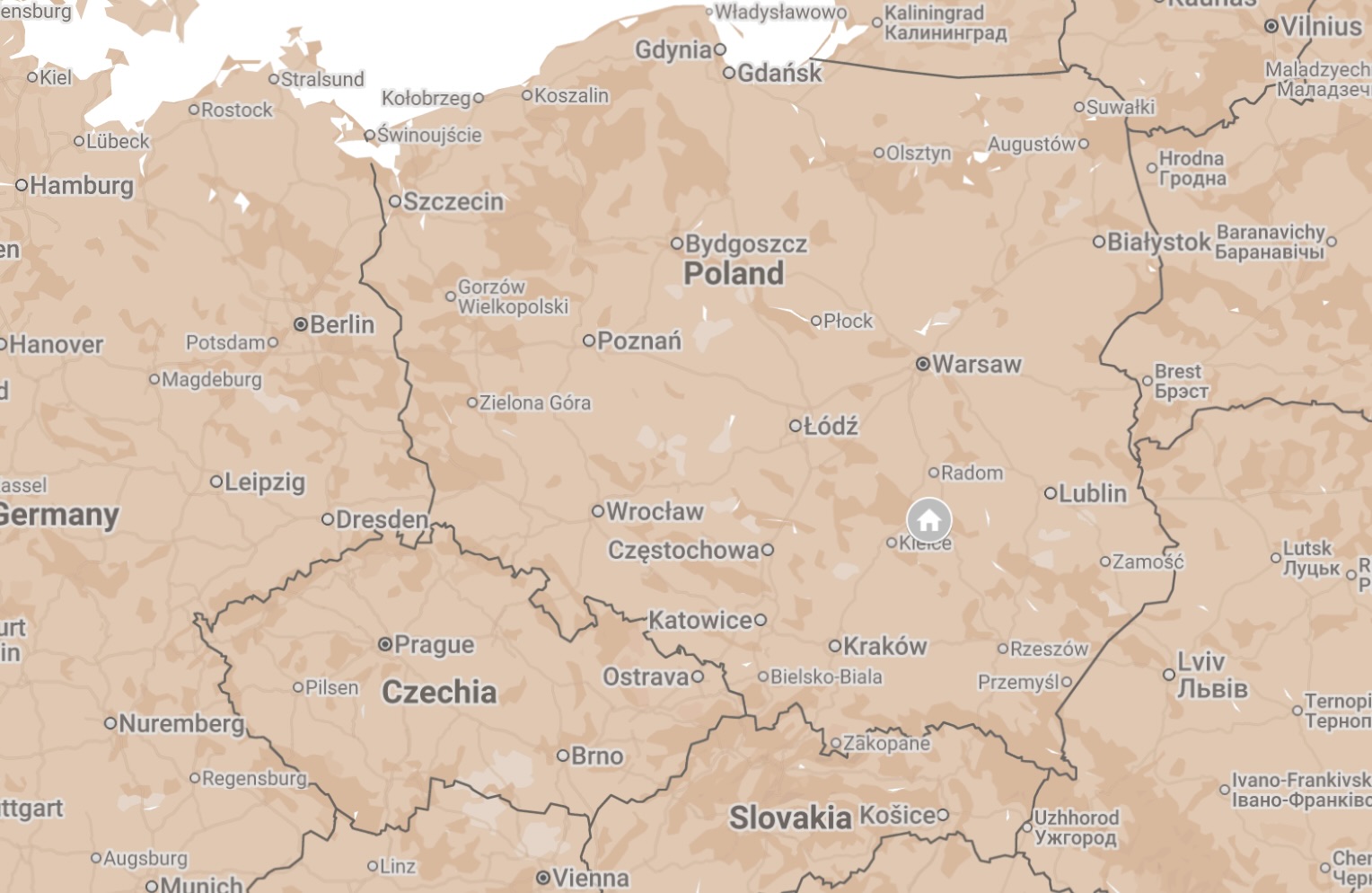
Getting there Starachowice is easily accessible from both Warsaw and Kraków via direct train services.
Before World War II, the Jewish population lived mainly in the town of Wierzbnik.
Jewish Cemetery ( 21, Bieszczadzka ul.) Established in 1891,On a hillside off a public road., it contains between 100 and 500 gravestones (matzevot), many with finely smoothed sandstone and Hebrew or Yiddish inscriptions. It is considered one of the best-preserved Jewish cemeteries in the region.
 About
About History
 Education
 Quilts
 FIlms
FIlms Photos
 News Media & Events
 Publications
 Donate