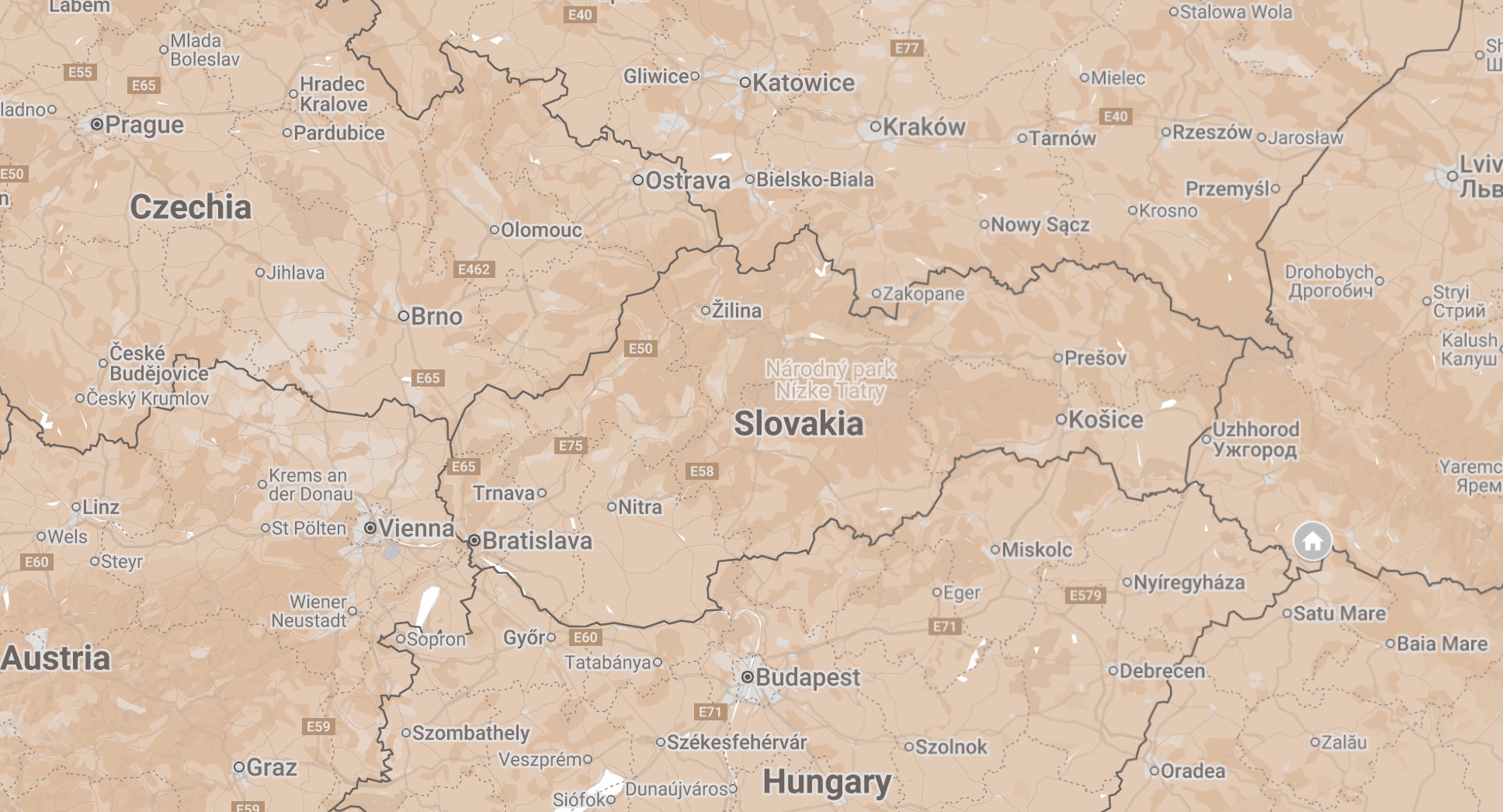
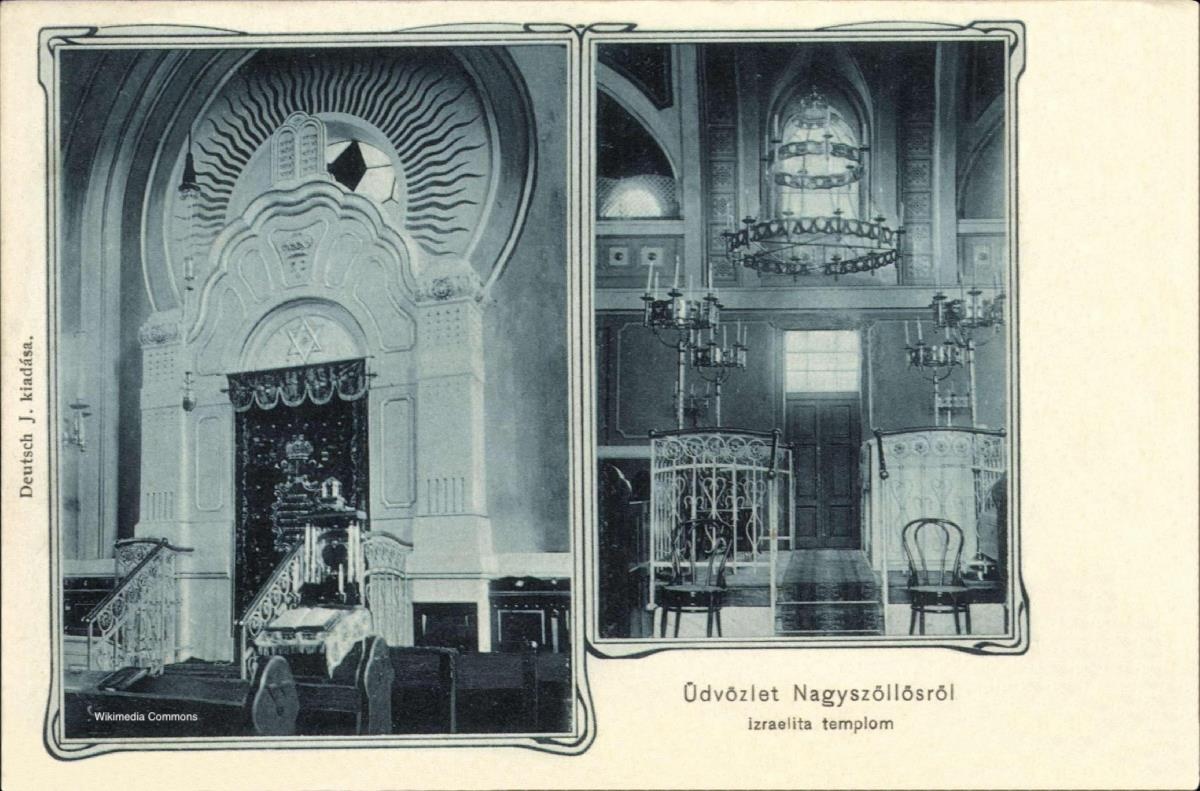
Veľka Sevljus is situated in the region known as Transcarpathia. It is 19km west of Khust near the border with Romania and Hungary.
Until the end of World War I, Veľka Sevljus belonged to Austro-Hungary. During the period between the two World Wars it was part of Czechoslovakia. In the course of World War II the town was occupied by Hungary. At the end of the war the region became part of the Soviet Union.
Pre-war
The first Jews probably settled in Veľka Sevljus in the first half of the 18th century. Under the Austro-Hungarians, Jews specialised in the production and export of wine.
Most of the city’s trade was in Jewish hands. Jews also owned banks, flour mills, distilleries, a canning factory and a number of farms. There were also Jewish doctors, veterinarians, lawyers and engineers. A few were administrative officials.
During the interwar period, Zionists were active in Sevljuš and in 1921 the Jewish National Party won 11 of the 36 seats in the municipal council. The Maccabi sports club had a branch in Sevljus, and there were many youth movements in the city, who sent their members to training farms and factories to prepare for emigration to the Palestine Mandate.
The Jewish population of Sevljus grew significantly after World War I, reaching 2,913 in 1921 and 4,262, out of a total of 13,331, or 32%, by 1941.
Occupation
Following the Munich Agreement in 1938, Veľka Sevljus and the surrounding area were occupied and then annexed by Hungary. The town was now known by its Hungarian name, Nagyszőlős.
The Hungarians imposed laws restricting Jewish access to education, trade, and the professions. Many Jews were persecuted and pushed out of their occupations. Jewish businesses were taken over by Hungarians but many remained closed.
In 1940, hundreds of Jews were drafted into labour battalions for forced labour on the eastern front, where many died. In August 1941, dozens of Jewish families without Hungarian citizenship were expelled to Kamianets-Podilskyi in German occupied Ukraine, where many were murdered in mass shootings.
Deportation
In March 1944, the Germans occupied Hungary. In April 1944, on the last day of Passover, 12,000 Jews from Nagyszőlős and the surrounding districts were forced to move into the Nagyszollos Ghetto (to find out more click here). Between 20 May and 3 June 1944, the Jews in the ghetto were deported to Auschwitz II-Birkenau concentration and extermination camp in three transports among them members of the Boys and their families.
Liberation
In the autumn of 1944, the Soviet Red Army entered Nagyszőlős. After World War II, the Carpathians were annexed to the Soviet Union in 1945. Nagyszollos is now known as Vynohradiv.
Most of the surviving Jews who returned to the town after the war soon left, as it was not possible to practice religious observance under Stalinism and Zionist politics could lead to arrest.
Present-day
Today, Vynohradiv is an industrial city with a population of over 25,000 but no Jews live there
 About
About History
 Education
 Quilts
 FIlms
FIlms Photos
 News Media & Events
 Publications
 Donate