
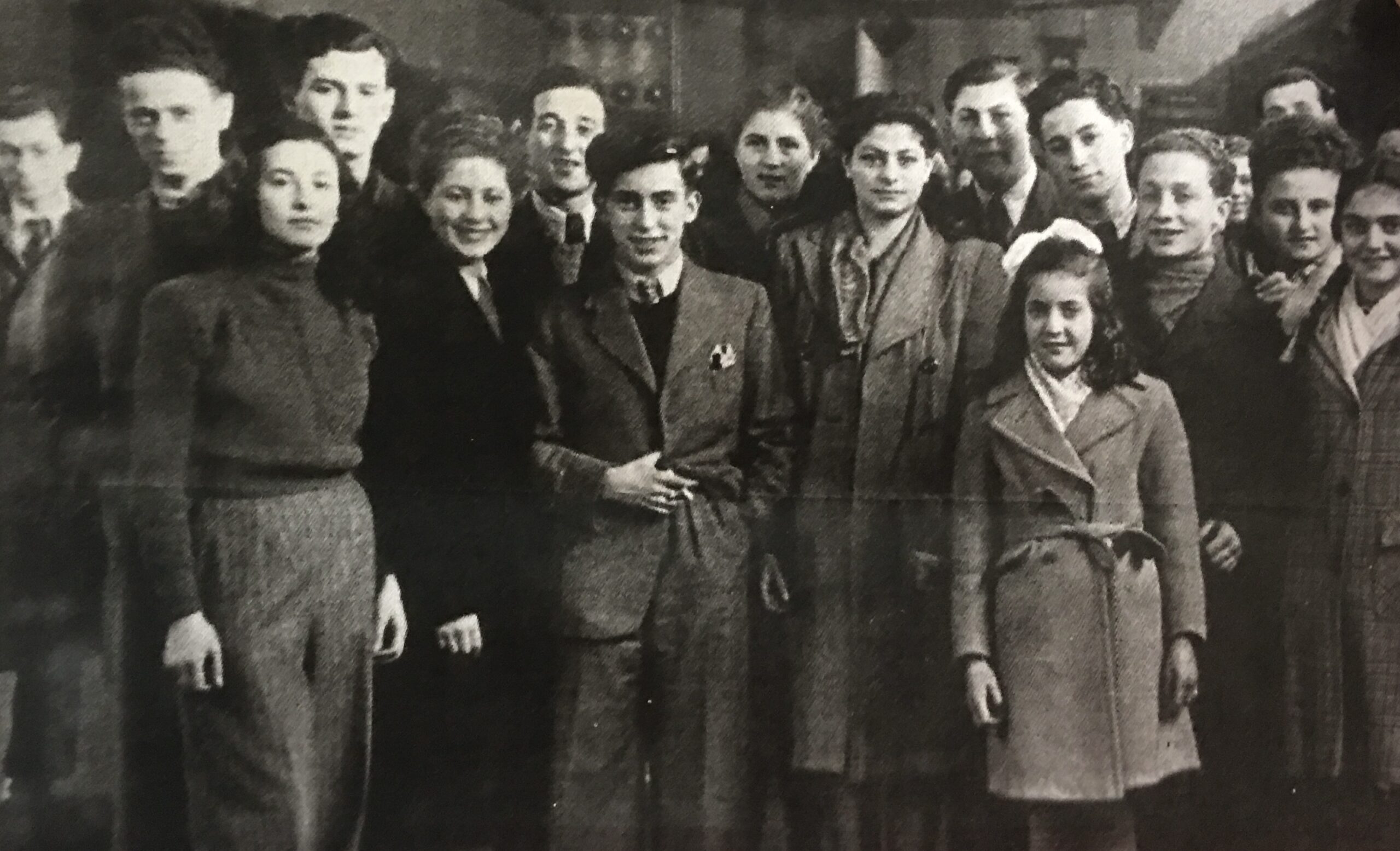
Many members of the Boys settled in Canada. Most of those who went to Canada between 1947 and 1949 were accepted on the Canadian War Orphans Project.
The Boys were teenage and child-Holocaust survivors, who were brought to the UK after the war for rest and rehabilitation.
Members of the Boys were held in Nazi labour and concentration camps and used as slave labourers, they had also survived World War II in hiding or as feral children.
Background
Between 1947 and 1949, 1,123 Jewish orphans who had survived the Holocaust were allowed to settle in Canada. In 1947, the Canadian Jewish Congress (CJC) persuaded the government to allow about 1,000 young Jewish refugees to immigrate to Canada.
Until now the Canadian government had been reluctant to let in Jewish refugees. In 1942 the CJC had lobbied the federal government in 1942 to bring over 500 Jewish children from Vichy France, whose parents had been deopted to Auschwitz in the summer of 1942. Canada’s immigration department, under the purview of the openly anti-Semitic Frederick Blair and Prime Minister William Lyon Mackenzie King, reluctantly agreed to permit them into the country but by the time the government accepted the paperwork, the Nazi Germany had occupied Vichy, France.
After the war, national attitudes towards immigration started to change. Canadians found themselves with a suddenly booming economy, resulting in a labour shortage that convinced the government to accept the limited immigration of European refugees, despite a majority of citizens still staunchly opposed to their migration.
The Project
Strict guidelines were applied to the project that mirrored those imposed by the British government:
The children had to be under 18 years of age.
The CJC had to accept the full legal and financial responsibility.
The children would be cared for by Jewish foster families or become self-supporting.
“Only ten days after applying, I was on my way. All I had to do was pass a medical exam and brief interview with Canadian government officials.
Like the other orphans going across the Atlantic on the Aquitania – I was embarking on a great adventure on a massive ocean liner. As it departed from Southampton on January 4, 1948, all I had was forty dollars in Canadian currency, a bag full of clothes, an accordion, a violin the Northampton headmaster had given me as a going-away gift, a few school books and some photos and other memorabilia from two-and-a-half wonderful years in England.
I found myself sitting at the piano playing tunes, singing songs and drinking beer only moments after hitting the high seas. But the fun lasted all of about one hour. It took five days to get to Halifax and I was sick on each of them. With the exception of that first hour, I spent the whole trip in bed.
Five days later, a Friday afternoon, we arrived in Halifax. We were greeted by members of the city’s Jewish community and a reporter from a local newspaper, who wrote about our arrival. We spent the weekend in Halifax before heading on to Montreal and Toronto.”
Jankiel Klajman, later Jack Klajman, The Smallest Hope (Azrieli Foundation, 2023). Klajman had lived as a feral child in Poland after escaping from the Warsaw Ghetto.
Once the approval to bring in the 1,000 Jewish orphans was granted in 1947, the CJC had three months to come up with a plan. It convened committees in Winnipeg, Montreal and Toronto to raise the money for the programme and recruit the foster families.
In the spring of 1947, the CJC sent three scouts to Europe to find the orphans. The CJC faced the same challenges as the Central British Fund had encountered when trying to bring orphaned Jewish children to the UK. Among them was the insistence of Zionists in the DP camps that the children should settle in the Palestine Mandate and the reluctance of governments to release the children to their care.
Pier 21
The main entry point for over one million immigrants to Canada between 1928 and 1971 was Pier 21 in the port of Halifax in Nova Scotia. The members of the Boys who were accepted on the War Orphans Project all arrived at Pier 21.
Today, Pier 21 is a Canadian Historic Site and muse.
Other Orphans
The members of the Boys who went to Canada were joined by other orphans who had similar experiences and had been in the DP camps in Germany. Greta Fisher, who had fled Czechoslovakia for London in 1939 brought the last group of orphans from the Kloster Indersdorf children home in Bavaria. Fifty members of the Boys had spent time in the home before they came to Britain in October 1945.
Fisher had worked with Anna Freud in the Hampstead War Nursery during World War II and had joined the UNRRA Team 182, at Kloster Indersdorf in the summer of 1945. She settled in Canada were she continued to work as a social worker.
Not all the members of the Boys who joined the War Orphans Project settled in Canada. Many later lived in the USA.
 About
About History
 Education
 Quilts
 FIlms
FIlms Photos
 News Media & Events
 Publications
 Donate