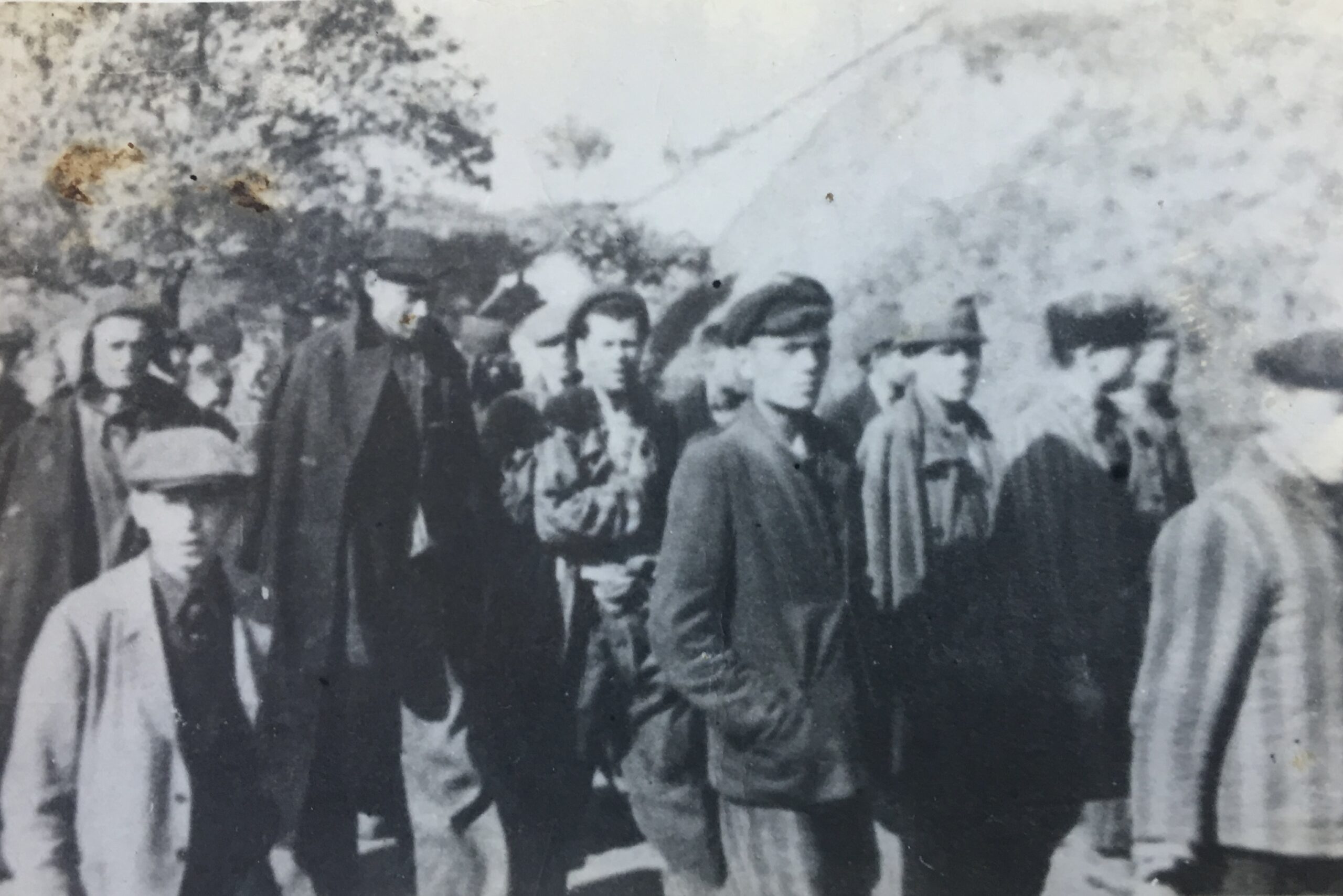
Eliasz Pfefferkorn

Pfefferkorn was born on 6 May 1928 in Radzyn-Podlaski, a town in eastern Poland.

Pfefferkorn was a member of a group of Holocaust survivors known as the Boys, despite the fact the group consisted of over 200 girls. 

The Boys were teenage and child-Holocaust survivors, who were brought to the UK after World War II for rest and rehabilitation.

Members of the Boys were held in Nazi labour and concentration camps and used as slave labourers. They had also survived World War II in hiding or as lone children.

Pfefferkorn’s parents were Szyja (1909), a photographer, and Rosa (1912).

In October 1940 the family was imprisoned in the Radzyń-Podlaski Ghetto. The family were moved to the Międzyzec Ghetto in the autumn of 1942, where a round up was taking place. Pfefferkorn’s mother told him to run away and hide.

Slave Labour

In April 1943, he was deported to the Majdanek concentration and extermination camp 100km north of Międzyzec.

In August 1943, he was then sent to the Skarżysko-Kamienna labour camp where he worked in Section C. In August 1944, he was sent to work in a labour battalion and from there he was transferred to the Częstochowa-HASAG labour camp in southern Poland. In January 1945, he was transported to the Buchenwald concentration camp in Germany and was in the Rehmsdorf-Tröglitz subcamp.

Liberation

He was liberated at Rehmsdorf-Tröglitz concentration camp. He returned home but then made his way back to Germany.

“On a train journey I take back to my hometown in search of family and friends who might have eluded death, I meet liberated forced labour Poles who are heading back home to their villages and towns, to their families. I crouch in a corner, my eyes seeking hints of another Jewish face. I’m looking around to see whether someone my age is sitting, like me, shrunk in a corner. As the train crosses the German border into Poland, a host of eagle-emblazoned fluttering, white and red flags greet us. The young Poles rise to their feet and break into song, singing the national anthem. I’m alone and lonely amidst their joyful celebration …

I was travelling to a country from which I was estranged. The sight of the celebrating returnees on their way home filled me with envy. I felt a deepening abyss inside of me. Notwithstanding their suffering and deprivation in Nazi bondage, they were travelling to their future, while I was going to a funeral.”

Eli Pfefferkorn, The Muselmann at the Water Cooler (Academic Studies Press, 2011).

He went to the Feldafing DP camp and Föhrenwald DP camp both in Bavaria. There he told aid workers there he wanted to go to America and become an electrical engineer, despite having only three years of formal education from 1936-9. In Föhrenwald, he joined the second group of the Boys.

Eliasz Pfefferkorn’s Journey 1939-1948
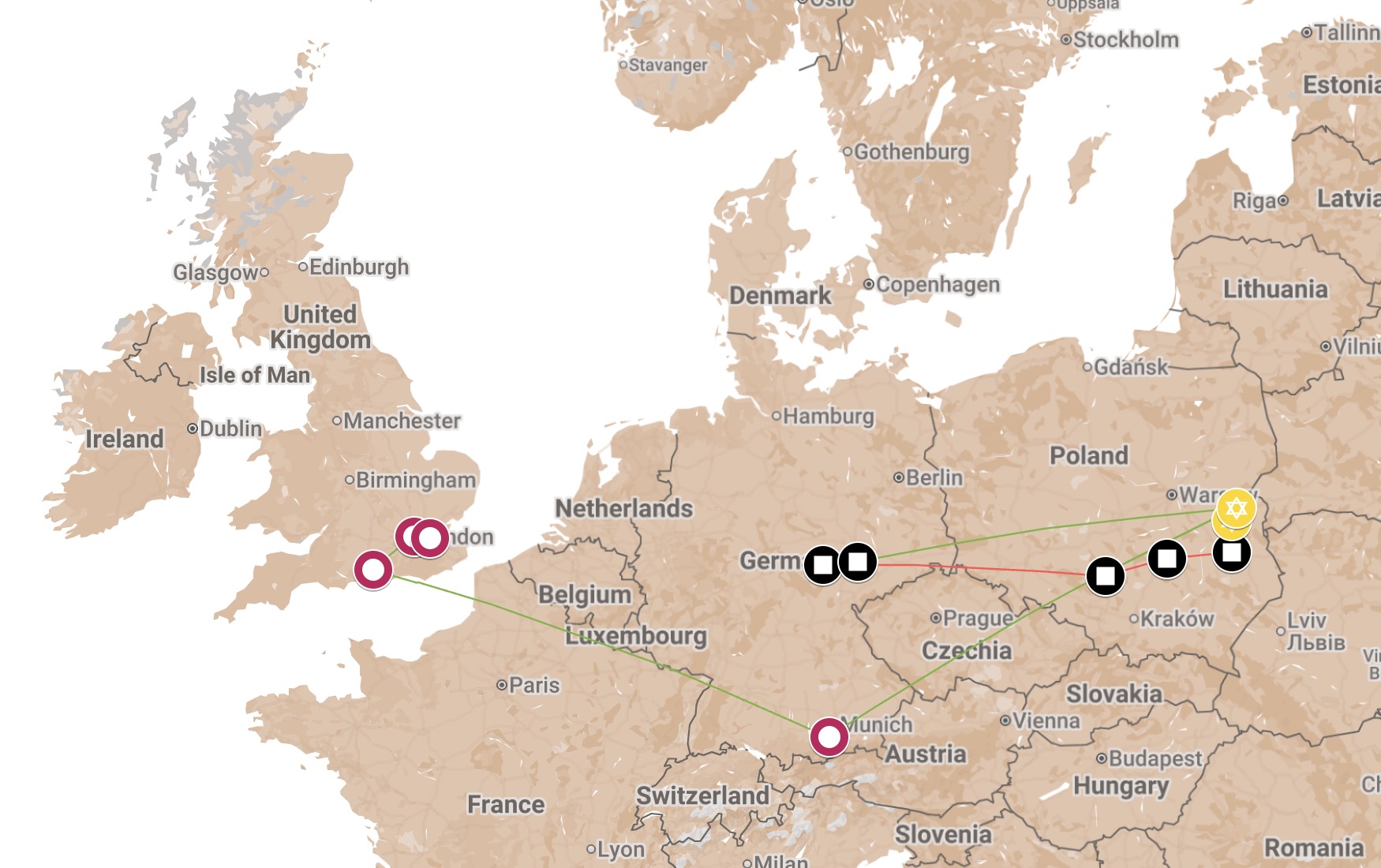
Map of Eliasz Pfefferkorn's Journey 1939-1948.

Pre-war Life: Radzyn Podlaski, Poland. Forced Journey: → Radzyn Podlaski Ghetto Międzyzec Podlaski Ghetto Majdanek concentration camp Skarżysko-Kamienna labour camp Częstochowa-HASAG labour camp Buchenwald concentration camp Rehmsdorf-Tröglitz concentration camp Liberation at Rehmsdorf-Tröglitz . After liberation: → Return home Fledafing & Fohrenwald DP camps, Germany Joins 2nd Group of the Boys Wintershill reception centre, Hampshire, UK London, UK ORT Training Ship, Grays, Essex, UK.

A New Life

Pfefferkorn arrived in the UK in October 1945 and spent time at the Wintershill Hall reception centre. He was then in the Finchley Rd hostel. He trained for the merchant marine on the ORT training ship before volunteering to fight for Israeli forces in 1948. He travelled illegally to Israel and saw action in the Negev in southern Israel.

He stayed in Israel after the war and went to Bar-Ilan University. For decades he pretended that he had come to England on the pre-war Kindertransport, as he claimed prewar refugees were treated with less discrimination than concentration camp survivors.

Pfefferkown went on to be an academic and obtained a Ph.D. from Brown University in 1971. He joined the faculty of Haifa University in 1972. He served as the director of research for the United States Holocaust Memorial Museum from 1981-1987. Pfefferkorn wrote and taught extensively about the Holocaust.

Pfefferkorn died in 2018.
Name:
Eliasz Pfefferkorn
Also known as:
Elias Kupiec
Yiddish Name:
Rodzin
Lone Child:
no
Hidden Child:
no
Deportation destination:
Majdanek
Liberation:
Rehmsdorf-Tröglitz
Repatriation:
no
Return Home:
yes
Arrival in UK:
October 1945
Group:
Left UK:
1948
Destination:
Israel
Lived in:
Israel
Main Quilt:
Gallery:
Contact:
team@45aid.org
45 Aid Copyright 2026
45 aid society is a registered charity
in England and Wales (243909)
Design and development:
Graphical