Members of the Boys were born in Kraków.
The Boys were teenage and child-Holocaust survivors, who were brought to the UK after the war for rest and rehabilitation.
Members of the Boys were held in Nazi labour and concentration camps and used as slave labourers. They had also survived World War II in hiding or as lone children.
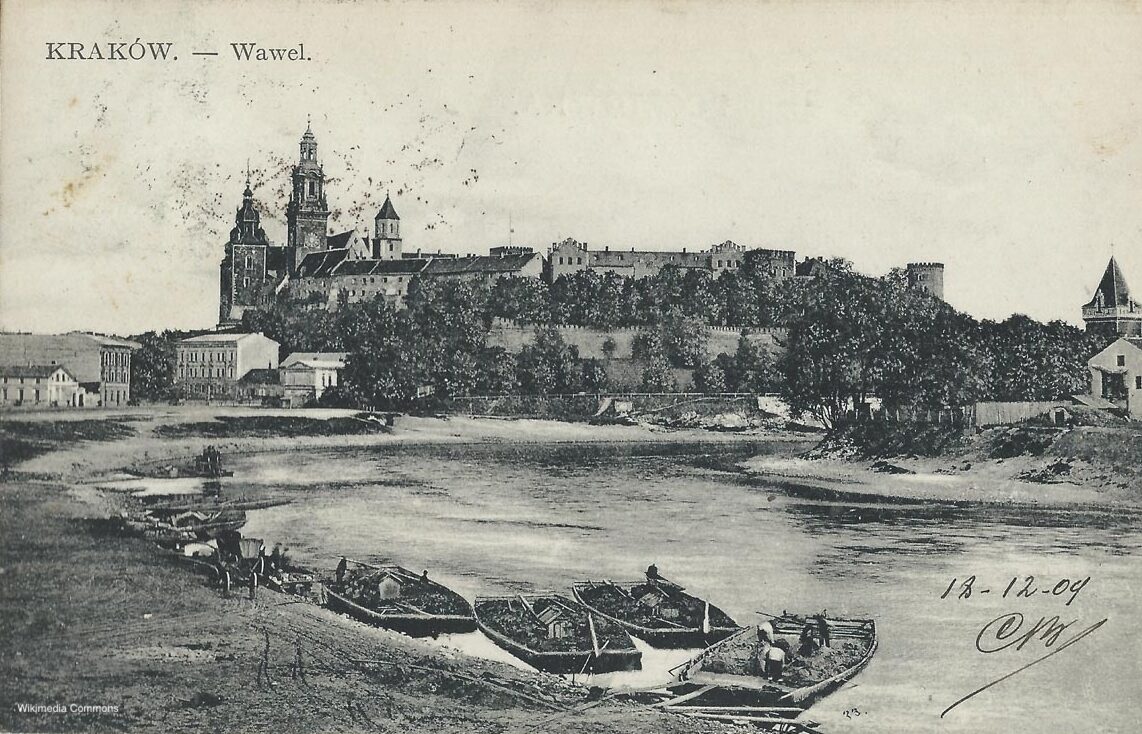
Kraków is a major centre of Polish academic, cultural, and economic life.
Kraków had a thriving Jewish community for centuries, with the Jewish District of Kazimierz containing the largest complex of synagogues in Europe, second only to Prague.
Kraków is an important location in the history of the Boys.
Besides the Boys who grew up here, many of them were incarcerated in the ghetto and endured slave labour at the Kraków-Plaszow labour camp.
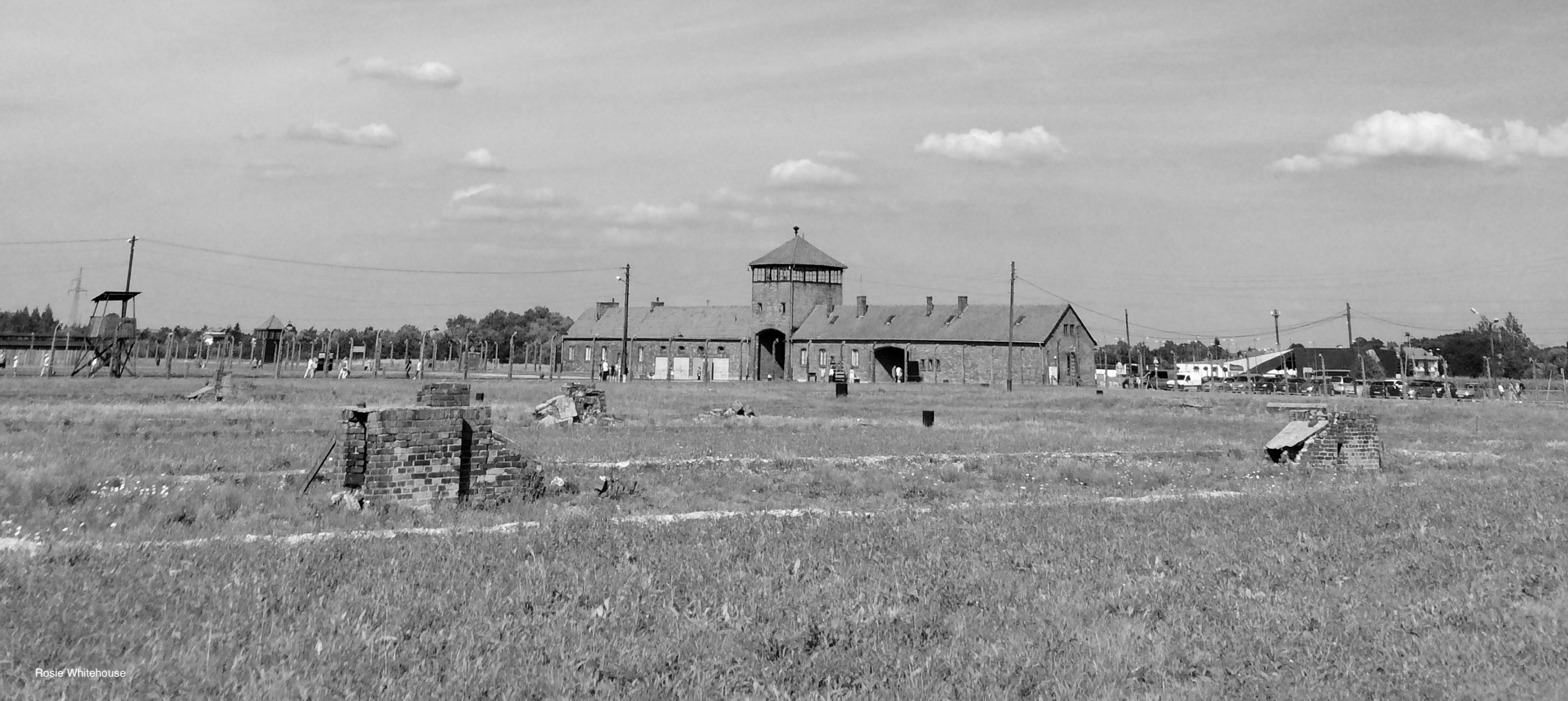
Nearby Auschwitz is also one of the most important sites associated with the story of the Boys. Not only did they survive slave labour in the camp and the death marches when it was evacuated – Auschwitz was the place where their families were murdered.
Pre-war
Before the German invasion in 1939, Kraków was home to an estimated 60,000-80,000 Polish Jews.
Wartime
Immediately after the German invasion, Jews faced persecution, including forced labour, the wearing of identifying armbands, and the closure of synagogues. Kraków was designated the capital of the General Government, and the German authorities aimed to make it “racially clean”. Massive deportations of Jews ensued, with most of the 68,000 Jews in Kraków expelled. Only 15,000 workers and their families were allowed to remain, confined to the Kraków Ghetto.
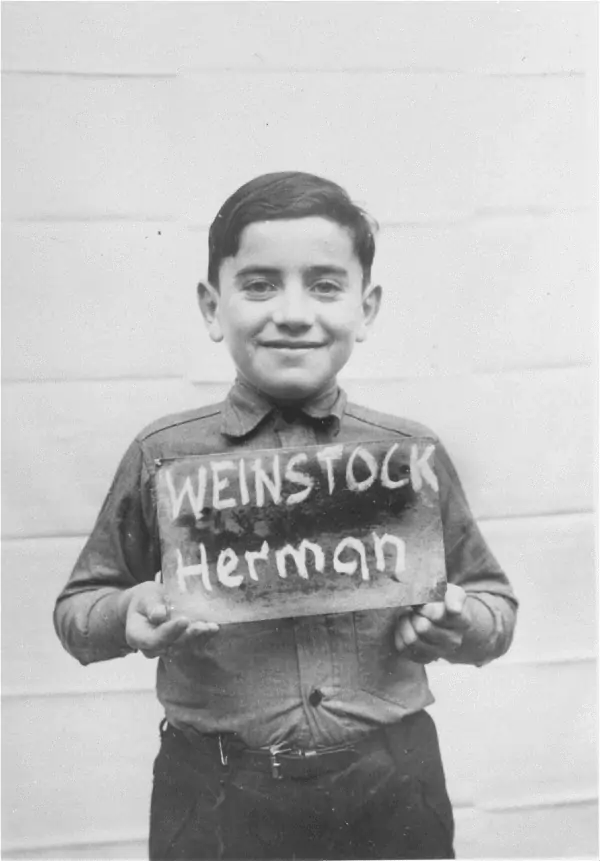
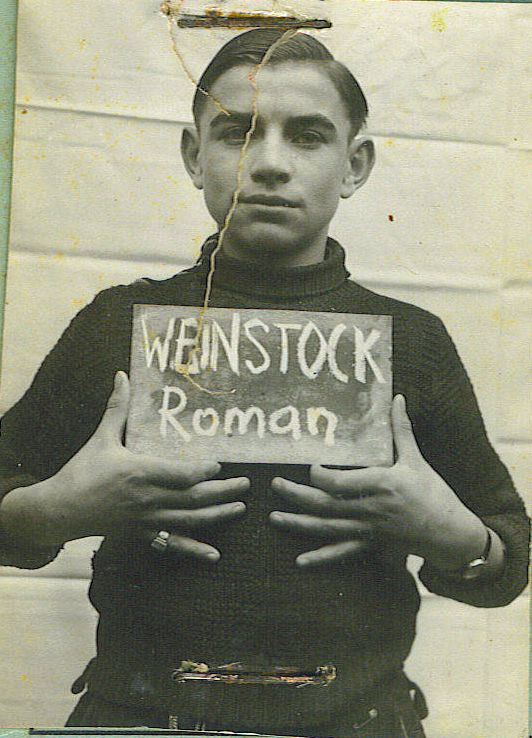
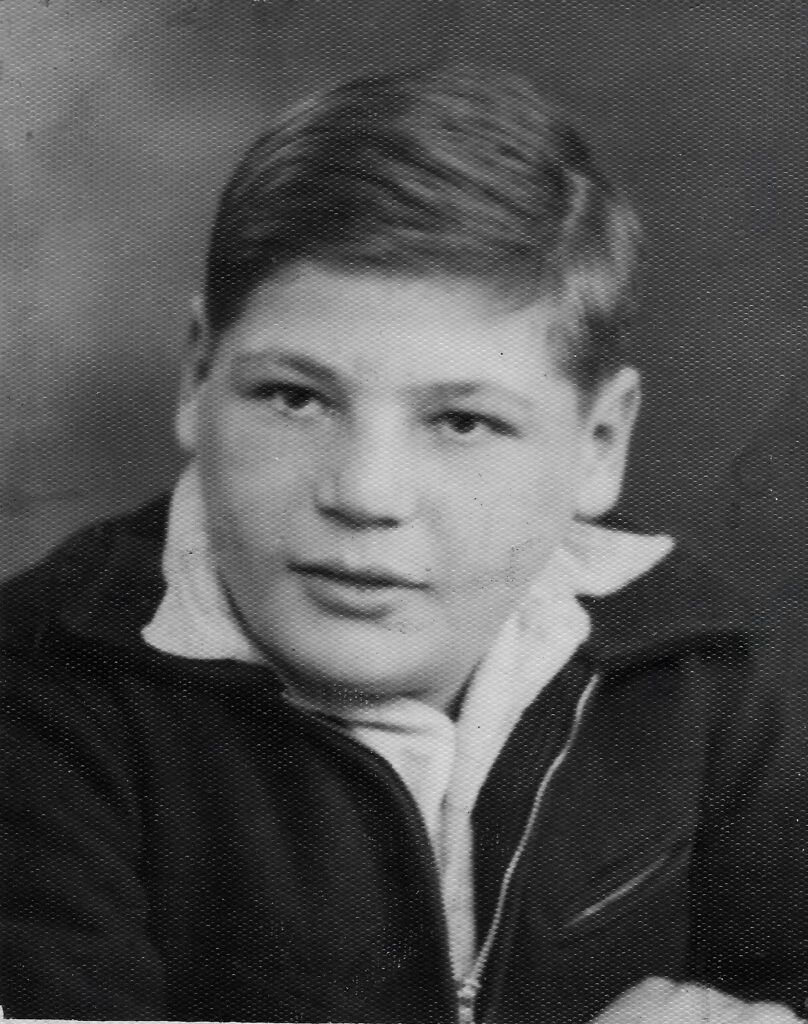
Some of the Boys for whom Kraków was home. These photographs were all taken after the liberation.
Ghetto
Established in May 1940, the Kraków Ghetto was the designated area where Jews were forced to live. Conditions in the ghetto were harsh, with limited resources and the constant threat of deportation. In 1943, the remaining Jews in the ghetto were deported to the Bełżec extermination camp, where they were murdered. To find out more about the ghetto and one of the Boy’s extraordinary photograph collections click here.
Aftermath
The city was a magnate for many survivors but there was still considerable antisemitism. A pogrom took place in Kraków in August 1945. Many members of the Boys passed through Kraków after the liberation.
Present-day
Today, there are roughly 1,000 Jews living in Kraków, but experts believe that many Poles have Jewish roots and heritage that they are unaware of.
Getting there
Kraków is easily accessible by air, bus, road and train.
Getting around
Sites in Kraków are all accessible on foot. Take a taxi to see the site of the former Plaszów camp.
Visiting the Auschwitz-Birkenau complex
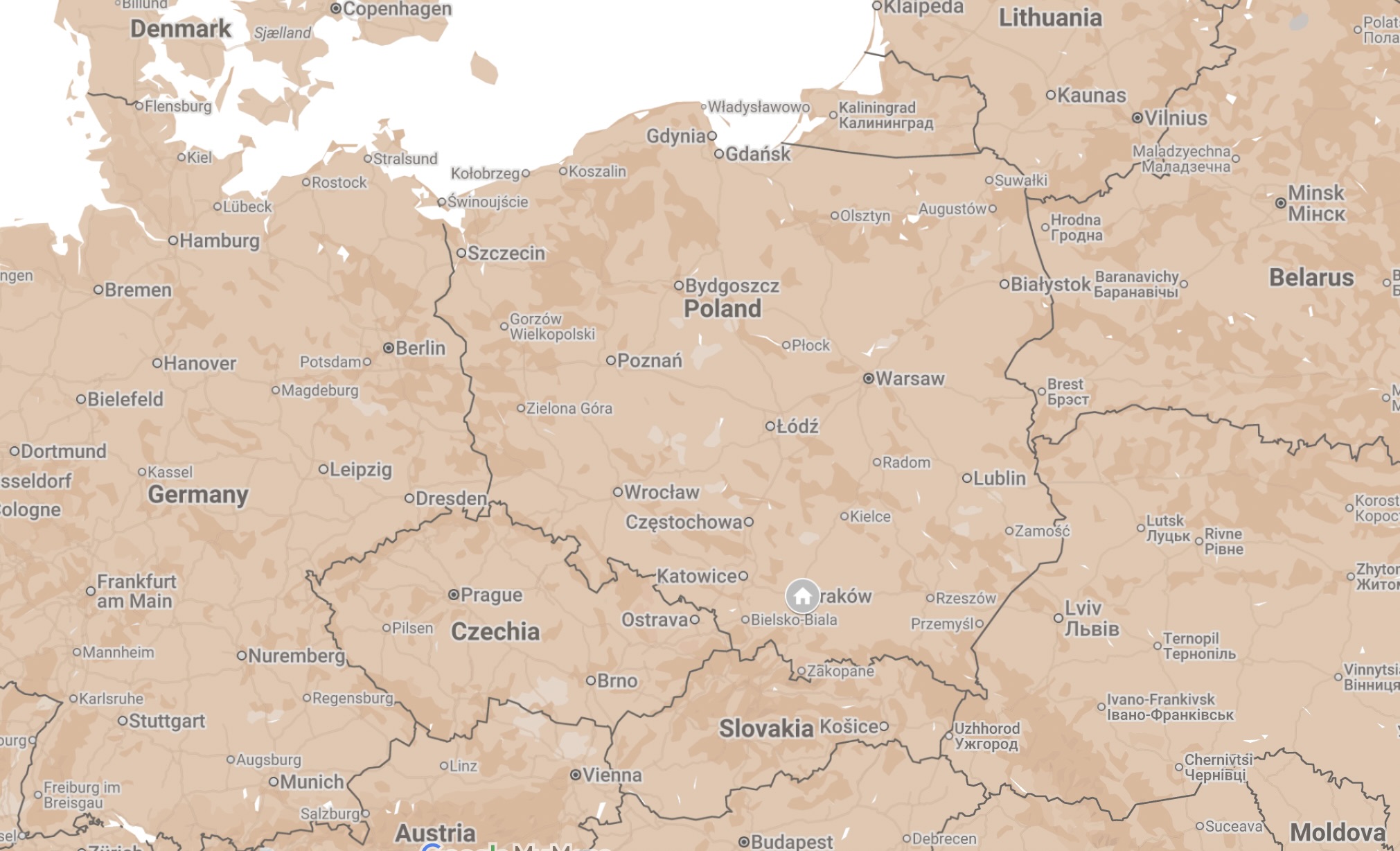
The camp is 60km to the east of Kraków.
There are regular trains from Kraków to Oświcięm, where the former camp is located. There are buses from the station to Auschwitz I and Auschwitz Birkenau II.
If driving, there are car parks at both Auschwitz I and Auschwitz II. Guided tours leave from Kraków and are advertised in hotels but are expensive. It is better to take the train and reserve a ticket online.
What to see
Synagogues
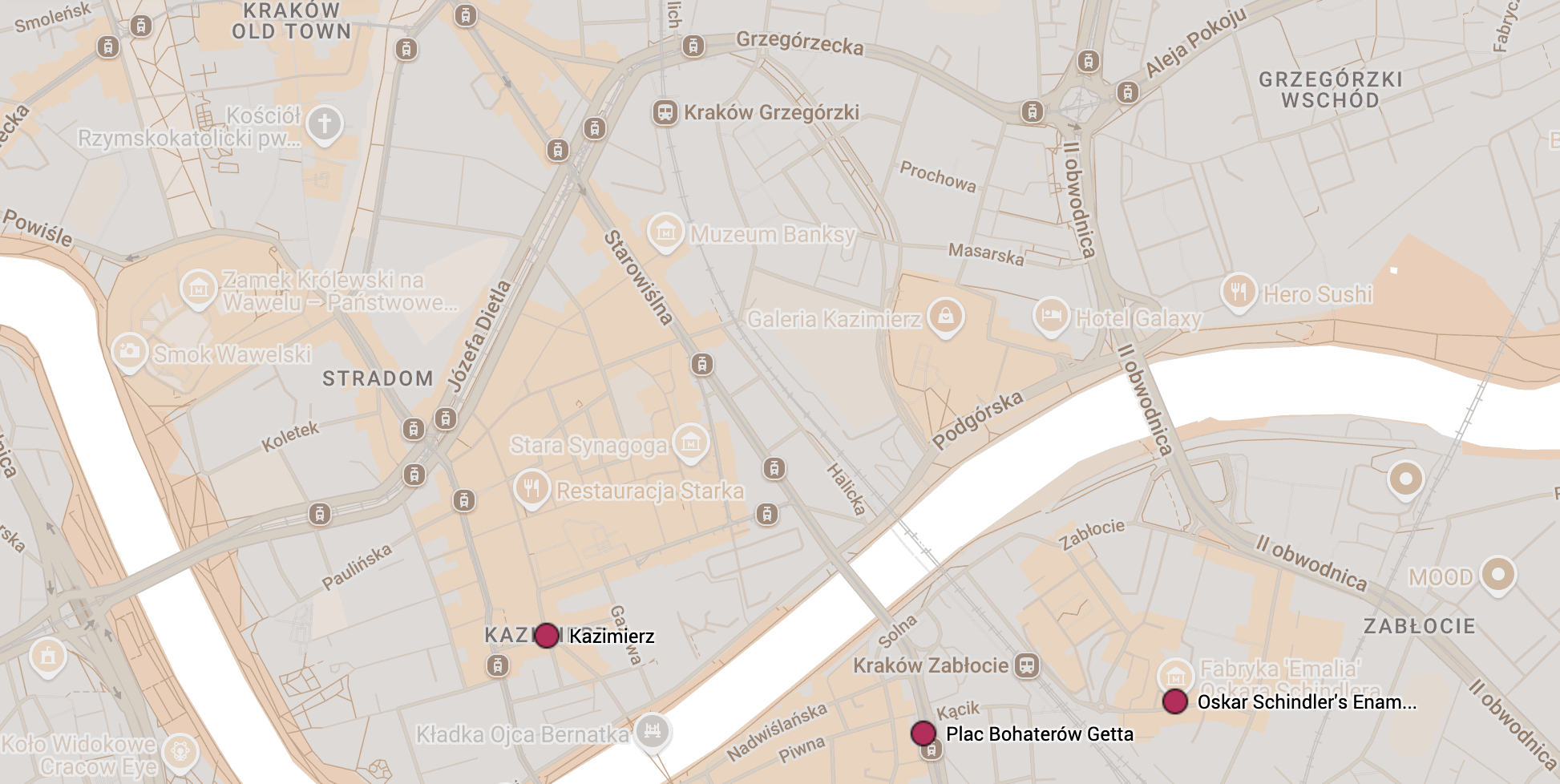
The Jewish district of Kazimierz was an island in the Middle Ages. It is a bustling tourist attraction that centres on ul. Szeroka, a large rectangular town square. The area is unique as a preserved Jewish settlement and is home to some of the oldest surviving synagogues in Poland.
Old Synagogue (Seroka 24; entry fee) The 16th–century synagogue houses a Museum of Jewish History that covers the Nazi period.
Remuh Synagogue (Seroka 40; entry fee) The only active synagogue in Kraków. Services are held here on the Sabbath and High Holidays. In the cemetery there is a wall made up of shattered tombstones known as the Wailing Wall. Outside the Remuh Synagogue is a statue of Jan Karski, a leading member of the Polish resistance.
Museums
The Jewish Museum of Galicia (Dajwór, 18; entry fee) Also in Kazimierz, this museum is worth visiting if you intend to explore the Galicia region. On display is an exhibition of photographs by the British photographer Chris Schwartz. The catalogue Rediscovering Traces of Memory: The Jewish Heritage of Galicia by Jonathan Webber and Chris Swararz is an invaluable companion for a detailed tour of the region.
Ghetto Location
The Jewish ghetto was in the suburb of Podgórze on the opposite bank of the Vistula River. The only surviving remnants of the ghetto walls are at ul. Lwowska 25–29 and behind the school building at ul. Limanowskiego 60/62. The latter is in the shape of Jewish tombstones.
Ghetto Memorials
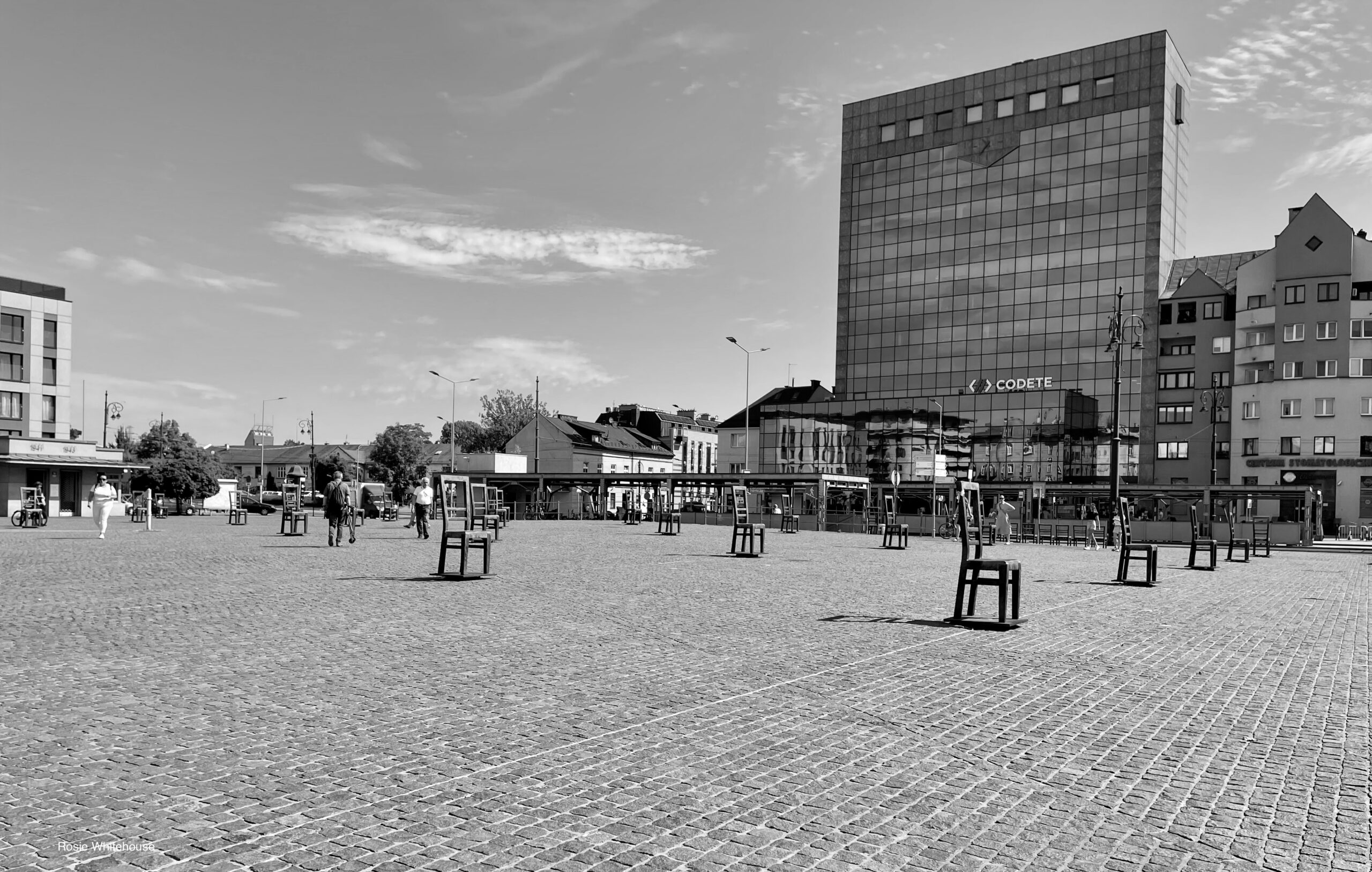
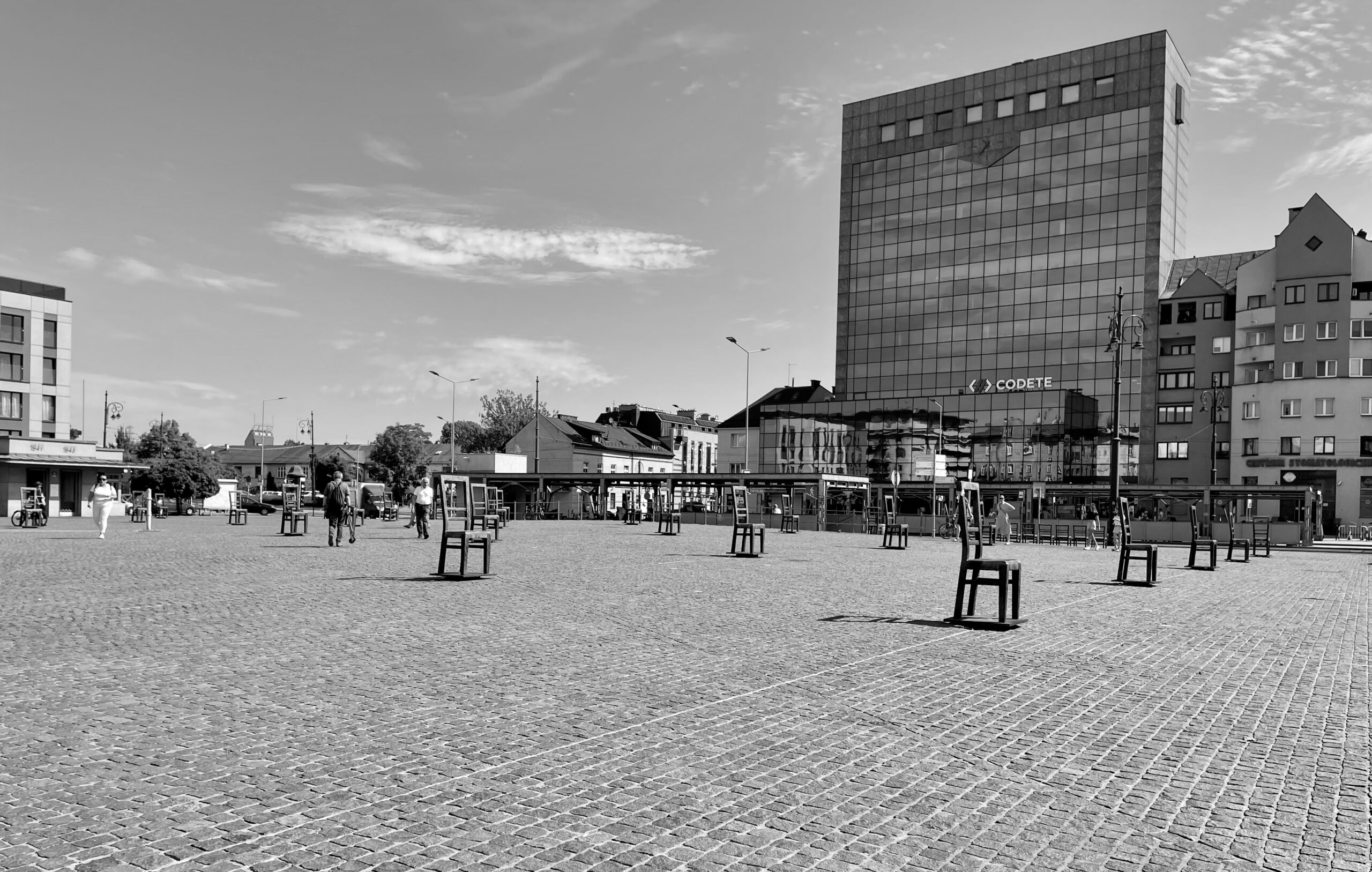
The main memorial is in the large Plac Bohaterów Getta, Ghetto Heroes Square, which was the assembly point for deportations, mainly to Bełżec and Auschwitz-Birkenau. Deportation trains left from nearby Zabłocie station. Every year, the March of Memory follows the route they took from Plac Bohaterów.
A plaque at No. 6, put up in 1948, on the western side of Plac Bohaterów Getta marks the headquarters of the ghetto’s significant underground resistance movement, which radicalised after deportations to the Bełżec extermination camp began in June 1942. Before this it had centred on continuing education for children and cultural resistance. Their most famous attack was carried out on the Cyganeria Café in the city centre, killing 12 German officers. A plaque was placed at the site at Szpitalna 38 in 2022.
Eagle Pharmacy (Apteka pod Orłem; Bohaterów 18; entry fee). On the southwestern corner of the square the Polish pharmacist Tadeusz Pankiewicz and his staff, the only Poles allowed to live and work in the ghetto, ran a pharmacy. The shop became an important centre of social life, as well as the place to access food and medicine as well as acquire false papers. The shop has been recreated to look as it did during the Nazi occupation and has a small museum.
Oskar Schindler’s factory (ul. Lipowa 4; entry fee) There are long queues at the museum, so it pays to buy a ticket in advance. Schindler is not the focus of the exhibition here; the building contains a multimedia exhibition on the German occupation and an art museum.
Plaszów
Little of the camp remains and the area is now a public park. High on a hill above the former camp there is a vast communist era monument on the site of one of the mass graves from which there is a view on the commercial shopping district and the arterial roads that encircle it. To the right is the Jewish memorial and a statue that honours Hungarian women who were taken from Plaszów to Auschwitz. The quarry where prisoners worked is behind it. Amon Göth’s house remains at ul. Heltmana 22 but is a private residence.
A new memorial museums at Kamieńskiego and in the Grey House, which served as the SS living quarters at Jerozolimska 3, are due to open in 2026.
Auschwitz-Birkenau State Museum (Miejsce Pamięci i Muzeum Auschwitz-Birkenau; Więźniów Oświęcimia 55, Oświęcim; w auschwitz.org; free)
The Tour
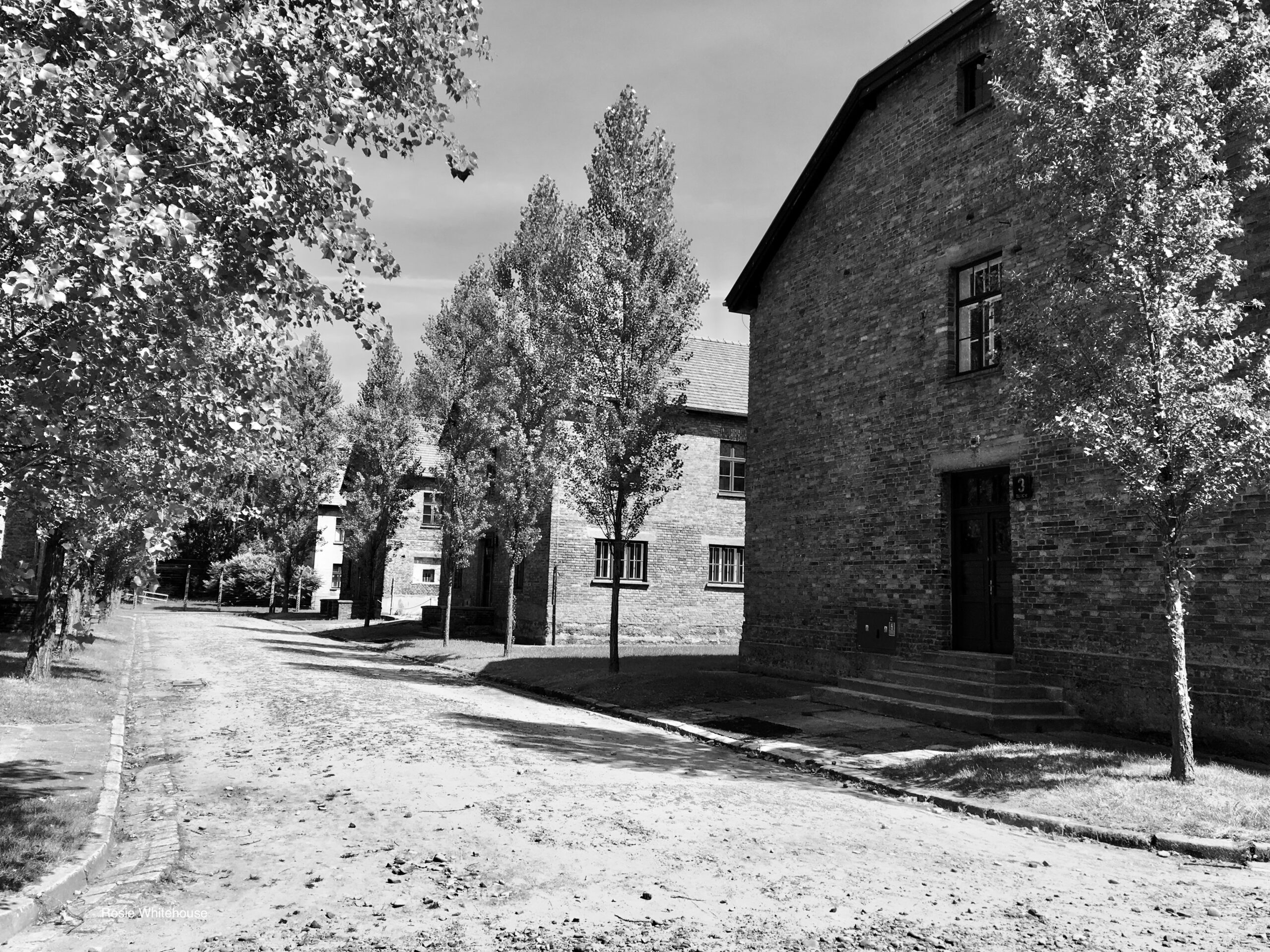
The visit starts at the former Auschwitz I site. At the end of the tour, a bus takes visitors to Auschwitz II-Birkenau, the site of the extermination camp 2km away; but, if you have your own car, you can drive.
If you take the bus, however, you will not see the Old Jewish Ramp (Alte Judenrampe), a former freight station in an open field 900m from Birkenau’s main gate. From here, prisoners unable to walk were loaded into lorries and driven directly to the gas chambers. This memorial is moving but rarely visited. If you want to see this, you will have to take a taxi or your own car.
Allow 4 hours to see Auschwitz I and II.
Auschwitz I Individual visits are possible at Auschwitz I, but at restricted times; otherwise you must join a guided tour. Tours are tailored to the interests of each national group, and the guide listened to via headphones.
Auschwitz II-Birkenau Birkenau is a vast site and the most significant part of the whole complex, as it was the heart of the killing machine.
Next to the main gate there is a car park and visitors’ centre that looks like a motorway service station. Although it seems totally out of place here, visiting the camp is an emotional experience and can be exhausting in the cold of winter or the heat of summer. The café is a good place to warm up, cool down and gather yourself.
There are no queues at Birkenau, and you do not have to join a guided tour.
A surprise for visitors is the large black memorial by the main gate that remembers the Polish inhabitants of the village on which the camp is built, who were expelled from their homes.
Tip To gauge the scale of the camp, climb up to the top of the gate tower. The gateway, used as the main SS guardhouse, and the spur of the railway that runs under it were built in the spring of 1944 to receive the Hungarian Jews due for deportation. The ramp sits between the two parts of the camp known as BI and BII. Half a million Jews, as well as 13,000 Poles captured in the Warsaw Uprising, arrived here in 1944. In the summer alone, 10,000 Hungarian Jews arrived every day.
Good to Know
The sheer number of tourists can come as a shock if you are visiting the memorial to remember family members who were murdered here. Some survivors say that they have found the place too commercialised.
The most shocking addition to the mass tourism at the site is an ice cream van that sells fridge magnets near the gate at Auschwitz II. It is not on land owned by the memorial, who have asked the local council to remove the van, but you will also encounter people eating sandwiches in the visitors centre at Auschwitz I which has a shop selling chocolates and snacks.
If you are visiting because you lost family here it is best to avoid peak season and, if that is not possible, visit Birkenau first thing in the morning or late in the afternoon when the tour groups are less likely to be there.
Although there is intense security at Auschwitz I, there is none at Auschwitz II.
At Auschwitz II there is little shade in summer and the site can be extremely cold in winter. No food or drinks are available inside the site, but you can bring a small bottle of water.
If you take an individual ticket without a guide, there is a useful guide on sale in the shop The Auschwitz-Birkenau Memorial: A Guidebook. The memorial’s website (w visit.auschwitz.org) also offers virtual tours.
Film
The experience of the Sonderkommando was caught in the award-winning Hungarian film Saul Fia (Son of Saul; 2015), while Zone of Interest (2023) focuses on the daily life led by commandant Rudolf Höss and his family, who lived next to the camp.
Books
There are many fictional and non-fiction accounts of Auschwitz; among the most famous are Primo Levi’s If This Is a Man… (Penguin, 2000) and Elie Wiesel’s Night (Penguin, 2006), both of which are on sale in the bookshop at the museum.
Books by the Boys
Andra & Tatiana Bucci, Always Remember Your Name: The Children of Auschwitz (Manilla, 2022) The Bucci sisters were among the youngest survivors of the Auschwitz camp. To find out more click here.
Arek Hersch, A Detail of History (Beth Shalom, 1998) Hersch was deported from the Łódź Ghetto in 1944. To find out more click here.
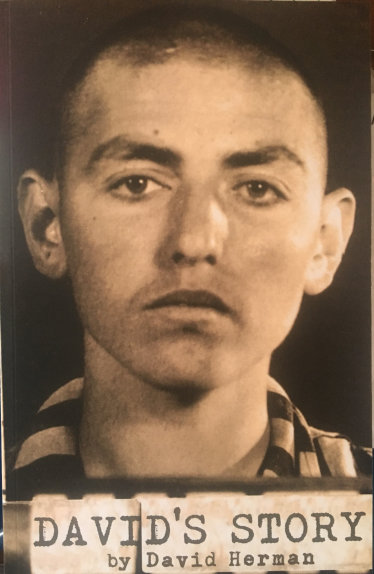
David Herman, David’s Story (2016) Herman was deported from the Carpathian Mountains and endured slave labour in Auschwitz III. To find out more click here.
Hugo Gryn, with Naomi Gryn, Chasing Shadows (Penguin, 2001) Gryn was deported from Berehove with his family in 1944. To read more click here.
To discover other books written by the Boys who were in Auschwitz click here.
 About
About History
 Education
 Quilts
 FIlms
FIlms Photos
 News Media & Events
 Publications
 Donate