Segal was born Jehoszua Cygelfarb in the Polish industrial city of Łódź in 1926.
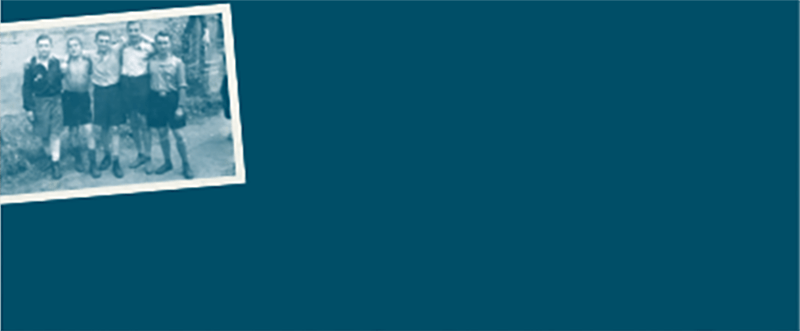
Segal was a member of a group of Holocaust survivors known as the Boys, despite the fact the group consisted of over 200 girls.
The Boys were teenage and child-Holocaust survivors, who were brought to the UK after World War II for rest and rehabilitation.
Members of the Boys were held in Nazi labour and concentration camps and used as slave labourers. They had also survived World War II in hiding or as lone children.
This content has been restricted to logged-in users only. Please
log in to view this content.
Segal’s parents were Avrom Kalman, a self-employed painter and decorator and Pessa.
Segal had three sisters, Sarah, Rachel and Mindy and a brother, Wovek.
In September 1939, the Germans occupied Łódź, renaming it Litzmannstadt, they incorporated the city into the Third Reich.
As a result the family moved to Piotrków.
Life in the Ghetto
The family was imprisoned in the Piotrków Ghetto, the first to be created in Poland.
Segal worked in the Hortensia glass factory with Wovek, then aged 19. They were separated from their family, who were never to be seen again.
His father dropped a note for them from the train while being deported telling them to take care of each other. The family were murdered at the Treblinka extermination camp.
Slave Labour
On 25 November 1944, the brothers arrived at Częstochowa-HASAG labour camp, from where they were moved in January 1945 to the Buchenwald concentration camp in Germany and then to Nordhausen Barracks in the Mittlebau-Dora concentration camp.
Each day, prisoners were taken to the main camp of Mittelbau-Dora, a large underground factory for manufacturing bombs and rockets. Segal worked in the staff kitchen where the officers ate and was able to supply extra food for his brother.
Joshua Segal’s Journey 1939-1947

Pre-war Life: Łódź, Poland. Forced Journey: → Piotrków Ghetto → Częstochowa-HASAG labour camp → Buchenwald concentration camp → Mittelbau-Dora concentration camp. After liberation: → Prague, Czechoslovakia → Joins 1st Group of the Boys → Windermere reception centre, UK → Alton, Hampshire, UK → Bedford, Bedfordshire, UK.
Liberation
After the war, Segal went to Prague to look for his family. Finding none he registered at a Jewish orphanage.
Segal came to the UK as part of the first group of the Boys in August 1945 and was cared for in the Windermere reception centre. He was then taken to the hostel in Alton.
He was taught to work with wrought iron and then moved to a hostel in Bedford, where he was an apprentice mechanic for Rolls-Royce.
An uncle from Nottingham tracked him down and gave him names and addresses of relatives in Canada and Paris.
He contacted his aunt in Paris, who told him that Wovek had survived and was living with her.
A New Life
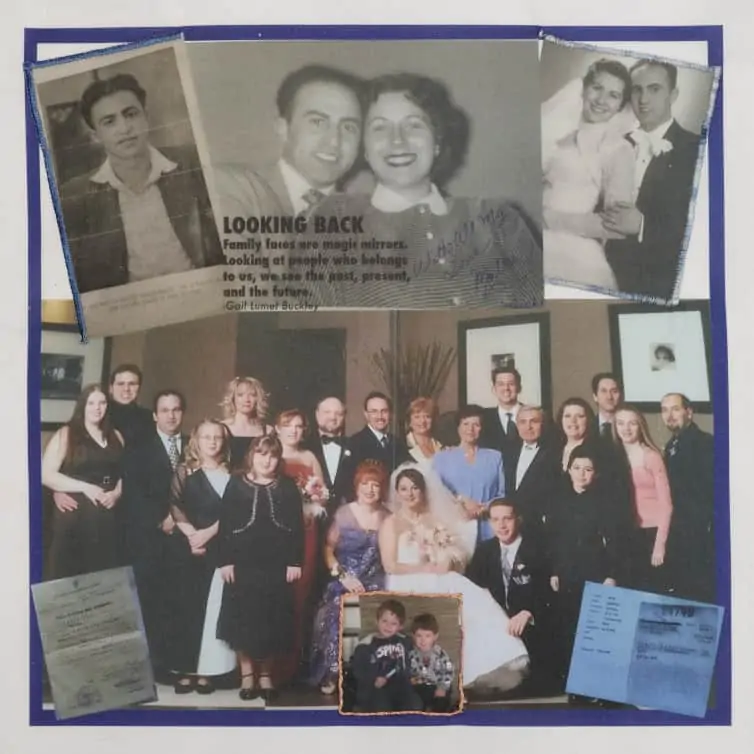
Segal left for Canada in 1947, where he lived in Toronto. He married and had four children.
This content has been restricted to logged-in users only. Please
log in to view this content.